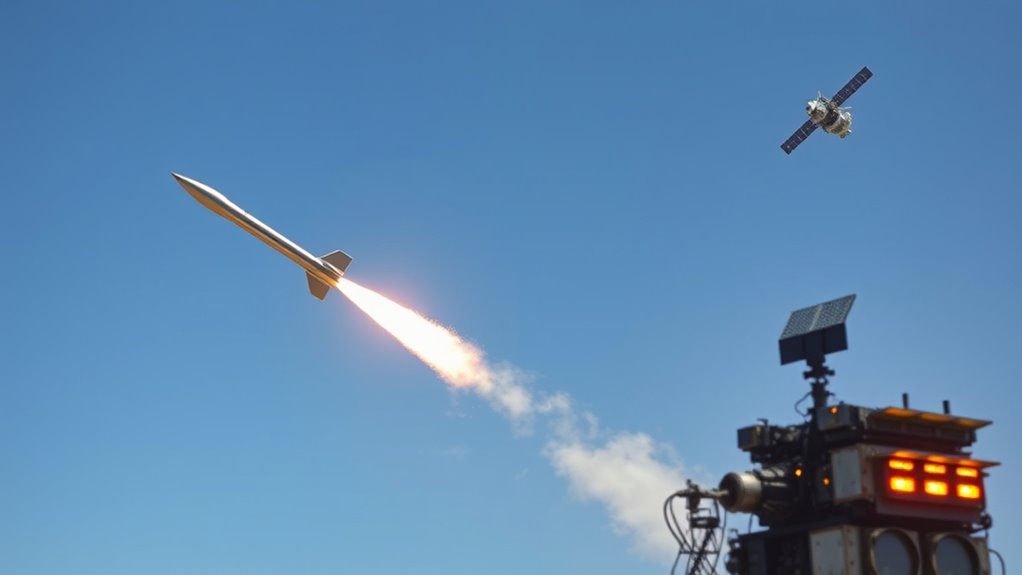

Anti-satellite weapons and jammers threaten space surveillance by damaging or destroying satellites and disrupting their communications. ASATs can create dangerous debris, causing collisions and risking the functionality of crucial space assets. Jammers interfere with signals, leading to service outages without physical destruction. These threats increase risks for navigation, defense, and communication systems we rely on daily. To understand how these technologies impact space safety and what measures are in place, keep exploring further.
Key Takeaways
- ASATs create space debris and risk cascading collisions, threatening satellite infrastructure and undermining space surveillance capabilities.
- Jamming devices disrupt satellite communication and navigation signals, impairing real-time space monitoring and data collection.
- Advances in anti-satellite tech enable more precise, high-velocity attacks, increasing threats to space assets and surveillance systems.
- Electronic warfare tactics like signal jamming are difficult to detect and counter, complicating space situational awareness.
- Developing resilient satellite systems and multi-layered defense strategies is essential to counteract evolving anti-satellite and jamming threats.
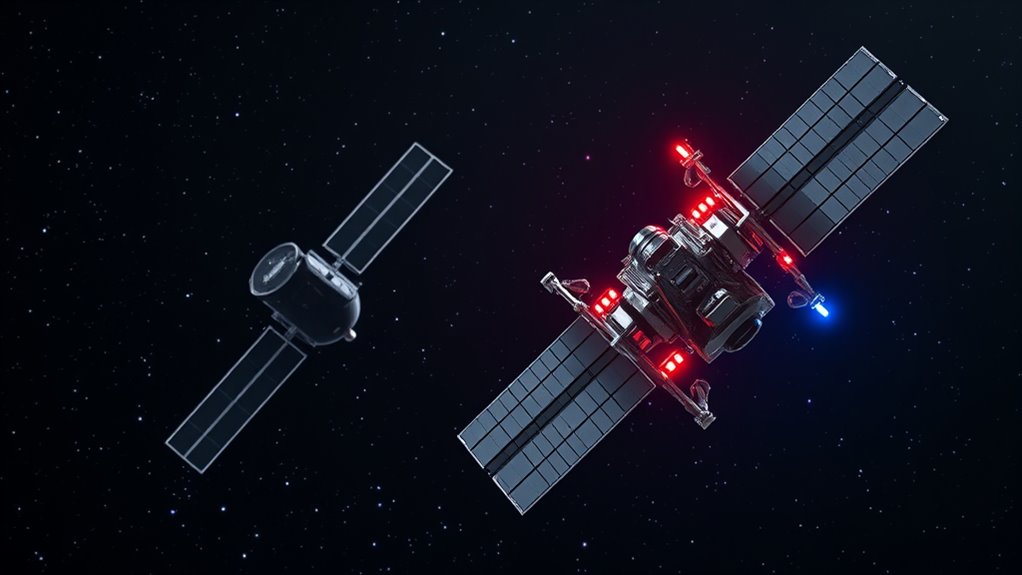
Anti-satellite weapons and jammers are emerging tools in modern warfare that threaten the stability of space-based assets. As you become more aware of these threats, it’s vital to understand how they can impact your satellite operations and the broader space environment. One significant concern is the increase in space debris, which already poses risks to functioning satellites. When anti-satellite weapons destroy or disable a satellite, they often generate thousands of fragments that orbit at high velocities. These fragments can collide with other satellites or spacecraft, creating a cascade effect known as the Kessler Syndrome. This scenario could make certain orbits unusable for years, jeopardizing everything from communication networks to GPS services you rely on daily. The proliferation of space debris complicates efforts to maintain safe and sustainable space activities, making it harder to protect your assets from accidental or deliberate damage.
To counter these threats, satellite resilience becomes a top priority. You need to guarantee that your satellites are equipped with robust defensive measures—such as hardened hardware, autonomous fault detection, and maneuvering capabilities—that allow them to withstand or evade attacks. Jamming devices further threaten satellite resilience by disrupting signals essential for communication or navigation. When anti-satellite jammers interfere with satellite signals, they can cause temporary or permanent loss of service, which can be disastrous in military or commercial contexts. The challenge is that jamming doesn’t necessarily destroy the satellite but can render it useless by blocking its data transmission. This kind of electronic warfare can be difficult to detect and counter, especially when jammers are highly directional or operate intermittently. Additionally, the rapid development of space technology means that adversaries are constantly innovating new methods to compromise satellite systems, increasing the urgency for advanced defense strategies.
Furthermore, the sophistication of anti-satellite technology is rapidly advancing, making it harder for satellite operators to defend against these threats. You may find that traditional security measures are no longer sufficient, requiring ongoing upgrades and innovations in satellite design. For example, deploying satellites in more resilient configurations, such as low Earth orbit constellations with overlapping coverage, can help mitigate the impact of targeted attacks. Additionally, developing anti-jamming technologies, encrypted communication channels, and rapid satellite replacement strategies can boost your resilience. Ultimately, the goal is to minimize the vulnerability of your space assets amid an evolving threat landscape, recognizing that the stakes go beyond individual satellites—they impact global security, economic stability, and your daily reliance on space-based systems.

TWAYRDIO High Gain Yagi Antenna, UHF 70cm 9dBi Outdoor 100W 400-470Mhz GMRS Directional Yagi for Amateur Radio,Repeater System,433mhz Device,Satellite Work,Police Scanner
- Frequency Range: UHF 400-470MHz
- Maximum Power: 100W
- Antenna Gain: 9dBi at 430MHz
As an affiliate, we earn on qualifying purchases.
As an affiliate, we earn on qualifying purchases.
Frequently Asked Questions
How Do Anti-Satellite Weapons Impact Civilian Satellite Services?
Anti-satellite weapons threaten your civilian satellite services by making satellite data privacy vulnerable. When these weapons target or disrupt satellites, they can cause service outages or data breaches, impacting navigation, communication, and weather monitoring. This vulnerability increases risks for commercial satellites, forcing businesses to invest more in security. Ultimately, such threats undermine the reliability of your satellite-based services, making you more dependent on fragile infrastructure that’s at risk of attack or interference.
What International Laws Regulate Anti-Satellite Weapon Development?
You should know that international space law, including the Outer Space Treaty, primarily guides anti-satellite weapon development, emphasizing treaty compliance and responsible behavior. While no specific treaties ban anti-satellite weapons outright, these laws promote peaceful uses, prohibit harm to space objects, and advocate for transparency. You must stay aware that ongoing discussions aim to strengthen legal frameworks, ensuring space remains safe and accessible for all, fostering stability through treaty compliance.
Can Space Debris From Anti-Satellite Tests Threaten Earth?
Yes, space debris from anti-satellite tests can threaten Earth. When satellites are destroyed, they create debris that orbits the planet at high speeds. This debris can cause orbital collisions, generating even more space junk. While most debris burns up in the atmosphere, larger pieces pose risks, and fragments from collisions could eventually fall to Earth, potentially causing damage or injury. Staying vigilant helps mitigate these threats.
How Do Jammers Differ From Other Satellite Communication Disruptions?
Jammers differ from other satellite communication disruptions by actively causing signal interference through spectrum jamming. You’ll notice that jammers block or distort signals intentionally, making communication impossible. Unlike natural disruptions like weather or unintentional interference, jammers target specific signals, overpowering them to disrupt services. They are designed to interfere precisely, whereas other issues might be accidental or broader in scope, affecting multiple systems or signals without malicious intent.
What Are the Long-Term Geopolitical Consequences of Anti-Satellite Capabilities?
You might see anti-satellite capabilities shift space diplomacy, making nations more cautious and competitive. These weapons could undermine strategic stability, leading to an arms race in space. As countries develop and test anti-satellite tech, trust erodes, increasing the risk of conflicts or accidental escalations. Long-term, this could destabilize global security, forcing nations to prioritize missile defenses and deterrence, ultimately complicating international cooperation in space.

Space Governance: Challenges, Threats and Countermeasures (Space Law and Policy)
As an affiliate, we earn on qualifying purchases.
As an affiliate, we earn on qualifying purchases.
Conclusion
As you consider the growing threat of anti-satellite weapons and jammers, remember that over 60 countries now have space capabilities, increasing the risk of conflict. These techs can disrupt global communications, navigation, and surveillance systems we rely on daily. Staying aware of these developments is vital, as space is becoming a battleground. Protecting our space assets isn’t just about technology — it’s about securing our future in an increasingly contested frontier.

As an affiliate, we earn on qualifying purchases.

SABRE Pepper Spray & 3-in-1 Stun Gun with Flashlight and Anti-Grab Bar Technology, Self Defense Kit, 35 Bursts, 10 Ft (3 m) Range, 120 Lumens LED Light, Rechargeable Battery (Set of 2)
- Trusted Brand: SABRE trusted by police and consumers
- Enhanced Protection: 35 bursts, 10-foot range, powerful stream
- Effective Self-Defense: 1.250 µC stun gun with Anti-Grab Technology
As an affiliate, we earn on qualifying purchases.
As an affiliate, we earn on qualifying purchases.