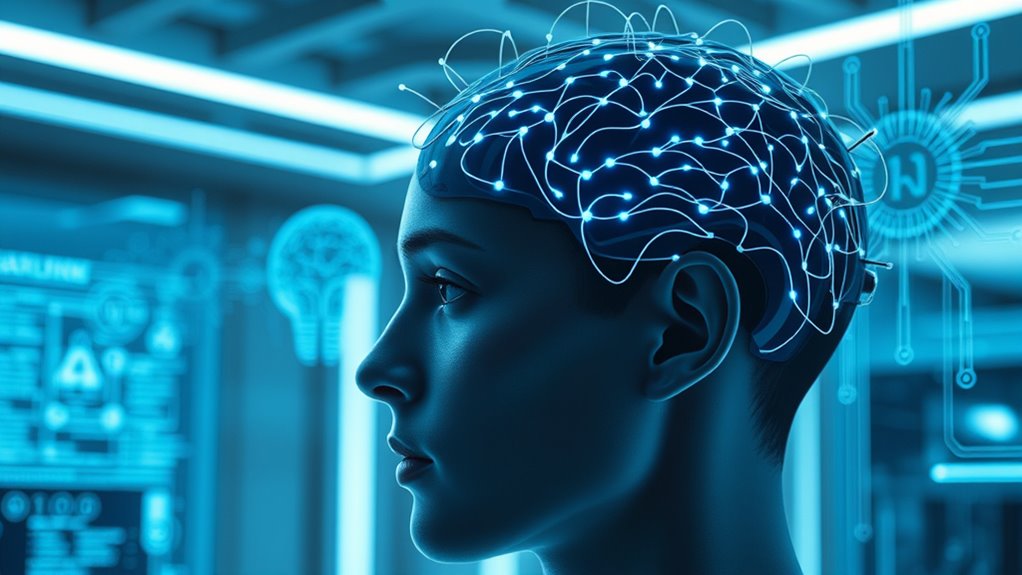

Brain-computer interfaces are transforming espionage by allowing direct access to your neural signals, effectively turning your thoughts into actionable data. With advanced algorithms, intelligence agencies could decode sensitive information or detect intentions covertly. Ethical concerns arise as these systems might infringe on personal privacy and autonomy, risking misuse or manipulation. As these technologies evolve, security and safeguards become essential to prevent abuse. If you’re curious about how this groundbreaking field could impact the future, keep reading.
Key Takeaways
- BCI technology can potentially decode neural signals to infer covert thoughts, raising espionage and intelligence concerns.
- Advances in neural decoding may enable real-time brain monitoring for espionage, risking unauthorized access to sensitive information.
- Ethical issues arise from using BCIs for mind-reading, including privacy violations and consent complications in espionage contexts.
- Security vulnerabilities in neural data transmission could allow hacking, manipulation, or false memory implantation by malicious actors.
- Balancing technological benefits with ethical safeguards is crucial to prevent misuse of BCIs in espionage and protect individual rights.

Have you ever wondered how we might directly connect our brains to machines? This question is at the heart of brain-computer interfaces (BCIs), a rapidly advancing technology that could revolutionize how we communicate, work, and even think. At its core, BCI relies on neural decoding—interpreting the electrical signals generated by your brain’s neurons to understand your thoughts, intentions, or feelings. This process involves sophisticated algorithms that translate brain activity into commands, enabling a machine to respond as if it were reading your mind. As these systems improve, their potential uses extend far beyond medical applications, raising the intriguing possibility of mind reading in fields like espionage.
Imagine a scenario where an agent’s brain signals are monitored and decoded in real-time, revealing sensitive information without the need for traditional interrogation methods. BCI technology could, in theory, tap directly into a person’s thoughts, extracting intelligence that was once hidden behind layers of psychological defense. This capability, however, sparks serious ethical implications. The idea of accessing someone’s innermost thoughts without consent challenges fundamental privacy rights and personal autonomy. You might ask yourself, where do we draw the line between technological advancement and individual rights? As neural decoding becomes more precise, the risk of misuse or abuse grows. Governments or organizations could weaponize this technology for surveillance, coercion, or control, creating a future where the boundary between mind and machine blurs dangerously.
The ethical implications are compounded by concerns about consent and security. Unlike traditional data, brain signals are deeply personal and fragile, making them a target for malicious hacking or unauthorized access. If someone’s brain data is intercepted, it could lead to devastating consequences, including manipulation or false memories. Furthermore, the potential for false positives—misinterpreting neural signals—raises questions about reliability and fairness. Who is responsible if a BCI misreads a person’s thoughts, leading to wrongful accusations or actions? Additionally, as the field of neural decoding advances, ensuring the security of brain data becomes crucial to prevent unauthorized access and protect individual privacy.
Despite these concerns, the promise of neural decoding within BCIs cannot be ignored. It offers incredible opportunities for restoring lost functions, such as helping paralyzed individuals communicate or control prosthetics. Yet, as you consider the future of this technology, it’s essential to weigh its immense benefits against the profound ethical challenges it poses. Developing robust safeguards, transparent policies, and ethical guidelines will be fundamental to ensure that the power of neural decoding is harnessed responsibly—so that the journey into mind-reading doesn’t compromise the very principles that protect individual freedom and privacy.

Brain-Computer Interface Technologies: Accelerating Neuro-Technology for Human Benefit
As an affiliate, we earn on qualifying purchases.
As an affiliate, we earn on qualifying purchases.
Frequently Asked Questions
Are Brain-Computer Interfaces Currently Used in Espionage?
You might wonder if brain-computer interfaces are used in espionage now. Currently, there’s little public evidence they are, but experts speculate about their potential for neural enhancement and cognitive hacking. As these technologies develop, spies could use them to boost mental capabilities or manipulate minds. While not widespread yet, future advancements could make brain-computer interfaces a powerful tool for covert operations and information gathering.
What Are the Ethical Concerns Surrounding Mind-Reading Technology?
You should consider the chilling concerns of privacy violations and consent dilemmas with mind-reading tech. It threatens personal privacy, as sensitive thoughts could be exposed without permission. This raises ethical questions about informed consent, autonomy, and potential misuse. As you navigate this new frontier, remember the importance of safeguarding individual rights, ensuring transparent use, and establishing strict boundaries to prevent abuse and protect human dignity in this technological terrain.
How Accurate Are Current Brain-Computer Interfaces in Detecting Thoughts?
You might be surprised, but current brain-computer interfaces achieve moderate accuracy in neural decoding, often detecting general thoughts rather than precise details. The thought fidelity varies depending on the technology and individual differences. While some signals are reliably interpreted, others remain ambiguous. Overall, these interfaces are improving, yet they still can’t perfectly read your mind, meaning there’s a significant margin of error in thought detection at this stage.
Can BCI Technology Be Hacked or Manipulated Remotely?
Yes, BCI technology can be hacked or manipulated remotely. You’re vulnerable due to neural security gaps and hacking vulnerabilities in the system’s software or hardware. Malicious actors could exploit these weaknesses to access or alter neural data, potentially compromising your thoughts or actions. To protect yourself, make sure your BCI device has robust security measures, including encryption, regular updates, and strong access controls, reducing the risk of remote manipulation.
What Measures Ensure Privacy in Brain-Computer Interface Applications?
Imagine your thoughts as a fortress—you need strong walls to keep intruders out. Neural encryption and privacy protocols act as those walls, protecting your mind from unauthorized access. By implementing advanced encryption methods and strict privacy standards, developers guarantee your neural data remains confidential. These measures act like a safeguard, making it nearly impossible for malicious actors to breach your mental privacy, giving you peace of mind in a connected world.
As an affiliate, we earn on qualifying purchases.
Conclusion
As you explore the evolving world of brain-computer interfaces, it’s clear they hold incredible potential. While they may subtly reshape how we connect and share thoughts, it’s wise to take into account the gentle balance between innovation and privacy. As these technologies become more integrated into our lives, staying curious and cautious ensures you’re prepared for the future’s delicate dance between discovery and discretion. Embrace the possibilities, but remember to tread thoughtfully along the way.
As an affiliate, we earn on qualifying purchases.

The Book of Unusual Knowledge: Big Book of Fascinating Facts & Information | Hardcover Gift for Trivia Buffs, Curious Minds, Adults, Dad & Knowledge Seekers
As an affiliate, we earn on qualifying purchases.
As an affiliate, we earn on qualifying purchases.