Biometric spoofing challenges your access systems by exploiting vulnerabilities in facial recognition and fingerprint technologies. Attackers use high-quality photos, masks, or deepfake videos to trick these systems into granting access. Without anti-spoofing measures or liveness detection, your security can be easily bypassed. As spoofing techniques evolve, your systems must adapt to stay protected. Staying informed about these threats helps you understand how to strengthen your security defenses effectively.
Key Takeaways
- Spoofing techniques like masks, deepfakes, and fake fingerprints can deceive biometric systems, compromising security.
- Lack of anti-spoofing measures makes access systems vulnerable to sophisticated deception methods.
- High dependency on image quality and sensor accuracy increases susceptibility to manipulation.
- Evolving spoofing methods require continuous updates and advanced detection technologies.
- No biometric system is completely immune, necessitating layered security strategies to mitigate risks.
Biometric access systems, once considered nearly foolproof, are increasingly vulnerable to spoofing attacks that can deceive even the most advanced sensors. As technology advances, so do the methods malicious actors use to bypass these security measures. One of the most pressing issues is facial recognition vulnerabilities. Despite its sophisticated algorithms, facial recognition can be tricked using high-quality photos, masks, or deepfake technology. Attackers can create realistic masks or manipulate images to mimic authorized individuals, fooling the system into granting access. These vulnerabilities highlight that facial recognition isn’t infallible; it relies heavily on the quality and robustness of the underlying software and hardware. If the system isn’t designed to detect spoofing attempts, it becomes an open door for unauthorized entry.
Facial recognition systems can be fooled by photos, masks, or deepfakes, highlighting their vulnerability without anti-spoofing measures.
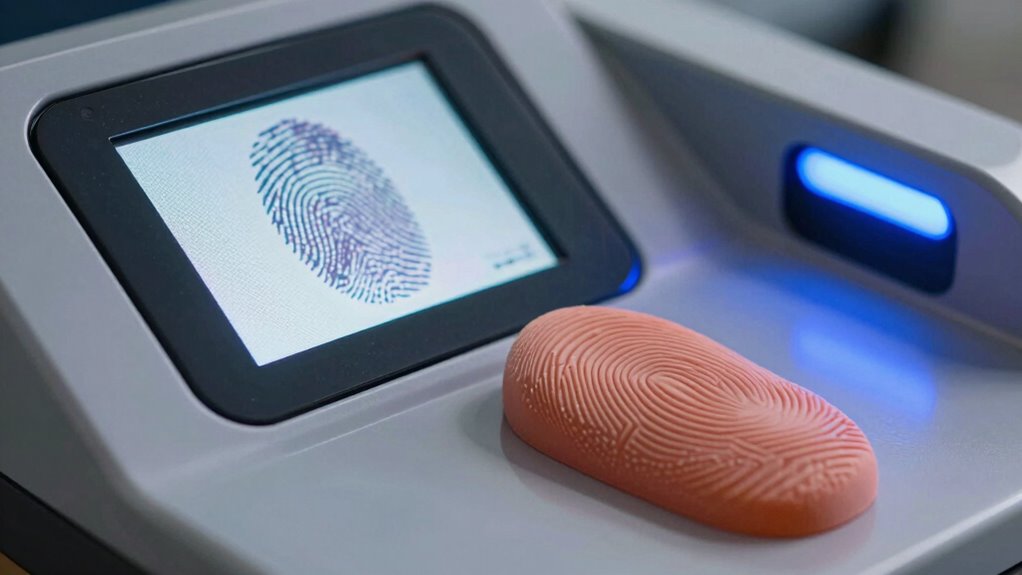
Similarly, fingerprint replication risks pose a significant threat. Fingerprint sensors, although widely used, aren’t immune to deception. Hackers can lift latent prints from surfaces like glass or metal, then create molds or fake fingerprints using materials like silicone or gelatin. Once they produce a convincing replica, they can use it to unlock devices or facilities. Advances in fingerprint spoofing techniques have made it easier to bypass biometric sensors, especially if the system lacks liveness detection features. Without measures to verify that the fingerprint is from a living person, attackers can exploit these weaknesses with relative ease. The use of biometric security and anti-spoofing technologies is crucial in mitigating these risks. Incorporating adaptive detection methods can further strengthen defenses against evolving spoofing techniques. Regular security evaluations are essential to identify and address emerging vulnerabilities in biometric systems. Recognizing that no system is entirely immune emphasizes the importance of a comprehensive security strategy. Only then can you guarantee that biometric security remains a reliable line of defense rather than an easy target for spoofing attacks.
biometric anti-spoofing security devices
As an affiliate, we earn on qualifying purchases.
As an affiliate, we earn on qualifying purchases.
Frequently Asked Questions
What Are the Latest Advancements in Biometric Spoofing Detection?
You’ll find that the latest advancements in biometric spoofing detection focus on improved liveness detection and facial recognition. These innovations actively analyze skin texture, eye movement, and facial depth to distinguish real users from fake images or masks. Facial recognition advancements now incorporate 3D mapping and thermal imaging, making spoofing much harder. By integrating these technologies, access systems become more secure, effectively reducing the risk of unauthorized entries through biometric spoofing.
How Do Organizations Respond to Biometric Security Breaches?
When a biometric security breach occurs, you should act swiftly by updating your user authentication protocols and enhancing security measures. You might implement multi-factor authentication or biometric liveness detection to prevent future spoofing attempts. It’s also essential to address privacy concerns by informing users about the breach, reviewing data protection policies, and ensuring compliance with privacy regulations. These steps help restore trust and strengthen your system’s defenses against future threats.
Are There Legal Consequences for Biometric Spoofing Activities?
You should know that biometric spoofing activities carry significant legal implications. Laws vary by region, but many jurisdictions have regulatory policies that criminalize unauthorized access and data breaches involving biometric data. Engaging in spoofing can lead to criminal charges, fines, or lawsuits. Organizations and individuals must understand these legal consequences to prevent violations, as regulatory policies aim to safeguard biometric information and ensure security standards are maintained.
How Cost-Effective Are Anti-Spoofing Measures for Access Systems?
Think of anti-spoofing measures as your modern knight in shining armor, protecting access points. They can be quite cost-effective when you do a thorough cost analysis, considering both upfront expenses and long-term savings. Budget considerations play a big role; investing in advanced security can prevent costly breaches later. While initial costs vary, many systems offer scalable options that fit different budgets, making anti-spoofing a smart, economical choice for safeguarding your access systems.
What Industries Are Most Vulnerable to Biometric Spoofing Attacks?
You’re most vulnerable to biometric spoofing in industries like finance, healthcare, and government sectors, where sensitive data is at stake. Attackers use spoofing to commit corporate espionage or identity theft, gaining unauthorized access to secure areas or systems. These industries often hold valuable information, making them prime targets. Implementing robust anti-spoofing measures is essential to protect against these threats and safeguard your organization’s assets.
Conclusion
You now see how biometric spoofing isn’t just a minor hiccup; it’s a seismic threat capable of shaking the very foundation of modern security. As hackers become more cunning, your access systems face the relentless storm of deception, risking more than just data—it’s your trust and privacy at stake. Staying vigilant and innovative is your best armor against this ever-evolving menace, because in the battle of security, complacency is the biggest vulnerability, and you can’t afford to blink.