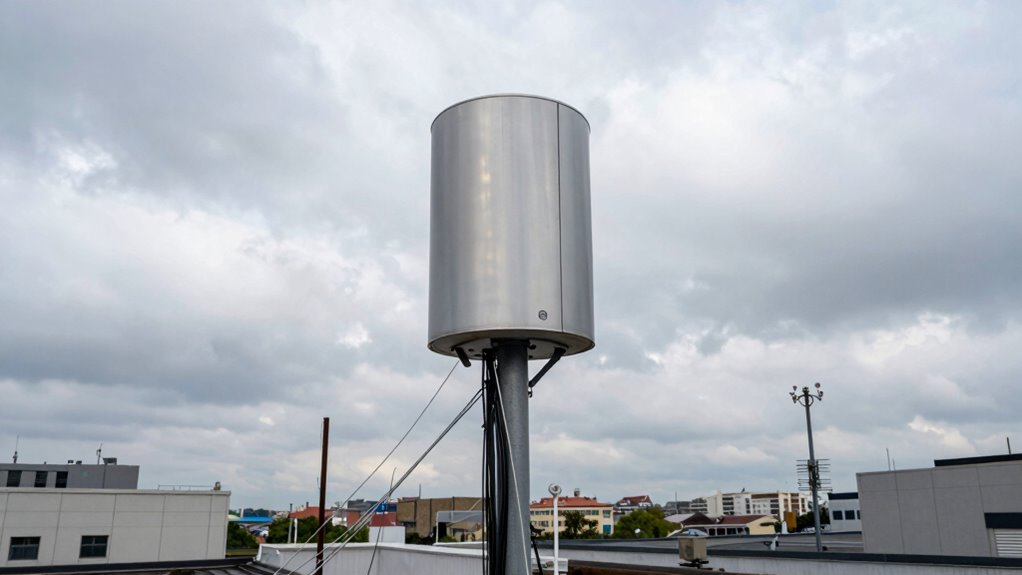

Cell-site simulators, or “stingrays,” mimic real cell towers to connect with your phone and gather location data. They trick your device into linking to a fake tower instead of a genuine one, revealing your precise location through unique identifiers. This allows authorities to track your movements in real time. If you’re curious about how these devices work and their broader implications, there’s more to uncover below.
Key Takeaways
- Cell-site simulators mimic legitimate cell towers to prompt nearby phones to connect, revealing their presence and location.
- They identify unique phone identifiers (like IMEI or IMSI) to track specific devices.
- By forcing devices to connect, simulators monitor signal strength and handover patterns to determine precise locations.
- They capture connection timestamps and signal data to analyze movement and proximity over time.
- Advanced simulators can intercept encrypted communications, linking location data with other device information.

Cell-site simulators, often called Stingrays, have become powerful tools for tracking mobile phone locations, raising significant privacy concerns. These devices mimic actual cell towers, tricking nearby phones into connecting with them instead of legitimate towers. As a result, they can pinpoint your phone’s location with surprising accuracy. When your device connects, it reveals identifying information like the phone’s unique identifiers, enabling operators to track movements in real-time. This capability is especially useful for law enforcement during investigations, but it also raises questions about privacy and consent.
One of the biggest technical vulnerabilities associated with cell-site simulators involves encryption. Modern smartphones use encryption protocols to secure communications, making it difficult for outsiders to eavesdrop on calls or messages. However, when a phone connects to a fake tower, these encryption layers can be bypassed or weakened. In some cases, the simulators exploit vulnerabilities in encryption protocols, allowing operators not only to track your location but also to potentially intercept calls, texts, or data transmissions. This undermines the privacy protections you expect and exposes sensitive information to malicious actors or unwarranted surveillance. Additionally, the use of these devices often involves encryption vulnerabilities, which can further compromise your data security. The ongoing development of cellular technology also influences how these vulnerabilities can be exploited or mitigated, highlighting the importance of staying informed about security measures. Advances in network encryption are crucial for countering these threats and protecting user data. Improving encryption standards can help close some of these security gaps and make it more difficult for malicious actors to exploit vulnerabilities.
Cell-site simulators can bypass encryption, risking interception of calls, texts, and sensitive data.
Beyond technical issues, regulatory challenges complicate how these devices are used and monitored. Laws governing cell-site simulators vary widely by jurisdiction, often lacking clear standards or oversight. Some agencies operate these tools under strict legal frameworks, requiring warrants or court orders, while others may deploy them more freely. This patchwork of regulations makes it difficult for the public to understand when and how their location data might be tracked. It also raises concerns about potential abuses, such as warrantless searches or mass surveillance, which threaten individual privacy rights and civil liberties.
Furthermore, the use of cell-site simulators often occurs without the knowledge or consent of the people being tracked. This lack of transparency fuels debates about the balance between public safety and personal privacy. While law enforcement argues that Stingrays aid in solving crimes, privacy advocates warn that these devices can be misused or deployed excessively, leading to unwarranted intrusion into everyday life. The challenges of regulating their deployment and ensuring encryption remains robust highlight the ongoing struggle to protect individual privacy in an increasingly connected world.
In the end, your location data can be more vulnerable than you realize, especially when cell-site simulators operate behind the scenes. As technology advances, staying aware of encryption vulnerabilities and advocating for clearer regulations becomes essential to safeguard your privacy against intrusive tracking methods.
cell phone privacy protection case
As an affiliate, we earn on qualifying purchases.
As an affiliate, we earn on qualifying purchases.
Frequently Asked Questions
Can Cell-Site Simulators Track Data From Wi-Fi Networks?
Yes, cell-site simulators can track data from Wi-Fi networks. They use techniques like Wi-Fi triangulation to locate devices within a specific area. However, signal interference from other electronic devices can affect the accuracy of this tracking. By analyzing Wi-Fi signals, the simulators can gather data on a device’s location, but environmental factors like interference may cause some discrepancies in the precise positioning.
Are Cell-Site Simulators Effective Indoors?
Indoors, cell-site simulators struggle with signal struggles, making them less effective amid indoor signal interference. You might worry about privacy concerns, but these devices often face limitations inside buildings, reducing their accuracy. While they can sometimes pick up signals indoors, their effectiveness diminishes due to obstructed signals and interference. So, if you’re concerned about precise indoor tracking, these simulators aren’t your most reliable tool.
How Long Can Cell-Site Simulators Store Location Data?
Cell-site simulators can store location data for varying durations, depending on their encryption protocols and data retention policies. Some devices may retain data for days or weeks, while others delete it immediately after collection. Your device’s data security depends on these policies and whether encryption protocols protect the data during storage. Always review the specific simulator’s policies to understand how long your location information might be stored.
Do Cell-Site Simulators Work With All Mobile Carriers?
Did you know that about 90% of cell-site simulators work across major carriers? They generally do, but carrier compatibility varies, so some may face signal interference or limited access. If you’re concerned about your provider, check whether the simulator is compatible with your carrier’s network. Keep in mind, signal interference can sometimes hinder these devices, affecting their ability to accurately track location data.
Can Users Detect if They Are Being Tracked?
You might find it hard to detect if you’re being tracked by a cell-site simulator because they operate covertly, raising privacy concerns. While some signs, like sudden signal drops or unusual battery drain, could hint at tracking, most users can’t reliably detect user detection. To protect your privacy, consider using encrypted communication apps and staying informed about potential tracking methods, as avoiding unauthorized surveillance is essential.
Conclusion
You might not realize it, but cell-site simulators quietly gather your location data, often without your knowledge. As technology advances, these devices become more widespread, capturing your movements just as easily as they track criminals. Coincidence or not, your location could be revealing more than you think—an echo of your daily life, woven into the fabric of surveillance. Stay aware, stay cautious—because in this digital age, privacy is more fragile than ever.