
Deepfake detection is still a moving target because quickly evolving technologies make it hard to keep up. As creators develop more realistic and sophisticated forgeries, detection methods struggle to identify artifacts or anomalies that often become less noticeable. The arms race between deepfake creators and detectors means new techniques constantly challenge existing systems. If you want to understand how ongoing innovations shape this battle, there’s more to uncover about the challenges faced by detection tools today.
Key Takeaways
- Deepfake generation techniques continually evolve, making detection methods quickly outdated.
- Advances in AI produce highly realistic fakes that lack detectable artifacts or irregularities.
- Detection algorithms rely on subtle cues that become less visible as deepfake quality improves.
- Ethical concerns and false positives complicate developing universally reliable detection standards.
- The rapid pace of technology and resource demands hinder the development of definitive detection solutions.
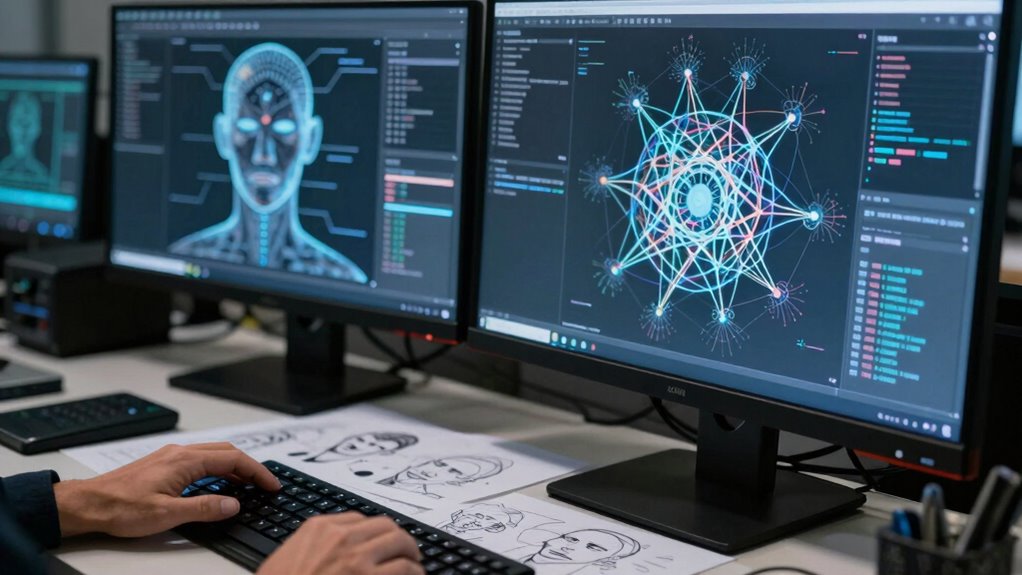
Deepfake detection has become increasingly challenging as technology advances, making it harder to distinguish authentic videos from manipulated ones. As deepfake generation tools grow more sophisticated, your ability to identify fakes diminishes, especially since algorithms struggle to keep pace with the rapid evolution of these techniques. Many detection methods rely on algorithms designed to spot inconsistencies or artifacts in videos, but these algorithms have notable limitations. For instance, they often depend on identifying subtle pixel anomalies or irregularities, yet as deepfake creators refine their methods, these clues become less apparent or disappear altogether. This creates a constant arms race where detection tools lag behind the latest generation techniques, making deepfake detection a moving target.
Deepfake detection struggles as creators refine techniques, making artifacts harder to detect and keeping the arms race ongoing.
Moreover, algorithm limitations aren’t just technical—they also raise serious ethical considerations. When you develop or deploy detection systems, questions about privacy, fairness, and transparency come into play. For example, algorithms might inadvertently flag genuine videos as fakes, leading to false positives that can damage reputations or infringe on privacy rights. Conversely, overly aggressive detection could suppress legitimate content, raising concerns about censorship or bias. These ethical dilemmas complicate efforts to establish universal standards for deepfake detection, and they can slow down the development of more accurate tools. You must carefully balance the need for security with respect for individual rights, which isn’t always straightforward.
Adding to the complexity, deepfake technology continually improves through machine learning, making it harder for your detection algorithms to stay effective. As generative models learn from vast datasets, they can produce highly convincing fakes that mimic real human behavior, speech patterns, and facial expressions. This means that your detection systems need to become increasingly sophisticated, but that’s often limited by computational resources and the inherent constraints of current algorithms. The faster the generation of realistic deepfakes, the more your detection methods risk becoming obsolete before they’re even deployed. Staying ahead in this ongoing battle requires not only technological innovation but also an understanding of emerging trends in AI and adaptive detection strategies, which influence how both fakes and detection methods evolve. Additionally, incorporating multi-modal analysis could improve detection accuracy by analyzing both visual and audio cues simultaneously. It’s also essential to recognize that public trust plays a crucial role in addressing the societal impact of deepfakes and the importance of developing reliable detection techniques.
In this landscape, no single solution offers a definitive answer. The constant technological advancements mean you’re always playing catch-up, and ethical considerations remind you to approach detection with caution. The combination of algorithm limitations and moral responsibilities ensures that deepfake detection remains an ongoing challenge—one that demands continuous innovation, careful ethical judgment, and a nuanced understanding of what’s possible within current technological constraints. Ultimately, the fight against deepfakes isn’t just about technology; it’s about steering through a complex web of technical and moral issues that evolve alongside the fakes themselves.
Deepfake and Image Forgery Detection: Cybersecurity, Multimedia Forensics, Image Manipulation (De Gruyter STEM)

As an affiliate, we earn on qualifying purchases.
As an affiliate, we earn on qualifying purchases.
Frequently Asked Questions
How Accurate Are Current Deepfake Detection Tools?
Current deepfake detection tools are moderately accurate but still face challenges due to synthetic realism and facial distortions. You might catch obvious fakes, but advanced deepfakes can fool even sophisticated detectors. As creators improve their techniques, detection tools need constant updates. So, while they’re helpful, they aren’t foolproof, and you should stay cautious, especially with videos that seem too perfect or have subtle facial distortions.
Can Deepfakes Ever Be Completely Foolproof?
Deepfakes are like chameleons, constantly changing to blend in, so they can’t be entirely foolproof. You face realism challenges that make detection tricky, and detection biases can be exploited by skilled creators. As technology advances, both deepfake creators and detectors evolve, ensuring a cat-and-mouse game. While near-perfect detection might be possible someday, right now, it’s a moving target, always one step behind the latest deepfake innovations.
What Are the Legal Implications of Deepfake Technology?
You face significant legal concerns with deepfake technology, especially regarding privacy and intellectual property rights. You could be held liable if you create or share deepfakes that invade someone’s privacy or misuse copyrighted content. Laws are evolving to address these issues, but current regulations may not fully protect against malicious uses. Staying informed and cautious helps you avoid legal pitfalls, ensuring you respect others’ rights while steering through this complex digital landscape.
How Quickly Do Deepfake Detection Methods Evolve?
Deepfake detection methods evolve at lightning speed, driven by a relentless detection arms race. Synthetic vulnerabilities emerge rapidly, making it feel like the technology’s changing every second. You can’t keep up if you rely on static defenses; instead, you must adapt constantly. As deepfake creators refine their techniques, detection tools must innovate just as quickly, or risk becoming obsolete in this high-stakes game.
Are There Ethical Concerns in Developing Detection Algorithms?
Yes, developing detection algorithms raises ethical concerns, especially around synthetic ethics and privacy risks. You must consider how these tools could be misused or infringe on individuals’ rights. As you design detection methods, it’s essential to balance technological advancement with protecting privacy and ensuring ethical standards. Addressing these concerns helps foster trust and prevents potential harm caused by misuse or overreach in deepfake detection.
Conclusion
Just as a chameleon constantly shifts to blend in, deepfake detection remains a moving target. Every new technique you develop becomes a fleeting shadow, easily mimicked by clever fakes. The battle is ongoing, like chasing the horizon’s edge—always just out of reach. Stay vigilant, knowing that as technology evolves, so must your defenses, forever dancing on the edge of illusion and reality. It’s a game you’ll never truly win, only adapt to.