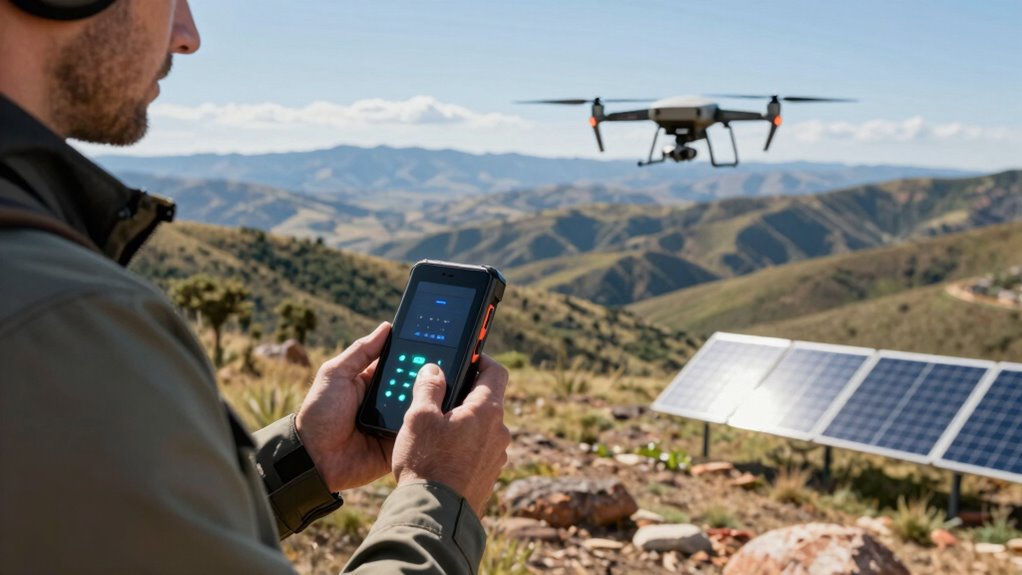

Edge devices matter for field intelligence collection because they allow you to analyze data locally, providing immediate insights and faster decision-making. They reduce latency, support operation in remote areas, and manage bandwidth efficiently by transmitting only relevant information. With strong security measures, they protect your data and guarantee reliability even in unsecured environments. If you want to discover more about how these devices can optimize your field efforts, keep exploring their benefits and strategies.

Get privacy and security gear delivered free — and shop member deals
- Fast, free delivery on millions of items
- Access to Prime Big Deal Days deals on October 6–7
- Prime Video, Amazon Music and more included
Key Takeaways
- Enable real-time data collection and analysis for immediate decision-making in the field.
- Reduce latency by processing data locally, ensuring rapid response times.
- Minimize bandwidth usage by transmitting only relevant, filtered information.
- Enhance operational safety and efficiency through swift, on-site insights.
- Strengthen security and data integrity with robust measures tailored for remote environments.
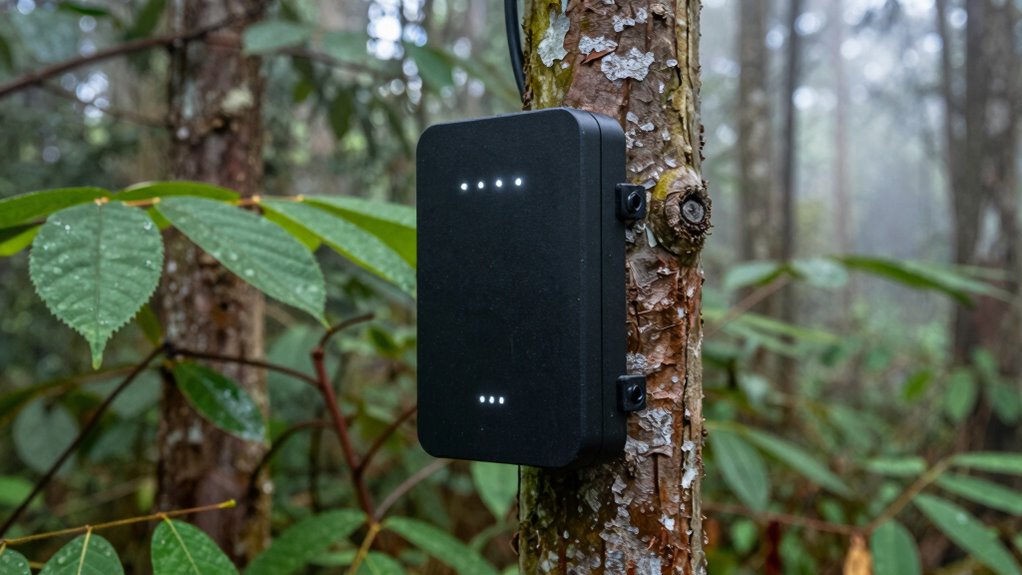
Edge devices are transforming how we gather and process data by bringing intelligence closer to the source. This shift allows for faster decision-making and more efficient operations, especially in field environments where delays can cost time and resources. When you deploy edge devices, you’re enabling real-time data collection and processing, which means you get immediate insights without waiting for data to travel to a centralized cloud or data center. This immediacy is essential in applications like industrial monitoring, agriculture, or disaster response, where swift action can prevent failures or save lives.
By processing data locally, edge devices reduce the latency involved in transmitting information over networks. Instead of sending raw data to a distant server, these devices analyze and filter information on-site, sending only relevant insights. This approach not only speeds up response times but also alleviates bandwidth constraints, saving costs and reducing network load. When you rely on real-time data, you’re equipped to make timely adjustments—whether it’s optimizing equipment performance or responding to environmental changes—ultimately improving operational efficiency and safety. Incorporating local data processing capabilities further enhances the effectiveness of edge devices by enabling more complex analysis directly at the source. Additionally, integrating power management solutions ensures these devices remain operational in remote or off-grid locations.
However, with increased connectivity and data flow comes the vital need for device security. Protecting edge devices from cyber threats is essential because they often operate in remote or unsecured environments. A breach or malfunction could lead to compromised data, operational disruptions, or safety hazards. You must guarantee robust security measures, including encrypted communications, secure boot processes, and regular firmware updates, to safeguard these devices. Additionally, implementing strict access controls and continuous monitoring helps prevent unauthorized access and detects anomalies early. As the volume of connected devices grows, cybersecurity becomes even more critical to prevent vulnerabilities.
The significance of device security extends beyond safeguarding data. It also involves maintaining the integrity of the entire field intelligence system. If an edge device is compromised, it could send false or misleading data, leading to poor decisions or safety incidents. Therefore, securing these devices isn’t just about preventing theft or hacking—it’s about ensuring the reliability and trustworthiness of the data collected. As you integrate more edge devices into your operations, you’ll find that balancing the need for real-time data and rapid insights with strong security protocols is fundamental to success. Ensuring secure deployment practices is key to maintaining both operational continuity and data integrity. Moreover, adopting cybersecurity best practices can help mitigate potential vulnerabilities associated with increased device connectivity.
industrial edge computing device
As an affiliate, we earn on qualifying purchases.
As an affiliate, we earn on qualifying purchases.
Frequently Asked Questions
How Do Edge Devices Improve Real-Time Decision-Making?
Edge devices improve real-time decision-making by enabling data processing right at the source, which considerably reduces latency. When you rely on these devices, you get faster insights without waiting for data to travel to a central server. This instant processing helps you respond quickly to changing conditions, whether in the field or in critical situations, ensuring more effective and timely decisions.
What Are the Security Challenges of Using Edge Devices?
Think of edge devices as the guardians of your data fortress, facing constant threats. Their security challenges include protecting data with robust encryption, so unauthorized users can’t access sensitive info. You also need strict access control to prevent breaches, ensuring only trusted personnel can operate or modify these devices. Without these measures, your edge devices could become weak links, exposing essential field intelligence to cyberattacks and data leaks.
How Cost-Effective Are Edge Devices Compared to Traditional Systems?
Edge devices are highly cost-effective compared to traditional systems because they offer significant cost savings through reduced data transmission and storage needs. You’ll also notice improved maintenance efficiency since these devices process data locally, decreasing reliance on centralized infrastructure. This setup minimizes ongoing expenses and downtime, helping you save money while ensuring faster, more reliable field intelligence collection. Overall, edge devices deliver a smarter, more economical solution for your operational needs.
What Types of Sensors Are Typically Integrated Into Edge Devices?
You might be surprised at the sensors integrated into edge devices—they range from high-precision cameras and thermal sensors to environmental and acoustic sensors. These sensors guarantee data accuracy and quick data synchronization, essential for real-time insights. Their ability to capture and transmit precise information swiftly keeps operations seamless, revealing the hidden power behind these compact devices. It’s a game-changer for field intelligence, where every detail counts.
How Scalable Are Edge Device Deployments in Large Field Operations?
Edge device deployments in large field operations are quite scalable if you plan carefully. You should consider scalability limitations like network bandwidth, power supply, and data management. Using effective deployment strategies, such as modular setups and phased rollouts, helps you expand gradually without overloading your infrastructure. This approach guarantees smooth integration, maintains performance, and allows you to adapt as your operation grows, maximizing the value of your field intelligence collection.
Conclusion
Edge devices act like vigilant sentinels on the frontlines, capturing whispers of the environment and turning them into essential insights. They’re your eyes, ears, and heartbeat in the field, bridging gaps and breaking barriers. As you harness their power, you’re weaving a tapestry of real-time intelligence that’s both agile and resilient. In this digital dance, edge devices keep you one step ahead—constantly sensing, learning, and evolving with every heartbeat of the field.
Fall Picks
fall essentials
As an affiliate, we earn on qualifying purchases.