Lie detectors like polygraphs measure physiological responses to identify stress that may indicate deception, but their accuracy is highly debated. Factors like anxiety or fear can trigger false results, and courts often reject them as proof. Advances in technology aim to develop more reliable tools for truth verification while addressing ethical concerns about privacy and false accusations. If you want to explore how these new methods are shaping interrogation techniques, you’ll find more details ahead.
Key Takeaways
- Polygraphs measure physiological responses linked to stress but are unreliable indicators of deception.
- Advances in cybersecurity and new technologies aim to develop more accurate and ethical lie detection methods.
- Legal systems often exclude polygraph results due to questions about their scientific validity.
- Ethical concerns include privacy violations, false positives, and coercion during lie detection procedures.
- Combining multiple investigative tools and understanding limitations improve the reliability of truth verification efforts.
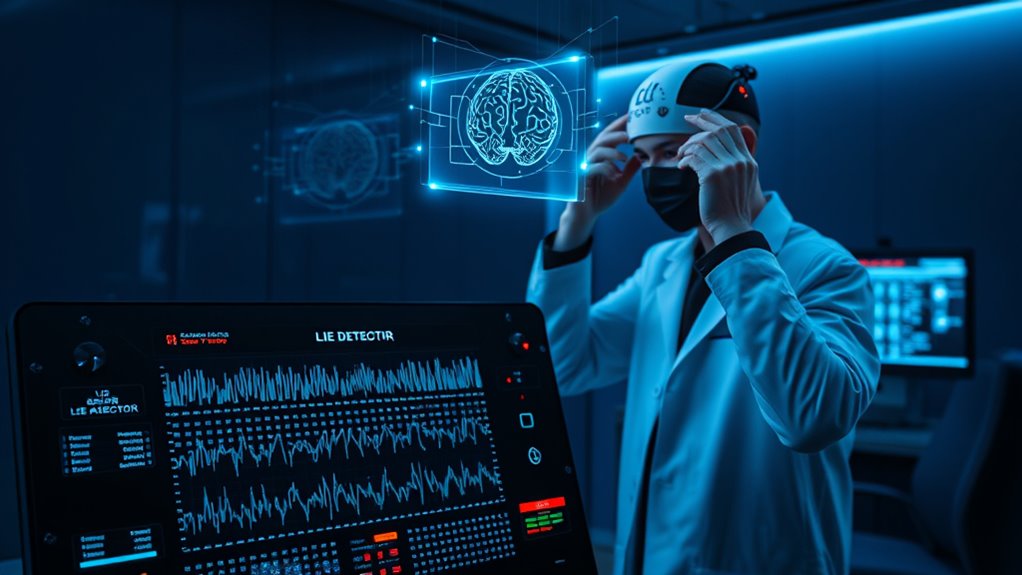
Lie detectors have long been used as tools to uncover deception, but their reliability and ethical implications continue to spark debate. When you consider the polygraph, it’s essential to understand that its reliability isn’t absolute. The polygraph measures physiological responses—such as heart rate, blood pressure, and skin conductivity—hoping to detect lies by identifying stress caused by deception. However, research shows that these responses can be triggered by many factors unrelated to lying, like anxiety or fear, which questions the test’s accuracy. Because of this, the polygraph’s reliability remains controversial among scientists and legal practitioners alike. Some courts have even refused to accept polygraph results as evidence, citing their questionable accuracy.
Beyond scientific concerns, ethical issues also come into play. When you rely on a lie detector, you risk violating individual rights and privacy. The test can pressure someone into self-incrimination, especially if the results are used improperly or without full consent. There’s also the risk of false positives—where truthful individuals are wrongly accused or suspected—potentially damaging reputations and lives. These ethical concerns are compounded by the fact that the polygraph is not foolproof; it’s more of an investigative aid than a definitive measure of truth. Using it as sole evidence can lead to wrongful accusations, which raises serious moral questions about fairness and justice. Additionally, the increasing use of cybersecurity tools and methods for verification suggests that technological advancements may offer more reliable alternatives in the future.
Given these issues, many experts believe that the polygraph should be used cautiously, primarily as a tool to guide investigations rather than as a conclusive test. You need to be aware of its limitations and avoid over-reliance on its results. Instead, it’s better to combine polygraph testing with other investigative methods, like interviews and evidence analysis, to build a more thorough picture. Advances in technology suggest that future methods might improve accuracy, but for now, the debate about polygraph reliability and ethics remains active. As you navigate the complex world of lie detection, it’s vital to recognize both the potential and the pitfalls of these tools. Ultimately, respect for individual rights and scientific integrity should guide their use, preventing misuse and ensuring that justice isn’t compromised.

USB Polygraph 1.0: Real Home Polygraph Lie Detector Machine Original Edition
- Platform Compatibility: Windows PC only
- Ease of Use: No experience needed, simple operation
- Versatile Application: Suitable for parties and small businesses
As an affiliate, we earn on qualifying purchases.
As an affiliate, we earn on qualifying purchases.
Frequently Asked Questions
How Reliable Are Polygraph Tests in Court?
Polygraph accuracy is generally questionable, so courts often view polygraph tests as unreliable evidence. They’re not consistently admissible in court because their results can be influenced by anxiety or deception, which makes them less trustworthy. You should know that, in most jurisdictions, polygraph evidence isn’t accepted as proof of guilt or innocence, so don’t rely solely on a polygraph test for your case.
Are There Privacy Concerns With Advanced Interrogation Technologies?
Do you worry that advanced interrogation technologies might invade your privacy? They definitely can raise concerns about privacy invasion and data security, especially if sensitive information gets stored or misused. These tools could potentially collect more than just truth, risking your personal data. As these technologies evolve, it’s essential to question whether their use respects individual rights or compromises your privacy for the sake of security.
Can AI Accurately Detect Lies Without Human Bias?
AI can improve lie detection accuracy with machine learning, but it still struggles to eliminate human bias completely. You need to understand that bias mitigation techniques are essential, yet they aren’t foolproof. While AI can analyze patterns better than humans, it may still be influenced by biased training data. So, you shouldn’t rely on AI alone for absolute truth detection, as biases can still skew results.
What Ethical Issues Surround Truth Extraction Methods?
You face significant ethical issues with truth extraction methods, especially around consent dilemmas and moral implications. These techniques often raise questions about whether individuals truly agree to such procedures and if their rights are respected. Using them without proper consent can lead to violations of privacy and autonomy. It’s essential to weigh these ethical concerns carefully, ensuring that the pursuit of truth doesn’t compromise moral standards or human dignity.
How Do Cultural Differences Affect Interrogation Techniques?
You notice how different cultures shape interrogation techniques, influencing everything from body language to communication styles. Cross-cultural communication becomes essential, as what’s acceptable in one society might provoke suspicion in another. You adapt your approach carefully, tailoring interrogation methods to respect cultural norms. This interrogation adaptation not only fosters trust but can uncover truths more effectively, revealing the subtle nuances that bridge cultural gaps and facilitate honest responses.
polygraph alternative technology
As an affiliate, we earn on qualifying purchases.
As an affiliate, we earn on qualifying purchases.
Conclusion
As you see, technology continues to evolve, offering new ways to uncover truths. But remember, even the most advanced tools can’t replace genuine understanding and trust. No method is perfect—“Honesty is the best policy,” after all. While science pushes boundaries, it’s your integrity and empathy that truly foster connection and truth. In the end, technology should serve to support, not replace, our human capacity for honesty.

The Truth about The Harbinger: Addressing the Controversy and Discovering the Facts About This Prophetic Message
As an affiliate, we earn on qualifying purchases.
As an affiliate, we earn on qualifying purchases.
As an affiliate, we earn on qualifying purchases.