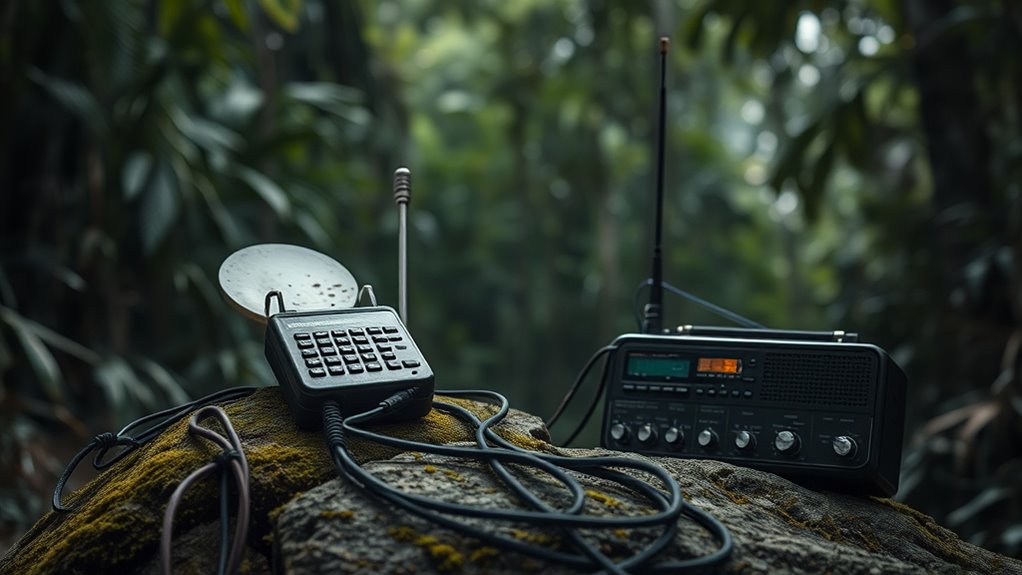

You can have your satellite phones and radios intercepted by exploiting vulnerabilities in signal transmission, encryption, or physical security. Adversaries use specialized equipment to capture radio signals from afar, analyze the data, and decode messages if encryption isn’t strong. Signal jamming is another tactic to disrupt communication without even accessing the content. Staying vulnerable is easier than you think, but if you continue exploring, you’ll discover how to protect yourself from these covert threats.
Key Takeaways
- Signal interception occurs when adversaries use specialized equipment to capture satellite or radio transmissions without direct access.
- Weak or compromised encryption keys allow eavesdroppers to decode intercepted messages.
- Advanced techniques like signal analysis and decryption can reveal transmitted data despite encryption.
- Interceptors may exploit physical vulnerabilities, such as insecure antenna setups or inadequate device security.
- Jamming signals can disrupt communication, making interception easier by forcing devices into less secure fallback modes.
In an increasingly connected world, listening from afar has become both easier and more complex. Advances in technology mean that satellite phones and radios can transmit and receive signals across vast distances, making communication nearly seamless. However, this convenience also opens up vulnerabilities. If you’re trying to keep your conversations private, you need to understand the risks of interception. Encrypted communication is designed to protect your messages, scrambling data so that only authorized parties can decode it. But even with encryption, there’s always a chance that malicious actors or government agencies can tap into signals or attempt to decode them. Signal jamming is another threat you should be aware of. It involves broadcasting powerful radio signals to interfere with legitimate transmissions, effectively blocking or disrupting communication channels. This tactic can be used for various reasons—whether to prevent sensitive information from being transmitted or to create chaos during critical operations.
When you use satellite phones or radios in remote areas, you might assume that your communications are secure by default. In reality, interception isn’t always obvious. Sophisticated adversaries can use specialized equipment to pick up signals and analyze their content. Even encrypted conversations aren’t entirely safe; if encryption keys are weak or compromised, your messages can still be decoded. Additionally, eye patches are a reminder that some vulnerabilities are related to the physical or superficial aspects of security, though they are more symbolic than technical. Signal jamming, on the other hand, doesn’t require you to access the actual data. Instead, it floods the airwaves with noise, making it impossible for your device to establish or maintain a connection. This tactic can be particularly disruptive in emergencies or covert operations, where reliable communication is essential.
To counter these threats, you should employ robust encryption protocols and stay aware of the potential for signal jamming. Using frequency-hopping spread spectrum (FHSS) technology can help mitigate jamming efforts by constantly changing transmission frequencies, making it harder for an attacker to block your signal. Additionally, deploying anti-jamming devices or antenna systems capable of detecting interference can alert you when jamming occurs, allowing you to switch to alternative communication methods. Remember, no system is entirely foolproof, but understanding how encryption and jamming work gives you a better chance of maintaining secure, reliable communication from afar. Whether you’re operating in hostile environments or just want peace of mind, being proactive about these vulnerabilities ensures your messages stay private and your operations stay connected.
satellite phone encryption device
As an affiliate, we earn on qualifying purchases.
As an affiliate, we earn on qualifying purchases.
Frequently Asked Questions
How Do Governments Track Satellite Phone Locations Globally?
Governments track satellite phone locations through satellite signal analysis. They monitor signal patterns, strength, and timing to pinpoint your device’s position. By analyzing these signals, authorities can conduct government surveillance, even from afar. You might not notice it, but your satellite communications are constantly being examined, allowing governments to track your movements globally. This technique helps ensure security but also raises concerns about privacy invasion.
Can Private Citizens Intercept Satellite Communications Legally?
You can’t legally intercept satellite communications as a private citizen because of satellite signal vulnerabilities and strict private interception laws. These laws prohibit unauthorized access, aiming to protect privacy and national security. While technology exists that could potentially intercept signals, doing so without permission is illegal and can lead to severe penalties. Always respect privacy laws and avoid attempting to intercept satellite communications without proper authorization.
What Encryption Methods Protect Satellite Radio Transmissions?
Encryption protocols like AES-256 and signal scrambling protect satellite radio transmissions by making intercepted data unreadable. Think of it as sending a message in a locked box; only the right key to open it. For example, military satellites use advanced encryption to guarantee their signals stay private. Without these methods, anyone could eavesdrop, but strong encryption keeps your communications secure from prying eyes.
Are There Devices Capable of Jamming Satellite Signals?
Yes, there are devices capable of signal jamming satellite signals. These jamming devices emit interference that disrupts or blocks satellite communication, making it difficult for your satellite phones or radios to connect. Signal jamming can be used intentionally for security or malicious purposes, so it’s important to be aware that such devices exist and can interfere with your communications, especially in sensitive or high-security environments.
How Often Are Satellite Communication Systems Updated for Security?
A stitch in time saves nine, and that’s true for satellite systems too. You should know that security updates for satellite communication systems happen regularly, but the encryption update frequency varies by provider. These updates aim to fix vulnerabilities and strengthen defenses against interception. Staying current is essential because satellite system vulnerabilities can be exploited if updates are delayed, so always ensure your provider maintains a strict security schedule.
As an affiliate, we earn on qualifying purchases.
Conclusion
So, whether you’re using satellite phones or radios, remember that signals travel through the air, and airwaves are open to interception. You can’t always control who’s listening, just as you can’t control the wind. Protect your conversations by understanding vulnerabilities, by staying vigilant, by choosing your channels wisely. Because, in the end, communication relies not just on technology, but on awareness—on knowing that every signal, like every message, can be intercepted, heard, or understood.
As an affiliate, we earn on qualifying purchases.
frequency-hopping spread spectrum radio
As an affiliate, we earn on qualifying purchases.
As an affiliate, we earn on qualifying purchases.