
Tapping into undersea cables involves advanced surveillance technologies designed to detect disturbances and prevent unauthorized access. Engineers embed fiber optic sensors within the cables, which monitor pressure, strain, and temperature changes, alerting operators to potential tampering or damage. Underwater drones, acoustic sensors, and satellite data further enhance security efforts. By understanding these sophisticated methods, you’ll discover how experts protect these essential underwater arteries—and how ongoing innovations keep your digital world safe.
Key Takeaways
- Embedded fiber optic sensors detect physical disturbances like tapping, pressure changes, or cable damage in real-time.
- Underwater acoustic sensors and drones monitor for suspicious activities or unauthorized access along cable routes.
- Satellite surveillance provides broad-area monitoring of the ocean surface to identify potential threats or anomalies near cables.
- Rapid alert systems notify operators immediately of any disturbances, enabling swift response to tapping attempts.
- Multiple redundant cable routes and data rerouting ensure continued security and connectivity despite potential sabotage.
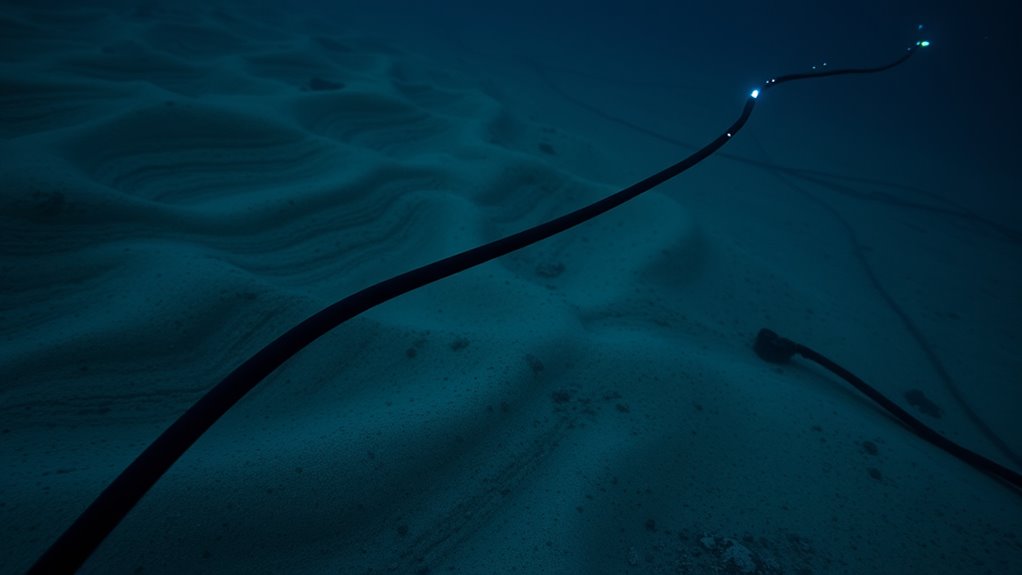
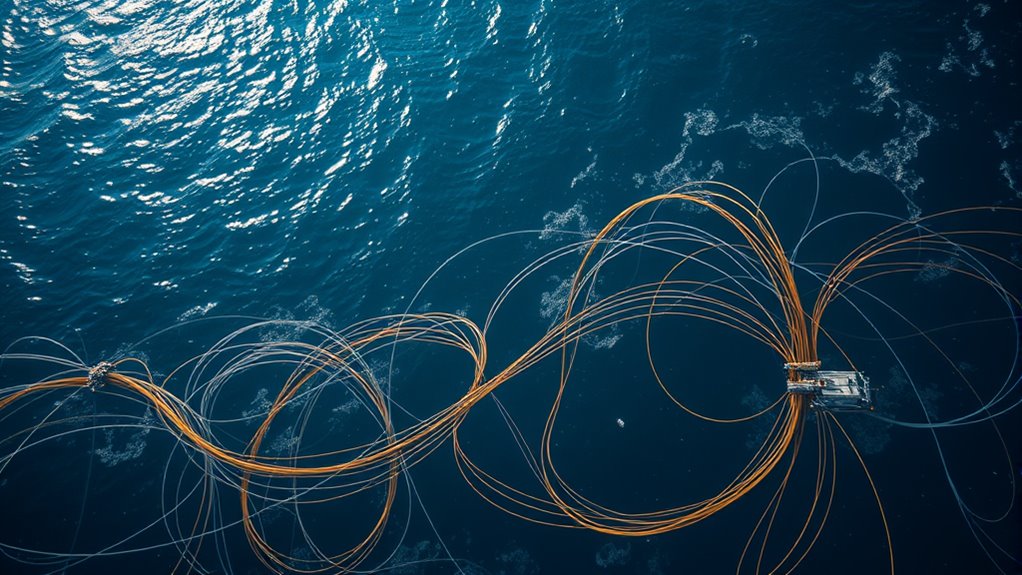
Undersea cables form the backbone of global communication, transmitting over 99% of international data. These cables connect continents, facilitate internet access, and support financial transactions, making their security absolutely essential. When you consider fiber optic security, you realize how critical it is to protect these delicate links from interference and sabotage. Fiber optics are highly efficient and fast, but their vulnerability can be a significant concern. Because they run across thousands of miles beneath the ocean, they are exposed to natural hazards, accidental damage from shipping, or intentional tapping efforts. Recognizing this susceptibility, experts have developed a range of surveillance and security measures to safeguard the cables.
You might not think about it often, but cable vulnerability extends beyond natural phenomena. Ships, anchors, or fishing activities can inadvertently damage or sever these cables, causing widespread disruptions. To mitigate this, monitoring systems are in place that can detect even minor disturbances along the cable’s length. These systems often include fiber optic sensors embedded within the cables themselves, which can identify changes in pressure, strain, or temperature. When a disturbance occurs, rapid alerts allow response teams to address the issue before it escalates into a major failure. Additionally, the vulnerability of undersea cables** is partly addressed through redundancy. Multiple cables often run parallel or along different routes, so if one gets compromised, data can reroute through alternative pathways. This layered approach ensures that even if a cable is cut or tapped, the communication network remains functional. Governments and private companies also invest heavily in research to improve detection and response capabilities. These efforts include deploying underwater drones, acoustic sensors**, and satellite surveillance to complement fiber optic security systems.
Ultimately, understanding the vulnerabilities inherent in undersea cables emphasizes the importance of continuous surveillance and innovative security techniques. As cyber threats evolve and natural hazards persist, protecting these essential connections remains a top priority. By staying vigilant and employing advanced technology, you can help guarantee that these underwater arteries keep transmitting data reliably, safeguarding the global digital economy.
fiber optic cable security sensors
As an affiliate, we earn on qualifying purchases.
As an affiliate, we earn on qualifying purchases.
Frequently Asked Questions
How Long Do Undersea Cables Typically Last Before Needing Replacement?
Undersea cables typically last about 25 years before needing replacement. You should plan for regular cable maintenance to guarantee peak performance and to address potential damage from environmental factors or accidents. Lifespan estimation varies based on cable quality, installation conditions, and maintenance efforts. By monitoring and maintaining your cables regularly, you can extend their lifespan and avoid unexpected failures that disrupt global communications.
What Materials Are Used to Make Undersea Cables Resistant to Damage?
Undersea cables are made from materials like steel or aluminum for strength, wrapped in layers of corrosion protection such as polyethylene or polyurethane. You’ll also find insulation made of durable substances like silicone or rubber to withstand harsh conditions. These materials guarantee corrosion resistance and enhance material durability, helping the cables resist damage from water, pressure, and marine life. This combination keeps the cables functional and reliable over their long service life.
Can Undersea Cables Be Used for Communication Beyond Internet Data?
Imagine the vast, dark ocean as a gateway to endless possibilities—yes, undersea cables can be used for communication beyond internet data. They facilitate alternative communication channels, especially crucial for remote areas or during crises. Militaries also rely on these cables for secure, covert operations. You can see how these underwater lifelines, stretching across the depths, connect more than just data—they connect nations and protect interests.
How Do Countries Coordinate to Monitor Shared Undersea Cable Routes?
You should know that countries coordinate to monitor shared undersea cable routes through diplomatic agreements and collaborative monitoring efforts. They work together to share information, set up joint surveillance, and guarantee the cables’ security. This cooperation helps prevent disruptions, detect unauthorized tapping, and maintain reliable communication links. By partnering through these agreements, nations promote transparency and protect essential undersea infrastructure efficiently.
Are There International Laws Regulating the Surveillance of Undersea Cables?
You should know that international treaties like the United Nations Convention on the Law of the Sea (UNCLOS) regulate undersea cables, respecting sovereignty rights. These treaties establish guidelines for cable installation, maintenance, and surveillance, aiming to prevent conflicts and unauthorized monitoring. While laws exist, enforcement varies, and countries often interpret their sovereignty rights differently, making international cooperation essential for responsible and lawful undersea cable surveillance.
underwater drone for cable inspection
As an affiliate, we earn on qualifying purchases.
As an affiliate, we earn on qualifying purchases.
Conclusion
As you now see, undersea cable surveillance is like having a secret army beneath the waves, silently guarding our digital world. This technology’s reach is so vast, it’s almost as if the ocean itself has become a living, watchful eye. With every fiber of these cables, we’re trusting an unseen force to protect our most valuable information. Remember, beneath those waves lies a network so powerful, it’s like the ocean’s own heartbeat, constantly vigilant and unstoppable.

Siren Marine Wired Micro ePIR Motion Sensor
- Detection Method: Enhanced passive infrared detection
- Integration: Wired for Siren Marine systems
- Application: Marine onboard security
As an affiliate, we earn on qualifying purchases.
As an affiliate, we earn on qualifying purchases.
satellite ocean monitoring device
As an affiliate, we earn on qualifying purchases.
As an affiliate, we earn on qualifying purchases.