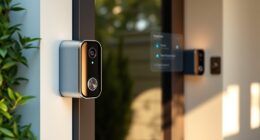
Discreet motion sensors range from tiny components for custom electronics to ready-to-use smart-home devices, and the AKAMATIS Human Presence Sensor v2.2 is my best overall pick for Home Assistant setups that need a compact presence-sensing option. For a low-cost component approach, the Stemedu HC-SR505 pack offers several mini PIR sensors, while the TP-Link Tapo T100 is a more approachable choice for buyers who want a finished smart-home sensor. The key tradeoff is between a small form factor and easy installation: compact modules often need wiring or integration work, while consumer devices can be larger and tied to a particular ecosystem. Sensor type matters too, since PIR motion detection and mmWave presence detection behave differently. Continue reading for the full breakdown, including which models suit DIY projects, smart homes, and simple alerts.

Get privacy and security gear delivered free with Prime
- Fast, free delivery on millions of items
- Prime Video, Amazon Music and more included
- Member-only deals all year
Key Takeaways
- AKAMATIS leads for Home Assistant users because this roundup’s strongest overall fit is a dedicated presence sensor paired with a specific smart-home platform; it is less suitable for buyers who want a stand-alone device.
- Stemedu HC-SR505 is the component-focused value pick: its five-sensor pack suits repeated DIY installations, but buyers need to handle the surrounding electronics and setup.
- Tapo T100 and GoveeLife suit different smart-home priorities: choose between a familiar connected-home sensor and a wireless option rather than assuming every sensor integrates with the same system.
- Mini PIR modules trade convenience for size: AITIAO and Heayzoki are better aligned with compact builds and LED control than with plug-and-play room monitoring.
- VELATEMOR mmWave and SpyX serve narrow needs: the former is aimed at app-controlled human-presence sensing, while the latter is a simple motion-alarm toy, not a general smart-home sensor.
| AKAMATIS Human Presence Sensor v2.2 for Home Assistant |  | Best for Home Assistant Presence Detection | Sensor: HLK-LD2410B mmWave radar | Controller: Seeed C3 | Detection range: Up to 20 ft (6 m) | VIEW ON AMAZON | See Our Full Breakdown |
| Stemedu HC-SR505 Mini Infrared PIR Motion Sensors, Pack of 5 |  | Best Value for DIY Projects | Pack size: 5 sensors | Sensor type: HC-SR505 PIR | Working voltage: 4.5–20 V DC | VIEW ON AMAZON | See Our Full Breakdown |
| SpyX Micro Motion Alarm Spy Toy |  | Best for Simple Local Alerts | Sensor technology: Passive infrared and piezoelectric | Detection: Motion or vibration | Alarm volume: 90 dB | VIEW ON AMAZON | See Our Full Breakdown |
| AITIAO Mini PIR Motion Sensor, 2-Pack, 12 mm |  | Best for Adjustable Wired Lighting | Pack quantity: 2 | Sensor type: PIR motion sensor | Interface diameter: 12 mm | VIEW ON AMAZON | See Our Full Breakdown |
| Heayzoki Mini PIR Motion 4A DC 5-24V Infrared Motion Sensor Detector Switch Occupancy Sensor for Automatic LED Strip USB Interface (Black) |  | Best for USB-Powered LED Strips | Sensor type: PIR infrared motion sensor | Maximum range: 7 meters | Detection angle: 120 degrees | VIEW ON AMAZON | See Our Full Breakdown |
| TP-Link Tapo T100 Motion Sensor |  | Best for Tapo Smart-Home Setups | Hub requirement: Tapo H100, sold separately | Wireless protocol: Sub-1G low-power wireless | Detection angle: 120 degrees | VIEW ON AMAZON | See Our Full Breakdown |
| GoveeLife Wireless Smart Motion Sensor |  | Best Compact Pick for GoveeLife Owners | Model: H5121 | Power and battery: Battery powered; 1 included CR2 lithium battery | Detection range: 16–19 feet (5–6 meters) | VIEW ON AMAZON | See Our Full Breakdown |
| VELATEMOR 24 GHz MmWave Human Presence Sensor with App Control |  | Best for Detecting Static Presence | Technology: 24 GHz mmWave | Detection: Motion and static presence | Maximum range: 10 centimeters, as listed | VIEW ON AMAZON | See Our Full Breakdown |
| discreet motion sensor | Mounting | Dimensions | Detection angle |
|---|---|---|---|
| AKAMATIS Human Presence Sensor | Wall mount | 0.55 × 1.6 × 1.05 in (D × W × H) | — |
| Stemedu HC-SR505 Mini Infrared | Wall mount | 0.39 × 0.39 × 1.18 in | — |
| SpyX Micro Motion Alarm Spy To | — | — | — |
| AITIAO Mini PIR Motion Sensor | — | 42 × 40 × 20 mm | 160 degrees |
| Heayzoki Mini PIR Motion 4A DC | Wall mount | — | 120 degrees |
| TP-Link Tapo T100 Motion Senso | Wall mount with 3M adhesive or magnetic base | — | 120 degrees |
| GoveeLife Wireless Smart Motio | — | — | ±60 degrees |
| VELATEMOR 24 GHz MmWave Human | Wall mount; bracket included | 4.33 × 3.94 × 1.18 inches | — |
More Details on Our Top Picks
AKAMATIS Human Presence Sensor v2.2 for Home Assistant
For discreet room monitoring that can still register someone sitting still, I’d rank the AKAMATIS v2.2 ahead of basic PIR options such as the Heayzoki Mini PIR. Its mmWave radar detects both moving and stationary objects up to 20 feet, which can help keep automations active when someone is working or resting rather than walking through the sensor’s view. The compact white wall-mounted unit and external Wi-Fi antenna support a tidy installation, while pre-flashed ESPHome removes a firmware-flashing step. The tradeoff is ecosystem dependence: it requires a running Home Assistant setup and some familiarity with configuring it. Unlike the standalone SpyX Micro Motion Alarm, it is built for smart-home automations, not a simple audible alert.
Pros:- Detects stationary as well as moving objects
- Detection range reaches up to 20 feet indoors
- Pre-flashed ESPHome firmware simplifies setup
- External Wi-Fi antenna and USB-C power avoid battery changes
Cons:- Requires Home Assistant to be installed and running
- Setup still assumes basic Home Assistant familiarity
- Corded USB-C power limits placement away from an outlet
Best for: Home Assistant users who want discreet detection that can register a person remaining still in a room.
Not ideal for: People seeking a standalone sensor or a plug-and-play alarm without Home Assistant setup.
- Sensor:HLK-LD2410B mmWave radar
- Controller:Seeed C3
- Detection range:Up to 20 ft (6 m)
- Power:USB-C, corded electric
- Wi-Fi:2.4 GHz
- Compatibility:Home Assistant
- Mounting:Wall mount
- Dimensions:0.55 × 1.6 × 1.05 in (D × W × H)
Our verdict“Choose the AKAMATIS if you already use Home Assistant and need stationary-presence detection rather than motion-only triggering.”
Stemedu HC-SR505 Mini Infrared PIR Motion Sensors, Pack of 5
The Stemedu HC-SR505 five-pack suits builders who want small PIR modules for several discreet, custom installations rather than a finished smart-home sensor. Each unit measures just 0.39 × 0.39 × 1.18 inches, making it easier to tuck into a project enclosure than the wall-mounted AKAMATIS v2.2. Automatic triggering and a two-second light-control interval fit simple movement-triggered circuits, but that interval is fixed, and the maximum range is only three meters. These modules detect movement, not someone sitting still, so they are a weaker fit for room-presence automations than the AKAMATIS mmWave model. They also need a compatible 4.5–20 V DC supply and integration into the buyer’s own project; this is a component pack, not a ready-to-use household sensor.
Pros:- Five modules support multiple builds or replacement units
- Compact dimensions suit discreet placement inside custom projects
- Automatic PIR triggering supports basic motion-controlled devices
- Accepts a 4.5–20 V DC working voltage
Cons:- Maximum detection range is limited to 3 meters
- Two-second light-control time is not adjustable
- Requires a compatible DC supply and project-level integration
Best for: DIY electronics hobbyists who need several tiny PIR modules for short-range, movement-triggered projects.
Not ideal for: Buyers wanting a finished smart-home sensor, adjustable hold time, or detection of a person sitting still.
- Pack size:5 sensors
- Sensor type:HC-SR505 PIR
- Working voltage:4.5–20 V DC
- Maximum range:3 meters
- Light-control time:2 seconds, not adjustable
- Dimensions:0.39 × 0.39 × 1.18 in
- Mounting:Wall mount
- Weight:9.07 g
Our verdict“Pick the Stemedu pack for inexpensive, compact DIY motion sensing, not for a ready-made room-presence system.”
SpyX Micro Motion Alarm Spy Toy
The SpyX Micro Motion Alarm is the simplest self-contained alert in this group: it detects motion or vibration and sounds a 90 dB alarm, with no hub or wiring required. That makes it more immediately usable for a child’s pretend spy game than the project-oriented Stemedu HC-SR505, which needs external circuitry. Its compact body can be placed near belongings, but the toy framing matters: it is not a smart-home sensor and does not offer the distance, integrations, or room-presence behavior of the AKAMATIS v2.2. Two AAA batteries add a maintenance step, and a loud audible alert is not especially discreet once triggered. I’d choose it for simple, temporary play-based alerts, not as a dependable household security device.
Pros:- Detects motion or vibration
- Built-in 90 dB alarm gives a clear local alert
- Compact, battery-powered design needs no wired supply
- Push-button control keeps operation simple
Cons:- Designed as a children’s spy toy rather than a security system
- Requires two AAA batteries
- Loud alarm may draw attention instead of providing a discreet notification
Best for: Children who want a small, battery-powered motion or vibration alarm for pretend spy play.
Not ideal for: Adults seeking discreet smart-home monitoring, reliable security coverage, or alerts that do not make noise.
- Sensor technology:Passive infrared and piezoelectric
- Detection:Motion or vibration
- Alarm volume:90 dB
- Power:Battery powered
- Batteries required:2 AAA
- Control method:Push button
- Weight:68.04 g
- Model number:10041
Our verdict“Choose SpyX for children’s simple local alerts, but skip it if you need discreet, connected home monitoring.”
AITIAO Mini PIR Motion Sensor, 2-Pack, 12 mm
For discreet motion-triggered lighting, the AITIAO Mini PIR offers more control over placement behavior than the fixed-interval Stemedu HC-SR505: sensitivity, light threshold, and delay are adjustable, and its 160-degree detection angle can cover a broad approach to a light or fan. Its compact 12 mm interface and IP54 housing support installations where a small sensor needs to work around indoor or outdoor conditions. This is still a wired control component, not a wireless smart-home presence sensor like the AKAMATIS v2.2; it detects motion rather than stationary occupancy and needs AC wiring. The supplied delay ranges conflict, so I wouldn’t choose it when precise timing is a requirement. Compatibility also depends on the connected device and its electrical load.
Pros:- Adjustable detection sensitivity, light threshold, and delay
- 160-degree detection angle covers a broad area
- IP54 housing supports indoor and outdoor installation
- Compatible with several lighting and electrical devices
Cons:- Requires AC wiring at 85–265 V
- Product text gives conflicting delay-time ranges
- PIR motion detection does not identify stationary occupancy
Best for: Home improvers wiring a compact motion trigger to compatible lights, LED strips, fans, or alarm lights.
Not ideal for: Renters or smart-home users who need wireless installation, stationary-presence sensing, or clearly specified delay settings.
- Pack quantity:2
- Sensor type:PIR motion sensor
- Interface diameter:12 mm
- Working voltage:AC 85–265 V
- Maximum detection range:20 ft (approximately 6–8 m)
- Detection angle:160 degrees
- Light sensitivity:2–2000 lux, adjustable
- Ingress protection:IP54
- Dimensions:42 × 40 × 20 mm
Our verdict“Choose AITIAO for adjustable, wired motion-triggered lighting, but not for wireless presence sensing or exact delay control.”
Heayzoki Mini PIR Motion 4A DC 5-24V Infrared Motion Sensor Detector Switch Occupancy Sensor for Automatic LED Strip USB Interface (Black)
The Heayzoki Mini PIR is a practical middle ground for discreet indoor lighting: it offers up to seven meters of motion detection and can draw power from a 5–24 V USB source, avoiding the AC wiring required by the AITIAO Mini PIR. That makes it a better fit for a corridor, bathroom, or garage where a USB-powered LED setup is already convenient. Its 120-degree detection cone is broad, though narrower than AITIAO’s 160 degrees, and PIR sensing still responds to movement rather than reliably tracking someone who remains still. The temperature-compensation chip is intended to help keep range more consistent, but this is a wired sensor switch, not a battery-powered or networked device like the AKAMATIS v2.2. Its USB power requirement also confines practical use to indoor locations with a suitable supply.
Pros:- USB-compatible 5–24 V DC power allows flexible supply choices
- Detection range reaches up to 7 meters
- 120-degree detection angle suits corridor and room lighting
- Temperature compensation is designed to support consistent range
Cons:- USB power limits practical installation to locations with a suitable supply
- Indoor-use focus does not suit exposed outdoor placement
- PIR sensing responds to movement, not reliably to a person sitting still
Best for: DIY lighting users who want a compact motion switch for USB-powered LED strips in an indoor passage or utility space.
Not ideal for: Buyers needing outdoor installation, stationary-presence detection, or a wireless sensor that reports to a smart-home hub.
- Sensor type:PIR infrared motion sensor
- Maximum range:7 meters
- Detection angle:120 degrees
- Power supply:USB 5–24 V DC
- Mounting:Wall mount
- Color:Black
- Temperature compensation:Built-in chip
Our verdict“Choose Heayzoki for a discreet, USB-powered indoor lighting trigger, not for outdoor or stationary-presence monitoring.”
TP-Link Tapo T100 Motion Sensor
The Tapo T100 is the strongest fit here for buyers who want a discreet battery-powered sensor tied into a wider smart-home routine. Its 120-degree field of view and adjustable 3-, 5-, or 7-meter detection range let you tune coverage for a hallway or room rather than accept a fixed reach. It can send app alerts or trigger compatible Tapo devices, while the included battery is rated for up to two years under the stated usage conditions. That longevity sets it apart from the GoveeLife sensor, whose listed battery life is up to four months. The tradeoff is a separate Tapo H100 hub requirement, plus 2.4 GHz Wi-Fi for setup. I’d choose it for an existing Tapo home, not as a standalone sensor.
Pros:- Adjustable detection range of 3, 5, or 7 meters helps tailor coverage to the room.
- 120-degree detection angle covers a broad area from a discreet wall-mounted unit.
- Included CR2450 battery is rated for up to two years under the stated usage conditions.
- Can send app notifications and trigger compatible Tapo devices.
Cons:- Requires a Tapo H100 hub sold separately.
- Setup requires a secured 2.4 GHz Wi-Fi network, and Sub-1G compatibility varies by region.
Best for: Tapo users who want adjustable room coverage, app alerts, and automations without frequent battery changes.
Not ideal for: Buyers seeking a standalone sensor or unwilling to add the separately sold Tapo H100 hub and configure a secured 2.4 GHz Wi-Fi network.
- Hub requirement:Tapo H100, sold separately
- Wireless protocol:Sub-1G low-power wireless
- Detection angle:120 degrees
- Detection range:Up to 7 meters; adjustable to 3, 5, or 7 meters
- Battery:1 included CR2450
- Battery life:Up to 2 years with fewer than 100 motion detections per day
- Mounting:Wall mount with 3M adhesive or magnetic base
- Weight and color:0.03 kg; white
Our verdict“Choose the Tapo T100 if you already use Tapo devices and want adjustable coverage with less frequent battery replacement.”
GoveeLife Wireless Smart Motion Sensor
For a small, easy-to-place sensor in a GoveeLife setup, this model keeps the hardware compact and gives you a 120-degree adjustable wall mount to aim detection where it is useful. Its 16–19-foot motion range is shorter than the Tapo T100’s maximum 7 meters, and it is designed to trigger compatible GoveeLife Wi-Fi products rather than serve as a broad smart-home controller. Adjustable 60–180-second trigger intervals can help limit repeated activations, which is useful near a frequently crossed doorway. The main compromise is upkeep: its CR2 battery is rated for up to four months, well below the Tapo’s stated two-year figure. It also lacks Alexa and Google Assistant support, so I’d skip it if voice-assistant integration or longer battery life matters more than compact placement.
Pros:- Compact body measures 1.18 × 1.18 × 1.25 inches.
- Adjustable 120-degree wall mount makes it easier to direct detection toward a specific area.
- Trigger interval can be set from 60 to 180 seconds to reduce repeated activations.
- Included CR2 battery and adhesive backing support straightforward placement.
Cons:- Requires a compatible Govee Home Wi-Fi product and 2.4 GHz Wi-Fi.
- Listed battery life is up to four months, requiring more frequent replacement than the Tapo T100.
- Does not connect to Alexa or Google Assistant.
Best for: GoveeLife owners who need a small wall-mounted sensor to trigger compatible Govee Home Wi-Fi devices and want adjustable trigger timing.
Not ideal for: Buyers who need Alexa or Google Assistant support, longer intervals between battery changes, or compatibility beyond GoveeLife products.
- Model:H5121
- Power and battery:Battery powered; 1 included CR2 lithium battery
- Detection range:16–19 feet (5–6 meters)
- Detection angle:±60 degrees
- Maximum device range:55 meters (180 feet) with compatible GoveeLife Wi-Fi products
- Trigger interval:60–180 seconds
- Battery life:Up to 4 months
- Dimensions and weight:1.18 × 1.18 × 1.25 inches; 0.05 kg
- Compatibility:Govee Home Wi-Fi products; 2.4 GHz Wi-Fi required; no Alexa or Google Assistant support
Our verdict“Pick this compact sensor for targeted automations in a GoveeLife home, provided you accept limited ecosystem support and regular battery changes.”
VELATEMOR 24 GHz MmWave Human Presence Sensor with App Control
The VELATEMOR takes a different approach from the Tapo T100 and GoveeLife sensor: its 24 GHz mmWave technology is specified to detect both movement and static presence, making it the distinct choice for lighting or appliance routines where someone may remain still. It connects to an app over 2.4 GHz Wi-Fi and includes a wall bracket, but it needs continuous USB 5V power rather than a replaceable battery. That can suit a fixed indoor installation, though it limits placement near outlets. The largest concern is the supplied maximum range of just 10 centimeters. That figure is far shorter than the stated coverage of either battery-powered alternative, so I would not rely on it for ordinary room-scale motion detection without clarifying the intended range. Its presence-detection feature is appealing, but the listed range makes this the most uncertain pick.
Pros:- Specified to detect static presence as well as motion.
- App control uses 2.4 GHz Wi-Fi.
- Wall-mount bracket is included.
Cons:- Listed maximum detection range of 10 centimeters is far shorter than the Tapo T100 and GoveeLife sensor ranges.
- Requires USB 5V power, limiting placement to locations with a suitable power connection.
- The supplied details do not specify a detection angle or battery option.
Best for: Buyers planning a fixed, USB-powered installation who specifically want a sensor described as detecting both motion and static presence.
Not ideal for: Anyone needing dependable room-scale coverage or flexible battery-powered placement; the listed maximum range is only 10 centimeters.
- Technology:24 GHz mmWave
- Detection:Motion and static presence
- Maximum range:10 centimeters, as listed
- Power:USB 5V
- Connectivity:2.4 GHz Wi-Fi
- Mounting:Wall mount; bracket included
- Dimensions:4.33 × 3.94 × 1.18 inches
Our verdict“Consider the VELATEMOR only for a fixed installation where static-presence detection matters and its unusually short listed range fits the intended use.”

How We Picked
I ranked these options by how well they balance discreet size, practical sensing, setup effort, and intended use. A small sensor only earns a strong position if its form factor serves a real buyer need; I also weighed whether it is a finished device or a component that requires wiring, a controller, or platform setup. The distinction between PIR motion sensing and mmWave presence sensing matters because the technologies are designed for different detection needs, not because one is automatically better.
The ranking gives priority to products with a clear role and a credible path to use: smart-home integration, repeatable DIY projects, compact LED control, or simple alerts. I placed specialized and toy-oriented choices below more broadly useful options because they fit fewer household situations. Buyers should check compatibility, power requirements, and the intended installation before choosing; product names and feature claims alone do not establish performance in every room or setup.
| discreet motion sensor | Mounting |
|---|---|
| AKAMATIS Human Presence Sensor | Wall mount |
| Stemedu HC-SR505 Mini Infrared | Wall mount |
| SpyX Micro Motion Alarm Spy To | — |
| AITIAO Mini PIR Motion Sensor | — |
| Heayzoki Mini PIR Motion 4A DC | Wall mount |
| TP-Link Tapo T100 Motion Senso | Wall mount with 3M adhesive or magnetic base |
| GoveeLife Wireless Smart Motio | — |
| VELATEMOR 24 GHz MmWave Human | Wall mount; bracket included |
Factors to Consider When Choosing Discreet Motion Sensors
Choosing a discreet sensor is less about finding the smallest body and more about matching its detection method and installation demands to the job. I would start with the system it must work with, then check power, placement, and what kind of movement or presence needs to trigger it.
Match the sensing method to the job
PIR sensors detect changes in infrared energy associated with movement, while mmWave sensors use radio waves to detect motion or presence. That difference can shape whether a sensor fits an entryway, a DIY trigger, or a space where small movements matter. Do not treat “presence” and “motion” as interchangeable labels when comparing listings. Think about the event you want to detect and how the sensor will be positioned, then check the maker’s stated capabilities. A more elaborate sensing method may add setup and integration work without helping a simple lighting trigger. For routine movement alerts, a basic PIR module may be enough; choose a presence-oriented model only when that distinction matters to your use.
Decide whether you want a finished device or a component
Compact modules such as mini PIR boards can fit inside projects or narrow spaces, but they are not necessarily ready for direct use as a household sensor. They may need a suitable power source, wiring, a controller, or an enclosure, all of which affect the final footprint. A finished smart-home sensor is usually simpler to place and manage, though it can be bulkier and less flexible. A common mistake is comparing the bare module’s dimensions with the whole installed size of a consumer device. Allow room for cables, connectors, mounting, and any protective housing. If you are not comfortable building the supporting circuit, prioritize a complete device over the smallest sensor element.
Check compatibility before choosing a smart sensor
Smart-home sensors are only useful if they communicate with the system and automations you already use. Confirm the required hub, app, protocol, and platform support from the product documentation rather than inferring compatibility from a brand name. Home Assistant users may favor a device described for that environment, while a household already using a particular app may prefer a sensor within that ecosystem. Integration can change over time, so verify current support before purchase. Also check whether the sensor can trigger the action you want, not just appear in an app. A low-profile sensor with limited integration may be a worse fit than a slightly larger model that works reliably with your existing setup.
Plan for power and installation constraints
Power requirements can decide whether a discreet sensor is practical in a specific location. A wired module may work well inside a powered LED project but be awkward in a hallway with no convenient cable route. Wireless devices reduce wiring, yet still need attention to battery access and the placement rules stated by the manufacturer. Before buying, identify how the sensor will be mounted and how you will reach it for maintenance. Do not assume that a small sensor can be hidden behind any surface; obstructions and the chosen sensing method can affect detection. Sketching the intended location and power path can prevent a compact component from becoming a messy installation.
Balance subtle placement with useful coverage
A discreet sensor should stay unobtrusive without being blocked or pointed at the wrong area. Corners, doorways, shelves, and strip-light channels can all change the direction and area the sensor covers. Review the product’s stated detection range and field of view, then compare those figures with the room layout rather than relying on a single headline specification. A sensor placed too high, too low, or behind an obstacle may miss the movement that matters. Overly sensitive placement can also produce unwanted triggers from activity outside the target zone. When possible, favor a location that is both visually subtle and accessible for adjustment.
Pay for convenience only when it solves a real problem
Extra app control or smart-home integration is useful when you need remote management, linked automations, or a shared household setup. It adds little for a standalone LED strip or a basic local alert that needs no network connection. Likewise, a multipack makes sense when several DIY builds are planned, but unused sensors do not improve value. Compare the total effort as well as the hardware: wiring, setup, compatibility checks, and future maintenance all count. A premium or connected model is justified when it reduces work or supports a specific automation you will use. For a single, simple trigger, a modest component may meet the need with fewer dependencies.
Frequently Asked Questions
Which of these discreet motion sensors is easiest to add to an existing smart home?
The TP-Link Tapo T100 or GoveeLife Wireless Smart Motion Sensor is a more natural starting point if you want a finished connected device rather than a bare sensor module. The better choice depends on the app, hub, and automation platform already in your home. Check current compatibility and any required gateway before buying, since a wireless label does not mean universal smart-home support. If your setup is built around Home Assistant, the AKAMATIS model is a more specifically targeted candidate. For a system-free DIY trigger, the mini PIR modules may be simpler electrically, but they require more hands-on installation.
Can I use a mini PIR sensor to switch an LED strip on automatically?
Yes, a compact PIR module can suit an LED project, but the module itself may not be a complete strip controller. Check its voltage range, output type, current limits, and compatibility with the strip and power supply before connecting components. The Heayzoki Mini PIR is specifically presented for automatic LED-strip switching, while the AITIAO and Stemedu options are component-oriented choices. Do not assume a sensor output can safely power a strip directly; a relay, driver, or controller may be needed. If you want less wiring and fewer electrical decisions, choose a finished motion-controlled lighting product instead.
Should I choose PIR or mmWave for a room where people may sit still?
Start by checking whether the product is designed to detect continued presence or primarily movement. PIR is commonly used for motion triggers, while an mmWave model such as the VELATEMOR 24 GHz sensor is positioned around human-presence sensing. That does not guarantee a particular result in every room, since placement, settings, and the surrounding environment still matter. App control may help manage a sensor, but it does not by itself prove that it will work with your preferred smart-home platform. Check the documented detection behavior and integration requirements before choosing for a room where small movements matter.
Are the smallest sensors suitable for a rental or a no-wiring installation?
Not always: a tiny sensor board can need more wiring and enclosure work than a larger wireless device. The AITIAO and Stemedu modules make more sense for electronics projects than for renters seeking a ready-to-place room sensor. Wireless smart-home models reduce the need to route power cables, though mounting methods, battery access, and hub requirements still matter. For a rental, favor a device that can be installed without permanent changes and removed cleanly. Confirm the mounting instructions and power source before treating compact size as a sign of simple installation.
Is the SpyX Micro Motion Alarm a substitute for a smart-home motion sensor?
No. The SpyX Micro Motion Alarm is a toy-oriented motion alarm, so it is a narrower choice than the Tapo, GoveeLife, or Home Assistant-focused options. It may suit a simple local alert or play scenario, but buyers should not expect the smart-home integration and automation role of a connected sensor. Check the product’s stated alarm behavior and intended use before relying on it for household monitoring. If you need app notifications or linked routines, choose a device specifically made for that ecosystem instead.
Conclusion
For the broadest fit in this lineup, I recommend the AKAMATIS Human Presence Sensor v2.2 as best overall, particularly for buyers building around Home Assistant. My best value pick is the Stemedu HC-SR505 pack for people comfortable using several components in DIY projects, while the TP-Link Tapo T100 is my best choice for beginners who want a more finished smart-home sensor. Buyers seeking a more specialized presence-sensing approach can look at the VELATEMOR mmWave sensor, after confirming app and platform compatibility; for compact LED control, the Heayzoki is the targeted option. Choose AITIAO for small project components, GoveeLife if its wireless setup fits your existing system, and SpyX only for a simple toy-style motion alarm. The right pick comes down to whether your priority is integration, easy setup, compact DIY use, or a specific sensing task.
Halloween Picks
halloween
As an affiliate, we earn on qualifying purchases.