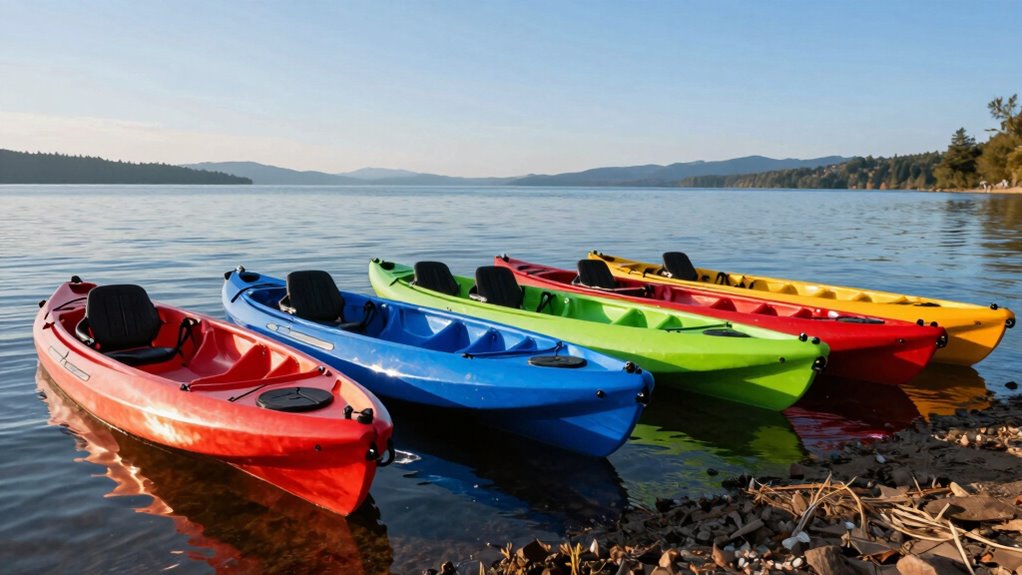

For outdoor creators, the Pelican Catch Mode 110 is my best overall pick because its broad, stable layout suits fishing and camera work better than a compact entry-level hull. The Reel Yaks Rapido stands out when transport and storage are priorities, while the Pelican Bass Raider 10E NXT offers a roomier small-boat format for creators who can manage a heavier craft. The main tradeoff is between on-water stability and usable space versus portability, simplicity, and a smaller footprint. A kayak that suits a fishing setup may still need extra planning for camera mounts, batteries, and safe gear access. Read on for the full breakdown and help matching each option to your filming style.

Get privacy and security gear delivered free with Prime
- Fast, free delivery on millions of items
- Prime Video, Amazon Music and more included
- Member-only deals all year
Key Takeaways
- The Pelican Catch Mode 110 leads this lineup for creators who want a stable-feeling fishing platform with room to manage camera gear, rather than the lightest craft to carry.
- The Reel Yaks Rapido’s modular format sets it apart for storage and transport, but creators should weigh setup steps and modular joints against the convenience of a one-piece kayak.
- The Pelican Bass Raider 10E NXT is a small fishing boat, not a conventional kayak; its extra room can help with filming gear, but its bulk makes it a less flexible choice for solo loading and shore access.
- The Pelican Sentinel 100X Angler and Lifetime Tamarack Angler 100 are compact, approachable options, though their smaller platforms call for restraint with large camera rigs and bulky accessories.
- The longer Lifetime Yukon Angler and sit-in Perception Sound 9.5 suit different priorities: the Yukon favors a roomier sit-on-top setup, while the Sound can make more sense when a sheltered cockpit matters more than open access to gear.
| Pelican Sentinel 100X Angler Sit-On-Top Fishing Kayak |  | Best Compact Pick | Type: Sit-on-top fishing kayak | Seating capacity: 1 | Maximum weight capacity: 275 pounds | VIEW ON AMAZON | See Our Full Breakdown |
| Lifetime Tamarack Angler 100 Fishing Kayak |  | Best Starter Setup | Type: Sit-on-top fishing kayak | Seating capacity: 1 | Maximum weight capacity: 275 pounds | VIEW ON AMAZON | See Our Full Breakdown |
| Pelican Bass Raider 10E NXT Angler Fishing Boat |  | Best for Two-Person Filming | Model: Pelican Bass Raider 10E NXT | Type: Fishing boat | Seating capacity: 2 | VIEW ON AMAZON | See Our Full Breakdown |
| Pelican Catch Mode 110 Fishing Kayak |  | Best for Stand-Up Filming | Type: Sit-on-top fishing kayak | Seating capacity: 1 | Maximum weight capacity: 375 pounds | VIEW ON AMAZON | See Our Full Breakdown |
| Reel Yaks Rapido Modular Fishing Kayak, 10.8 ft, 440 lb Capacity |  | Best Pedal-Drive Pick | Type: Modular sit-on-top fishing kayak | Seating capacity: 1 | Length: 10.8 ft | VIEW ON AMAZON | See Our Full Breakdown |
| Lifetime Yukon Angler Sit-On-Top Fishing Kayak with Paddle, 11 ft 6 in |  | Best for Stand-Up Casting and Camera Rigging | Model: 91274 | Length: 138 in (11 ft 6 in) | Width: 32 in | VIEW ON AMAZON | See Our Full Breakdown |
| Perception Sound 9.5 Sit-In Fishing Kayak |  | Best Lightweight Pick for Quiet-Water Shoots | Model: Sound 9.5 | Type: Sit-in fishing kayak | Length: 9.5 ft | VIEW ON AMAZON | See Our Full Breakdown |
| Pelican Catch Classic 100 Angler Fishing Kayak |  | Best Balanced Sit-On-Top for Gear-Laden Day Trips | Model: Catch Classic 100 | Type: Sit-on-top fishing kayak | Length: 10 ft | VIEW ON AMAZON | See Our Full Breakdown |
| fishing kayaks for outdoor creator | Type | Length | Item weight | Material |
|---|---|---|---|---|
| Pelican Sentinel 100X Angler S | Sit-on-top fishing kayak | 9 ft 6 in | 44.6 pounds | Polyethylene (PE) |
| Lifetime Tamarack Angler 100 F | Sit-on-top fishing kayak | — | 51 pounds | UV-protected high-density polyethylene (HDPE) |
| Pelican Bass Raider 10E NXT An | Fishing boat | 10.2 ft | — | High-impact Ram-X polyethylene |
| Pelican Catch Mode 110 Fishing | Sit-on-top fishing kayak | 10 ft 8 in | 67 pounds | Polyethylene (PE), RAM-X |
| Reel Yaks Rapido Modular Fishi | Modular sit-on-top fishing kayak | 10.8 ft | 72 pounds | High-density polyethylene (HDPE) |
| Lifetime Yukon Angler Sit-On-T | — | 138 in (11 ft 6 in) | 78.5 lb | Plastic |
| Perception Sound 9.5 Sit-In Fi | Sit-in fishing kayak | 9.5 ft | 39 lb | Polyethylene (PE) |
| Pelican Catch Classic 100 Angl | Sit-on-top fishing kayak | 10 ft | 57 lb | — |
More Details on Our Top Picks
Pelican Sentinel 100X Angler Sit-On-Top Fishing Kayak
The Sentinel 100X Angler suits creators who need a fishing kayak that is easier to carry, store, and launch between filming spots. At 44.6 pounds and 9 feet 6 inches long, it is notably more manageable on land than the 67-pound Pelican Catch Mode 110. Its removable ExoPak lets you pack gear separately, while four rod holders help keep fishing setups organized around a camera workflow. The padded, high-back seat adds comfort for longer sessions. The tradeoff is a 275-pound capacity and a single seat, leaving less room for a heavier creator plus camera equipment than the Catch Mode 110 or Reel Yaks Rapido. I’d choose it for portability, not for standing casts or carrying an expansive production kit.
Pros:- Light 44.6-pound build and compact 9-foot-6-inch length ease transport and storage.
- Removable ExoPak separates packed gear from the kayak.
- Four rod holders support multiple fishing setups.
- High, wide padded backrest adds support during long filming sessions.
Cons:- 275-pound capacity leaves less payload room than the Catch Mode 110 or Rapido.
- Single-seat layout cannot accommodate a camera assistant or passenger.
- Compact hull is not described as a standing-and-casting platform.
Best for: Solo creators who prioritize easy car-top handling, compact storage, and a modest camera-and-tackle setup.
Not ideal for: Creators carrying heavy camera rigs or extra gear near the 275-pound limit, or anyone who wants a standing platform or passenger seat.
- Type:Sit-on-top fishing kayak
- Seating capacity:1
- Maximum weight capacity:275 pounds
- Length:9 ft 6 in
- Dimensions:114 x 30 x 13.25 inches
- Item weight:44.6 pounds
- Material:Polyethylene (PE)
- Storage:Removable ExoPak compartment
- Rod holders:4 total: 2 flush-mount and 2 vertical
Our verdict“Choose the Sentinel 100X if carrying and storing a solo creator’s compact setup matters more than extra capacity or a standing deck.”
Lifetime Tamarack Angler 100 Fishing Kayak
The Lifetime Tamarack Angler 100 is the most straightforward entry point here for a creator who wants a ready-to-paddle fishing kayak without sourcing basic equipment separately. The included paddle, two storage compartments, and three rod holders make it a practical starter package; its adjustable padded seat and multiple footrest positions also help accommodate different paddlers. Compared with the lighter Pelican Sentinel 100X Angler, it weighs 51 pounds and is slightly longer, so repeated solo loading takes more effort. The tradeoff for its included gear and simple layout is a 275-pound capacity and one-person seating, which can restrict heavier camera kits. I’d favor it over the Sentinel when a paddle and separate storage areas matter more than minimizing carry weight.
Pros:- Paddle is included, reducing the need to source a basic essential separately.
- Two storage compartments help separate filming equipment from fishing gear.
- Three rod holders provide useful fishing organization.
- Adjustable padded seat and multiple footrest positions allow a more tailored fit.
Cons:- At 51 pounds, it is heavier than the Pelican Sentinel 100X Angler.
- 275-pound capacity limits the combined weight of paddler and creator gear.
- Single-seat design offers no room for a passenger or camera assistant.
Best for: First-time kayak-fishing creators who want a paddle, basic rod storage, and two gear compartments in one setup.
Not ideal for: Creators hauling a large camera rig near the 275-pound limit or those who need a lighter kayak for frequent solo loading.
- Type:Sit-on-top fishing kayak
- Seating capacity:1
- Maximum weight capacity:275 pounds
- Item weight:51 pounds
- Dimensions:120 x 31 x 14.1 inches
- Material:UV-protected high-density polyethylene (HDPE)
- Included components:Kayak and paddle
- Rod holders:3
- Storage compartments:2
Our verdict“Pick the Tamarack Angler 100 as a practical first fishing kayak when an included paddle and organized storage outweigh lighter carry weight.”
Pelican Bass Raider 10E NXT Angler Fishing Boat
Unlike the one-person kayaks in this group, the Bass Raider 10E NXT is a two-seat fishing boat, giving a creator the option to bring a camera operator or fishing partner. Its 600-pound capacity provides far more room for people and equipment than the Pelican Catch Mode 110’s 375-pound limit. Sliding, 360-degree swivel seats offer flexibility for filming angles and casting, while pre-wiring for an electric motor and sonar can simplify adding those systems. This is a different kind of choice from the compact Sentinel 100X: the Bass Raider favors a stable, gear-carrying platform over lightweight, kayak-style portability. Its 10.2-foot hull is made from plastic rather than aluminum, and the available details don’t give an item weight, so I’d check transport and storage needs before choosing it.
Pros:- Two seats allow a passenger or camera operator to join the session.
- 600-pound capacity leaves more room for people and production gear than the sit-on-top kayaks listed.
- 360-degree swiveling seats with sliding tracks support flexible positioning.
- Pre-wired for electric motors and sonar.
Cons:- Two-person boat format is less suited to creators seeking a compact solo kayak.
- Plastic construction may be less rigid than an aluminum hull.
- Item weight is not provided, making transport planning less certain.
Best for: Creators who film with a second person and need capacity for a passenger, fishing gear, and camera equipment.
Not ideal for: Solo creators who need a lightweight, compact kayak for frequent car-top loading or tight storage spaces.
- Model:Pelican Bass Raider 10E NXT
- Type:Fishing boat
- Seating capacity:2
- Weight capacity:600 pounds
- Length:10.2 ft
- Material:High-impact Ram-X polyethylene
- Seat system:Ergo360 seats with sliding tracks and 360-degree swivel
- Motor and sonar readiness:Pre-wired for electric motors and sonar
- Warranty:2 years on boat; 1 year on parts and accessories
Our verdict“Choose the Bass Raider 10E NXT when a second person and generous carrying capacity matter more than compact kayak portability.”
Pelican Catch Mode 110 Fishing Kayak
The Catch Mode 110 is the clearest fit for creators who want to stand while casting or frame wider shots from a stable deck. Its wide, flat platform and tunnel hull are designed for standing, a capability not specified for the more compact Sentinel 100X or Tamarack Angler 100. The elevated ERGOBOOST seat, under-seat storage, and bungee-secured platform provide useful options for keeping gear close. At 375 pounds of capacity, it also allows more payload than those two 275-pound models. The tradeoff is land handling: its listed weight is 67 pounds, and it is 10 feet 8 inches long, making solo loading less appealing than with the 44.6-pound Sentinel. It remains a one-person kayak, so extra capacity is for gear, not a second creator.
Pros:- Wide deck and stable tunnel hull are designed for standing and casting.
- 375-pound capacity exceeds the 275-pound limits of the Sentinel 100X and Tamarack Angler 100.
- ERGOBOOST seat offers an elevated position and under-seat storage.
- Bungee-secured storage platform and three flush-mount rod holders help organize gear.
Cons:- Listed 67-pound item weight can make solo carrying and loading difficult.
- One-person seating does not accommodate a camera assistant.
- Longer and wider than the compact Sentinel 100X, so it takes more storage space.
Best for: Solo fishing creators who want a standing-capable deck and room for camera equipment alongside their tackle.
Not ideal for: Creators who frequently load a kayak alone or need a compact, lightweight option for small vehicles and storage areas.
- Type:Sit-on-top fishing kayak
- Seating capacity:1
- Maximum weight capacity:375 pounds
- Length:10 ft 8 in
- Dimensions:128 x 34.5 x 13 inches
- Item weight:67 pounds
- Material:Polyethylene (PE), RAM-X
- Seat:ERGOBOOST with EVA seat pad and under-seat storage
- Rod holders:3 flush-mount
Our verdict“Choose the Catch Mode 110 if a standing-capable filming deck and extra solo payload matter more than easy transport.”
Reel Yaks Rapido Modular Fishing Kayak, 10.8 ft, 440 lb Capacity
The Reel Yaks Rapido stands apart from the paddle-focused kayaks here with a propeller pedal drive that provides forward and reverse control. For a creator, hands-free movement can make it easier to adjust position while keeping a camera or fishing setup in hand. Its 440-pound capacity also exceeds the Pelican Catch Mode 110’s 375 pounds, while the wide W-hull, track rails, storage hatches, and rod holder support a more gear-oriented setup. The two-piece modular design can help with storage and transport, though the complete kayak weighs 72 pounds, more than the Sentinel 100X or Tamarack Angler 100. It seats one person, so its higher capacity is for the paddler and equipment rather than a film partner. I’d pick it for pedal control and payload, not minimum carry weight.
Pros:- Propeller pedal drive provides forward and reverse control without relying only on a paddle.
- 440-pound capacity gives more payload room than the Catch Mode 110.
- Two-piece modular construction supports more compact storage and transport.
- Track rails, storage hatches, paddle, stadium seat, and rod holder are included.
Cons:- At 72 pounds, it is heavier than the Sentinel 100X, Tamarack Angler 100, and Catch Mode 110.
- Single-seat layout cannot carry a camera assistant as a passenger.
- Pedal-drive setup adds complexity compared with the simpler paddle kayaks in this group.
Best for: Solo creators who want pedal-powered position control and extra capacity for camera gear, tackle, and accessories.
Not ideal for: Creators who need the lightest kayak for frequent solo lifting, or those who want a second seat for a filming partner.
- Type:Modular sit-on-top fishing kayak
- Seating capacity:1
- Length:10.8 ft
- Dimensions:130 x 35 x 13 inches
- Item weight:72 pounds
- Weight capacity:440 pounds
- Material:High-density polyethylene (HDPE)
- Drive:Propeller pedal drive with forward and reverse control
- Included components:360 rod holder, modular kayak, paddle, propeller drive, stadium seat
Our verdict“Choose the Rapido if hands-free pedal control and high solo payload matter more than the lightest possible kayak.”
Lifetime Yukon Angler Sit-On-Top Fishing Kayak with Paddle, 11 ft 6 in
The Lifetime Yukon Angler suits creators who want room to fish actively while keeping cameras and accessories within reach. Its 32-inch-wide hull is designed to support stand-up casting, and the adjustable frame seat and foot braces help tailor the paddling position for longer filming sessions. Compared with the lighter Perception Sound 9.5, the Yukon offers a sit-on-top deck, three rod holders, accessory tracks, and a larger 350-pound capacity—useful when carrying camera gear alongside fishing equipment. The tradeoff is portability: at 78.5 pounds, it is substantially heavier than the Sound. It also comes without a rudder or transducer, so creators wanting those tools must add them separately. Its included paddle and five-year limited warranty add practical value.
Pros:- Stable hull designed for stand-up casting
- Three rod holders and accessory mounting tracks support fishing and camera setups
- Adjustable frame seat and foot braces allow a more tailored paddling position
- 350-pound capacity and tankwell storage accommodate fishing and filming gear
Cons:- At 78.5 pounds, it is harder to carry and transport than the Perception Sound 9.5
- Rudder and transducer are not included
Best for: Anglers filming stand-up casts or working with several mounted cameras and fishing accessories who can manage a heavier kayak.
Not ideal for: Solo creators who regularly load and unload a kayak without help, or buyers who want a rudder and transducer included.
- Model:91274
- Length:138 in (11 ft 6 in)
- Width:32 in
- Item weight:78.5 lb
- Maximum capacity:350 lb
- Seating capacity:1
- Material:Plastic
- Included components:Kayak with paddle
- Warranty:5-year limited warranty
Our verdict“Choose the Yukon if stand-up fishing stability and mounting options matter more than easy solo transport.”
Perception Sound 9.5 Sit-In Fishing Kayak
For creators who prioritize getting a kayak to the water without a difficult carry, the Perception Sound 9.5 weighs 39 pounds—far less than the Lifetime Yukon Angler. Its compact 9.5-foot sit-in design is aimed at quiet, slow-moving water, where the tri-keel hull supports tracking and steering between filming spots. The cushioned adjustable seat, two molded-in rod holders, accessory mounts, and rear tank well give solo anglers useful basics without a large, gear-heavy deck. That compact setup is also its limit: compared with the Pelican Catch Classic 100, it has a lower 300-pound capacity and a sit-in layout rather than an open sit-on-top workspace. It is a better fit for a restrained camera kit and calm-water shoots than for standing casts, bulky rigs, or rough conditions.
Pros:- 39-pound weight makes carrying and handling easier than the Lifetime Yukon Angler
- Tri-keel hull is designed for stable tracking and smooth steering
- Adjustable cushioned seat supports a more comfortable seated filming session
- Two rod holders, accessory mounts, and rear tank well provide useful fishing storage
Cons:- Designed for quiet, slow-moving water rather than rough or fast current
- 300-pound capacity is lower than the Pelican Catch Classic 100 and Lifetime Yukon Angler
- Sit-in layout offers less open deck access for camera equipment than sit-on-top alternatives
Best for: Solo creators filming fishing sessions on calm ponds or slow-moving water who need a kayak they can carry more easily.
Not ideal for: Anglers who want an open sit-on-top deck, room for a large filming rig, or a kayak suited to rough and fast-moving water.
- Model:Sound 9.5
- Type:Sit-in fishing kayak
- Length:9.5 ft
- Dimensions:114 × 28 × 13.1 in
- Item weight:39 lb
- Maximum weight capacity:300 lb
- Material:Polyethylene (PE)
- Rod holders:2 molded-in
- Warranty:5 years on hull and deck; 1 year on parts and accessories
Our verdict“Pick the Sound 9.5 for calm-water filming when low carry weight matters more than an open, high-capacity deck.”
Pelican Catch Classic 100 Angler Fishing Kayak
The Pelican Catch Classic 100 is a practical middle ground for creators who want an open fishing platform without the Yukon Angler’s heavier, longer hull. At 57 pounds and 10 feet long, it is easier to handle than the Yukon while offering a wide 34-inch footprint, a 350-pound capacity, and front and rear storage for a day’s filming kit. Its tunnel hull, dual-position seat, adjustable footrests, two rod holders, and rigging tracks help organize an outing around both paddling and recording. Compared with the lightweight Perception Sound 9.5, it provides a sit-on-top layout and more capacity, but it weighs 18 pounds more and is less suited to creators who value compact carrying above deck space. It remains a one-person kayak, and its 350-pound limit includes the paddler and gear.
Pros:- 34-inch width and tunnel hull provide a broad platform for seated fishing and filming
- Front hatch and rear tank well keep gear separated and accessible
- Rigging tracks, accessory eyelets, and rod holders support a flexible fishing setup
- 57-pound weight is more manageable than the Lifetime Yukon Angler
Cons:- At 57 pounds, it is heavier than the Perception Sound 9.5
- 350-pound maximum capacity must cover both the paddler and all gear
- Single-person seating does not suit creators who want a partner aboard
Best for: Solo fishing creators who want an open, stable-feeling platform with storage for a moderate camera kit and fishing tackle.
Not ideal for: Creators seeking a very light carry, a tandem setup, or capacity beyond 350 pounds for themselves and their equipment.
- Model:Catch Classic 100
- Type:Sit-on-top fishing kayak
- Length:10 ft
- Dimensions:120 × 34 × 15 in
- Item weight:57 lb
- Maximum weight capacity:350 lb
- Seat:Adjustable dual-position ERGOCAST CLASSIC
- Storage:Front quick-lock hatch and rear tank well with bungee cords
- Fishing features:Two flush-mount rod holders, two accessory eyelets, and two 4-inch rigging tracks
Our verdict“Choose the Catch Classic 100 for a capable solo sit-on-top that balances filming space, storage, and easier handling than the Yukon.”

How We Picked
I ranked these options around the needs that distinguish fishing kayaks for outdoor creators from basic fishing platforms: usable stability for filming, access to rods and camera equipment, space for essential kit, transport and storage demands, and how much setup each craft asks of its owner. I also considered hull format and likely use conditions, since a sit-in cockpit, an open sit-on-top, a modular kayak, and a small fishing boat each shape camera placement and gear access differently.
The ranking favors models that offer a practical balance for filming and fishing, not the longest feature list or the most specialized design. That places the Catch Mode 110 first as a broadly capable platform, while compact and easier-to-store picks rank higher for buyers whose main constraint is transport. The Bass Raider is included for creators who value space over kayak-like portability, but it ranks lower for people who need to launch and load alone. Since fit, load limits, and accessory compatibility vary by setup, buyers should confirm the manufacturer’s specifications and plan for the complete weight of themselves, cameras, batteries, and fishing gear.
| fishing kayaks for outdoor creator | Type | Material |
|---|---|---|
| Pelican Sentinel 100X Angler S | Sit-on-top fishing kayak | Polyethylene (PE) |
| Lifetime Tamarack Angler 100 F | Sit-on-top fishing kayak | UV-protected high-density polyethylene (HDPE) |
| Pelican Bass Raider 10E NXT An | Fishing boat | High-impact Ram-X polyethylene |
| Pelican Catch Mode 110 Fishing | Sit-on-top fishing kayak | Polyethylene (PE), RAM-X |
| Reel Yaks Rapido Modular Fishi | Modular sit-on-top fishing kayak | High-density polyethylene (HDPE) |
| Lifetime Yukon Angler Sit-On-T | — | Plastic |
| Perception Sound 9.5 Sit-In Fi | Sit-in fishing kayak | Polyethylene (PE) |
| Pelican Catch Classic 100 Angl | Sit-on-top fishing kayak | — |
Factors to Consider When Choosing Fishing Kayaks For Outdoor Creators
The right craft depends on more than whether it can carry a rod. I recommend choosing around the way you make content: how often you film while moving, whether you need a fixed camera angle, how much equipment you carry, and how you get the kayak to the water. These broader checks can prevent a capable fishing platform from becoming an awkward filming setup.
Choose Stability Around Your Camera Workflow
Stability matters most when you need repeatable framing, handle a camera near the water, or shift position to reach equipment. A wider, open platform can feel more accommodating for those tasks, but it may be heavier or slower to transport than a compact kayak. Don’t treat a stable hull as permission to stand or move carelessly; water conditions, load placement, and paddler skill still matter. Before buying, decide whether most footage will come from a fixed mount, handheld shots while seated, or frequent repositioning. If you plan to stand for filming, confirm that the manufacturer supports that use and practice in calm, shallow conditions with safety gear. Creators who mainly use fixed mounts may not need to accept the size penalty of a larger craft.
Budget for the Whole Filming Load
Kayak capacity is not a target load for camera equipment alone: it includes the paddler, clothing, food, fishing gear, batteries, and every accessory aboard. Add up the real weight of a fully packed shoot, then leave a margin rather than planning to use the maximum capacity. A loaded kayak may sit lower and handle differently, and a crowded deck can make essential items harder to reach. Avoid buying a craft based only on its advertised capacity or assuming that a mount adds no meaningful weight. Think through where heavy items will sit and how you’ll secure them if the kayak shifts. A lighter kit and a clear deck can improve both filming access and practical handling.
Map Camera Placement Before Adding Accessories
Rod holders, mounting tracks, and open deck space can support a filming setup, but accessory compatibility is specific to the kayak and the mount. Sketch the camera angles you need and check whether a mount could block paddling, fishing, entry, or access to storage. A high camera position can capture more of the scene, yet it may catch wind or create an awkward reach over water. Keep a way to secure cameras and small parts, and avoid placing expensive equipment where a dropped paddle or fishing line could snag it. Start with one essential mount rather than filling every available mounting point. This keeps the setup easier to adjust and leaves room for safe movement.
Match the Hull to Your Launch and Storage Routine
A kayak that fits your filming needs on the water may be a poor fit for your route from home to the launch. Consider vehicle space, roof or trailer arrangements, lifting distance, stairs, and whether you often launch alone. Modular designs can ease storage and transport, though their assembly and connection points add steps to each outing. A small fishing boat may provide extra working room but can require a different transport plan from a one-piece kayak. Measure storage openings and check the craft’s packed dimensions before committing. If you expect frequent spontaneous shoots, a manageable loading routine may matter more than a feature you use only occasionally.
Plan for Conditions, Safety, and Sound
Water conditions shape both safety and footage quality: wind can move a kayak and shake a shot, while wakes and current can complicate gear handling. Pick a platform and route that fit your experience, and check local rules, weather, and water conditions before filming. A sheltered sit-in cockpit can reduce direct splash exposure, but it limits open access compared with a sit-on-top layout. Whichever style you choose, keep a properly fitted personal flotation device accessible and protect electronics from spray and accidental immersion. Consider how often you’ll pause to film, since repeated stops can leave you exposed to changing conditions. A realistic filming plan includes a safe way to stow gear and end the session if conditions worsen.
Spend on Fit and Function Before Extra Features
Paying more makes sense when a craft solves a frequent problem, such as insufficient room for your kit, an uncomfortable seating position during long shoots, or difficult transport. It makes less sense to buy added features without checking whether they work with your cameras and fishing equipment. Sit-in and sit-on-top layouts involve different compromises, and neither is automatically better for every creator. If you’re new to kayak fishing, prioritize manageable handling, a clear gear layout, and a suitable fit over a complex camera build. Creators who already know their camera angles can make a more informed choice about mounts and deck space. Keep some of your budget for safety equipment, dry storage, and secure camera attachments.
Frequently Asked Questions
Can I film while fishing from a compact kayak like the Sentinel 100X or Tamarack Angler 100?
Yes, but a compact platform rewards a simple setup. A single secured camera mount and a small, organized kit are easier to manage than multiple cameras, large batteries, and loose accessories. Check that the combined load stays within the manufacturer’s capacity and that gear does not interfere with paddling or fishing. If you need to shift position often or keep several cameras ready to hand, a roomier option may be a better fit. Practice reaching for equipment in calm conditions before filming in busier or more exposed water.
Is the Bass Raider 10E NXT a better choice than a kayak for filming?
It may suit creators who value a broader working area and can handle the transport demands of a small fishing boat. That space can help separate filming gear from fishing equipment, but it does not offer the same kayak-like portability or straightforward solo handling. Think about how you will move it from storage to shore and whether your launch sites can accommodate it. Also check the manufacturer’s specifications for capacity and intended use before planning a full camera load. For frequent car-top transport or quick solo launches, a conventional kayak is likely easier to manage.
Should I choose the modular Reel Yaks Rapido or a one-piece kayak?
Choose the Rapido’s modular approach if storage space and transport are ongoing obstacles, not occasional inconveniences. The tradeoff is that assembly and checks of the connections become part of each outing, so allow time before heading onto the water. A one-piece kayak avoids that assembly routine but can be harder to store and move. For creators who film on short notice, compare the full setup time rather than just the packed size. Confirm the model’s assembly instructions and capacity details, then decide which routine you’re more likely to maintain.
Does a sit-in kayak work well for fishing videos?
A sit-in design such as the Perception Sound 9.5 can make sense when you prefer a more enclosed cockpit and your filming plan uses compact, reachable equipment. It can be less convenient than an open sit-on-top when you need to reposition gear, access items behind you, or keep several accessories spread across the deck. Consider how often you expect to reach for a camera while holding a paddle or rod. Test the intended seating position and check available mounting options before buying. The right fit depends on whether cockpit shelter or open equipment access matters more for your shoots.
What should I check before mounting a camera on a fishing kayak?
Check that the mount is compatible with the kayak’s available mounting points and does not obstruct paddling, fishing, entry, or access to essential gear. Think about the camera’s position at the angles you actually film, then verify that you can secure and reach it safely from your seated position. Account for the mount and camera in your total load, and use a tether or other suitable backup for valuable equipment. Avoid placing a heavy camera high or far from your center of balance without understanding how it affects handling. Test the setup close to shore in calm water before relying on it for a full shoot.
Conclusion
For most creators who want one fishing platform that can also support a practical camera setup, I’d choose the Pelican Catch Mode 110 as the best overall pick. The Lifetime Tamarack Angler 100 is my best value-style choice for buyers seeking a straightforward, compact fishing kayak, while the Catch Mode 110 is the best premium-style option in this lineup for those prioritizing a more filming-friendly platform over minimum size. Beginners may find the Pelican Sentinel 100X Angler easier to approach if they want a compact setup and modest gear load; creators who need more room should look at the Catch Mode 110 instead. For tight storage and transport, the Reel Yaks Rapido is the specific-use pick, and the Bass Raider 10E NXT makes sense for creators who want a small-boat format and can plan around its bulk. Choose by your launch routine, filming load, and camera access needs—not by fishing features alone.