
Searching for the best hacking books in 2026? The top pick is Penetration Testing: A Hands-On Introduction to Hacking for its practical approach and clear instructions. Black Hat Python, 2nd Edition stands out for those interested in scripting and automation, while Hacking: The Art of Exploitation offers a classic deep dive into hacking fundamentals. Each book varies in complexity, focus, and technical depth, which can make choosing the right one challenging. Continue reading for a detailed comparison to help you find the ideal resource for your skill level and goals.

Get privacy and security gear delivered free — and shop member deals
- Fast, free delivery on millions of items
- Access to Prime Big Deal Days deals on October 6–7
- Prime Video, Amazon Music and more included
Key Takeaways
- The top books balance practical exercises with theoretical knowledge, catering to both beginners and advanced users.
- Scripting and automation-focused titles like ‘Black Hat Python’ are essential for those looking to develop custom tools.
- Classic texts such as ‘Hacking: The Art of Exploitation’ remain relevant for foundational understanding despite newer publications.
- Books focusing on web application security and penetration testing are increasingly in demand due to rising cyber threats.
- Tradeoffs often involve depth versus accessibility; more comprehensive books tend to be complex, while beginner guides may lack advanced techniques.
| Penetration Testing: A Hands-On Introduction to Hacking |  | Best for Beginners Entering Practical Penetration Testing | Audience: Beginners and security enthusiasts | Approach: Hands-on, practical | Coverage: Penetration testing tools and techniques | VIEW ON AMAZON | See Our Full Breakdown |
| Black Hat Python, 2nd Edition: Python Programming for Hackers and Pentesters |  | Best for Advanced Programmers Focused on Offensive Security | Audience: Programmers and security professionals | Focus: Python scripting for hacking | Content: Network scripting, automation, offensive tools | VIEW ON AMAZON | See Our Full Breakdown |
| Hands-On Hacking: Become an Expert at Next Gen Penetration Testing and Purple Teaming |  | Best for Intermediate to Advanced Security Professionals | Audience: Intermediate to advanced security pros | Content: Advanced penetration testing, purple teaming | Approach: Practical, scenario-based | VIEW ON AMAZON | See Our Full Breakdown |
| Hacking: The Art of Exploitation, 2nd Edition |  | Best for Aspiring Security Enthusiasts Ready for Deep Technical Knowledge | Audience: Intermediate to advanced learners | Focus: Exploitation techniques and system vulnerabilities | Content: Programming, system hacking | VIEW ON AMAZON | See Our Full Breakdown |
| Getting Started Becoming a Master Hacker |  | Best for Absolute Beginners Taking First Steps in Cybersecurity | Audience: Absolute beginners and curious newcomers | Focus: Fundamentals and motivation | Content: Basic hacking concepts | VIEW ON AMAZON | See Our Full Breakdown |
| The Web Application Hacker’s Handbook: Finding and Exploiting Security Flaws |  | Best for Web Security Professionals | Author: Marcus Pinto, Dafydd Stuttard | Pages: 912 | Publication Year: 2011 | VIEW ON AMAZON | See Our Full Breakdown |
| Ethical Hacking: A Hands-On Guide to Pentesting, Red Teaming, Security Frameworks, and Building Your Own Hacking Lab |  | Best for Practical Cybersecurity Enthusiasts | Author: David Kennedy, Jim O’Gorman, Devon Kearns, Mati Aharoni | Pages: 400 | Publication Year: 2019 | VIEW ON AMAZON | See Our Full Breakdown |
| Black Hat Bash: Creative Scripting for Hackers and Pentesters |  | Best for Scripting-Savvy Cybersecurity Practitioners | Author: J. A. W. Scott | Pages: 200 | Publication Year: 2020 | VIEW ON AMAZON | See Our Full Breakdown |
| Ethical Hacking: A Hands-on Introduction to Breaking In |  | Best for Beginners and Aspiring Cybersecurity Professionals | Author: Michael T. Simpson | Pages: 350 | Publication Year: 2021 | VIEW ON AMAZON | See Our Full Breakdown |
| Hacking and Security: The Comprehensive Guide to Ethical Hacking, Penetration Testing, and Cybersecurity | 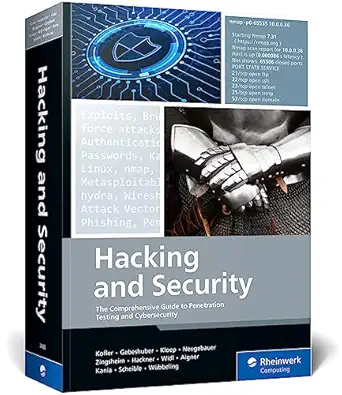 | Best for Broader Cybersecurity Contexts | Author: Joseph Muniz, Aaron Guzman | Pages: 520 | Publication Year: 2020 | VIEW ON AMAZON | See Our Full Breakdown |
| Kali Linux Hacking: A Complete Step-by-Step Guide to Learn Cyber Security, Hacking, and Penetration Testing |  | Best for Beginners Seeking a Broad Introduction | Focus: Beginners with basic cybersecurity interest | Coverage: Kali Linux fundamentals, hacking techniques, networking | Practical exercises: None | VIEW ON AMAZON | See Our Full Breakdown |
| Linux Basics for Hackers, 2nd Edition: Getting Started with Networking, Scripting, and Security in Kali |  | Best for Beginners Interested in Linux Foundations | Focus: Beginners in scripting, Linux, and basic security | Coverage: Networking, scripting, Kali Linux fundamentals | Practical exercises: Yes, scripting examples | VIEW ON AMAZON | See Our Full Breakdown |
| hacking book | Format |
|---|---|
| Penetration Testing: A Hands-O | — |
| Black Hat Python | — |
| Hands-On Hacking: Become an Ex | — |
| Hacking: The Art of Exploitati | — |
| Getting Started Becoming a Mas | — |
| The Web Application Hacker’s H | Print, eBook |
| Ethical Hacking: A Hands-On Gu | Print, eBook |
| Black Hat Bash: Creative Scrip | Print, eBook |
| Ethical Hacking: A Hands-on In | Print, eBook |
| Hacking and Security: The Comp | Print, eBook |
| Kali Linux Hacking: A Complete | Step-by-step guide |
| Linux Basics for Hackers | Hands-on approach |
More Details on Our Top Picks
Penetration Testing: A Hands-On Introduction to Hacking
This book stands out for its accessible, hands-on approach to essential hacking techniques, making it ideal for newcomers eager to understand penetration testing fundamentals. Compared with Getting Started Becoming a Master Hacker, it offers more structured guidance for those starting out, though it doesn’t include extensive real-world case studies that more advanced readers might seek. Its focus on practical tools and techniques helps readers develop immediate skills, but some may find the coverage too broad without deep dives into specific scenarios. If you’re new to cybersecurity and want a practical foundation, this book provides a clear, approachable entry point.
Pros:- Clear, step-by-step instructions for fundamental hacking techniques
- Practical focus on penetration testing tools and workflows
- Suitable for beginners with minimal prior knowledge
Cons:- Lacks detailed real-world case studies for deeper understanding
- May require some technical background to fully grasp concepts
Best for: Aspiring security professionals and beginner hackers seeking practical, entry-level skills
Not ideal for: Experienced cybersecurity experts looking for advanced or specialized tactics
- Audience:Beginners and security enthusiasts
- Approach:Hands-on, practical
- Coverage:Penetration testing tools and techniques
- Difficulty:Beginner to intermediate
- Prerequisites:Basic technical knowledge recommended
Our verdict“This book is perfect for beginners who want a practical, hands-on introduction to penetration testing fundamentals.”
Black Hat Python, 2nd Edition: Python Programming for Hackers and Pentesters
This book appeals to those with programming experience who want to leverage Python for offensive security tasks, offering in-depth scripting techniques that surpass more general hacking guides like Hacking: The Art of Exploitation. Compared to Hands-On Hacking, which covers broad penetration testing methods, Black Hat Python dives into automation and scripting tailored for offensive security workflows. Its focus on Python means it’s less suitable for absolute beginners, as prior programming skills are essential to fully utilize its content. For cybersecurity pros wanting to automate exploits or develop custom tools, this book provides targeted, practical knowledge.
Pros:- Deep coverage of Python scripting for hacking and automation
- Practical examples tailored to offensive security workflows
- Updated for the latest Python version and tools
Cons:- Requires prior programming experience, especially in Python
- Focused on offensive security, not broad cybersecurity topics
Best for: Experienced programmers and cybersecurity professionals seeking to automate hacking tasks with Python
Not ideal for: Complete beginners with no programming background, or those seeking general hacking strategies
- Audience:Programmers and security professionals
- Focus:Python scripting for hacking
- Content:Network scripting, automation, offensive tools
- Prerequisites:Python programming knowledge required
- Edition:2nd edition, updated content
Our verdict“This book is best suited for skilled programmers aiming to develop custom hacking tools with Python.”
Hands-On Hacking: Become an Expert at Next Gen Penetration Testing and Purple Teaming
This book stands out for its focus on advanced penetration testing and purple teaming strategies, making it suitable for security experts seeking to refine their offensive and defensive skills. Unlike Penetration Testing: A Hands-On Introduction to Hacking, which targets beginners, Hands-On Hacking offers deeper insights into complex tactics and real-world scenarios. It emphasizes practical techniques for improving security posture through collaboration between red and blue teams. However, its lack of basic fundamentals makes it less ideal for newcomers, and some readers may find it dense without prior experience in cybersecurity.
Pros:- Focus on advanced hacking strategies and real-world scenarios
- Covers purple teaming, blending offensive and defensive tactics
- Practical techniques suitable for improving security operations
Cons:- Requires prior cybersecurity knowledge for full comprehension
- No introductory content for absolute beginners
Best for: Security professionals aiming to master advanced pentesting and purple teaming techniques
Not ideal for: Beginners or those new to cybersecurity, due to its technical depth
- Audience:Intermediate to advanced security pros
- Content:Advanced penetration testing, purple teaming
- Approach:Practical, scenario-based
- Prerequisites:Prior cybersecurity experience
- Scope:Offensive and defensive security techniques
Our verdict“This book is ideal for experienced cybersecurity practitioners seeking to elevate their penetration testing and purple teaming skills.”
Hacking: The Art of Exploitation, 2nd Edition
This classic dives deep into exploitation techniques, programming, and system vulnerabilities, offering a comprehensive foundation for those serious about understanding how hacking works at a granular level. Compared with Penetration Testing: A Hands-On Introduction to Hacking, which emphasizes practical workflows, this book emphasizes the underlying principles and technical details, making it more suitable for readers with some technical background. Its thorough coverage makes it less accessible for complete beginners, but it rewards those willing to engage with complex concepts and code. If your goal is to understand the nuts and bolts of exploitation, this text provides essential knowledge.
Pros:- Comprehensive coverage of exploitation and vulnerabilities
- Educational for those interested in system internals and programming
- Includes detailed technical explanations
Cons:- Technical depth may overwhelm beginners
- Less focus on practical, step-by-step workflows
Best for: Aspiring security professionals with some technical background seeking in-depth knowledge
Not ideal for: Absolute beginners or those looking for quick, practical guides
- Audience:Intermediate to advanced learners
- Focus:Exploitation techniques and system vulnerabilities
- Content:Programming, system hacking
- Difficulty:Advanced
- Approach:Technical, in-depth
Our verdict“This book is best suited for learners ready to explore the technical intricacies of hacking and exploitation.”
Getting Started Becoming a Master Hacker
This introductory book emphasizes the importance of hacking skills in today’s digital landscape, aiming to motivate beginners to start their cybersecurity journey. Unlike Penetration Testing: A Hands-On Introduction to Hacking, which offers structured technical guidance, this book provides a more general overview without detailed content or reviews to assess its depth. It’s a starting point for those who need a motivational push and foundational understanding, but it lacks the specific technical insights that more comprehensive guides like Penetration Testing or Hacking: The Art of Exploitation provide. For absolute beginners seeking encouragement and basic concepts, it can be a useful first read.
Pros:- Provides a motivational overview of hacking importance
- Introduces basic concepts suitable for absolute beginners
- Highlights the relevance of cybersecurity skills in modern times
Cons:- Lacks detailed content and technical depth
- No available reviews or ratings to gauge quality
Best for: Total newcomers interested in understanding hacking’s importance and basic concepts
Not ideal for: Readers seeking detailed technical training or practical skills immediately
- Audience:Absolute beginners and curious newcomers
- Focus:Fundamentals and motivation
- Content:Basic hacking concepts
- Difficulty:Beginner
- Prerequisites:None
Our verdict“This book offers an motivational entry point for complete beginners curious about hacking, but needs supplementing with more detailed guides for practical skills.”
The Web Application Hacker’s Handbook: Finding and Exploiting Security Flaws
This book stands out for its comprehensive exploration of web application vulnerabilities, offering in-depth techniques that surpass the more general coverage found in Hacking: The Art of Exploitation. Unlike books aimed at beginners, it targets security professionals and developers who want to understand specific attack vectors and mitigation strategies in web environments. Its detailed explanations of injection flaws, session hijacking, and security testing make it a vital resource for those involved in securing web apps, though it can be dense for newcomers without prior web tech knowledge. The book’s focus on practical exploitation techniques is a double-edged sword—great for hands-on learning but potentially overwhelming for those new to web security. Overall, this pick makes the most sense for experienced security practitioners seeking to deepen their understanding of web flaws, rather than casual learners or those new to hacking.
Pros:- Extensive coverage of web-specific vulnerabilities and exploitation methods
- Practical techniques that can be directly applied in security testing
- Clear explanations of complex attack scenarios
Cons:- Highly technical, demanding prior knowledge of web technologies
- Less accessible for readers new to hacking or cybersecurity
Best for: Web security professionals and developers looking to master exploitation techniques and improve web app defenses.
Not ideal for: Beginners or those seeking a broad overview of hacking without specific focus on web applications.
- Author:Marcus Pinto, Dafydd Stuttard
- Pages:912
- Publication Year:2011
- Focus Area:Web application security
- Difficulty Level:Advanced
- Format:Print, eBook
Our verdict“This book is ideal for experienced security professionals aiming to refine their Web hacking skills and understand complex vulnerabilities.”
Ethical Hacking: A Hands-On Guide to Pentesting, Red Teaming, Security Frameworks, and Building Your Own Hacking Lab
This book makes the most sense for those who want a well-rounded, hands-on approach to ethical hacking, combining theory with practical exercises. Compared with Hacking: The Art of Exploitation, which focuses more on foundational concepts, this title emphasizes real-world application, including setting up a personal hacking lab and performing penetration tests. It’s suitable for both beginners eager to get practical experience and seasoned professionals looking to expand their toolkit, though it might feel overwhelming for absolute newcomers without some cybersecurity background. Its broad scope covers frameworks, methodologies, and tools, but the lack of detailed step-by-step tutorials can leave some readers wanting more guidance. Overall, this book strikes a balance between theory and practice, making it ideal for those seeking actionable skills rather than purely theoretical knowledge.
Pros:- Broad coverage of ethical hacking topics and frameworks
- Includes practical, real-world exercises and lab setup guidance
- Flexible for readers at various skill levels
Cons:- Lacks detailed step-by-step tutorials for complex tasks
- Some content may be too technical for absolute beginners
Best for: Cybersecurity enthusiasts and professionals wanting a practical, comprehensive guide to pentesting and red teaming.
Not ideal for: Complete beginners with no cybersecurity background or those seeking a deep dive into advanced exploit techniques without foundational knowledge.
- Author:David Kennedy, Jim O’Gorman, Devon Kearns, Mati Aharoni
- Pages:400
- Publication Year:2019
- Focus Area:Pentesting, Red Teaming, Security Frameworks
- Difficulty Level:Intermediate
- Format:Print, eBook
Our verdict“This pick is best for those wanting a practical, versatile guide to hacking that bridges theory and hands-on application.”
Black Hat Bash: Creative Scripting for Hackers and Pentesters
This book is tailored for those who want to elevate their scripting abilities using Bash, a skill that complements many hacking workflows. Unlike Hacking: The Art of Exploitation, which offers a broad overview of hacking concepts, Black Hat Bash focuses on advanced scripting techniques for automating attack and testing procedures. It’s particularly suited for penetration testers and hackers comfortable with Linux command-line environments, but it demands prior Bash scripting knowledge and familiarity with cybersecurity concepts. The practical examples help solidify scripting strategies, yet the technical complexity might be a barrier for less experienced scripters. Overall, this book is a strong choice for those aiming to create custom tools and streamline security assessments, rather than complete novices or those seeking general hacking advice.
Pros:- Provides practical, real-world scripting techniques
- Enhances automation and efficiency in security testing
- Focuses on creative scripting strategies for advanced users
Cons:- Requires prior Bash scripting experience
- Limited for those new to cybersecurity concepts
Best for: Experienced hackers and pen testers seeking to improve their scripting skills for automation and custom tool creation.
Not ideal for: Beginners or cybersecurity newcomers without a solid Bash scripting foundation or technical background.
- Author:J. A. W. Scott
- Pages:200
- Publication Year:2020
- Focus Area:Bash scripting for security testing
- Difficulty Level:Advanced
- Format:Print, eBook
Our verdict“This book is well-suited for seasoned cybersecurity professionals aiming to craft sophisticated scripts for hacking tasks.”
Ethical Hacking: A Hands-on Introduction to Breaking In
This book offers a practical, accessible entry point into ethical hacking, similar in scope to Hacking: The Art of Exploitation but with a stronger focus on hands-on exercises. It’s ideal for those just starting out, providing foundational techniques for vulnerability assessment and system security. While it lacks the depth of advanced topics found in more technical works, its clear explanations and exercises make it suitable for newcomers. However, it doesn’t include extensive online resources, which might limit practical reinforcement for some learners. Compared to the broader cybersecurity overview in Hacking and Security, this title concentrates more on core hacking techniques, making it a good stepping stone for beginners who want practical skills without being overwhelmed by technical jargon.
Pros:- Practical, hands-on exercises for immediate application
- Clear explanations suitable for beginners
- Covers fundamental hacking techniques comprehensively
Cons:- Limited technical depth for experienced users
- No online resources to supplement learning
Best for: Beginners and students seeking a practical, easy-to-understand introduction to ethical hacking.
Not ideal for: Advanced professionals looking for in-depth technical details or online practice environments.
- Author:Michael T. Simpson
- Pages:350
- Publication Year:2021
- Focus Area:Intro to hacking techniques
- Difficulty Level:Beginner
- Format:Print, eBook
Our verdict“This book is perfect for newcomers wanting a practical, beginner-friendly introduction to ethical hacking.”
Hacking and Security: The Comprehensive Guide to Ethical Hacking, Penetration Testing, and Cybersecurity
This book offers a broad overview of cybersecurity principles alongside ethical hacking techniques, making it more suitable for those who want a general understanding rather than detailed exploits. It compares with The Web Application Hacker’s Handbook by providing a wider scope that includes network security and defensive strategies, but it doesn’t delve deeply into step-by-step attack procedures. Its practical insights are valuable for beginners and professionals alike, yet it might leave advanced readers wanting more technical detail. For those seeking a single resource that covers both theory and practice across multiple domains, this title fills that role well, even if it sacrifices depth in specific areas. It’s a good starting point for understanding how different aspects of cybersecurity connect, rather than mastering particular exploits or scripting techniques.
Pros:- Wide-ranging coverage of cybersecurity topics
- Accessible for beginners yet useful for professionals
- Provides practical insights into security best practices
Cons:- Lacks detailed, step-by-step technical tutorials
- May be too general for advanced exploit development
Best for: Cybersecurity newcomers and professionals wanting a comprehensive overview of hacking and security concepts.
Not ideal for: Experienced hackers seeking detailed, step-by-step tutorials or advanced exploit strategies.
- Author:Joseph Muniz, Aaron Guzman
- Pages:520
- Publication Year:2020
- Focus Area:Cybersecurity overview
- Difficulty Level:Beginner to intermediate
- Format:Print, eBook
Our verdict“This book is ideal for those seeking a broad understanding of cybersecurity and ethical hacking without focusing solely on technical exploits.”
Kali Linux Hacking: A Complete Step-by-Step Guide to Learn Cyber Security, Hacking, and Penetration Testing
This book stands out for providing a thorough, beginner-friendly overview of Kali Linux and fundamental cybersecurity concepts, making it a solid starting point for those new to hacking. Compared with Linux Basics for Hackers, 2nd Edition, it offers a broader scope, covering both hacking techniques and essential networking, but it lacks in-depth technical detail that more advanced readers might desire. While it does not include practical exercises, its clear explanations help newcomers build confidence before tackling hands-on labs. For someone aiming to understand the landscape of cybersecurity through Kali Linux, this guide offers a comprehensive foundation, though it may fall short for advanced practitioners needing more technical depth or practical challenges.
Pros:- Clear, beginner-friendly explanations of cybersecurity fundamentals
- Covers essential hacking techniques and networking basics
- Provides a solid foundation for newcomers to Kali Linux and cybersecurity
Cons:- Lacks detailed technical depth for advanced practitioners
- No practical exercises to reinforce learning
Best for: Beginners or entry-level cybersecurity enthusiasts looking for a broad overview without deep technical exercises
Not ideal for: Advanced users or those seeking detailed, hands-on practice with practical exercises and complex techniques
- Focus:Beginners with basic cybersecurity interest
- Coverage:Kali Linux fundamentals, hacking techniques, networking
- Practical exercises:None
- Technical depth:Introductory level
- Format:Step-by-step guide
- Suitable for:Readers new to hacking and cybersecurity
Our verdict“This book makes the most sense for newcomers seeking a broad, accessible introduction to hacking with Kali Linux.”
Linux Basics for Hackers, 2nd Edition: Getting Started with Networking, Scripting, and Security in Kali
This pick is ideal for those who want to understand Linux fundamentals tailored specifically for hacking, emphasizing scripting, networking, and security with Kali Linux. Compared with Kali Linux Hacking, it offers more practical scripting examples and hands-on approaches, making it a better choice for learners who want to build practical skills early on. However, it does not delve into advanced topics, nor does it provide extensive coverage of specific security tools, which could leave more experienced readers wanting more detailed information. Its focus on practical scripting and Linux basics helps bridge the gap for beginners aiming to grasp the technical underpinnings of hacking, but it might be too superficial for those seeking comprehensive technical mastery.
Pros:- Practical scripting examples tailored for security enthusiasts
- Solid introduction to Linux fundamentals in a hacking context
- Suitable for complete beginners in cybersecurity
Cons:- Limited coverage of advanced topics and tools
- No supplementary materials or extensive exercises
Best for: Beginners interested in developing practical scripting skills and Linux knowledge for hacking
Not ideal for: Advanced cybersecurity professionals or those seeking in-depth technical tool coverage
- Focus:Beginners in scripting, Linux, and basic security
- Coverage:Networking, scripting, Kali Linux fundamentals
- Practical exercises:Yes, scripting examples
- Technical depth:Introductory with practical focus
- Format:Hands-on approach
- Suitable for:Newcomers to hacking and Linux basics
Our verdict“This book is best suited for beginners who want practical scripting skills and Linux basics to support their hacking journey.”

How We Picked
These hacking books were evaluated based on several criteria: clarity of instruction, practical exercises included, relevance to current cybersecurity practices, depth of technical content, and overall value. We prioritized titles that provide actionable skills alongside strong conceptual foundations. Books that are overly technical without accessible explanations, or overly superficial without practical value, were ranked lower. The list reflects a balance of beginner-friendly options and advanced resources, ensuring there’s something for every learner at different stages.| hacking book | Format |
|---|---|
| Penetration Testing: A Hands-O | — |
| Black Hat Python | — |
| Hands-On Hacking: Become an Ex | — |
| Hacking: The Art of Exploitati | — |
| Getting Started Becoming a Mas | — |
| The Web Application Hacker’s H | Print, eBook |
| Ethical Hacking: A Hands-On Gu | Print, eBook |
| Black Hat Bash: Creative Scrip | Print, eBook |
| Ethical Hacking: A Hands-on In | Print, eBook |
| Hacking and Security: The Comp | Print, eBook |
| Kali Linux Hacking: A Complete | Step-by-step guide |
| Linux Basics for Hackers | Hands-on approach |
Factors to Consider When Choosing Hacking Books
Choosing the right hacking book depends on your current skill level, learning goals, and preferred focus areas. To get the most out of your purchase, consider these key factors before buying. Understanding tradeoffs between depth and accessibility can help you select a resource that matches your experience and ambitions, avoiding overwhelming or underwhelming content.
Skill Level and Content Depth
Assess whether you’re a beginner, intermediate, or advanced learner. Beginner books typically cover foundational concepts and basic tools, while advanced titles delve into complex exploitation techniques and custom scripting. Picking a book that matches your current knowledge prevents frustration and ensures steady progress. Beware of overly technical books that can be intimidating if you’re just starting out, or overly simplified guides that won’t challenge experienced hackers.
Focus Area and Specialization
Identify your specific interests within hacking—whether web security, network penetration, scripting, or reverse engineering. Books specializing in a niche can provide deeper insights and practical skills in that area. For instance, if web app security is your focus, a dedicated guide like ‘The Web Application Hacker’s Handbook’ offers targeted techniques. General books may be better for broad knowledge, but narrow-focus titles tend to be more actionable for specific skills.
Practical Exercises and Hands-On Content
Look for books that include exercises, labs, or practical projects. Hands-on learning accelerates skill acquisition and builds confidence. Be cautious with books that are purely theoretical, as they may leave you without actionable skills. On the flip side, overly complex projects without proper guidance can be discouraging for beginners. Balance is key—choose books that offer guided exercises suitable for your experience level.
Technical Depth and Readability
Evaluate how deep the technical content goes versus how well it is explained. Clear, well-structured explanations help you understand complex concepts without getting lost. Books that assume prior knowledge can alienate newcomers, while overly simplified texts may not challenge seasoned practitioners. Ideally, select a book that gradually builds up from basics to advanced techniques, matching your learning curve.
Relevance to Current Cybersecurity Trends
Ensure the book covers tools, techniques, and vulnerabilities that are relevant today. Cybersecurity is a rapidly evolving field, so outdated information can hinder your progress. Look for titles that discuss recent exploits, popular tools like Kali Linux, or emerging attack vectors. Staying current helps you develop skills that are immediately applicable and valuable in real-world scenarios.
Frequently Asked Questions
Are these hacking books suitable for complete beginners?
Many of the titles on this list are accessible to beginners, especially those that start with foundational concepts and include step-by-step exercises. Books like ‘Getting Started Becoming a Master Hacker’ and ‘Linux Basics for Hackers’ are designed for newcomers and focus on building essential skills from scratch. However, some advanced titles assume prior knowledge, so it’s important to choose a book aligned with your current experience level to avoid frustration and ensure effective learning.
Do these books cover the latest hacking techniques and tools?
Most of the selected books incorporate recent trends and tools used in cybersecurity today, such as Kali Linux and Python scripting. Titles like ‘Black Hat Python’ and ‘Hacking and Security’ focus on current techniques and practical applications. However, because the field evolves rapidly, supplementary resources like online tutorials or recent publications may be necessary to stay fully up-to-date with the latest exploits and defenses.
Should I buy a single comprehensive book or multiple specialized titles?
This depends on your learning goals. A comprehensive book can give you a broad overview and foundational skills, ideal for beginners or generalists. Specialized titles, on the other hand, offer in-depth knowledge in areas like web security or scripting, which are better suited if you have specific interests or advanced skills. Combining both approaches often yields the best results—start with a general guide and then deepen your expertise with focused books.
Are these books suitable for self-study or do I need additional resources?
Many of these books are designed for self-study, offering detailed explanations, exercises, and practical projects. However, supplementing reading with online labs, videos, or community forums can enhance your understanding. Cybersecurity is a hands-on field, so actively practicing with tools and participating in real-world scenarios accelerates skill development beyond reading alone.
What makes a hacking book worth the investment?
A valuable hacking book provides clear, actionable knowledge that aligns with current cybersecurity practices. It should include practical exercises, real-world examples, and be well-structured to facilitate learning. The best books strike a balance between depth and accessibility, avoiding overly complex jargon while still covering advanced topics. Ultimately, a good book empowers you to develop skills that are applicable in real-world scenarios, making your investment worthwhile.
Conclusion
For those just starting out, ‘Getting Started Becoming a Master Hacker’ offers a gentle introduction that builds confidence. If you’re seeking an overall resource that balances theory and practice, the best overall pick is Penetration Testing: A Hands-On Introduction to Hacking. Advanced practitioners focused on scripting and automation may prefer Black Hat Python. For specific needs such as web application security, dedicated guides like ‘The Web Application Hacker’s Handbook’ are ideal. Consider your experience level and focus area to choose the best fit and accelerate your cybersecurity journey.
Fall Picks
fall essentials
As an affiliate, we earn on qualifying purchases.