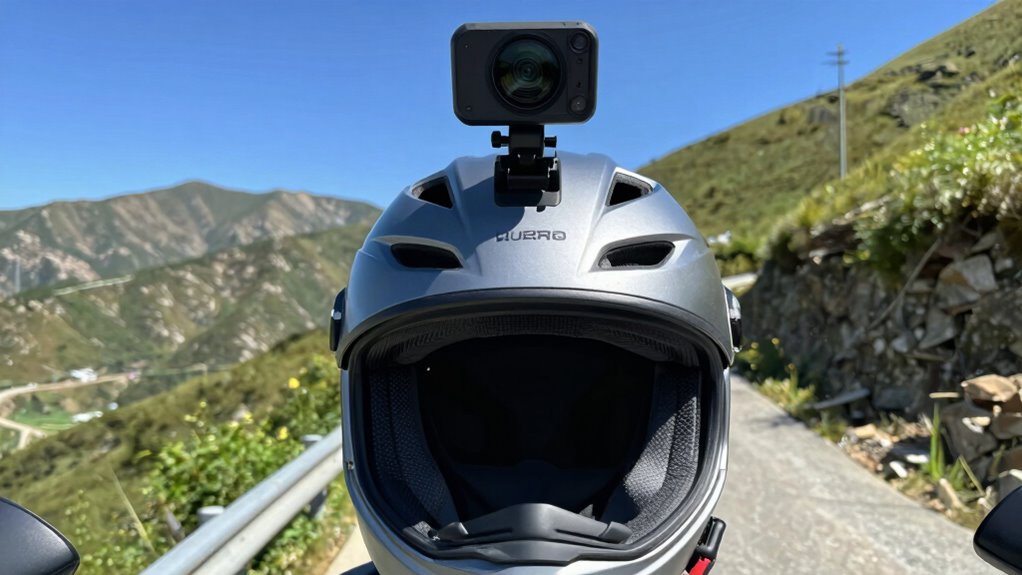
A helmet camera has to do three things well: stay securely mounted at speed, capture usable footage in shaky and low-light conditions, and run long enough to actually record your ride. After comparing 13 models, the Insta360 GO 3S In-Helmet POV Bundle stands out as the best overall pick because its tiny magnetic mount, strong stabilization, and clip form factor solve the classic helmet-camera problem of weight and wind drag. The Drift Ghost XL is the pick for anyone who needs marathon battery life, while the AKASO Brave 4 delivers the best value for casual riders on a budget. The main tradeoff in this category is size versus capability — miniature thumb cameras are light but struggle with detail, while full action cameras produce sharper footage but add bulk to your helmet. Read on for the full breakdown, including who each model suits and which ones to skip.

Get privacy and security gear delivered free with Prime
- Fast, free delivery on millions of items
- Prime Video, Amazon Music and more included
- Member-only deals all year
Key Takeaways
- Mounting security separated the winners from the rest: models with dedicated helmet mounts or magnetic systems (Insta360 GO 3S, Drift Ghost XL) outperformed generic clip-on thumb cameras, which can shift or detach at highway speeds.
- The cheapest 1080p mini cameras (Jadfezy, thumb body cams) are fine for daylight commuting evidence but fall apart in low light and fast motion — 4K with stabilization is what keeps footage usable when you need it most.
- Battery life varies enormously: Drift Ghost XL leads by a wide margin for all-day riding, while 4K mini cams like the Sixmou i3 drain fast enough to require spare batteries or a power bank.
- Fire Cam’s two entries dominate the professional/firefighter niche, with heat-resistant builds — but that specialization makes them overkill and awkward for everyday motorcycle or cycling use.
- Dual-camera setups like the LKT front-and-rear system capture a different kind of evidence than single POV cameras; choose based on whether you want a ride record or a liability record.
| Jadfezy 1080p Action Camera with 12MP Photos, Waterproof Case, Two Batteries, and Accessories |  | Best Budget Starter Kit | Video resolution: 1080p at 30 fps | Photo resolution: 12 MP | Display: 2-inch LCD | VIEW ON AMAZON | See Our Full Breakdown |
| Fire Cam MINI1080 Helmet Camera |  | Best for Firefighting Duty | Video resolution: 1080p at 30 fps; 720p at 60 fps | Water resistance: Underwater use up to 33 ft | Storage included: 32GB U1 microSD card with adapter | VIEW ON AMAZON | See Our Full Breakdown |
| Drift Ghost XL Waterproof 1080p Action Camera |  | Best Battery Life | Video resolution: 1080p | Photo resolution: 12 MP | Battery life: Up to 9 hours (3000mAh) | VIEW ON AMAZON | See Our Full Breakdown |
| RunCam Helmet Camera, 4K Bendable Action Camera with App Control |  | Best Adjustable Mounting Angle | Resolution: 4K | Battery life: Up to 6 hours | Connectivity: Wi-Fi with app control | VIEW ON AMAZON | See Our Full Breakdown |
| Insta360 GO 3S Motorcycle In-Helmet POV Bundle Special Edition |  | Best Premium POV Setup | Video resolution: 4K | Battery life: 140 minutes with Action Pod | Storage: 128 GB built-in | VIEW ON AMAZON | See Our Full Breakdown |
| AKASO Brave 4 Action Camera 4K30 Ultra HD Waterproof Underwater Camera |  | Best Budget Full-Featured Helmet Camera | Video Resolution: 4K 30fps to 1080P 60fps | Photo Resolution: 20MP | Viewing Angles: 170°, 140°, 110°, 70° | VIEW ON AMAZON | See Our Full Breakdown |
| Fire Cam Onyx 4K Helmet Camera |  | Best for Firefighters and Long Shifts | Sensor: CMOS | Video Resolutions: 4K at 30 fps; 1080p at 30, 60, or 120 fps | Image Stabilization: Electronic | VIEW ON AMAZON | See Our Full Breakdown |
| LKT Dual Motorcycle and Bicycle Camera, 2K Front and 1080p Rear, 64GB Card |  | Best Dual-Lens Coverage for Riders | Front Resolution: 2K | Rear Resolution: 1080p | Battery: 1920mAh, up to 5–6 hours | VIEW ON AMAZON | See Our Full Breakdown |
| Sixmou i3 4K Mini Action Camera |  | Best Ultralight 4K POV Camera | Sensor: CMOS | Video Resolution: Up to UHD 4K | Weight: 35.7 g (1.25 oz) | VIEW ON AMAZON | See Our Full Breakdown |
| Mini Body Cam with 16GB Memory Card, 26g Thumb Action Camera, Black |  | Best for Everyday Casual Recording | Weight: 26g (0.9oz) | Storage: 16GB memory card included | Battery Life: Up to 180 minutes | VIEW ON AMAZON | See Our Full Breakdown |
| AKASO EK7000 4K Action Camera with EIS, WiFi, and Remote Control |  | Best Value Full-Featured Pick | Video Resolution: 4K at 30fps, 2.7K at 30fps | Photo Resolution: 20MP | Stabilization: Electronic Image Stabilization (EIS) | VIEW ON AMAZON | See Our Full Breakdown |
| Mini Body Camera 1080P Thumb Action Camera |  | Best Ultralight Discreet Mount | Video Resolution: 1080P HD | Weight: 26g (0.9 oz) | Lens Angle: 120° wide-angle | VIEW ON AMAZON | See Our Full Breakdown |
| 4K Mini Body Camera with 6-Axis EIS Stabilization |  | Best Compact 4K Body Cam | Video Resolution: 4K at 30 fps | Image Stabilization: EIS 3.0, 6-axis | Display: 1.5-inch HD screen | VIEW ON AMAZON | See Our Full Breakdown |
| helmet camera | Video resolution | Battery life | Connectivity |
|---|---|---|---|
| Jadfezy 1080p Action Camera wi | 1080p at 30 fps | — | — |
| Fire Cam MINI1080 Helmet Camer | 1080p at 30 fps; 720p at 60 fps | — | — |
| Drift Ghost XL Waterproof 1080 | 1080p | Up to 9 hours (3000mAh) | Wi-Fi, Bluetooth |
| RunCam Helmet Camera | — | Up to 6 hours | Wi-Fi with app control |
| Insta360 GO 3S Motorcycle In-H | 4K | 140 minutes with Action Pod | — |
| AKASO Brave 4 Action Camera 4K | 4K 30fps to 1080P 60fps | — | Wi-Fi, HDMI |
| Fire Cam Onyx 4K Helmet Camera | — | 5 hours | — |
| LKT Dual Motorcycle and Bicycl | — | — | Wi-Fi app control |
| Sixmou i3 4K Mini Action Camer | Up to UHD 4K | — | Wi-Fi |
| Mini Body Cam with 16GB Memory | — | Up to 180 minutes | OTG transfer |
| AKASO EK7000 4K Action Camera | 4K at 30fps, 2.7K at 30fps | Approximately 90 minutes | WiFi (up to 10m), 2.4G wireless remote |
| Mini Body Camera 1080P Thumb A | 1080P HD | 120 minutes | — |
| 4K Mini Body Camera with 6-Axi | 4K at 30 fps | Up to 150 minutes | 2.4 GHz Wi-Fi, Bluetooth |
More Details on Our Top Picks
Jadfezy 1080p Action Camera with 12MP Photos, Waterproof Case, Two Batteries, and Accessories
For a first helmet camera, the barrier is usually cost and confusion — this bundle clears both. The Jadfezy ships with everything a beginner needs: helmet and bicycle mounts, a waterproof case rated to 30 m, and two 900 mAh batteries that each run over two hours. That spare battery matters more than it sounds, because entry-level cameras like the AKASO Brave 4 often make you buy extras separately. The tradeoff is resolution: unlike the RunCam 4K later in this roundup, you’re capped at 1080p at 30 fps, which looks soft on large screens. Photo modes like burst and long exposure are surprisingly flexible for the category, and the loop recording mode means it can double as a dash cam. The 2-inch LCD makes framing and menu navigation simple compared with the tiny 1-inch display on the Drift Ghost XL.
Pros:- Complete accessory bundle including helmet and bicycle mounts
- Two rechargeable batteries for over four hours of combined recording
- Waterproof case rated to 30 m (98 ft)
- Versatile shooting modes including loop recording, burst, and time-lapse
Cons:- Maximum resolution is only 1080p at 30 fps
- Waterproof rating depends entirely on the included case, not the camera body
Best for: First-time helmet camera buyers who want a complete, low-commitment kit for cycling, motocross, or casual watersports
Not ideal for: Anyone wanting sharp modern footage — 1080p at 30 fps lags well behind the 4K options in this guide
- Video resolution:1080p at 30 fps
- Photo resolution:12 MP
- Display:2-inch LCD
- Waterproof depth:30 m (98 ft) with case
- Battery:Two 900 mAh batteries, 2+ hours each
- Video modes:Time-lapse, loop recording, dash cam
- Accessories:Waterproof case, helmet and bicycle mounts
Our verdict“A sensible low-risk entry point for riders who want to try helmet filming without buying mounts and batteries piece by piece.”
Fire Cam MINI1080 Helmet Camera
Most helmet cameras in this roundup are built for sport; this one is built for structure fires and emergency scenes. The Fire Cam MINI1080 is heat- and water-resistant where consumer models like the Jadfezy rely on a plastic waterproof case that would fail under thermal stress. The included BlackJack mount attaches directly to US-style fire helmet brims — a fit no generic bicycle mount replicates — and a 32GB microSD card arrives in the box, so it’s deploy-ready. The resolution ceiling of 1080p at 30 fps (or 720p at 60 fps) is lower than the Fire Cam Onyx 4K elsewhere in this guide, but the frame-rate flexibility helps capture fast-moving action, and the time/date stamp is genuinely useful for incident documentation. The main frustration is that alternative mounts cost extra, limiting versatility off the fireground.
Pros:- Purpose-built heat- and water-resistant construction for firefighting
- BlackJack mount fits US-style fire helmet brims out of the box
- Includes 32GB microSD card and adapter
- Dual frame-rate options (1080p/30 or 720p/60) with time/date stamping
Cons:- Additional mounting options must be purchased separately
- 1080p maximum resolution trails the 4K picks in this roundup
Best for: Firefighters and first responders who need heat-resistant, brim-mounted documentation of live incidents
Not ideal for: General sports users — the fire-helmet-specific mount system and lower resolution make consumer action cameras better value
- Video resolution:1080p at 30 fps; 720p at 60 fps
- Water resistance:Underwater use up to 33 ft
- Storage included:32GB U1 microSD card with adapter
- Features:Photo mode, time/date stamp, loop recording, auto power off
- Mount:BlackJack mount for US-style fire helmets
Our verdict“If your helmet has a brim and your job involves heat, this is the specialized pick — everyone else should look at the general-purpose options.”
Drift Ghost XL Waterproof 1080p Action Camera
Nine hours of recording on a single charge is the number that defines the Drift Ghost XL, and no other camera here comes close — the RunCam manages six hours and the Insta360 GO 3S just 140 minutes. For all-day touring riders, truckers, or commuters, that gap means the difference between charging once and carrying spares. The 3000mAh internal battery is paired with IPX7 waterproofing without a case, a real advantage over the Jadfezy, which needs its housing for any water exposure. Dash cam mode with loop recording and impact-triggered footage protection turns it into a genuine accident witness. Compromises exist: it tops out at 1080p while several picks here shoot 4K, the 1-inch display is bare-bones for framing, and no memory card is included, so budget for a microSD.
Pros:- Up to 9 hours of recording per charge — best in this lineup
- IPX7 waterproof body with no housing required
- Dash cam mode with loop recording and impact footage protection
- 140° wide-angle lens with Wi-Fi and Bluetooth connectivity
Cons:- 1080p resolution trails the 4K competitors in this guide
- No memory card included
- Small 1-inch display makes shot framing awkward
Best for: Motorcycle tourers, commuters, and dash-cam users who need all-day recording without battery swaps
Not ideal for: Detail-obsessed videographers — 1080p output and a tiny 1-inch display limit framing and image quality
- Video resolution:1080p
- Photo resolution:12 MP
- Battery life:Up to 9 hours (3000mAh)
- Water resistance:IPX7
- Field of view:140°
- Connectivity:Wi-Fi, Bluetooth
- Storage:Micro SD (not included)
Our verdict“Buy this for endurance, not resolution — it’s the pick when footage must last as long as the ride does.”
RunCam Helmet Camera, 4K Bendable Action Camera with App Control
Most helmet cameras lock you into whatever angle your mount allows; the RunCam’s bendable tube lets you re-aim the lens in seconds without repositioning hardware. That flexibility is its whole reason for being, and it pairs with 4K recording and up to six hours of battery — a stronger endurance-versus-resolution balance than either the Drift Ghost XL (longer life, softer footage) or the Insta360 GO 3S (matching 4K, but far shorter runtime). Wi-Fi sync enables real-time preview through the app, which compensates partly for the lack of a usable onboard screen. Two caveats temper the appeal: the magic tape mounting is convenient but less secure than the screw-mounted or brim-clip systems used by the Fire Cam MINI1080, and full functionality leans heavily on the companion app rather than physical controls.
Pros:- Bendable tube allows quick, tool-free angle adjustments
- 4K recording with up to 6 hours of battery life
- Wi-Fi app sync for real-time preview and sharing
- One-touch recording with vibration alerts for status
Cons:- Magic tape mounts are less durable and secure than screw mounts
- App required for full functionality and live preview
Best for: Riders and racers who frequently adjust their camera angle and want 4K footage with long battery endurance
Not ideal for: Users who prefer physical controls and rock-solid mounting — the tape-based system and app dependency will frustrate them
- Resolution:4K
- Battery life:Up to 6 hours
- Connectivity:Wi-Fi with app control
- Mount type:Slider and magic tape
- Controls:One-touch recording, vibration alerts
- Design:Bendable tube for adjustable angles
Our verdict“The most adaptable 4K option here for shooters who tinker with framing — just don’t expect GoPro-grade mounting hardware.”
Insta360 GO 3S Motorcycle In-Helmet POV Bundle Special Edition
This bundle is the most polished package in the roundup, and the price reflects it. The Insta360 GO 3S is tiny enough to mount inside a motorcycle helmet via the dedicated POV mount, capturing a rider’s-eye view that exterior-mounted cameras like the Drift Ghost XL or RunCam simply can’t replicate. FlowState stabilization with Horizon Lock produces noticeably smoother 4K footage than unstabilized rivals, and 128GB of onboard storage means no card shopping. The tradeoffs are real: 140 minutes of total runtime (via the Action Pod) is a fraction of the Drift’s nine hours, so full-day rides need a recharge plan. The Action Pod itself is only splashproof (IPX4), and the magnetic mounting system is flagged as a hazard for pacemaker users. Compared with the budget Jadfezy, you’re paying for discretion and stabilization rather than raw accessory count.
Pros:- Ultra-compact design enables genuine in-helmet POV mounting
- FlowState stabilization with Horizon Lock for smooth 4K footage
- 128GB of built-in storage included
- Complete bundle with Action Pod, POV mount, and multiple mounting accessories
Cons:- Only 140 minutes of battery life with the Action Pod
- Action Pod is merely splashproof (IPX4) and can’t be submerged
- Magnets pose a safety risk for users with pacemakers
Best for: Motorcyclists and content creators who want true first-person POV footage with top-tier stabilization
Not ideal for: All-day endurance riders and pacemaker users — short battery life and magnetic components are disqualifying
- Video resolution:4K
- Battery life:140 minutes with Action Pod
- Storage:128 GB built-in
- Stabilization:FlowState with Horizon Lock
- Waterproofing:Camera 10 m; Action Pod IPX4 splashproof
- Form factor:Ultra compact with magnetic mounting
- Bundle contents:GO 3S, Action Pod, In-Helmet POV Mount, Easy Clip, Magnet Pendant, Pivot Stand, Lens Guard, Mic Wind Muff
Our verdict“The premium choice for immersive, stabilized rider-POV footage — provided your sessions stay under a couple of hours.”
AKASO Brave 4 Action Camera 4K30 Ultra HD Waterproof Underwater Camera
For riders who want 4K recording and a full accessory kit without paying flagship prices, this option stands out as the most complete package in this batch. Compared with the AKASO EK7000, the Brave 4 adds a front-facing screen, which makes framing helmet POV shots far easier, and its adjustable viewing angles (down to 70°) help tone down the fisheye distortion that plagues wide-angle helmet footage. The 40-meter waterproof case puts it ahead of non-sealed options like the Fire Cam Onyx 4K for wet-weather riding. The tradeoff is polish: Wi-Fi range is short at 10 meters, and the wrist remote is not waterproof, so it can’t be relied on in the rain.
Pros:- Records 4K at 30fps with electronic image stabilization
- Dual screens make self-framed helmet shots simple
- Waterproof to 40 meters with included case
- Two batteries and a dual charger come in the box
Cons:- Wrist remote is not waterproof
- Wi-Fi range limited to 10 meters
Best for: Budget-minded riders and vloggers who want 4K footage, spare batteries, and underwater capability in one box
Not ideal for: Anyone needing reliable remote control in wet conditions or long-range wireless transfer
- Video Resolution:4K 30fps to 1080P 60fps
- Photo Resolution:20MP
- Viewing Angles:170°, 140°, 110°, 70°
- Waterproof Depth:40 meters (131ft) with case
- Screens:2″ rear, 0.96″ front
- Battery:1050mAh (2 included), up to 90 minutes each
- Connectivity:Wi-Fi, HDMI
Our verdict“A well-rounded starter kit for riders who want 4K helmet footage and accessories included at a low cost of entry.”
Fire Cam Onyx 4K Helmet Camera
This pick makes the most sense for a very specific buyer: fire service professionals who need a camera that mounts to US-style and brim-style fire helmets and runs an entire shift. The 5-hour battery life is the standout figure here — the AKASO Brave 4 manages only 90 minutes per battery, and even the Drift Ghost XL class of cameras is the only real competitor on endurance. Add low-light recording and configurable time/date stamping, and it’s clearly built for incident documentation rather than casual vlogging. The tradeoff is serious: no water resistance at all, so it needs protection from hose lines and weather that cheaper cameras shrug off.
Pros:- 5-hour battery life covers a full shift
- Mounts designed specifically for US-style and brim-style fire helmets
- Low-light recording and configurable time/date stamping
- 32 GB microSD card included
Cons:- Not water resistant at all
- USB-only connectivity with no Wi-Fi or app control
Best for: Firefighters and first responders who need long battery life, timestamped footage, and fire-helmet mounting
Not ideal for: Motorcyclists and watersports riders — the lack of any water resistance is a dealbreaker in the rain
- Sensor:CMOS
- Video Resolutions:4K at 30 fps; 1080p at 30, 60, or 120 fps
- Image Stabilization:Electronic
- Storage Included:32 GB microSD card (U3)
- Display:2 inches
- Weight:4 ounces
- Battery Life:5 hours
- Helmet Compatibility:US-style fire helmets and brim-style helmets
Our verdict“A purpose-built documentation tool for fire service use rather than a general-purpose action camera.”
LKT Dual Motorcycle and Bicycle Camera, 2K Front and 1080p Rear, 64GB Card
Most helmet cameras only show what’s ahead of you — this one covers both directions at once, with 2K front and 1080p rear recording running simultaneously. For commuters and cyclists, that rear view can capture the hit-from-behind scenario that a single camera like the AKASO Brave 4 misses entirely. The automatic incident detection and G-sensor add an evidence-gathering layer that pure action cameras lack, and the ability to run off a power bank means all-day recording is possible. The front resolution tops out at 2K rather than 4K, so footage won’t match the Sixmou i3 or Brave 4 for detail, and the card needs formatting before first use or the camera may not record.
Pros:- Simultaneous front 2K and rear 1080p recording
- G-sensor and automatic incident detection lock evidence footage
- 64GB card included, plus loop recording for continuous use
- Can record while powered by a power bank
Cons:- Front resolution limited to 2K
- Included memory card requires formatting before first use
Best for: Motorcycle commuters and cyclists who want front-and-rear incident evidence rather than cinematic action footage
Not ideal for: Riders chasing maximum image quality — 2K front resolution trails the 4K cameras in this lineup
- Front Resolution:2K
- Rear Resolution:1080p
- Battery:1920mAh, up to 5–6 hours
- Storage:64GB card included
- Connectivity:Wi-Fi app control
- Recording Features:Loop recording, G-sensor, automatic incident detection
- Mounting:Helmet, bicycle, and motorcycle mounts
- Charging:USB Type-C, power bank compatible
Our verdict“The choice for riders whose priority is documenting what happens around them, not just producing slick videos.”
Sixmou i3 4K Mini Action Camera
At 35.7 grams, this thumb-sized camera is built for riders who forget they’re wearing it — a fraction of the bulk of the Fire Cam Onyx 4K at 4 ounces. Compared with the Insta360 GO 3S, it offers similar hands-free flexibility through its magnetic mount and rotating spring clip, plus a 64GB card and a 40-meter waterproof housing in the box, keeping the total cost of ownership low. The ability to record while charging means long sessions are workable with a power bank. Tradeoffs are real though: the camera itself has no water resistance without its housing, and 4K recording drains the 800mAh battery in about 90 minutes, so resolution and endurance pull against each other.
Pros:- Featherweight 35.7g design barely registers on a helmet
- Magnetic and clip mounts enable fast, hands-free positioning
- Waterproof housing rated to 40 meters included
- Records while charging for extended sessions
Cons:- Camera is not waterproof without its housing
- 4K recording limited to about 90 minutes per charge
Best for: Riders and vloggers who want invisible-on-the-helmet 4K recording with magnetic quick-mount convenience
Not ideal for: All-weather riders who dislike fussing with a housing every time conditions turn wet
- Sensor:CMOS
- Video Resolution:Up to UHD 4K
- Weight:35.7 g (1.25 oz)
- Battery:800 mAh — 150 min at 1080P, 90 min at 4K
- Water Resistance:Up to 40 m with included case; camera itself not waterproof
- Storage Included:64 GB microSD card
- Connectivity:Wi-Fi
- Mounting:Magnetic design, rotating spring clip, accessories
Our verdict“The best pick when low weight and mount-anywhere flexibility matter more than all-day battery or weather sealing.”
Mini Body Cam with 16GB Memory Card, 26g Thumb Action Camera, Black
This is the lightest camera in the entire roundup at 26 grams, undercutting even the Sixmou i3 by nearly 10 grams, and its standout trick is OTG transfer — plug it straight into a phone to pull clips without Wi-Fi, apps, or pairing frustration. For daily documentation, commuting, or quick social posts, that simplicity beats fiddling with the Wi-Fi connections the LKT dual camera and others require. The magnetic mount and lanyard give flexible placement on a helmet or jacket. But the compromises are steep: 16GB of storage fills fast with loop recording, battery life stops at 180 minutes, and there’s no waterproofing or ruggedness mentioned anywhere — this is a fair-weather, light-duty tool.
Pros:- Lightest option in the roundup at just 26 grams
- OTG transfer moves clips to a phone without Wi-Fi or apps
- Strong magnetic mount plus lanyard for versatile hands-free use
- Loop recording and 16GB card included out of the box
Cons:- Only 16GB of storage, requiring frequent file management
- No waterproofing or rugged durability claims
- Battery caps out at 180 minutes
Best for: Casual users and commuters who want the lightest possible camera and instant phone transfer for quick sharing
Not ideal for: Adventure riders and anyone in wet or dusty conditions — no waterproofing or rugged durability
- Weight:26g (0.9oz)
- Storage:16GB memory card included
- Battery Life:Up to 180 minutes
- Connectivity:OTG transfer
- Mounting:Magnetic mount and lanyard
- Recording Features:Loop recording, audio capture
Our verdict“A grab-and-go micro camera for low-stakes daily footage, not for demanding or wet riding conditions.”
AKASO EK7000 4K Action Camera with EIS, WiFi, and Remote Control
This option stands out for packing 4K30 recording, EIS, and a 131-foot waterproof case into a bundle that undercuts most big-name action cameras. The wireless wrist remote is a genuine advantage for helmet use — starting a recording without reaching for your head is something the Mini Body Camera 1080P simply cannot do. Compared with the AKASO Brave 4, the EK7000 leans on a fisheye lens that gives footage that classic wide action-cam look, though it distorts edges more than some riders will like. The 90-minute battery is the real tradeoff: longer than the EK7000’s tiny rivals but short for all-day rides, and the remote itself is not waterproof, so it needs to stay dry even when the camera doesn’t.
Pros:- 4K30 video and 20MP photos deliver sharp, shareable footage
- Electronic Image Stabilization smooths out vibration on rough terrain
- Waterproof case rated to 131 feet for rain, spray, and submersion
- Wireless wrist remote enables hands-free start/stop while mounted on a helmet
Cons:- Battery tops out around 90 minutes of recording
- Wrist remote is not waterproof, limiting use in heavy rain
- Fisheye lens distorts the frame edges noticeably
Best for: Budget-minded motorcyclists and watersports riders who want 4K footage, app sharing, and hands-free remote control without paying flagship prices
Not ideal for: Riders planning all-day recording sessions — the 90-minute battery will force mid-ride swaps, and the non-waterproof remote limits wet-weather use
- Video Resolution:4K at 30fps, 2.7K at 30fps
- Photo Resolution:20MP
- Stabilization:Electronic Image Stabilization (EIS)
- Waterproofing:Case rated to 131 feet
- Battery Life:Approximately 90 minutes
- Connectivity:WiFi (up to 10m), 2.4G wireless remote
- Weight:2 ounces
- Storage:MicroSDXC (not included)
Our verdict“A well-rounded budget choice for riders who want 4K quality and remote convenience, provided they carry a spare battery.”
Mini Body Camera 1080P Thumb Action Camera
At 26 grams, this thumb-sized camera is barely noticeable on a helmet, which is exactly its appeal — the AKASO EK7000 feels like a brick by comparison. The 360° rotatable clip and magnetic lanyard open up mounting spots a traditional action camera can’t reach: jacket lapels, collar edges, or any metal surface. Resolution is where the tradeoff bites: 1080P is fine for casual POV clips but falls well short of the 4K Mini Body Camera’s detail, and with no WiFi, Bluetooth, or companion app, getting footage off the device means physically removing the card. Recording while charging over USB-C partially offsets the 120-minute battery for longer rides.
Pros:- Featherweight 26g design disappears on a helmet or clothing
- Rotating clip plus magnetic lanyard offer unusually flexible mounting
- Records while charging via USB-C for extended sessions
- Supports microSD cards up to 512GB for very long recordings
Cons:- 1080P resolution lags far behind 4K rivals in detail
- No WiFi, Bluetooth, or app — no remote control or wireless transfer
- Only water resistant, not submersible
Best for: Commuter cyclists, delivery riders, and anyone wanting an unobtrusive, always-ready camera for evidence-style footage or lightweight vlogging
Not ideal for: Creators who want crisp, detailed footage or wireless control — the 1080P ceiling and lack of any app connectivity will feel limiting fast
- Video Resolution:1080P HD
- Weight:26g (0.9 oz)
- Lens Angle:120° wide-angle
- Battery Life:120 minutes
- Charging:USB-C, 1-hour charge time, records while charging
- Storage Support:Up to 512GB microSD (not included)
- Water Resistance:Water resistant (not submersible)
Our verdict“The pick when weight and discretion matter more than image quality or smart features.”
4K Mini Body Camera with 6-Axis EIS Stabilization
This model splits the difference between the two extremes above: it keeps near-thumb-cam portability at 35 grams while delivering 4K30 footage and six-axis EIS 3.0, a stabilization step up from the basic EIS on the AKASO EK7000. The 1.5-inch built-in screen is rare at this size — you can frame shots and review clips without pairing a phone, something the Mini Body Camera 1080P can’t offer at all. Wi-Fi and Bluetooth add app control, and the accessory pile (helmet, cycling, and ski mounts plus a waterproof case) covers most riding scenarios out of the box. The catch is that waterproofing depends entirely on the case, and 150 minutes of battery still won’t span a full day of touring.
Pros:- 4K30 recording with a 1/2.3-inch sensor for above-average detail at this size
- Six-axis EIS 3.0 keeps footage steady on rough roads
- Built-in 1.5-inch screen for framing and playback without a phone
- Bundle includes helmet, cycling, and ski mounts plus a waterproof case
Cons:- Waterproof only when housed in the included case
- Battery caps out at 150 minutes of recording
- Small sensor struggles in low light compared with larger action cameras
Best for: Riders and skiers who want 4K detail and strong stabilization in a featherweight package with everything needed to mount on a helmet included
Not ideal for: Submersible-sport users or all-day tourers — waterproofing requires the bulky case, and the 150-minute battery still needs mid-day charging
- Video Resolution:4K at 30 fps
- Image Stabilization:EIS 3.0, 6-axis
- Display:1.5-inch HD screen
- Connectivity:2.4 GHz Wi-Fi, Bluetooth
- Weight:35 g (1.23 oz)
- Battery Life:Up to 150 minutes
- Recording Modes:Time-lapse, slow motion, loop recording
- Included Accessories:Waterproof case, rotating clip, cycling mount, helmet mount, ski mount
Our verdict“The strongest all-around compact choice for riders prioritizing 4K quality and stability over absolute minimal weight.”

How We Picked
I ranked these helmet cameras on four factors that actually determine whether footage is worth having. Mounting and stability came first — a camera that vibrates, shifts, or detaches is useless no matter how good its sensor is, so dedicated helmet mounts and magnetic systems scored above generic clips. Image quality under real conditions mattered more than spec-sheet resolution: 4K at 30fps with electronic stabilization beats 4K without it, and 1080p with good low-light handling beats 4K that turns to mush at dusk. Battery endurance was weighted heavily because helmet footage is often about capturing unpredictable events, and a dead camera captures nothing. Finally, I judged value and intended use — a $50 camera that does 90 percent of a $300 camera’s job for a commuter ranks higher than an expensive model whose extras go unused.
The ranking order reflects this logic. Purpose-built POV systems like the Insta360 GO 3S sit at the top because they were engineered for exactly this job. Established action cameras from AKASO and Drift follow because their proven mounts and image pipelines transfer well to helmets. The budget minis and specialized professional units fill specific roles lower in the list — capable within their lane, but narrower in appeal.
Factors to Consider When Choosing Helmet Camera
Before picking a specific model, it helps to understand what actually separates a good helmet camera from a disappointing one. These are the factors that shaped this ranking, and the ones most buyers get wrong.Mount Security Beats Every Other Spec
The most common mistake helmet-camera buyers make is treating the mount as an afterthought. At 60 mph, wind pressure on a thumb-sized camera is substantial, and clip-style mounts that feel secure in your hand can rotate, vibrate, or launch off a helmet entirely. Vibration matters as much as retention — even a camera that stays attached produces unwatchable jelly footage if the mount has any flex. Look for rigid adhesives, tether points, or magnetic systems with mechanical locks rather than friction alone. If you ride off-road or on rough pavement, this factor alone should drive your decision more than resolution.
Stabilization Is What Makes Footage Usable
A helmet is the shakiest camera platform most people will ever use, because your head moves constantly with road vibration, checks over the shoulder, and body position. Electronic image stabilization (EIS) is the difference between footage an insurer or court can actually read and footage that is a blurred mess. Gyro-based or 6-axis systems perform better than basic digital stabilization, especially at higher resolutions where cropping room is limited. Buyers chasing 4K without stabilization often end up with worse real-world results than 1080p with good EIS. Check whether stabilization is available at the resolution and frame rate you plan to shoot — some cameras only offer it in lower modes.
Battery Life and How You Actually Ride
Match battery endurance to your typical ride length, not to marketing claims. A camera rated for 90 minutes will not survive an all-day touring ride, and mid-ride battery swaps on a helmet mount are genuinely annoying — the mount often has to come off with the camera. Models with swappable batteries help, but only if you carry spares and can access the mount. If you commute for 30 minutes, nearly anything works; if you ride for hours, endurance cameras or hardwired power solutions pay off. Also check whether recording loops or parking modes exist, since many riders want the camera running when the bike is parked, which drains batteries differently than riding.
Form Factor: Weight Changes Your Helmet
Every gram on a helmet affects neck fatigue, wind noise, and even crash safety — a heavy camera creates a lever arm in an impact. This is why tiny cameras like the Insta360 GO series and thumb body cams exist, and why they trade battery and lens size for lightness. Full action cameras like the AKASO models deliver better image quality but belong on the side or chin of the helmet, never the top, where drag and leverage are worst. Consider also whether you want to move the camera between helmets or bikes, which favors quick-release magnetic mounts over adhesives. There is no universally correct size, only the right tradeoff for how long you wear the helmet each day.
Waterproofing and Environmental Protection
Water resistance claims come in two flavors: cameras that are waterproof on their own and cameras that need an external case. Cases add bulk, muffle audio badly, and sometimes prevent button access, but they allow deeper submersion and protect against pressure washing. For motorcycling in rain, splash resistance plus a decent housing usually suffices; for cyclists who crash in creeks or fire professionals facing hose water, sealed units earn their premium. Cold weather is the hidden killer — battery capacity drops sharply in winter, so riders in cold climates should budget endurance accordingly. Check the seal design too, because door gaskets are the first failure point on aging cameras.
Evidence Use: What Insurance Companies Actually Need
If your goal is liability protection rather than cinematic footage, your requirements shift. Timestamps, continuous loop recording, and a wide field of view matter more than resolution, because you need to prove what happened, not produce a film. Front-and-rear coverage — like the LKT dual system — often proves more valuable than a single POV angle, since rear-end collisions are among the most common and hardest to self-document. Audio capture can matter for witness statements, so sealed waterproof cases with muffled microphones are a real drawback for this use. Be aware that very wide lenses can distort distance perception, which occasionally works against the rider in a dispute; some cameras let you narrow the field of view for this reason.
Frequently Asked Questions
Can I use a regular action camera as a helmet camera, or do I need a dedicated one?
In most cases, yes — models like the AKASO Brave 4 and Drift Ghost XL are general action cameras that work well on helmets, provided you use a proper adhesive or strap mount rated for wind load. The reason dedicated helmet cameras exist is weight and mounting ergonomics: devices like the Insta360 GO 3S or Fire Cam units are shaped to sit flat against a helmet shell, reducing drag and the risk of the mount peeling off. A standard action camera on top of a helmet catches significant wind and adds neck strain on long rides. If you already own a GoPro-style camera, mounting it on the chin bar or side of a full-face helmet is usually fine. Buy dedicated only if weight, low profile, or professional certification (heat resistance, for example) matters for your use case.
Is 1080p enough for helmet footage, or should I pay more for 4K?
It depends what the footage is for. If you mainly want evidence that a car cut you off, 1080p with good stabilization is generally sufficient — license plates close to the camera will be readable, though plates at distance across an intersection often will not. 4K gives you the cropping room to zoom into details and still keep a sharp image, which is where models like the Fire Cam Onyx 4K and RunCam 4K earn their price. The trap is cheap 4K: some budget cameras interpolate up from lower native sensors, producing files labeled 4K that look worse than honest 1080p. If low light is part of your riding, prioritize sensor quality and stabilization over resolution numbers, because a shaky 4K clip at dusk is less useful than a stable 1080p one.
Where is the best place to mount a camera on a helmet?
The chin bar of a full-face helmet is widely considered the best position because it sits closest to your eye line, keeps weight low and central, and produces the most natural footage. Side mounting is a good alternative and reduces wind drag compared to top mounting, though it gives a slightly skewed perspective. Top mounting is the worst option for anything above city speeds — the camera acts like a sail, strains your neck, and creates leverage in a crash. Whatever position you choose, use a tether as backup to the adhesive, and check your local regulations, since some jurisdictions restrict helmet-mounted objects on legality or crash-safety grounds. Also confirm the mount does not obstruct your visor operation or ventilation.
How long do helmet camera batteries last on a real ride?
Real-world endurance is typically 20 to 40 percent lower than manufacturer claims, especially with stabilization on, WiFi connected, or in cold weather. Compact thumb cameras and 4K minis often manage 60 to 90 minutes, which covers a commute but not a day of touring. The Drift Ghost XL exists precisely for this problem, running far longer than typical action cameras and supporting loop recording for extended sessions. If your rides regularly exceed two hours, prioritize swappable batteries, an external power bank setup, or a long-endurance model. Note that hardwiring a camera to your motorcycle’s battery is an option some riders use for parking-mode recording, but it does not work for bicycle helmets and complicates waterproofing.
Do I need front and rear cameras, or is one helmet camera enough?
One helmet camera covers what is in front of you, which handles most fault disputes — but rear-end collisions are among the most common motorcycle and cycling accidents, and a forward-only camera often cannot prove them. A dual system like the LKT front-and-rear setup records both angles simultaneously, which is why many riders now treat it as insurance rather than a gadget. The tradeoff is cost, installation complexity, and the fact that frame-mounted cameras do not move with your head, so they miss what you turned to look at. A reasonable compromise is starting with a quality helmet camera and adding a rear unit later if you ride in dense traffic. If you ride mostly rural roads, a single forward camera is usually adequate.
Conclusion
The right choice here depends entirely on how you ride. For the best overall helmet camera, the Insta360 GO 3S In-Helmet POV Bundle wins on weight, mounting, and stabilized footage — the qualities that define this category. For best value, the AKASO Brave 4 delivers dependable 4K footage and proven mounting at a price that leaves room for accessories, with the AKASO EK7000 as an even cheaper fallback for occasional riders. Riders who need all-day endurance should choose the Drift Ghost XL, which outruns everything else on this list. For beginners, the AKASO models are the easiest entry point thanks to familiar controls, bundled accessories, and forgiving mounts. Specialty needs round out the lineup: the LKT dual system for evidence-focused riders who want front and rear coverage, the Fire Cam MINI1080 and Onyx 4K for professional and heat-exposed environments, the RunCam 4K for app-controlled flexibility, and the Sixmou i3 or thumb-style minis for anyone who prioritizes invisibility over image quality. Skip the cheapest unbranded minis unless daylight commuting evidence is genuinely all you need — the gap in stabilization and low-light performance is where budget cameras fail you exactly when it matters.
Columbus Day / Indigenous Peoples' Day Picks
long weekend sales
As an affiliate, we earn on qualifying purchases.