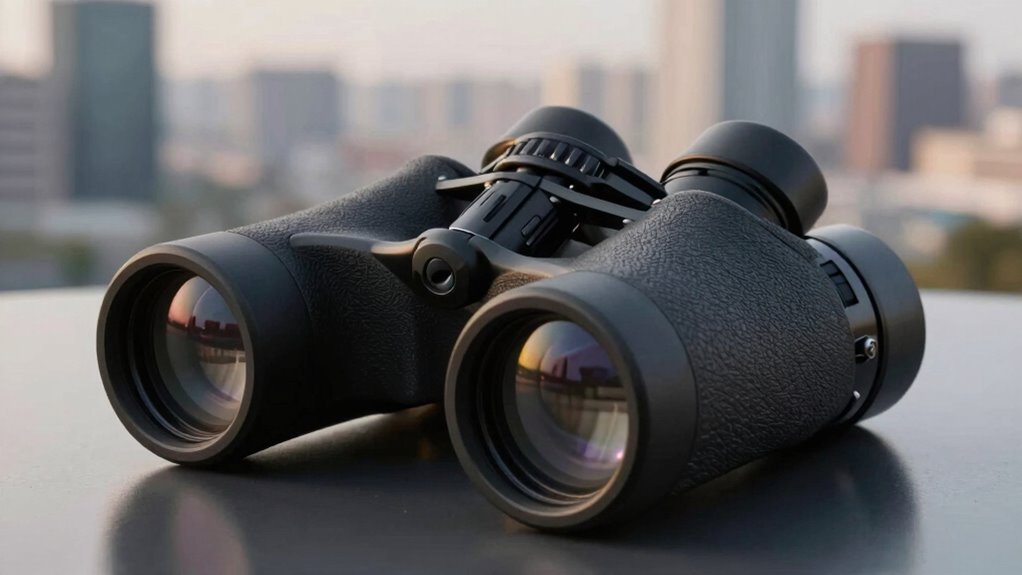

For handheld surveillance at a distance, image stabilized binoculars can make details easier to follow by reducing the shake that becomes more visible at higher magnification. My best overall pick is the Canon 10×42 L IS WP, which balances useful reach with weather resistant construction. The Canon 18×50 models suit distant observation, while the SIG SAUER ZULU6 HDX PRO 18×50 offers a marine oriented alternative. The main tradeoffs are magnification versus steadiness, size versus portability, and weather protection versus a lighter setup. Read on for how the ten options compare and which type of surveillance each fits best.

Get privacy and security gear delivered free with Prime
- Fast, free delivery on millions of items
- Prime Video, Amazon Music and more included
- Member-only deals all year
Key Takeaways
- The Canon 10×42 L IS WP is the roundup’s best overall fit because it combines moderate magnification with weather resistant construction, a useful balance for varied outdoor observation.
- The Canon 18×50 models prioritize distant detail, but their larger form makes them less convenient to carry or use for long periods than the 10×30 options.
- The Canon 10×30 IS II models favor portability and approachable magnification, though they offer less reach than the 15×50 and 18×50 choices.
- The SIG SAUER ZULU6 HDX PRO 18×50 Marine is the specialized pick for buyers drawn to a marine focused design; it serves a narrower role than the general purpose Canon options.
- Bundle listings do not change the binocular’s core optical or stabilization performance, so compare the included accessories with what you actually need before choosing one.
| Canon 12×36 Image Stabilization III Binoculars |  | Best for Mid-Range Reach | Magnification: 12x | Objective lens diameter: 36 mm | Prism type: Porro | VIEW ON AMAZON | See Our Full Breakdown |
| Canon 15×50 Image Stabilized Binoculars |  | Best for Long-Range Surveillance | Magnification: 15x | Objective lens diameter: 50 mm | Image stabilization: Optical Image Stabilizer | VIEW ON AMAZON | See Our Full Breakdown |
| Canon 10×42 L IS WP Image Stabilized Binoculars |  | Best for All-Weather Surveillance | Brand: Canon | Magnification: 10x | Objective lens diameter: 42 mm | VIEW ON AMAZON | See Our Full Breakdown |
| Canon 10×30 IS II Image Stabilized Binoculars Bundle |  | Best Compact Bundle | Magnification: 10x | Objective lens diameter: 30 mm | Prism design: Porro prism | VIEW ON AMAZON | See Our Full Breakdown |
| Canon 10×42 L IS WP Image Stabilized Binoculars Bundle |  | Best Premium Weatherproof Bundle | Magnification: 10x | Objective lens diameter: 42 mm | Image stabilization: Vari-Angle Prism, ±0.8° correction range | VIEW ON AMAZON | See Our Full Breakdown |
| Canon 18×50 Image Stabilization All-Weather Binoculars |  | Best for Long-Range Daylight Surveillance | Magnification: 18x | Objective lens diameter: 50 mm | Image stabilization: Optical; powered by 2 AA batteries | VIEW ON AMAZON | See Our Full Breakdown |
| Canon 10×30 Image Stabilization II Binoculars |  | Best for Portable, Close-Range Surveillance | Magnification: 10x | Objective lens diameter: 30 mm | Prism type: Porro II | VIEW ON AMAZON | See Our Full Breakdown |
| SIG SAUER ZULU6 HDX PRO 18x50mm Marine Binoculars |  | Best for Marine Surveillance | Magnification: 18x | Objective lens diameter: 50 mm | Prism type: Roof prism | VIEW ON AMAZON | See Our Full Breakdown |
| SIG SAUER Zulu6 HDX OIS 16x42mm Roof Prism Binoculars, Flat Dark Earth |  | Best for Weather-Exposed Observation Posts | Magnification: 16x | Objective lens diameter: 42 mm | Prism type: Roof prism | VIEW ON AMAZON | See Our Full Breakdown |
| Canon 18×50 IS Image Stabilized Binoculars Bundle |  | Best Surveillance Kit Bundle | Magnification: 18x | Objective lens diameter: 50 mm | Image stabilization correction: ±0.7° | VIEW ON AMAZON | See Our Full Breakdown |
| image stabilized binoculars for surveillance | Magnification | Objective lens diameter | Eye relief | Water resistance |
|---|---|---|---|---|
| Canon 12×36 Image Stabilizatio | 12x | 36 mm | 14.5 mm | Water resistant |
| Canon 15×50 Image Stabilized B | 15x | 50 mm | 15 mm | — |
| Canon 10×42 L IS WP Image Stab | 10x | 42 mm | — | — |
| Canon 10×30 IS II Image Stabil | 10x | 30 mm | 14.5 mm | — |
| Canon 10×42 L IS WP Image Stab | 10x | 42 mm | 16 mm | — |
| Canon 18×50 Image Stabilizatio | 18x | 50 mm | 15 mm | Water resistant |
| Canon 10×30 Image Stabilizatio | 10x | 30 mm | 14.5 mm | Not water resistant |
| SIG SAUER ZULU6 HDX PRO 18x50m | 18x | 50 mm | — | IPX7 waterproof and fogproof |
| SIG SAUER Zulu6 HDX OIS 16x42m | 16x | 42 mm | — | IPX-7 |
| Canon 18×50 IS Image Stabilize | 18x | 50 mm | 15 mm | Water resistant |
More Details on Our Top Picks
Canon 12×36 Image Stabilization III Binoculars
The 12×36 Image Stabilization III suits surveillance where a target needs more magnification than a 10x model provides, while its 36 mm lenses keep the body more compact than the Canon 15×50. Image stabilization helps steady the stronger magnification during handheld observation, and the field-flattener lenses and multicoated optics support clear views across the image. Water resistance adds practical protection outdoors, though the listing does not describe it as waterproof. Its 14.5 mm eye relief offers some comfort for glasses wearers, but the 3 mm exit pupil gives less margin for eye placement and dim conditions than the larger 50 mm option. Stabilization depends on batteries, and 12x still calls for a steady hold when tracking moving subjects.
Pros:- 12x magnification adds reach over the 10×42 and 10×30 options.
- Image stabilization helps control hand shake at higher magnification.
- Multicoated optics and field-flattener lenses support a sharp, bright view.
- Water-resistant construction and 14.5 mm eye relief suit varied outdoor use.
Cons:- The 3 mm exit pupil offers less tolerance in dim conditions than larger-aperture models.
- Image stabilization requires batteries, with up to 12 hours of continuous use only when using optional lithium AA batteries.
- Water resistance is not the same as the waterproof and fogproof protection specified for the Canon 10×42 L IS WP.
Best for: Surveillance users who want more reach than a 10x binocular and prefer a more compact alternative to a 15×50.
Not ideal for: Buyers who need waterproof protection, generous low-light viewing, or battery-free stabilization.
- Magnification:12x
- Objective lens diameter:36 mm
- Prism type:Porro
- Eye relief:14.5 mm
- Exit pupil diameter:3 mm
- Focus type:Center focus
- Water resistance:Water resistant
- Stabilization runtime:Up to 12 hours with optional lithium AA batteries
Our verdict“Choose this Canon if you want stabilized 12x reach in a smaller format than the 15×50 and can work around its battery needs and limited low-light margin.”
Canon 15×50 Image Stabilized Binoculars
When distant details matter more than compact handling, the Canon 15×50 offers the strongest magnification in this five-model batch. Its Optical Image Stabilizer is designed to compensate for hand shake and small vibrations, which matters more at 15x than with the 10×42 Canon models. The 50 mm objectives and multicoated ultra-low dispersion elements are aimed at a bright, detailed view, while 15 mm eye relief helps make longer observation more comfortable. That reach comes with a practical cost: greater magnification can make it harder to keep moving subjects in view, and the product data gives no weight, weather protection, or battery-runtime details. Compared with the Canon 12×36, this is the pick for more distant targets, but it gives up the smaller objective format.
Pros:- 15x magnification offers more reach than the other four products in this batch.
- Optical Image Stabilizer compensates for hand shake and small vibrations.
- 50 mm objectives support a bright view.
- Multicoated ultra-low dispersion elements and 15 mm eye relief support detailed, comfortable viewing.
Cons:- Higher magnification can make tracking moving subjects more demanding.
- The supplied product data does not specify weather protection or battery runtime.
- The 50 mm objectives make it a less compact choice than the Canon 12×36 and 10×30.
Best for: Observers monitoring distant, relatively slow-moving subjects who can manage a larger 50 mm binocular.
Not ideal for: Users who need documented waterproofing, known battery runtime, or a compact setup for frequent movement.
- Magnification:15x
- Objective lens diameter:50 mm
- Image stabilization:Optical Image Stabilizer
- Eye relief:15 mm
- Objective optics:Multicoated ultra-low dispersion elements
- Stabilization function:Compensates for hand shake and small vibrations
Our verdict“Pick the 15×50 when distant detail is your priority and you can accept less compact handling and limited published information on weather protection and runtime.”
Canon 10×42 L IS WP Image Stabilized Binoculars
The Canon 10×42 L IS WP is the weather-ready choice here: its stated waterproofing and image stabilization suit outdoor surveillance where conditions may change. Its 10×42 configuration trades some reach for a more manageable view than the Canon 15×50, which can help when following activity across a broad area. The included case, straps, rainguard, objective cap, and AA batteries make it a ready-to-carry package. That accessory list is useful, but it does not change the core tradeoff: this model gives less magnification than the 12×36 and 15×50, and the supplied data does not specify runtime, eye relief, or field of view. Compared with the newer 10×42 L IS WP bundle, the listed kit is simpler and lacks a harness, charger, and cleaning kit.
Pros:- Waterproof weatherproofing supports use in wet outdoor conditions.
- Image stabilization helps steady handheld surveillance.
- 10×42 configuration balances reach and a manageable field of view.
- Includes a padded case, straps, rainguard, objective cap, and two AA batteries.
Cons:- 10x magnification provides less reach than the Canon 12×36 and 15×50.
- The supplied data does not state stabilization runtime, eye relief, or field of view.
- The included accessories are less extensive than those listed with the 10×42 L IS WP bundle.
Best for: Outdoor observers who need stabilized 10x viewing and documented waterproof protection in changing weather.
Not ideal for: Buyers prioritizing long-range magnification or wanting a bundle with a harness, charger, and cleaning kit.
- Brand:Canon
- Magnification:10x
- Objective lens diameter:42 mm
- Image stabilization:Yes
- Weatherproofing:WP
- Included accessories:Padded case with strap, neoprene strap, eyepiece rainguard, push-on objective cap, and two 1.5 V AA alkaline batteries
Our verdict“Choose this 10×42 when waterproof protection and stabilized outdoor viewing matter more than maximum reach or a larger accessory kit.”
Canon 10×30 IS II Image Stabilized Binoculars Bundle
For surveillance on foot, the 10×30 IS II bundle keeps the objective size and listed length down while retaining stabilization for handheld viewing. Its 315 ft field of view at 1,000 yards can make it easier to scan an area than the more reach-focused Canon 12×36 or 15×50. At slightly over 21 ounces, it is still a substantial handheld instrument, and the 30 mm objectives offer less aperture than the 42 mm Canon models. The bundle adds a harness, travel bag, charger, batteries, and cleaning kit, which makes carrying and upkeep more convenient. Its runtime is listed as up to nine hours at room temperature, so long surveillance shifts need battery planning. Choose it for compactness and scanning; skip it if weather sealing or low-light aperture leads your priorities.
Pros:- 5.9-inch length and 30 mm objectives make it more compact than the 10×42 options.
- 315 ft field of view at 1,000 yards supports broad-area scanning.
- 14.5 mm eye relief can suit glasses wearers.
- Bundle includes a harness, travel bag, AA batteries with charger, and cleaning kit.
Cons:- 30 mm objectives offer less aperture than the Canon 10×42 and 15×50 models.
- Stabilization requires two AA batteries and runs up to nine hours at room temperature.
- At slightly over 21 ounces, it may feel heavy for a compact binocular.
Best for: Mobile observers who want a relatively compact stabilized binocular with a wide scanning view and carry accessories.
Not ideal for: Surveillance users who need waterproofing, extended runtime, or a larger aperture for dim conditions.
- Magnification:10x
- Objective lens diameter:30 mm
- Prism design:Porro prism
- Field of view:315 ft at 1,000 yards
- Eye relief:14.5 mm
- Length:5.9 inches
- Weight:Slightly over 21 ounces
- Stabilization runtime:Up to 9 hours at room temperature
- Included accessories:Harness strap, travel bag, AA batteries with charger, and cleaning kit
Our verdict“Pick this bundle for mobile, wide-area surveillance where compact dimensions and included carrying gear outweigh aperture and battery-runtime limits.”
Canon 10×42 L IS WP Image Stabilized Binoculars Bundle
This 10×42 L IS WP bundle pairs stabilized 10x viewing with stated waterproof and fogproof protection, giving outdoor surveillance a stronger weather specification than the water-resistant 12×36. Its ±0.8° Vari-Angle Prism correction range describes the stabilization system, while the 65° apparent field of view supports broad observation. At 16 mm, eye relief is the most generous among these five entries, which can help glasses wearers maintain a comfortable view. The tradeoff is reach: the Canon 12×36 and 15×50 magnify more, though they do not offer the same specified weather protection. This bundle also supplies a harness, travel bag, charger, batteries, and cleaning kit. The product data omits weight and dimensions, so buyers cannot judge carrying bulk from the listing details.
Pros:- Waterproof and fogproof construction is specified for outdoor use.
- Vari-Angle Prism stabilization provides a stated ±0.8° correction range.
- 16 mm eye relief and a 65° apparent field of view support comfortable, broad viewing.
- Bundle includes a harness, travel bag, AA batteries with charger, and cleaning kit.
Cons:- 10x magnification offers less reach than the Canon 12×36 and 15×50.
- Image stabilization depends on two AA batteries.
- Weight and dimensions are not provided in the supplied product data.
Best for: Outdoor surveillance users who need waterproof and fogproof protection, comfortable eye relief, and a complete carrying bundle.
Not ideal for: Buyers who need maximum magnification or require published weight and dimensions before choosing gear.
- Magnification:10x
- Objective lens diameter:42 mm
- Image stabilization:Vari-Angle Prism, ±0.8° correction range
- Apparent angle of view:65°
- Eye relief:16 mm
- Water and fog resistance:Waterproof and fogproof
- Power:Two AA batteries
- Included accessories:Harness strap, travel bag, AA batteries with charger, and cleaning kit
Our verdict“Choose this bundle for weather-exposed surveillance and generous eye relief, provided 10x reach is enough and the missing size details are acceptable.”
Canon 18×50 Image Stabilization All-Weather Binoculars
For watching distant subjects in daylight, the 18x magnification and 50 mm objectives bring more detail into view than the Canon 10×30 IS II, while optical stabilization helps counter the hand movement that becomes more visible at higher power. The water-resistant, shock-resistant body also suits outdoor observation where conditions may be rough. The tradeoff is a 2.8 mm exit pupil, which is less forgiving in dim light than the larger objectives might suggest, and the 18x view still takes a steady hold. Stabilization runs on two AA batteries, so extended surveillance calls for spare cells. Choose this Canon for distant daytime watching; the SIG SAUER ZULU6 HDX PRO is a better fit for wet marine conditions, with its IPX7 protection and fogproof construction.
Pros:- 18x magnification reveals more distant detail than the Canon 10×30 IS II.
- Optical stabilization helps reduce hand shake at high magnification.
- 50 mm objectives and multi-coated optics support clear daytime viewing.
- Water- and shock-resistant construction suits outdoor use.
Cons:- Stabilization requires two AA batteries.
- The 18x view remains demanding to hold steady.
- A 2.8 mm exit pupil is limiting as light fades.
Best for: Daylight observers who need to identify distant subjects from a fixed outdoor position and want water- and shock-resistant construction.
Not ideal for: People conducting prolonged low-light surveillance or who need a waterproof binocular; the modest exit pupil and water-resistant rating have limits.
- Magnification:18x
- Objective lens diameter:50 mm
- Image stabilization:Optical; powered by 2 AA batteries
- Field of view:7.5 degrees
- Closest focusing distance:19.7 ft
- Eye relief:15 mm
- Water resistance:Water resistant
Our verdict“Pick this Canon for stabilized long-range daytime surveillance, but choose a waterproof marine model for frequent exposure to heavy spray or rain.”
Canon 10×30 Image Stabilization II Binoculars
When surveillance involves scanning a broad area or tracking movement at moderate distances, the Canon 10×30 IS II is easier to manage than the 18x Canon 18×50. Its 10x magnification gives a wider, less shaky view, and the compact body is more practical to carry between observation points. Canon’s stabilization and field-flattener lenses support a steady, sharp image across the view; 14.5 mm eye relief also accommodates many eyeglass wearers. These conveniences come with limits: 30 mm objectives gather less light than the 50 mm Canon, and this model is not water resistant. At 1.6 pounds, it is compact but not featherweight. It suits mobile daytime watching in fair weather, while the SIG SAUER ZULU6 HDX OIS offers more reach and weather protection for exposed posts.
Pros:- 10x magnification is easier to hold and scan with than the Canon 18×50.
- Image stabilization helps steady handheld observation.
- Field-flattener lenses support sharp views across the image.
- 14.5 mm eye relief and compact dimensions suit travel and eyeglass wearers.
Cons:- Not water resistant, limiting use in wet weather.
- 30 mm objectives are less suited to dim conditions than 42 mm or 50 mm alternatives.
- At 1.6 pounds, it may feel heavy during extended neck carry.
Best for: Mobile observers who need stabilization for daytime monitoring, a compact packable binocular, and usable eye relief with glasses.
Not ideal for: Surveillance in rain, spray, or dim conditions; it is not water resistant and its 30 mm objectives offer less light gathering than larger models.
- Magnification:10x
- Objective lens diameter:30 mm
- Prism type:Porro II
- Eye relief:14.5 mm
- Field of view:315 ft
- Focus type:Center focus
- Water resistance:Not water resistant
- Weight:1.6 lb
Our verdict“Choose this Canon for portable daytime surveillance where manageable magnification matters more than weather sealing or long-range reach.”
SIG SAUER ZULU6 HDX PRO 18x50mm Marine Binoculars
For surveillance from a boat or exposed shoreline, the ZULU6 HDX PRO pairs 18x magnification with OmniScan stabilization designed to keep views steady on moving vessels. Its IPX7 waterproof and fogproof housing is a substantial step up from the water-resistant Canon 18×50, and the polarized objective cover helps cut glare on bright water. HDX PRO ED glass supports detailed viewing, while the floating neck strap and waterproof case address practical marine handling. That protection and accessory kit make it more specialized than the Canon 10×30 IS II, which is lighter to carry but lacks weather sealing and reach. The SIG’s high magnification still demands stabilization, and AA power is required; the supplied data does not specify that batteries are included. This is the pick for wet, moving environments, not casual fair-weather carry.
Pros:- OmniScan stabilization supports 18x viewing on moving vessels.
- IPX7 waterproof and fogproof construction exceeds the Canon 18×50’s water-resistant protection.
- Polarized objective cover helps reduce glare from water.
- Includes a waterproof Pelican case and floating neck strap.
Cons:- 18x magnification remains demanding for handheld viewing when stabilization is off or conditions are rough.
- Requires AA batteries, and the supplied product data does not confirm they are included.
- Marine-oriented protection and accessories add bulk compared with the Canon 10×30 IS II.
Best for: Boat operators, harbor watchers, and shoreline observers who need stabilized long-range viewing with waterproof, fogproof protection.
Not ideal for: Travelers prioritizing a light, compact binocular or observers who do not need marine protection and 18x reach.
- Magnification:18x
- Objective lens diameter:50 mm
- Prism type:Roof prism
- Image stabilization:OmniScan
- Focus type:Autofocus
- Water resistance:IPX7 waterproof and fogproof
- Power options:Rechargeable AA cells or standard AA cells
- Included accessories:Waterproof Pelican case, floating neck strap, polarized objective lens cover
Our verdict“Choose the ZULU6 HDX PRO for wet, moving marine surveillance where sealing and stabilization matter more than compact carry.”
SIG SAUER Zulu6 HDX OIS 16x42mm Roof Prism Binoculars, Flat Dark Earth
The Zulu6 HDX OIS takes a middle path between the Canon 10×30 IS II and 18×50 models: 16x magnification reaches farther than the compact Canon, while 42 mm objectives make the binocular less front-heavy than a 50 mm option. Its Scan and Target stabilization modes let observers switch between following activity and holding on a specific subject; Target Mode is listed as increasing stability by up to 50%. HDX glass supports light transmission and resolution, and the IPX-7 rating offers protection the non-water-resistant Canon 10×30 lacks. The tradeoff is that 16x still narrows the view and amplifies movement, so stabilization is central to its usefulness. Product data does not give field of view, weight, or power details, making it harder to judge for long shifts. It fits a fixed, exposed post better than frequent pocket-to-pocket carry.
Pros:- 16x magnification provides more reach than the Canon 10×30 IS II.
- Scan and Target modes tailor stabilization to following or holding a subject.
- HDX glass supports light transmission and resolution.
- IPX-7 waterproof rating protects against exposure to the elements.
Cons:- High magnification still makes handheld viewing challenging without stabilization.
- The supplied product data does not specify weight, field of view, or power requirements.
- 42 mm objectives are smaller than the Canon and SIG 50 mm options.
Best for: Observers at an outdoor post who need more reach than 10x binoculars and want stabilization modes plus waterproof protection.
Not ideal for: People who need a lightweight compact optic for constant movement or require known field-of-view and battery details before purchase.
- Magnification:16x
- Objective lens diameter:42 mm
- Prism type:Roof prism
- Image stabilization:Optical image stabilization with Scan and Target modes
- Lens type:HDX glass
- Water resistance:IPX-7
- Color:Flat Dark Earth
Our verdict“Pick the Zulu6 HDX OIS for a weather-exposed observation post that needs strong reach without moving to an 18x, 50 mm binocular.”
Canon 18×50 IS Image Stabilized Binoculars Bundle
This bundle makes the most sense for someone setting up a dedicated observation kit: the 18×50 Canon binoculars bring high reach and stabilization, while the harness, travel bag, batteries with charger, and cleaning kit cover routine field use. Its UD glass and field-flattening lenses are aimed at sharp, high-contrast views across the image, and water resistance helps with outdoor work. Compared with the standalone Canon 18×50 All-Weather model, the core magnification and objective size are the same, but this package adds carrying and power accessories. The tradeoff is familiar: 18x magnification is demanding during long handheld observation, and the 15 mm eye relief may not suit every glasses wearer. A tripod socket offers another way to steady a fixed position. Buyers who already own compatible accessories may get more from SIG’s IPX7 marine options.
Pros:- 18x magnification and stabilization support distant observation.
- UD glass and field-flattening lenses support sharp, high-contrast viewing.
- Bundle includes a harness strap, travel bag, batteries with charger, and cleaning kit.
- Tripod socket supports steadier observation from a fixed position.
Cons:- High magnification makes long handheld sessions demanding.
- Water resistance is not equivalent to the SIG ZULU6 models’ IPX7 protection.
- Optional filters and lens hoods are not included.
Best for: Surveillance users assembling a ready-to-carry field kit who want 18x reach, included power accessories, and a tripod mount option.
Not ideal for: Buyers who already own batteries, a charger, and carrying gear, or who need waterproof protection for heavy exposure to water.
- Magnification:18x
- Objective lens diameter:50 mm
- Image stabilization correction:±0.7°
- Close focus distance:19.7 ft
- Eye relief:15 mm
- Filter thread size:58 mm
- Included accessories:Binocular harness strap, travel bag, AA batteries with charger, cleaning kit
- Water resistance:Water resistant
Our verdict“Choose this bundle over the standalone Canon 18×50 if you need the included carrying and power accessories for a field-ready surveillance kit.”

How We Picked
I ranked these binoculars around the demands of handheld surveillance: keeping a subject recognizable, following movement without a tripod, carrying the optic to a viewing position, and coping with outdoor conditions. Magnification matters because distant subjects can be easier to inspect, but higher power also makes the view more demanding to hold and track. I gave weight to the balance between magnification, stabilization, handling, and stated environmental protection rather than treating the largest number as an automatic advantage.
The Canon 10×42 L IS WP leads because it offers a practical mix of reach and weather protection. The Canon 18×50 options rank as long-range choices, with size and handling tempering their position. The compact Canon 10×30 models suit lighter, less demanding observation, while the 12×36 and 15×50 sit between those ends. SIG SAUER’s 18×50 Marine and 16×42 OIS options add alternatives for buyers with specific design preferences. Bundles are assessed as package variations, not as inherently better performing binoculars.
| image stabilized binoculars for surveillance | Water resistance | Image stabilization | Included accessories |
|---|---|---|---|
| Canon 12×36 Image Stabilizatio | Water resistant | — | — |
| Canon 15×50 Image Stabilized B | — | Optical Image Stabilizer | — |
| Canon 10×42 L IS WP Image Stab | — | Yes | Padded case with strap, neoprene strap, eyepiece rainguard, push-on objective cap, and two 1.5 V AA alkaline batteries |
| Canon 10×30 IS II Image Stabil | — | — | Harness strap, travel bag, AA batteries with charger, and cleaning kit |
| Canon 10×42 L IS WP Image Stab | — | Vari-Angle Prism, ±0.8° correction range | Harness strap, travel bag, AA batteries with charger, and cleaning kit |
| Canon 18×50 Image Stabilizatio | Water resistant | Optical; powered by 2 AA batteries | — |
| Canon 10×30 Image Stabilizatio | Not water resistant | — | — |
| SIG SAUER ZULU6 HDX PRO 18x50m | IPX7 waterproof and fogproof | OmniScan | Waterproof Pelican case, floating neck strap, polarized objective lens cover |
| SIG SAUER Zulu6 HDX OIS 16x42m | IPX-7 | Optical image stabilization with Scan and Target modes | — |
| Canon 18×50 IS Image Stabilize | Water resistant | — | Binocular harness strap, travel bag, AA batteries with charger, cleaning kit |
Factors to Consider When Choosing Image Stabilized Binoculars For Surveillance
Choosing binoculars for surveillance starts with the conditions and observation style you expect, not the biggest magnification printed on the product. Think about how far away the subject is, whether it moves, how long you will hold the binoculars, and whether weather exposure is likely.
Match Magnification to Distance and Movement
Higher magnification can reveal more detail on a distant, stationary subject, but it narrows the viewing area and makes moving targets harder to acquire. For surveillance that involves tracking people, vehicles, or wildlife, a moderate power can be easier to use than a long reach model. Think about the distance you actually expect to observe from rather than choosing the strongest magnification available. A common mistake is to equate more power with a better view in every situation. Stabilization helps reduce hand shake, but it does not remove the challenge of finding and following a subject through a narrower field. If you need both broad scanning and distant inspection, consider how often you will switch between those tasks.
Plan for Viewing Sessions, Not Just Peak Detail
Surveillance may involve holding binoculars ready for a long time, even when active viewing comes in short bursts. A heavier, higher power model can be tiring to keep positioned, while a compact model is easier to carry and bring up quickly. Stabilization can make handheld viewing more usable, but it does not make weight disappear. Consider the total time spent carrying the binoculars as well as the minutes spent looking through them. If your observation point allows a rest or support, that may reduce fatigue, but it can slow down repositioning. Choose a size you can realistically keep ready through a full outing.
Treat Weather Protection as a Use-Case Requirement
Outdoor surveillance can expose optics to rain, spray, dust, and abrupt temperature changes. A weather resistant construction can make a model a better fit when observation takes place on open water or in unpredictable conditions. Check the manufacturer’s stated protection rather than assuming that all binoculars with stabilization are sealed to the same level. Water resistance also does not mean the binoculars can be submerged or ignored after exposure. If use is mostly from a sheltered position, a more rugged build may add bulk without much practical benefit. Let the likely environment determine how much protection deserves priority.
Account for Light and the Viewing Schedule
Surveillance often happens around dawn, dusk, or under changing light, when identifying detail becomes harder. Magnification alone does not tell you how well a binocular will serve in low light; objective lens size and the full optical design also matter. Larger objectives can gather more light, but they usually add weight and bulk. Consider when you will use the binoculars most often and whether you need a portable tool for daytime checks or a more substantial optic for longer outdoor sessions. Avoid assuming that stabilization can compensate for a dim scene. If low light identification is central to the job, compare full optical specifications and seek reliable demonstrations before deciding.
Compare Bundle Contents Separately from the Optic
A bundle may include accessories such as a case, strap, or cleaning items, but the listing name alone does not establish what is included. These extras can be useful if they match how you carry and maintain binoculars, yet they do not change the underlying magnification or stabilization. Read the package contents carefully and compare them with accessories you already own. Avoid paying attention to the word “bundle” as if it signals an upgraded optical model. For a surveillance setup, a secure carry method and suitable protection can matter more than extras that stay unused. Make the decision based on the specific package details alongside the binocular itself.
Check Stabilization Controls and Power Needs
Stabilization systems can differ in how they activate and how they are powered, so check the manufacturer’s operating instructions before relying on a model for extended observation. Think about whether you can operate the controls comfortably while keeping a subject in view. Battery access and spare power matter when the observation point is far from a charger or vehicle. A stabilized view is only useful when the system is ready to work, so include power planning in your field routine. Do not assume every model behaves identically just because each is described as image stabilized. Confirm the specific controls and power requirements for the model you choose.
Frequently Asked Questions
Is 18x magnification a good choice for handheld surveillance?
It can be useful when your main task is inspecting distant, relatively steady subjects, and image stabilization can make handheld viewing more practical. The tradeoff is a narrower view that can make locating and tracking movement slower. An 18x model is also generally larger than a compact 10x option, which can matter during long shifts or frequent repositioning. If you need to scan a broad area quickly, moderate magnification may be more workable. Choose 18x when distance is the main challenge and you can accept the added size and narrower view.
Should I choose the Canon 10×42 L IS WP or a Canon 18×50?
Choose the 10×42 L IS WP if you want a more versatile balance of reach and weather protection for mixed outdoor observation. The 18×50 options make more sense when distant detail matters more than quick scanning, compact carry, or ease of tracking movement. The higher magnification does not automatically make them the better surveillance tool if your subjects are closer or moving. Consider how far away you will usually be and how long you will hold the binoculars. Your typical viewing conditions should decide between versatility and reach.
Are the 10×30 models enough for surveillance?
They can be a sensible fit for closer observation, daytime checks, and situations where portability matters more than long-range detail. Their lower magnification makes it easier to keep a broad area in view than with the 15×50 or 18×50 options. At greater distances, however, they may not provide the reach you need to distinguish small details. Consider the expected subject distance before treating compact size as the deciding factor. If your work regularly involves faraway subjects, a higher power model may be more suitable.
Does a bundle offer better surveillance performance?
A bundle does not by itself improve the binocular’s optics or stabilization; its value depends on the accessories included. A useful case or strap may improve carrying and storage, while items you already own may add little. Check the contents of each specific listing because package details can vary. Compare the bundled accessories with the cost and convenience of obtaining only what you need. Base your performance decision on the binocular model and treat the package as a separate fit question.
Which option makes the most sense for marine or wet conditions?
The Canon 10×42 L IS WP and SIG SAUER ZULU6 HDX PRO 18×50 Marine stand out for buyers considering weather exposed use, though they serve different magnification needs. The Canon offers moderate power and a broadly useful format, while the SIG SAUER is a higher power marine focused choice. Check each manufacturer’s stated water and environmental protection before taking an optic into spray or rain. Weather resistant does not mean suitable for submersion or careless storage. Match the model to both your viewing distance and the conditions it must handle.
Conclusion
For the broadest mix of outdoor surveillance needs, I recommend the Canon 10×42 L IS WP as best overall. Buyers prioritizing a simpler, more portable setup should look at the Canon 10×30 IS II models for best value and beginners, while accepting their shorter reach. For distant observation, the Canon 18×50 is my best premium direction, provided its size and narrower view suit your routine. The SIG SAUER ZULU6 HDX PRO 18×50 Marine fits buyers seeking a marine oriented high power option, and the SIG SAUER Zulu6 HDX OIS 16×42 offers a middle ground in magnification. Choose around your usual distance, movement, and weather exposure; those factors separate the best fit more clearly than magnification alone.