Listening devices serve very different needs: recording speech, hearing conversations more clearly, picking up distant sounds, or sharing audio in a group. For general-purpose recording, I’d put the Nanezan NZ007 128GB Magnetic Voice-Activated Recorder first for its ample storage and voice activation; the Sound Shark Parabolic Directional Microphone stands out for focused sound pickup, while the Retekess TT119 suits group listening and translation. The main tradeoffs are whether you need to record or amplify sound, how much portability matters, and whether a device must work for one person or several. Read on for how the options differ and which use cases each one fits.

Get privacy and security gear delivered free with Prime
- Fast, free delivery on millions of items
- Prime Video, Amazon Music and more included
- Member-only deals all year
Key Takeaways
The roundup spans distinct jobs: voice recorders capture sound, hearing aids amplify nearby speech, and parabolic microphones focus on distant sources. Choosing by the task matters more than comparing storage or amplification specs across unlike devices.
The Nanezan NZ007 is the broadest recorder pick: its 128GB capacity and voice activation make it a flexible choice for long sessions, while simpler 64GB and 72GB recorders may suit shorter, less demanding use.
Directional listening requires aiming: the Sound Shark and HAUSBELL kits focus on sound from a direction, which can help with a specific source but is less practical for general conversation than a hearing aid.
Group listening changes the decision: the Retekess TT119 includes one transmitter and ten receivers, making it better matched to a shared venue than any single-user recorder or hearing aid.
More storage does not make a recorder universally better: models with 128GB or more help when recording often, but controls, connection options, and the intended recording setting still determine whether a device fits.
| Nanezan NZ007 128GB Magnetic Voice-Activated Recorder |  | Best for Long Recording Sessions | Model: NZ007 | Storage: 128GB | Maximum recording time: Up to 1,600 hours | VIEW ON AMAZON | See Our Full Breakdown |
| iBstone Nova Invisible Hearing Aids for Seniors |  | Best for Simple Everyday Hearing Support | Intended use: Adults with mild hearing loss | Weight: 1.4 g | Charging time: 1.5 hours | VIEW ON AMAZON | See Our Full Breakdown |
| 72GB Magnetic Voice Recorder with Voice Activation and AI Noise Reduction |  | Best for Adjustable Recording Formats | Storage capacity: 72GB | Maximum recording time: Up to 8,400 hours at 32 Kbps | Recording bitrates: 512–3072 Kbps | VIEW ON AMAZON | See Our Full Breakdown |
| Sound Shark Parabolic Directional Microphone with TRRS and USB-C Adapters |  | Best for Capturing Distant Sounds | Type: Parabolic directional microphone | Pickup range: Up to 50 feet | Amplification: 6× mechanical | VIEW ON AMAZON | See Our Full Breakdown |
| BUKUCCETA 72GB Magnetic Voice-Activated Digital Voice Recorder |  | Best for Scheduled and Automatic Capture | Storage: 72GB | Maximum recording capacity: Up to 9,800 hours at 192 Kbps | Battery capacity: 500mAh | VIEW ON AMAZON | See Our Full Breakdown |
| ZIPCIDE 64GB Digital Voice Recorder with Voice Activation and Noise Reduction |  | Best for Simple, One-Touch Recording | Storage: 64GB TF card included; expandable memory supported | Recording capacity: Up to 776 hours at 192 kbps | Continuous recording: Up to 15 hours | VIEW ON AMAZON | See Our Full Breakdown |
| Elasound Voice Recorder with Noise Reduction, Voice Activation, and 128GB Storage |  | Best for Long Recording Sessions | Storage: 128GB TF card; another specification lists 136GB | Audio storage capacity: Up to 9,800 hours at 32 kbps | Continuous recording: Up to 100 hours | VIEW ON AMAZON | See Our Full Breakdown |
| Retekess TT119 Assistive Listening and Church Translation System with 1 Transmitter and 10 Receivers |  | Best for Group Listening and Translation | System configuration: 1 transmitter and 10 receivers | Working range: Up to 300 m (984 ft) | Channels: 17 | VIEW ON AMAZON | See Our Full Breakdown |
| Vivtone Supermini Rechargeable Digital Hearing Aids |  | Best for Discreet Everyday Listening | Type: In-canal digital hearing aids | Sound processing: 16-channel | Listening modes: 2 | VIEW ON AMAZON | See Our Full Breakdown |
| Xelarvex 72GB Voice Recorder with Voice Activation and AI Noise Reduction |  | Best Compact Recorder for Extended Sessions | Storage: 72GB | Recording capacity: Up to 4,800 hours at 192 kbps | Battery life: Up to 48 hours of continuous recording | VIEW ON AMAZON | See Our Full Breakdown |
| Pexqil 136GB Voice Recorder with AI Noise Reduction and Voice Activation |  | Best for Long Sessions | Storage: 136GB | Recording capacity: Up to 18,800 hours | Noise reduction: DSP 5.0 AI; listing claims filtering up to 97% of ambient noise | VIEW ON AMAZON | See Our Full Breakdown |
| HAUSBELL Parabolic Listening Kit with 8x Monocular and Headphones |  | Best for Outdoor Sound Observation | Magnification: 8x | Listening range: Up to 160 ft | Recording time: 12 seconds | VIEW ON AMAZON | See Our Full Breakdown |
| 136GB Magnetic Voice-Activated Recorder with AI Noise Reduction and USB-C |  | Best for Hands-Free Placement | Storage capacity: 136GB | Maximum continuous recording time: Up to 100 hours | Claimed storage duration: Up to 18,800 hours; dependent on recording settings | VIEW ON AMAZON | See Our Full Breakdown |
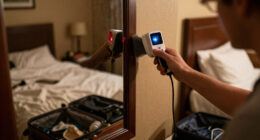
| Portable Wall Microphone and Pipe Leak Detector |  | Best for Pipe and Wall Diagnosis | Battery capacity: 200 mAh | Charging port: Yes | Earphone port: Yes | VIEW ON AMAZON | See Our Full Breakdown |
| 132GB Digital Voice Recorder with Voice Activation and USB-C | 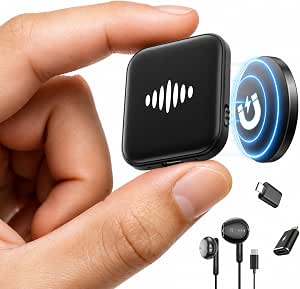 | Best for Accessory Flexibility | Storage: 132GB | Maximum audio storage: Up to 9,800 hours at 32 kbps | Continuous recording time: Up to 70 hours | VIEW ON AMAZON | See Our Full Breakdown |
More Details on Our Top Picks
Nanezan NZ007 128GB Magnetic Voice-Activated Recorder
The Nanezan NZ007 suits people who want a recorder that can stay ready through long stretches of classes, meetings, or interviews. Its 128GB storage and stated capacity of up to 1,600 recording hours reduce the need to clear files often, while up to 70 hours of battery life supports extended use between charges. One-touch recording keeps setup simple, and the built-in magnet offers a hands-free placement option on metal surfaces. Compared with the BUKUCCETA 72GB, the Nanezan gives you more storage, while the BUKUCCETA lists timer recording and auto-save. The NZ007’s zinc alloy shell adds a sturdy material choice, but the supplied information does not detail recording quality, and the maximum recording time alone does not tell you how clear speech will sound. This pick makes the most sense when capacity and simple operation matter more than documented audio performance.
Pros:- 128GB storage provides more capacity than the 72GB BUKUCCETA recorder.
- Up to 70 hours of battery life suits extended recording schedules.
- Built-in magnet allows attachment to suitable metal surfaces.
- One-touch recording keeps operation simple.
Cons:- Recording quality is not described in detail.
- Maximum recording hours do not specify the audio quality at that capacity.
Best for: Students, interviewers, and meeting attendees who want high onboard storage and straightforward one-touch recording.
Not ideal for: Buyers who need documented microphone performance or detailed audio-quality controls before choosing a recorder.
- Model:NZ007
- Storage:128GB
- Maximum recording time:Up to 1,600 hours
- Battery life:Up to 70 hours
- Weight:1 oz
- Material:Zinc alloy
- Recording features:Voice activation, built-in magnet, one-touch recording
Our verdict“Choose the Nanezan NZ007 if high storage and long battery life matter more to you than detailed audio-quality information.”
iBstone Nova Invisible Hearing Aids for Seniors
The iBstone Nova is the only hearing-support option in this five-product group, so it serves a different need from the recorders and directional microphone. Its one-button control and operation without an app or setup make it a straightforward choice for adults with mild hearing loss who prefer fewer steps. A 1.5-hour charge is listed to provide up to 20 hours of use, and nine ear tip sizes give buyers several fit options. By comparison, the Nanezan NZ007 captures audio for later listening; it does not amplify conversations for the wearer. The tradeoff is that the Nova is intended for mild hearing loss, and the provided details do not specify noise reduction or sound-adjustment features. Buyers should also weigh in-canal fit carefully, since comfort and fit can vary. This model favors simple controls and an unobtrusive design over configurable listening features.
Pros:- One-button volume control avoids app-based setup.
- Up to 20 hours of use is listed from a 1.5-hour charge.
- Nine ear tip sizes offer several fit options.
- Lightweight, in-canal design weighs 1.4 g.
Cons:- Intended for adults with mild hearing loss, limiting its stated use.
- Noise reduction and sound-adjustment details are not provided.
- In-canal fit may not suit everyone.
Best for: Adults with mild hearing loss who want simple in-canal hearing aids with physical controls and multiple ear tip sizes.
Not ideal for: People seeking a recorder, users who need detailed sound tuning or noise-reduction information, and those whose hearing needs exceed the stated mild-loss use.
- Intended use:Adults with mild hearing loss
- Weight:1.4 g
- Charging time:1.5 hours
- Battery life:Up to 20 hours
- Controls:One-button volume control
- Ear tip sizes:9 pairs
- Trial period:30 days
- Service period:12 months
Our verdict“Pick the iBstone Nova if you have mild hearing loss and want a simple in-canal device without app setup.”
72GB Magnetic Voice Recorder with Voice Activation and AI Noise Reduction
This 72GB magnetic recorder stands out for buyers who want a choice of recording bitrates, not just a large storage figure. Its listed range of 512–3072 Kbps and WAV format give more explicit recording-format information than the Nanezan NZ007 listing, which does not detail audio quality. That flexibility may help users balance file size against their needs, though the product details do not establish how clearly it captures speech. Voice activation, AI noise reduction, and a slide switch cover hands-free triggering and quick manual starts; USB-C and a 3.5 mm headphone jack add practical connection options. Unlike the BUKUCCETA 72GB, this model lists adjustable bitrates and WAV files, while BUKUCCETA specifies timer recording and auto-save. Its 8,400-hour maximum is given at only 32 Kbps, so buyers should not treat that capacity figure as a promise of high-quality audio.
Pros:- Adjustable 512–3072 Kbps recording bitrates offer format flexibility.
- WAV file format is specified.
- USB-C and 3.5 mm headphone jack support convenient connections.
- Slide switch provides a quick way to start and stop recording.
Cons:- The 8,400-hour capacity is specified at a low 32 Kbps bitrate.
- Recording quality and AI noise-reduction performance are not independently verified.
- At 72GB, it has less storage than the Nanezan NZ007.
Best for: Lecture and meeting recordists who want bitrate options, WAV files, and a quick physical recording switch.
Not ideal for: Buyers who need independently verified noise reduction or expect the maximum stated recording hours at higher bitrates.
- Storage capacity:72GB
- Maximum recording time:Up to 8,400 hours at 32 Kbps
- Recording bitrates:512–3072 Kbps
- File format:WAV
- Microphone:Built-in
- Connections:USB Type-C; 3.5 mm headphone jack
- Dimensions:3.8 x 0.97 x 4.4 in
- Features:Magnetic attachment, voice activation, AI noise reduction
Our verdict“Choose this recorder if adjustable bitrates and WAV files matter more to you than maximum storage or documented audio performance.”
Sound Shark Parabolic Directional Microphone with TRRS and USB-C Adapters
The Sound Shark parabolic microphone is built for a different listening task than the pocket recorders: aiming a dish toward a distant sound source. It is specified for pickup up to 50 feet away, with 6× mechanical amplification and a tight polar pattern intended to reduce surrounding noise. Its 3.5 mm output and included TRS and USB-C adapters offer more device flexibility than the USB-C connection listed for the 72GB magnetic recorder. The polycarbonate dish and anodized aluminum frame also give buyers concrete material details. Still, a directional microphone requires aiming, and its stated range is not accompanied by independent performance results. Compared with the Nanezan NZ007, this is less suited to discreet, unattended note capture and more appropriate when a user can point the microphone at a particular sound. It is a specialized choice, not a general-purpose recorder.
Pros:- Designed for sound pickup up to 50 feet away.
- Tight polar pattern is intended to reduce ambient sound.
- TRS and USB-C adapters support several device types.
- Impact-resistant polycarbonate dish and anodized aluminum frame are specified.
Cons:- Directional pickup requires aiming at the source.
- The stated range and amplification lack independent performance results.
- Adapters may be needed depending on the connected device.
Best for: Field recordists, hobbyists, and students who can aim a microphone at a distant sound source and connect it to compatible gear.
Not ideal for: People who need a pocket recorder for unattended lectures or meetings, or buyers who need independently verified pickup range.
- Type:Parabolic directional microphone
- Pickup range:Up to 50 feet
- Amplification:6× mechanical
- Output:3.5 mm
- Included adapters:TRS and USB-C
- Dish material:Impact-resistant polycarbonate
- Frame material:Anodized aluminum
- Compatible devices:Laptops, tablets, DSLR cameras, and smartphones
Our verdict“Choose the Sound Shark if you need a directional microphone for distant sounds and can aim it during recording.”
BUKUCCETA 72GB Magnetic Voice-Activated Digital Voice Recorder
The BUKUCCETA 72GB recorder is a strong fit for people who want recording to start by schedule or sound level, with less need to operate a switch each time. It lists timer recording, voice activation, and auto-save when power runs low, a combination that gives it a more automated role than the Nanezan NZ007. One-touch capture remains available for situations where a manual start is easier. Its 70-hour battery claim matches the Nanezan’s stated runtime, while its 72GB storage is lower than the Nanezan’s 128GB. The advertised maximum of 9,800 hours is tied to 192 Kbps, so it is best read alongside the bitrate rather than as a general estimate for every recording. Voice activation starts only above a stated 45 dB threshold, and settings may require consulting the manual.
Pros:- Timer and voice-activated recording support different capture routines.
- Auto-save is specified for low-power situations.
- Up to 70 hours of recording per charge is listed.
- Magnetic, 1-ounce design supports compact placement.
Cons:- Voice activation starts recording only above the stated 45 dB threshold.
- The manual may be needed to configure voice activation.
- 72GB storage is less than the Nanezan NZ007’s 128GB.
Best for: People recording recurring meetings or sessions who want timer, voice-activated, and low-power auto-save options.
Not ideal for: Buyers who need voice activation to capture quiet speech reliably or who prioritize storage capacity above automated features.
- Storage:72GB
- Maximum recording capacity:Up to 9,800 hours at 192 Kbps
- Battery capacity:500mAh
- Recording time per charge:Up to 70 hours
- Recharge time:About 2 hours
- Charging port:Type-C
- Voice activation threshold:45dB
- Dimensions and weight:0.4 inches thick; 1 ounce
- Features:AI noise reduction, magnetic attachment, timer recording, one-touch recording, auto-save
Our verdict“Choose the BUKUCCETA if scheduled capture and auto-save matter more than having the largest storage capacity.”
ZIPCIDE 64GB Digital Voice Recorder with Voice Activation and Noise Reduction
One-touch recording and timestamped files make the ZIPCIDE a straightforward choice for capturing classes, interviews, or reminders. Its included 64GB TF card holds up to 776 hours at the stated 192 kbps rate, and expandable memory leaves room for more. Compared with the Xelarvex 72GB Voice Recorder, ZIPCIDE offers less stated storage and much shorter continuous recording time, but it includes headphones and a broader set of setup accessories. The AI and DSP noise reduction is intended to help with vocal clarity, though it is not a substitute for a well-placed microphone. One practical catch: voice activation requires computer setup, so it is less ready to use for someone who wants that feature immediately. A 15-hour recording limit per charge also suits shorter sessions better than extended events.
Pros:- One-touch recording and timestamped files simplify capture and later file sorting.
- Included 64GB TF card stores up to 776 hours at the stated 192 kbps rate.
- Expandable memory allows additional storage.
- Headphones and several recording accessories are included.
Cons:- Voice activation must be enabled through computer setup.
- Continuous recording is limited to up to 15 hours per charge.
- Noise reduction performance is described by the product but not quantified.
Best for: Students and interviewers who want a simple recorder with one-touch operation, timestamped files, and included playback headphones.
Not ideal for: People recording all-day events or anyone who needs voice activation without first configuring it on a computer.
- Storage:64GB TF card included; expandable memory supported
- Recording capacity:Up to 776 hours at 192 kbps
- Continuous recording:Up to 15 hours
- Battery capacity:270mAh
- Headphone playback:Up to 30 hours
- Charging time:1.5 hours
- Noise reduction:AI and DSP chip with intelligent digital noise reduction
- Included accessories:TF card, wired headphones, Micro-USB cable, controller, 5 replacement refills, screwdriver, and manual
Our verdict“Choose ZIPCIDE for accessible one-touch recording and bundled playback gear, provided 15 hours per charge covers your sessions.”
Elasound Voice Recorder with Noise Reduction, Voice Activation, and 128GB Storage
For buyers who need a recorder to keep running through long sessions, the Elasound’s stated 100-hour continuous recording time is its clearest distinction. That far exceeds the ZIPCIDE’s 15-hour limit and the Xelarvex’s 48-hour claim, making Elasound better suited to multi-day note capture between charges. Its 128GB TF card and USB-C connection also provide ample storage and a familiar way to transfer files. The listed capacity of up to 9,800 hours depends on using the low 32 kbps setting, so that figure should not be treated as a guarantee at higher recording quality. Triple noise reduction and voice activation are useful on paper, while the included headphones and clip-on microphone add flexibility. The tradeoff is a larger, heavier body than a pocket-first recorder, and its storage listing conflicts with another stated capacity.
Pros:- Up to 100 hours of continuous recording is suited to extended use between charges.
- 128GB TF card provides substantial included storage.
- USB-C connectivity supports convenient transfers.
- Clip-on microphone, headphones, and adapters are included.
Cons:- The stated 9,800-hour capacity applies at 32 kbps.
- Storage is listed inconsistently as 128GB and 136GB.
- At 0.17 kg and 4.5 × 4 × 1.1 inches, it is less compact than pocket-focused options.
Best for: Researchers, students, and meeting attendees who need long stretches of voice capture between charges and want USB-C file transfer.
Not ideal for: Buyers prioritizing a small, lightweight recorder or those who need a clearly consistent storage-capacity specification.
- Storage:128GB TF card; another specification lists 136GB
- Audio storage capacity:Up to 9,800 hours at 32 kbps
- Continuous recording:Up to 100 hours
- Audio format:MP3
- Connectivity:USB Type-C; 3.5 mm headphone jack
- Recording features:Voice activation and triple noise reduction
- Dimensions:4.5 × 4 × 1.1 in
- Weight:0.17 kg
Our verdict“Pick Elasound when long recording time matters more than compact size and you can accept the capacity listing’s inconsistency.”
Retekess TT119 Assistive Listening and Church Translation System with 1 Transmitter and 10 Receivers
The Retekess TT119 serves a different listening need from the handheld recorders in this roundup: it sends live audio to a group through one transmitter and 10 receivers. Its stated 300 m range and 17 channels make it suited to venues that need to serve multiple groups or language channels, while XLR, AUX, RCA, and USB inputs help it connect to common audio sources. Compared with the Sound Shark Parabolic Directional Microphone, which is designed to capture distant sound for an individual listener, the TT119 distributes a source signal to many listeners. It also supports interpreter monitoring and audio recording. The system’s tradeoffs are its venue-oriented size and setup, receiver dependence on two AA batteries, and a mismatch between the receiver model named in the title and description. It is not a personal pocket listening device.
Pros:- One transmitter and 10 receivers support group listening.
- Up to 300 m stated range suits larger venues.
- 17 channels can accommodate multiple language groups.
- XLR, AUX, RCA, and USB inputs widen source compatibility.
Cons:- Each receiver requires two AA batteries and runs up to 10 hours.
- The receiver model is listed differently between the title and description.
- The 3.86 kg system and large case dimensions are less convenient for personal use.
Best for: Churches, tour operators, and meeting organizers who need to distribute a speaker or interpreter’s audio to a group.
Not ideal for: Individuals seeking a compact personal listening aid or a portable recorder for capturing nearby conversations.
- System configuration:1 transmitter and 10 receivers
- Working range:Up to 300 m (984 ft)
- Channels:17
- Audio:Mono by default; stereo selectable
- Inputs:XLR, AUX, RCA, USB
- Receiver battery:2 AA batteries
- Receiver battery life:Up to 10 hours
- Receiver weight:90 g
Our verdict“Choose the TT119 for live group listening and translation across a venue, not for individual portable listening.”
Vivtone Supermini Rechargeable Digital Hearing Aids
Unlike the recorders and venue system in this group, the Vivtone Supermini is intended to stay in the ear for everyday listening. Its in-canal form and four included earbud sizes give wearers options for finding a more secure, less conspicuous fit. Two listening modes cover everyday and noisy settings, while the memory function retains a preferred setting and automatic on/off reduces routine handling. The stated battery life of over 16 hours per charge is longer than the TT119 receiver’s up-to-10-hour run, though the TT119 serves groups and is not a personal hearing aid. Compared with a voice recorder, Vivtone is for listening as sound happens rather than saving audio for later. Its main compromises are limited mode choice and the uncertainty of individual fit and comfort; the charging case adds power, but standby is around one week.
Pros:- In-canal design is compact and intended for discreet wear.
- Two modes address everyday and noisy environments.
- Over 16 hours of use per charge supports a full day for many wearers.
- Four earbud sizes and automatic on/off add fit and handling flexibility.
Cons:- Only two listening modes are specified.
- Fit and comfort vary by wearer.
- Charging case standby power is stated at around one week.
Best for: Wearers seeking compact rechargeable in-canal hearing aids with a small set of listening modes for daily use.
Not ideal for: People who need many adjustable listening programs or cannot find a comfortable fit among the supplied earbud sizes.
- Type:In-canal digital hearing aids
- Sound processing:16-channel
- Listening modes:2
- Battery life:Over 16 hours per charge
- Charging time:About 2 hours
- Features:Auto on/off and memory function
- Included earbud sizes:X-small, small, medium, and large
- Charging case standby power:Around 1 week
Our verdict“Consider Vivtone for discreet daily listening with simple controls, if its in-canal fit and two modes suit your needs.”
Xelarvex 72GB Voice Recorder with Voice Activation and AI Noise Reduction
At one ounce, the Xelarvex is the easiest pick here to carry unobtrusively while recording. Its stated 48 hours of continuous recording per charge is a sizable step up from the ZIPCIDE’s 15 hours, though it trails Elasound’s 100-hour claim. That balance makes Xelarvex a stronger fit for long interviews or lecture days when weight matters but frequent charging would be inconvenient. The 72GB storage is listed for up to 4,800 hours at 192 kbps, and voice activation can reduce silent gaps that would otherwise take space and review time. Automatic saving also helps preserve recordings. A meaningful limitation is its two-hour maximum file duration, which divides longer sessions into multiple files; the AI noise reduction claim also lacks a stated performance measure. Buyers wanting continuous files should look elsewhere.
Pros:- One-ounce weight makes it easy to carry.
- Up to 48 hours of continuous recording per charge exceeds ZIPCIDE’s stated runtime.
- Voice activation can reduce silent gaps in recordings.
- Automatic file saving helps preserve captured sessions.
Cons:- Files are limited to two hours each, so long sessions are split.
- AI noise reduction performance is not quantified.
- Its 48-hour runtime is shorter than Elasound’s stated 100 hours.
Best for: Students, journalists, and field note-takers who want a lightweight recorder that can run through extended sessions.
Not ideal for: People who need a single recording file longer than two hours or want documented noise-reduction performance.
- Storage:72GB
- Recording capacity:Up to 4,800 hours at 192 kbps
- Battery life:Up to 48 hours of continuous recording
- Charging time:1.5 hours
- Maximum file duration:2 hours per file
- Weight:1 ounce
- Features:Voice activation, AI noise reduction, automatic file saving
Our verdict“Choose Xelarvex for lightweight extended recording, provided two-hour file segments fit your workflow.”
Pexqil 136GB Voice Recorder with AI Noise Reduction and Voice Activation
The Pexqil 136GB recorder suits people who need a lightweight device ready for long recording stretches. Its stated 48-hour battery life and voice activation can help capture spoken portions while limiting silent gaps between them. Compared with the 136GB Magnetic Voice-Activated Recorder, it has less claimed continuous runtime, but its 1-ounce weight and short stated charging time make it easy to carry and recharge between sessions. The 136GB storage is ample on paper, though the advertised 18,800-hour capacity depends on recording settings, so I would not treat that figure as a fixed real-world duration. DSP 5.0 noise reduction and OTG transfers add flexibility, but buyers should weigh those product claims against the lack of detail on supported formats and recording quality.
Pros:- 136GB of built-in storage
- Voice activation can reduce silent gaps in recordings
- OTG transfer supports phones and computers
- Weighs 1 ounce and claims up to 48 hours of recording per charge
Cons:- The 18,800-hour capacity depends on recording quality and file settings
- Its stated 48-hour runtime is shorter than the 100-hour claim for the 136GB Magnetic Voice-Activated Recorder
- Noise-reduction performance is described by the listing without independent verification
Best for: Students or interviewers who want a very light recorder for frequent sessions and phone or computer file transfers
Not ideal for: Buyers who need the longest stated continuous runtime or independently documented noise-filtering performance
- Storage:136GB
- Recording capacity:Up to 18,800 hours
- Noise reduction:DSP 5.0 AI; listing claims filtering up to 97% of ambient noise
- Recording modes:Voice-activated and one-button
- Data transfer:OTG; connects to phones and computers
- Charging time:About 1.5 hours
- Battery life:Up to 48 hours of continuous recording
- Weight:1 ounce
Our verdict“Choose the Pexqil if low weight, voice activation, and broad device transfer matter more than maximum stated runtime.”
HAUSBELL Parabolic Listening Kit with 8x Monocular and Headphones
The HAUSBELL Parabolic Listening Kit is the lineup’s specialized pick for pairing distant sound amplification with wildlife viewing. Its 8x monocular and parabolic microphone give it a different purpose from recorders such as the Pexqil 136GB, which are built to capture longer voice sessions and transfer files. Here, the appeal is one-hand outdoor observation, with headphones and a 9V battery included. The tradeoff is its 12-second recording and playback limit: that may help replay a brief sound, but it cannot preserve a long observation for later listening. The plastic construction and stated range of up to 160 feet also make it a more focused, activity-specific choice than a general-purpose listening device.
Pros:- Pairs parabolic sound amplification with 8x monocular viewing
- Includes headphones and a 9V battery
- Lightweight, under 1 pound, with one-hand operation
- Can record and replay sounds for up to 12 seconds
Cons:- Recording is limited to 12 seconds
- Plastic construction may be less suited to rough outdoor use
- Its observation-focused design does not offer the extended voice recording and file-transfer features of the Pexqil 136GB
Best for: Families with children ages 6–12 who want a lightweight kit for brief outdoor wildlife listening and viewing
Not ideal for: Birders or field researchers who need extended recordings, detailed audio capture, or long-term sound monitoring
- Magnification:8x
- Listening range:Up to 160 ft
- Recording time:12 seconds
- Battery:9V, included
- Material:Plastic
- Weight:Under 1 lb
- Recommended age:6–12 years
Our verdict“Pick the HAUSBELL for short outdoor sound-and-sight observations, and skip it if you need recordings you can keep.”
136GB Magnetic Voice-Activated Recorder with AI Noise Reduction and USB-C
For recording where a recorder needs to stay put, the double-sided magnetic attachment gives this model a practical distinction from the Pexqil 136GB: it can be mounted on a compatible metal surface for hands-free placement. The listed 100-hour continuous runtime is also the longest stated battery figure among these five products, making it a stronger fit for extended sessions than the Pexqil’s 48-hour claim or the 132GB recorder’s 70-hour claim. Voice activation and AI noise filtering add useful recording controls, while USB-C and OTG support file transfer. Its listing does not give a weight, charging time, or exact recording formats, however, and the claimed 18,800-hour storage duration depends on settings. Magnetic mounting also only helps when a suitable surface is available.
Pros:- 136GB internal storage
- Claims up to 100 hours of continuous recording
- Double-sided magnetic attachment enables hands-free placement on suitable surfaces
- USB-C and OTG support file transfer
Cons:- The 18,800-hour storage claim depends on recording settings
- The listing does not specify weight or charging time
- Magnetic placement is useful only when a compatible surface is available
Best for: People recording long meetings or interviews who can use a metal surface for secure hands-free placement
Not ideal for: Buyers who need a clearly documented size, charging time, or recording format, or who cannot rely on a magnetic mounting surface
- Storage capacity:136GB
- Maximum continuous recording time:Up to 100 hours
- Claimed storage duration:Up to 18,800 hours; dependent on recording settings
- Connectivity:USB Type-C and OTG
- Microphone:Built-in
- Headphone jack:3.5 mm
- Features:Voice activation, AI noise filtering, MP3 playback, double-sided magnetic attachment
Our verdict“Choose this recorder for long sessions and magnetic mounting when its unspecified size and setup details are acceptable.”
Portable Wall Microphone and Pipe Leak Detector
This wall microphone and pipe leak detector is designed for listening through building materials to locate possible leaks or floor-heating issues. Its high-sensitivity probe and earphones make it a diagnostic tool, unlike the HAUSBELL Parabolic Listening Kit, which is aimed at outdoor observation, or the voice recorders in this batch, which capture and store audio. Support for concrete, steel, wood, iron, glass, and hollow block gives it broad stated surface compatibility. A rechargeable 200 mAh battery and simple on/off knob keep the setup focused, though the listing gives no runtime or charging-time figure. Buyers should also account for the required earphones and the practical limits of locating a subtle sound: this amplifies listening, but the product data does not describe recording, display, or measurement functions.
Pros:- High-sensitivity probe is intended to amplify subtle sounds
- Listed for concrete, steel, wood, iron, glass, and hollow block
- Portable design with a rechargeable battery
- Simple on/off knob
Cons:- Requires earphones to hear amplified sounds
- Battery runtime and charging time are not specified
- The listing describes sound amplification but does not provide recording or measurement functions
Best for: Homeowners or maintenance workers tracing suspected water leaks or floor-heating problems through walls, floors, and pipes
Not ideal for: People seeking a device to save audio, monitor wildlife, or listen without connecting earphones
- Battery capacity:200 mAh
- Charging port:Yes
- Earphone port:Yes
- Controls:On/off knob
- Supported surfaces:Concrete, steel, wood, iron, glass, and hollow block
- Use cases:Pipe leak detection, water detection, and floor-heating detection
Our verdict“Choose this detector for hands-on leak listening through building materials, not for recording or general sound observation.”
132GB Digital Voice Recorder with Voice Activation and USB-C
The 132GB digital voice recorder is the most accessory-ready choice here: it includes a clip-on microphone, headphones, and both OTG-C and OTG-Lightning adapters. That bundle can suit someone who expects to record in different settings and move files between devices. Compared with the Pexqil 136GB, it offers slightly less storage but lists more included recording and transfer accessories; its stated 70-hour continuous runtime sits between the Pexqil’s 48 hours and the magnetic 136GB model’s 100 hours. Voice activation and AI noise reduction are listed, though the recording-time claims vary between the title and product details. At 27.22 g, it remains compact, but buyers should check which runtime claim applies to their chosen mode and treat noise-filtering performance as a product claim.
Pros:- Includes a clip-on microphone, headphones, and USB-C and Lightning OTG adapters
- 132GB storage with voice-activated recording
- MP3 playback and 3.5 mm headphone jack
- Compact size and 27.22 g weight
Cons:- Recording-time claims vary between the title and product details
- Continuous recording claim of up to 70 hours is below the magnetic 136GB recorder’s stated 100 hours
- Noise-reduction performance is listed but not independently verified
Best for: Students, interviewers, or mobile note-takers who want included microphone and adapters for transfers across phone types
Not ideal for: Buyers prioritizing the highest storage or longest stated continuous runtime, or those who need consistent recording-time details
- Storage:132GB
- Maximum audio storage:Up to 9,800 hours at 32 kbps
- Continuous recording time:Up to 70 hours
- Voice-activated recording time:Up to 100 hours
- Charging time:2 hours
- Audio format:MP3
- Connections:USB 3.0 Type-C and OTG
- Dimensions and weight:0.2 x 1.8 x 2.2 inches; 27.22 g
- Included accessories:Clip-on microphone, headphones, OTG-C adapter, OTG-Lightning adapter, USB-C cable
Our verdict“Pick this model if its included microphone and transfer adapters fit your workflow better than maximum storage or runtime.”

How We Picked
I grouped these products by what they help a buyer hear or capture: portable voice recorders, personal hearing aids, directional microphones, a group assistive listening system, and a pipe leak detector. I compared each on its fit for that task, including recording capacity and voice activation for recorders, wearing and charging needs for hearing aids, aiming and included connections for directional microphones, and the number of listeners supported by the Retekess system.
The ranking favors usefulness for the widest clearly stated use case, then weighs practical distinctions such as storage, portability, setup, and specialization. The Nanezan NZ007 leads among the general-purpose recorders because its capacity and voice activation support varied recording sessions. Specialized products rank for the situations where they make more sense: the Sound Shark for focused pickup and the Retekess for multiple listeners. Models with similar headline functions are separated by capacity or stated connection features, while narrow tools such as the pipe leak detector rank for their specific task rather than broad listening use.
Factors to Consider When Choosing Listening Devices
Before comparing individual models, pin down what “listening” means for your situation. A recorder stores sound, a hearing aid makes nearby sound easier to hear, and a directional microphone targets sound from a particular area. Those jobs overlap only slightly, so a mismatch can leave you with impressive specifications that do not solve your problem.
Choose Between Recording, Amplifying, and Directional Pickup
Start with the outcome you need: a saved audio file, clearer speech in the moment, or stronger pickup from a particular direction. A voice recorder is useful when you need to review a lecture, meeting, or personal note later, but it does not function as a hearing aid. Hearing aids are intended to support listening while worn and may be a poor fit if your goal is to capture an event. Parabolic microphones narrow attention toward a sound source, so they can be awkward when people move around or speak from several directions. For shared presentations, a transmitter and receiver system may make more sense than several unrelated personal devices. Buying by the word “listening” alone is a common mistake because it groups tools with different outputs and limitations.
Match the Device to the Listening Environment
Think about distance, background noise, and whether the sound source stays in one place. A recorder can capture a conversation without aiming, but the resulting clarity depends on where it sits and what else is audible. Directional microphones call for deliberate orientation and are less convenient in a lively room with multiple speakers. A hearing aid is designed for sounds around the wearer rather than distant sources across a field. In a church, classroom, or guided tour, a group system can distribute audio directly to several listeners. Consider the room and the people in it before treating a noise-reduction label as a guarantee of intelligibility.
Treat Storage as Recording Time, Not a Quality Score
Large storage capacity is helpful if you record frequently or keep sessions for a long time, but it does not tell you how clear a recording will be. Recording format and settings affect how much audio fits, so check the device’s instructions for realistic capacity details before relying on a headline number. Voice activation may reduce silent sections in some situations, yet it can miss quiet speech or the start of a sentence depending on its threshold. For occasional interviews, ease of starting, stopping, and moving files may matter more than maximum capacity. Decide how you will transfer, label, and back up recordings before the first important session. That habit can matter more than adding storage you never use.
Check Fit, Setup, and Everyday Handling
A device that is difficult to wear, aim, or operate can become a drawer item even when its feature list looks useful. Hearing aids need a comfortable fit and controls the wearer can manage; rechargeable designs also make charging part of the daily routine. A parabolic kit may include a monocular and headphones, which adds useful components but also means more setup and handling than a pocket recorder. For recording, check button access, charging or battery requirements, and how easily you can confirm a recording has started. If the device will be used by an older adult or in a group, simplicity may be more useful than a long list of modes. Choose around the least convenient part of the routine, not just the first use.
Pay for Specialization Only When the Task Calls for It
Specialized equipment earns its place when the job is specific: a multi-receiver system for a venue, a directional microphone for a distant source, or a pipe detector for locating leaks. For everyday note-taking, a straightforward recorder may be easier to carry and operate than a more specialized setup. Likewise, a hearing aid should be chosen around the listener’s needs rather than its resemblance to a tiny audio gadget. A higher storage figure or extra adapter is useful only if it addresses a real constraint in your routine. Check what is included, especially cables, receivers, headphones, and connection adapters, because missing pieces can change how ready a product is to use. Paying for the right capability can simplify the task; paying for an unrelated one adds bulk and setup without solving the problem.
Frequently Asked Questions
Can a voice recorder help me hear conversations more clearly?
A voice recorder captures sound for later playback; it does not amplify nearby speech for the wearer in the same way a hearing aid is intended to. It may help if you want to revisit a lecture or discussion, provided recording is permitted and the audio is captured clearly enough. Placement and background noise still affect what you can understand from playback. If your main need is hearing people in real time, compare hearing aids or an assistive listening system instead. Pick a recorder only when keeping an audio record is part of the goal.
Should I choose a recorder with 128GB or more?
Higher capacity is useful for frequent or lengthy recording sessions and for keeping files on the device between transfers. It is less important if you record short notes and regularly move files elsewhere. Capacity alone does not indicate recording clarity, battery life, or how easy the files are to organize. Check the recording settings and transfer method as well as the headline storage figure. The larger models in this roundup make most sense when your recording habits would otherwise require frequent file management.
When is a parabolic microphone a better choice than a recorder?
A parabolic microphone is a better fit when you need to focus pickup toward a particular distant sound source. A recorder is more convenient for nearby speech, general notes, or sessions where the source changes position. Directional equipment usually takes more aiming and setup, so it can be frustrating in conversations with several speakers. Consider whether you can stay oriented toward the sound and whether the included adapters match your recording device. For broad, casual use, a portable recorder is usually easier to manage.
Is the Retekess TT119 suitable for one listener?
It can serve a single listener, but its transmitter-and-receiver format is designed to distribute audio to multiple people. That can be useful for a venue, tour, or group that needs shared listening or translation. For an individual who simply wants clearer everyday hearing, a personal hearing aid may involve less equipment. Think about who will carry and manage the transmitter, and how the receivers will be handed out and charged. The system makes more sense when its group capacity solves a real coordination need.
What should I check before choosing a hearing aid for an older adult?
Focus on fit, comfort, charging routine, and whether the wearer can manage the controls independently. A compact rechargeable model may reduce battery handling, but charging still has to fit into the person’s daily habits. Check what the product says about adjustment and support, since amplification needs can vary from person to person. A device that is uncomfortable or confusing may go unused regardless of its size. If hearing difficulty is new, changing, or significant, a hearing professional can help identify appropriate options.
Conclusion
For a flexible recorder, I’d start with the Nanezan NZ007 as the best overall pick; it pairs voice activation with generous storage. For value, compare the ZIPCIDE 64GB or the 72GB recorders if their capacity and stated functions cover your sessions without extra headroom. The Pexqil 136GB is the best premium-style choice for buyers who prioritize storage, while the Retekess TT119 is the clearest fit for group listening. Beginners who want straightforward personal recording can start with a basic voice-activated recorder and prioritize simple controls over extra capacity. Choose the Vivtone Supermini or iBstone Nova for personal hearing support, the Sound Shark or HAUSBELL for directional pickup, and the pipe leak detector only when locating leaks is the task.