When choosing a network switch, the key factors are performance, port count, manageability, and build quality. The NETGEAR GS316v3 stands out as the best overall due to its solid performance and reliability, making it suitable for most users. For those on a tighter budget, the TP-Link LS1005G offers essential gigabit connectivity at a very affordable price, though it lacks advanced features. Meanwhile, the TP-Link TL-SG116 strikes a good balance for users needing more ports without complexity. Readers should consider their specific needs—such as port quantity, unmanaged vs. managed, and network speed—before making a choice. Continue reading for a detailed breakdown of the top options and what sets each apart.

Get privacy and security gear delivered free with Prime
- Fast, free delivery on millions of items
- Prime Video, Amazon Music and more included
- Member-only deals all year
Key Takeaways
- The best switches combine reliability with enough ports for most home and small office setups.
- Multi-Gigabit options are increasingly important for future-proofing faster local networks.
- Unmanaged switches are simpler and more affordable but lack advanced control features.
- Build quality, such as metal housing and fanless design, impacts durability and noise levels.
- Price often correlates with port count and manageability features, but some budget models deliver surprising value.
| NETGEAR 16-Port Gigabit Ethernet Unmanaged Network Switch (GS316v3) |  | Best Overall for Versatile, High-Speed Networking | Number of Ports: 16 | Port Speed: 1.0Gbps | Design: Fanless, compact metal | VIEW ON AMAZON | See Our Full Breakdown |
| NETGEAR 8-Port Gigabit Ethernet Unmanaged Network Switch (GS308) | 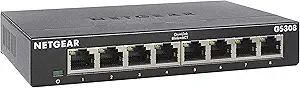 | Best Value for Small Network Expansion | Number of Ports: 8 | Compatible Devices: Computers, servers, switches | Voltage: 12 volts DC | VIEW ON AMAZON | See Our Full Breakdown |
| TP-Link LS1005G Litewave 5 Port Gigabit Ethernet Unmanaged Switch |  | Best Compact Switch for Space-Constrained Setups | Number of Ports: 5 | Port Speed: 10/100/1000Mbps | Uplink Ports: 1 | VIEW ON AMAZON | See Our Full Breakdown |
| NETGEAR 5-Port Gigabit Ethernet Unmanaged Network Switch (GS305) |  | Best Compact Switch for Basic Small Networks | Ports: 5 x 1.0Gbps Ethernet | Design: Fanless, compact metal | Compatibility: Works with Cat5e or Cat6 cables | VIEW ON AMAZON | See Our Full Breakdown |
| NETGEAR 24-Port Gigabit Ethernet Unmanaged Network Switch (GS324) |  | Best for Expanding Small Networks with High Capacity | Number of Ports: 24 | Data Transfer Rate: 24 gigabits_per_second | Case Material: Metal | VIEW ON AMAZON | See Our Full Breakdown |
| TP-Link TL-SG105S-M2 5-Port Multi-Gigabit Unmanaged Ethernet Switch |  | Best for High-Speed Home and Small Office Upgrades | Number of Ports: 5 | Compatible Devices: Desktop | Voltage: 9 volts of direct current | VIEW ON AMAZON | See Our Full Breakdown |
| TP-Link TL-SG116 16-Port Gigabit Unmanaged Ethernet Switch |  | Best for Expanding Small to Medium Networks | Number of Ports: 16 | Port Speed: Gigabit (10/100/1000Mbps) | Energy Efficiency: Yes | VIEW ON AMAZON | See Our Full Breakdown |
| TP-Link TL-SG108S-M2 8-Port Multi-Gigabit 2.5G Unmanaged Ethernet Switch |  | Best for Gaming, Streaming, and Small Networks Needing Fast Connections | Ports: 8 x 2.5-Gigabit | Switching Capacity: 40 Gbps | Auto-Negotiation: Yes | VIEW ON AMAZON | See Our Full Breakdown |
| TP-Link TL-SG105 5-Port Gigabit Unmanaged Ethernet Switch |  | Best for Basic Network Expansion for Small Setups | Ports: 5 x 10/100/1000Mbps | Flow Control: IEEE 802.3X | QoS: Port-based 802.1p/DSCP | VIEW ON AMAZON | See Our Full Breakdown |
| TP-Link 8 Port Gigabit Ethernet Network Switch |  | Best for Silent, High-Speed Network Expansion | Number of Ports: 8 | Port Type: RJ45 | Data Transfer Rate: 1000 Mbps | VIEW ON AMAZON | See Our Full Breakdown |
| network switch | Number of Ports | Design |
|---|---|---|
| NETGEAR 16-Port Gigabit Ethern | 16 | Fanless, compact metal |
| NETGEAR 8-Port Gigabit Etherne | 8 | — |
| TP-Link LS1005G Litewave 5 Por | 5 | — |
| NETGEAR 5-Port Gigabit Etherne | — | Fanless, compact metal |
| NETGEAR 24-Port Gigabit Ethern | 24 | — |
| TP-Link TL-SG105S-M2 5-Port Mu | 5 | — |
| TP-Link TL-SG116 16-Port Gigab | 16 | Fanless, Desktop or Wall-mount |
| TP-Link TL-SG108S-M2 8-Port Mu | — | Fanless, silent |
| TP-Link TL-SG105 5-Port Gigabi | — | Fanless metal casing |
| TP-Link 8 Port Gigabit Etherne | 8 | — |
More Details on Our Top Picks
NETGEAR 16-Port Gigabit Ethernet Unmanaged Network Switch (GS316v3)
The NETGEAR GS316v3 stands out for offering a generous 16 ports with high-speed gigabit connectivity, making it suitable for expanding networks without complexity. Its plug-and-play design ensures quick setup, and the fanless, compact metal build provides silent operation, ideal for office or home environments. Compared with the smaller GS308, this switch handles more devices simultaneously, but it lacks advanced management features, which might be a limitation for users needing network control. Its regional restriction to the U.S. & CA could be a concern for international deployments.
Pros:- High-speed gigabit ports support fast data transfer for multiple devices
- Plug-and-play setup simplifies deployment without configuration
- Silent, fanless operation for noise-sensitive environments
- Versatile mounting options for flexible placement
Cons:- Lacks advanced management capabilities for network control
- Region-specific design limits international use
Best for: Small to medium-sized offices or tech-savvy home users needing high capacity without management complexity.
Not ideal for: Large enterprise networks requiring managed switches or advanced VLAN support.
- Number of Ports:16
- Port Speed:1.0Gbps
- Design:Fanless, compact metal
- Mounting Options:Desktop or wall-mount
- Energy Efficiency:IEEE 802.3az compliant
Our verdict“This switch is perfect for users needing high port density with simple, silent operation, but not for those requiring advanced network management.”
NETGEAR 8-Port Gigabit Ethernet Unmanaged Network Switch (GS308)
The NETGEAR GS308 offers a straightforward 8-port solution for expanding small networks, making it a solid choice over the larger GS324 when fewer ports suffice. Its plug-and-play setup and durable metal case with versatile mounting options make it reliable for everyday use. However, compared to the GS316v3, it has fewer ports, limiting scalability, and lacks management features, which might be necessary for more complex setups. Its primary focus on unmanaged, small networks means it’s less suited for larger or enterprise environments.
Pros:- Easy plug-and-play setup with no software needed
- Energy-efficient and silent operation
- Compact, durable metal design with mounting flexibility
- Supports high-speed gigabit Ethernet for multiple devices
Cons:- Limited to unmanaged functionality
- Not suitable for large or highly complex networks
Best for: Home offices or small business environments needing reliable gigabit connections with minimal fuss.
Not ideal for: Networks requiring managed switches or larger port counts for future expansion.
- Number of Ports:8
- Compatible Devices:Computers, servers, switches
- Voltage:12 volts DC
- Interface:RJ45
- Data Transfer Rate:1 gigabit per second
- Case Material:Metal
Our verdict“This switch is well-suited for small networks where simplicity and reliability matter most, but it doesn’t support advanced features or scalability.”
TP-Link LS1005G Litewave 5 Port Gigabit Ethernet Unmanaged Switch
The TP-Link LS1005G is a tiny, five-port switch that excels in environments where space is limited, such as behind desks or in small media setups. Its fanless, plug-and-play design ensures quiet operation, and energy-efficient tech helps reduce power use. While it’s perfect for simple setups, its limited number of ports and unmanaged nature mean it’s not suited for larger or more complex networks. Compared with the GS305 or GS316v3, it sacrifices capacity for size, so it’s best for minimal device counts.
Pros:- Compact and lightweight for easy placement
- Energy-efficient technology reduces power consumption
- Fanless, quiet operation
- Plug-and-play setup for straightforward deployment
Cons:- Limited to 5 ports, restricting network growth
- No management features for advanced control
Best for: Users needing a small, reliable switch for a handful of devices in tight spaces.
Not ideal for: Larger networks or users who want management features or more ports for future expansion.
- Number of Ports:5
- Port Speed:10/100/1000Mbps
- Uplink Ports:1
- Dimensions:2.8 x 3.5 x 0.9 inches
- Weight:2.8 ounces
- Flow Control:IEEE 802.3X
Our verdict“Ideal for small, space-constrained environments where simplicity and quiet operation are priorities, but not for expanding networks.”
NETGEAR 5-Port Gigabit Ethernet Unmanaged Network Switch (GS305)
The NETGEAR GS305 provides a reliable 5-port gigabit solution with a fanless, compact metal design, making it suitable for small setups or as a secondary switch. Its straightforward plug-and-play operation and versatile mounting options make it a hassle-free choice. Compared with the LS1005G, the GS305’s metal case offers extra durability, but both are limited to unmanaged operation, which means no network control for advanced users. Its design targets smaller or less complex environments, with no PoE support.
Pros:- Easy plug-and-play setup
- Silent operation due to fanless design
- Durable metal enclosure with versatile mounting options
- Supports gigabit speeds for multiple devices
Cons:- Unmanaged, limiting control over network traffic
- Limited to small-scale setups without PoE
Best for: Small office or home users needing a durable, quiet switch with simple setup.
Not ideal for: Larger networks or those requiring managed features or PoE support.
- Ports:5 x 1.0Gbps Ethernet
- Design:Fanless, compact metal
- Compatibility:Works with Cat5e or Cat6 cables
- Energy Efficiency:IEEE 802.3az
Our verdict“A solid choice for small, quiet networks where durability and simplicity matter, but not suitable for managed or PoE needs.”
NETGEAR 24-Port Gigabit Ethernet Unmanaged Network Switch (GS324)
The NETGEAR GS324 offers 24 ports for users needing substantial expansion in small office or home environments. Its plug-and-play setup coupled with a durable metal enclosure makes it a reliable backbone for multi-device setups. While it’s a versatile unmanaged switch, it doesn’t include management features or PoE support, which might limit its use in more complex or power-dependent setups. Compared with the smaller GS305, the GS324 excels in capacity but sacrifices some portability and simplicity.
Pros:- High port density supports numerous devices
- Silent, fanless operation for quiet environments
- Metal enclosure enhances durability
- Easy to set up with plug-and-play convenience
Cons:- No management capabilities for network control
- Lacks PoE support for powering devices
Best for: Small offices or highly connected home environments requiring high port counts without management complexity.
Not ideal for: Networks that need managed switches, PoE functionality, or scalable enterprise features.
- Number of Ports:24
- Data Transfer Rate:24 gigabits_per_second
- Case Material:Metal
- Mounting Options:Desktop, Wall, Rack
- Voltage:230 volts
Our verdict“Ideal for expanding networks with many devices where management and PoE are not priorities, but not suitable for enterprise or managed setups.”
TP-Link TL-SG105S-M2 5-Port Multi-Gigabit Unmanaged Ethernet Switch
This switch stands out for offering multi-gigabit speeds in a compact, fanless design, making it ideal for those upgrading from traditional gigabit connections. Compared with the TP-Link TL-SG105, it delivers faster data transfer with 2.5G ports, though it sacrifices advanced management features. Its sturdy metal case and silent operation make it suitable for quiet environments, but its unmanaged nature limits customization and troubleshooting options. The absence of detailed power supply info might be a concern for some users, and its primary focus on desktop or wall-mount use narrows its flexibility.
Pros:- Supports high-speed 2.5G connections for fast data transfer
- Fanless design ensures silent operation
- Sturdy metal case suitable for various environments
- Plug-and-play setup simplifies installation
Cons:- Limited to unmanaged switch features
- No included power supply details
- Designed primarily for desktop or wall-mount use
Best for: Home users or small office setups needing quick, seamless upgrades without complex management.
Not ideal for: Large enterprise networks requiring managed switches or VLAN configuration, as this model lacks advanced features.
- Number of Ports:5
- Compatible Devices:Desktop
- Voltage:9 volts of direct current
- Interface:RJ45
- Data Transfer Rate:25 gigabits per second
- Switch Type:unmanaged
Our verdict“This switch is best suited for users who want easy, high-speed network upgrades without complexity.”
TP-Link TL-SG116 16-Port Gigabit Unmanaged Ethernet Switch
The TP-Link TL-SG116 makes a compelling case for those needing more ports without sacrificing speed or quiet operation. It offers 16 gigabit ports, making it suitable for expanding networks or small offices that require reliable, high-speed connections. Compared to the TP-Link TL-SG108S-M2, it supports more devices but offers no additional management features—it’s purely plug-and-play. Its energy-efficient, fanless design ensures quiet operation, yet the lack of advanced network management limits flexibility for complex setups. The absence of a pre-installed power supply means users must ensure compatibility with their existing power sources.
Pros:- Easy plug-and-play setup
- Supports traffic prioritization for quality of service
- Energy-efficient with fanless design
- Supports up to 16 devices with gigabit speeds
Cons:- Limited to unmanaged switch features
- No advanced management options
- No included power supply details
Best for: Small to medium-sized offices or workgroups needing simple, reliable network expansion.
Not ideal for: Organizations seeking managed switches with VLAN or traffic prioritization, as this model lacks those capabilities.
- Number of Ports:16
- Port Speed:Gigabit (10/100/1000Mbps)
- Energy Efficiency:Yes
- Flow Control:IEEE 802.3X
- QoS:Port-based 802.1p/DSCP
- Design:Fanless, Desktop or Wall-mount
Our verdict“Ideal for expanding networks in small to medium environments where simplicity and speed matter most.”
TP-Link TL-SG108S-M2 8-Port Multi-Gigabit 2.5G Unmanaged Ethernet Switch
The TL-SG108S-M2 fills a niche for users eager to upgrade their home entertainment or gaming setup with 2.5G speeds. Its 8 ports support high-speed data transfer, making it a good choice for LAN parties or streaming hubs. Compared with the 5-port TL-SG105, it provides more ports but maintains the same unmanaged, plug-and-play simplicity. Its fanless design guarantees silent operation, but it doesn’t support Power over Ethernet (PoE) or advanced network management, limiting its use in more complex setups. The auto-negotiation feature ensures broad device compatibility, simplifying upgrades.
Pros:- Supports high-speed 2.5G connections
- Fanless, silent operation
- Easy upgrade without additional wiring costs
- Auto-negotiation for device compatibility
Cons:- Limited to unmanaged switch functionality
- No PoE support
- No advanced management features
Best for: Gamers, streamers, or small office users needing quick, straightforward network expansion.
Not ideal for: Larger enterprises or setups requiring managed switches or PoE support, as this model is unmanaged and lacks PoE.
- Ports:8 x 2.5-Gigabit
- Switching Capacity:40 Gbps
- Auto-Negotiation:Yes
- Design:Fanless, silent
- Ideal For:LAN parties, home entertainment, small and home offices
Our verdict“This switch makes sense for users who want a simple, fast upgrade for high-speed local connections on a small scale.”
TP-Link TL-SG105 5-Port Gigabit Unmanaged Ethernet Switch
The TL-SG105 offers reliable gigabit performance in a simple, durable package. It’s designed for those who need to expand their existing network without fuss, offering plug-and-play setup and a sturdy metal case. Compared to the TP-Link TL-SG116, it supports fewer devices but remains highly suitable for small setups. Its energy-efficient design reduces power use, and the fanless construction guarantees silent operation, making it ideal for home or small office environments. However, its limited number of ports and lack of management features mean it’s not suitable for larger or more complex networks.
Pros:- Easy plug-and-play setup
- Energy-efficient with low power consumption
- Durable metal case
- Quiet operation
Cons:- Limited to 5 ports, not scalable for larger networks
- No advanced management features
- Basic specifications may not meet enterprise needs
Best for: Small offices or home users needing a straightforward gigabit switch for limited device connectivity.
Not ideal for: Growing networks or those requiring VLANs or traffic management, as this switch lacks such features.
- Ports:5 x 10/100/1000Mbps
- Flow Control:IEEE 802.3X
- QoS:Port-based 802.1p/DSCP
- IGMP Snooping:Yes
- Design:Fanless metal casing
- Warranty:3 years
Our verdict“This switch is perfect for simple, small-scale network expansion where ease and reliability are priorities.”
TP-Link 8 Port Gigabit Ethernet Network Switch
The TL-SG108 emphasizes durability and simplicity, making it a solid choice for expanding wired networks in both home and office contexts. Its 8 gigabit ports support high-speed data transfer and, compared with the TL-SG105, provides more connectivity options. The fanless, metal housing ensures silent operation, and its plug-and-play setup keeps installation straightforward. However, as an unmanaged switch, it offers no advanced features like VLAN support or traffic prioritization, which could limit its use in more demanding setups. Its basic specs make it ideal for those prioritizing reliability over management complexity.
Pros:- Supports high-speed Gigabit Ethernet
- Fanless design for silent operation
- Durable metal housing
- Plug-and-play setup
Cons:- Limited to unmanaged switch functionality
- No advanced management features
- Basic specifications may not suit enterprise needs
Best for: Home or small office environments needing fast, quiet, and reliable wired connections.
Not ideal for: Corporate or enterprise networks where advanced traffic control or management is required, due to its unmanaged nature.
- Number of Ports:8
- Port Type:RJ45
- Data Transfer Rate:1000 Mbps
- Maximum Power:2.77 watts
- Voltage:5 volts
- Material:Metal
Our verdict“A dependable, straightforward switch suited for users who want reliable Gigabit connectivity without complexity.”

How We Picked
These products were evaluated based on performance, build quality, and feature set. Priority was given to models that offer a good balance of value and reliability for various use cases, from simple home networks to small offices. We considered port variety, speed capabilities, manageability options, and overall durability. The ranking reflects a combination of user needs, with more advanced features placing higher for enterprise-ready switches while budget models are assessed for essential performance. This approach ensures the list covers a broad spectrum of requirements, helping buyers identify the best fit for their specific situation.| network switch | Design |
|---|---|
| NETGEAR 16-Port Gigabit Ethern | Fanless, compact metal |
| NETGEAR 8-Port Gigabit Etherne | — |
| TP-Link LS1005G Litewave 5 Por | — |
| NETGEAR 5-Port Gigabit Etherne | Fanless, compact metal |
| NETGEAR 24-Port Gigabit Ethern | — |
| TP-Link TL-SG105S-M2 5-Port Mu | — |
| TP-Link TL-SG116 16-Port Gigab | Fanless, Desktop or Wall-mount |
| TP-Link TL-SG108S-M2 8-Port Mu | Fanless, silent |
| TP-Link TL-SG105 5-Port Gigabi | Fanless metal casing |
| TP-Link 8 Port Gigabit Etherne | — |
Factors to Consider When Choosing Network Switches
Choosing the right network switch depends on understanding several key factors beyond just port count and price. Knowing how features like manageability, speed, and build quality impact your network can prevent costly mistakes and future-proof your setup. Here are the main considerations to keep in mind.Port Count and Speed
The number of ports determines how many devices you can connect directly, so assess your current needs and future expansion plans. Also, consider whether your network requires Gigabit or Multi-Gigabit speeds—especially if you plan to transfer large files or use bandwidth-intensive applications. Investing in Multi-Gigabit switches now can help prevent bottlenecks later, but they typically come at a higher cost. Balancing port quantity and speed is essential for a scalable, high-performance network.
Managed vs. Unmanaged Switches
Unmanaged switches are straightforward plug-and-play devices suitable for simple setups, but they lack advanced control features like VLANs or QoS. Managed switches, though more complex, provide granular control over traffic, security, and network segmentation. For most home users and small offices, unmanaged switches suffice, but larger or more security-conscious environments benefit from managed options. Consider your technical comfort level and future needs when choosing between these types.
Build Quality and Design
Durability matters, especially for switches that will be kept in active use over years. Metal housings tend to last longer and dissipate heat better than plastic cases, which can be important in warmer environments. Fanless designs reduce noise, making them ideal for office or home settings where quiet operation is preferred. Weigh these factors based on your environment to select a switch that combines longevity with quiet performance.
Future-Proofing Features
Look for features like Multi-Gigabit ports or compatibility with the latest Ethernet standards, which can extend the useful life of your switch. While these options usually come at a premium, they help avoid frequent upgrades as your network demands increase. Consider whether your devices support these higher speeds and whether your budget allows for these enhancements to maximize long-term value.
Ease of Use and Management
For users unfamiliar with network configuration, unmanaged switches are appealing due to their simplicity. However, if you need features like traffic prioritization or network segmentation, managed switches are worth the learning curve. Also, check if the switch offers user-friendly management tools, such as a web interface or mobile app, to simplify setup and maintenance. Balancing ease of use with advanced capabilities depends on your technical comfort and network complexity.
Frequently Asked Questions
Do I need a managed switch for my home network?
Most home networks operate efficiently with unmanaged switches, which are simple to set up and use. Managed switches are typically necessary when you require features like network segmentation, security controls, or Quality of Service (QoS) for streaming or gaming. If your setup is straightforward and doesn’t need advanced management, an unmanaged switch will usually meet your needs without adding complexity.
Is a Multi-Gigabit switch worth the investment?
If you regularly transfer large files, stream high-resolution media, or plan to upgrade your devices soon, a Multi-Gigabit switch can offer noticeable improvements. While they cost more upfront, they can reduce bottlenecks in demanding environments. For basic internet browsing or light use, a standard Gigabit switch often suffices, making Multi-Gigabit switches a better fit for future-proofing or high-performance setups.
What is the benefit of a fanless switch?
Fanless switches operate silently, making them ideal for quiet environments like offices or home setups where noise could be distracting. They tend to have fewer moving parts, which can improve longevity, but might be less effective at heat dissipation for high-traffic or densely populated networks. If noise level is a priority, a fanless design provides a significant advantage without sacrificing reliability in typical use cases.
Should I prioritize port quantity over speed?
It depends on your immediate needs and future plans. If you have many devices to connect now, prioritizing port quantity makes sense. However, if you need the fastest data transfer for large files or streaming, focusing on higher speeds like Multi-Gigabit ports might be more beneficial. Ideally, choose a switch that balances both features based on your current and anticipated requirements.
How important is build quality in a network switch?
Build quality impacts the switch’s durability and longevity, especially in environments with high usage or temperature fluctuations. Metal housings and robust design features help prevent damage and improve heat dissipation. Investing in a well-built switch can save costs over time by reducing the risk of failure, but it may come at a higher initial price. Consider your environment and usage intensity when evaluating build quality.
Conclusion
For most home users and small offices, the NETGEAR GS316v3 offers outstanding performance and reliability as the best overall choice. Budget-conscious buyers will appreciate the TP-Link LS1005G for its affordability and simplicity. Those seeking a high-performance, future-proof setup should consider multi-Gigabit options like the TP-Link TL-SG108S-M2. Beginners or casual users can stick with unmanaged models, while larger or security-focused environments benefit from managed switches. Ultimately, selecting the right switch depends on your specific network size, speed needs, and technical comfort level—use this guide to match your priorities with the best fit.