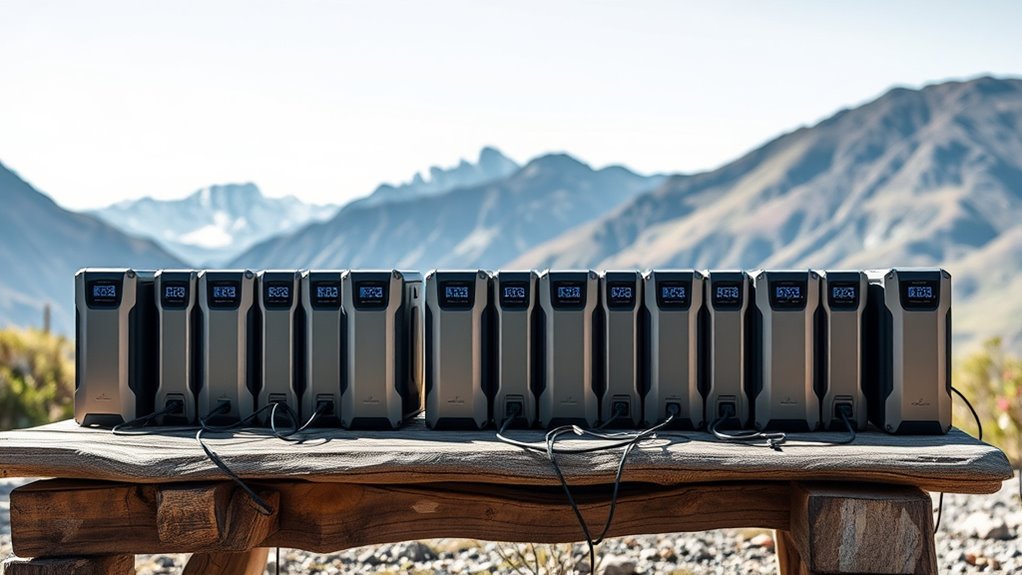

The best portable power stations over 2000Wh balance usable capacity, output, portability, and charging options rather than simply offering the largest battery. I rank the Jackery HomePower 3600 Plus as the best overall for its 3,584Wh capacity and 3,600W output, while the Anker SOLIX C2000 Gen 2 stands out for higher output in a roughly 2,000Wh class and the Jackery Explorer 2000 v2 for a more compact-capacity option. The main tradeoff is between bigger reserves for longer outages and a smaller unit that is easier to move and store. Solar bundles can simplify off-grid charging, but they add panels to transport and set up. Read on for how these nine options differ and which one fits your backup, travel, or home-power needs.

Get privacy and security gear delivered free with Prime
- Fast, free delivery on millions of items
- Prime Video, Amazon Music and more included
- Member-only deals all year
Complete the kit


Key Takeaways
- Capacity varies widely: the Jackery HomePower 3600 Plus leads this group at 3,584Wh, while the EBL Acc2400 lists 1,843.2Wh and sits below the 2,000Wh mark despite its 2,400W output.
- Battery size and output are separate questions: the Anker SOLIX C2000 Gen 2 pairs 2,048Wh with 2,400W output, while the Jackery Explorer 2000 v2 lists 2,042Wh and 2,200W.
- Solar bundles trade simplicity for bulk: the Jackery HomePower 3600 Plus and Explorer 2000 v2 each have bundled versions with two 200W panels, reducing the need to source panels separately while adding gear to carry.
- The product list favors Jackery models: five entries are Jackery options, so the Anker and OUKITEL are useful alternatives for buyers comparing other brands in the roughly 2,000Wh range.
- Capacity alone cannot settle the choice: buyers should compare rated output, charging inputs, portability, expansion, and the actual appliances they plan to run before choosing a larger station.
| Jackery HomePower 3600 Plus Portable Power Station, 3584Wh, 3600W |  | Best for Expandable Home Backup | Battery capacity: 3,584Wh | Output: 3,600W | Parallel output: 7,200W | VIEW ON AMAZON | See Our Full Breakdown |
| Jackery HomePower 3000 Portable Power Station, 3072Wh |  | Best for Home Backup with UPS Switching | Battery capacity: 3,072Wh | Running output: 3,600W | Surge output: 7,200W | VIEW ON AMAZON | See Our Full Breakdown |
| Jackery Explorer 2000 v2 Portable Power Station, 2042Wh, 2200W |  | Best Lightweight Pick | Battery capacity: 2,042Wh | AC output: 2,200W | AC ports: 3 | VIEW ON AMAZON | See Our Full Breakdown |
| Jackery HomePower 3600 Plus Portable Power Station with 2 × 200W Solar Panels |  | Best Solar-Ready Large-Capacity Bundle | Battery capacity: 3,584Wh | AC output: 3,600W | Parallel output: 7,200W | VIEW ON AMAZON | See Our Full Breakdown |
| Anker SOLIX C2000 Gen 2 Portable Power Station, 2,048Wh, 2,400W |  | Best for Fast Recharging and Expandability | Battery capacity: 2,048Wh | Peak output: 4,000W | Battery type: LiFePO4 | VIEW ON AMAZON | See Our Full Breakdown |
| OUKITEL P2001 Plus Portable Power Station, 2048Wh |  | Best for Fast, Flexible Recharging | Capacity: 2048Wh | Peak output: 4800W | Battery chemistry: LiFePO4 | VIEW ON AMAZON | See Our Full Breakdown |
| Jackery Explorer 2000 v2 Portable Power Station with Two 200W Solar Panels |  | Best Solar-Ready Bundle | Battery capacity: 2042Wh | AC output: 2200W | AC ports: 3 | VIEW ON AMAZON | See Our Full Breakdown |
| Jackery HomePower 2000 Plus v2 Portable Power Station |  | Best for Expandable Home Backup | Capacity: 2048Wh | AC output: 2400W | Expandable capacity: Up to 12kWh | VIEW ON AMAZON | See Our Full Breakdown |
| EBL Acc2400 Portable Power Station, 1843.2Wh LiFePO4 Battery, 2400W Output |  | Best for Multi-Device Backup on a Tight Capacity Fit | Battery capacity: 1843.2Wh | Maximum output: 2400W | Battery type: LiFePO4 | VIEW ON AMAZON | See Our Full Breakdown |
| portable power stations 2000wh plu | Weight | Battery capacity | Battery type | Battery cycle life |
|---|---|---|---|---|
| Jackery HomePower 3600 Plus Po | 77.2 lbs | 3,584Wh | LFP | Up to 6,000 cycles |
| Jackery HomePower 3000 Portabl | 59.5 lbs | 3,072Wh | LiFePO4 | 4,000 cycles to 70% capacity |
| Jackery Explorer 2000 v2 Porta | 39.5 lbs | 2,042Wh | — | — |
| Jackery HomePower 3600 Plus Po | 77.2 lbs | 3,584Wh | — | Up to 6,000 cycles |
| Anker SOLIX C2000 Gen 2 Portab | 41.7 lbs | 2,048Wh | LiFePO4 | — |
| OUKITEL P2001 Plus Portable Po | 47.4 lb (21.5 kg) | — | — | Over 4000 charge/discharge cycles |
| Jackery Explorer 2000 v2 Porta | — | 2042Wh | LiFePO4 | — |
| Jackery HomePower 2000 Plus v2 | 40.6 lb | — | LFP | Over 6000 cycles |
| EBL Acc2400 Portable Power Sta | 54 lb | 1843.2Wh | LiFePO4 | Over 3500 charge-discharge cycles |
More Details on Our Top Picks
Jackery HomePower 3600 Plus Portable Power Station, 3584Wh, 3600W
The Jackery HomePower 3600 Plus is the strongest fit here for buyers planning beyond a single battery: its 3,584Wh capacity can expand substantially, and paired units can provide 240V output. That gives it a broader home-backup path than the Jackery Explorer 2000 v2, which is lighter but has less than two-thirds the capacity and no expansion figures listed here. Four charging routes, including hybrid AC and DC, also help when the grid is down and solar conditions vary. The tradeoff is its 77.2-pound weight; wheels and a telescopic handle help on level ground but do not make it easy to lift into a vehicle. Solar panels are optional in this version, so buyers wanting solar included should compare the bundled HomePower 3600 Plus package.
Pros:- 3,584Wh capacity and 3,600W output suit larger backup loads
- Expandable capacity supports a staged backup setup
- AC, solar, gas-generator, and hybrid charging provide several replenishment options
- Wheels and a telescopic handle make rolling the 77.2-pound unit easier
Cons:- 77.2 pounds is difficult to lift or load without help
- Solar panels are not included with this listing
- Its size and expansion focus may be excessive for basic camping needs
Best for: Homeowners who want a high-capacity outage backup system with room to expand and may need 240V output from paired units
Not ideal for: Buyers who frequently carry a power station up stairs or want solar panels included in the same package
- Battery capacity:3,584Wh
- Output:3,600W
- Parallel output:7,200W
- Battery type:LFP
- Battery cycle life:Up to 6,000 cycles
- Expandable capacity:Up to 21kWh per unit or 43kWh with multiple units
- Charging time:2 hours hybrid AC+DC; 2.5 hours AC or gas generator; 4 hours solar
- Weight:77.2 lbs
Our verdict“Choose this Jackery for expandable, high-capacity home backup, but pick a lighter model if regular lifting matters more than runtime.”
Jackery HomePower 3000 Portable Power Station, 3072Wh
The Jackery HomePower 3000 pairs a substantial 3,072Wh battery with 3,600W running output, then adds a UPS transfer time of 20ms or less for supported backup setups. That makes it a more appliance-oriented option than the Jackery Explorer 2000 v2, which is easier to carry but offers less capacity and output. Its TT-30 RV port and AC, USB, DC, car, and generator charging options also make it useful beyond the house. The compromise is portability: at 59.5 pounds, it is still a load to move, though it is lighter than the 3,584Wh HomePower 3600 Plus. The listed solar setup reaches up to 80% in nine hours with two 200W panels, so solar replenishment is not as quick as its AC charging.
Pros:- 3,072Wh capacity and 3,600W running output cover substantial loads
- UPS transfer time of 20ms or less supports backup for compatible devices
- TT-30 RV port and multiple charging methods add home and travel flexibility
- Lighter than the 3,584Wh Jackery HomePower 3600 Plus
Cons:- At 59.5 pounds, it is not convenient for frequent carrying
- Two 200W solar panels take nine hours to reach 80% under the stated setup
- Solar panels are optional
Best for: Households seeking a large battery for outages, with UPS-style switching for compatible equipment and an RV port for travel
Not ideal for: Campers who need to carry their power station often or buyers who expect fast solar replenishment without a larger panel setup
- Battery capacity:3,072Wh
- Running output:3,600W
- Surge output:7,200W
- Battery type:LiFePO4
- Battery cycle life:4,000 cycles to 70% capacity
- UPS transfer time:20ms or less
- RV port:TT-30
- Weight:59.5 lbs
Our verdict“Pick the HomePower 3000 if UPS switching and a useful mix of home and RV connections matter more than lighter carry weight.”
Jackery Explorer 2000 v2 Portable Power Station, 2042Wh, 2200W
Among the products here that clear 2,000Wh, the Jackery Explorer 2000 v2 is the easier one to take along: it weighs 39.5 pounds, well below the 59.5-pound HomePower 3000 and 77.2-pound HomePower 3600 Plus. Its 2,042Wh battery and 2,200W AC output still provide meaningful capacity for camping, essential home loads, or backup for electronics, while the 20ms UPS switching adds a backup option for compatible equipment. Quiet charging below 30dB may also suit indoor use. The tradeoff is scale: it has less capacity and output than the larger Jackery models, and the supplied details list AC and solar charging rather than the broader charging choices of the HomePower 3000. Solar panels are optional.
Pros:- 39.5-pound weight is comparatively manageable for a 2,000Wh-plus station
- 2,042Wh capacity and 2,200W AC output support a range of everyday loads
- 20ms UPS switching provides a backup option for compatible devices
- Charging noise below 30dB is suited to quieter settings
Cons:- Lower capacity and output than the Jackery HomePower 3000 and 3600 Plus
- The listed charging choices are narrower than those of the HomePower 3000
- Solar panels are optional
Best for: Campers and homeowners who need more than 2,000Wh but still want a unit one person can move more readily
Not ideal for: Buyers backing up high-demand appliances for long periods or needing the greater output and capacity of a 3,000Wh-plus model
- Battery capacity:2,042Wh
- AC output:2,200W
- AC ports:3
- USB-C PD output:100W
- Battery chemistry:LiFePO4
- Weight:39.5 lbs
- AC charging time:0–80% in 66 minutes
- UPS switching time:20ms
Our verdict“Choose the Explorer 2000 v2 when carry weight and quiet operation matter more than the longer runtime of a larger station.”
Jackery HomePower 3600 Plus Portable Power Station with 2 × 200W Solar Panels
This bundle takes the same 3,584Wh Jackery HomePower 3600 Plus platform as the standalone version and adds two 200W solar panels, giving buyers a ready-made route to solar charging. That makes it a more complete starting point than the standalone HomePower 3600 Plus, where panels are optional, and a stronger fit for extended backup than the 2,042Wh Explorer 2000 v2. The station can also expand and supports 120V/240V output when units are connected in parallel, a useful distinction for larger backup plans. The cost in convenience is physical: the power station alone weighs 77.2 pounds, and the panels add more gear to store and set up. The station and panels may ship separately, so the complete solar setup might not arrive together.
Pros:- Includes two 200W solar panels rather than requiring a separate panel purchase
- 3,584Wh capacity and 3,600W output suit substantial backup needs
- Expandable system can support larger capacity plans
- Wheels and telescopic handle help roll the heavy station
Cons:- The 77.2-pound station is difficult to lift
- Panels and power station may arrive in separate packages
- Panels add setup and storage requirements compared with the standalone unit
Best for: Homeowners or RV users who want a high-capacity expandable station and panels included for solar charging
Not ideal for: Buyers prioritizing easy solo transport, compact storage, or a bundle that must arrive as one shipment
- Battery capacity:3,584Wh
- AC output:3,600W
- Parallel output:7,200W
- Battery cycle life:Up to 6,000 cycles
- Expandable capacity:Up to 21kWh per unit or 43kWh with multiple units
- Included solar panels:Two 200W panels
- Charging time:2 hours hybrid AC+DC; 2.5 hours AC or gas generator; 4 hours solar
- Weight:77.2 lbs
Our verdict“Choose this bundle over the standalone HomePower 3600 Plus if included solar panels are worth the added equipment and handling.”
Anker SOLIX C2000 Gen 2 Portable Power Station, 2,048Wh, 2,400W
The Anker SOLIX C2000 Gen 2 makes a case for buyers who want a 2,000Wh-class station that can recharge quickly and grow later. Its listed 58-minute AC-and-solar recharge is a standout among these options, while the ability to add a battery and reach 4kWh offers a smaller initial setup with an expansion path. It also delivers 2,400W rated output and 4,000W peak output, exceeding the Jackery Explorer 2000 v2’s 2,200W AC rating. At 41.7 pounds, however, it is slightly heavier than that Jackery, and its specifications list only one power outlet—a notable limitation for running several AC appliances directly. Expansion requires a separate battery, so the base unit remains a 2,048Wh station.
Pros:- 2,400W rated output and 4,000W peak output provide strong power for its capacity class
- Listed 58-minute recharge with AC and solar supports quick turnaround
- Expandable to 4kWh with an additional battery
- Six recharging methods and 800W alternator charging offer varied replenishment options
Cons:- Only one power outlet is listed in the specifications
- Reaching 4kWh requires purchasing and connecting an additional battery
- At 41.7 pounds, it is heavier than the Jackery Explorer 2000 v2
Best for: Road-trip and camping users who value rapid recharging, strong output, and the option to add capacity later
Not ideal for: Buyers who need multiple AC outlets on the station itself or want 4kWh capacity without adding an expansion battery
- Battery capacity:2,048Wh
- Peak output:4,000W
- Battery type:LiFePO4
- Recharge time:58 minutes with AC and solar
- Expandable capacity:Up to 4kWh
- Alternator charging:800W; full charge in 3 hours
- Weight:41.7 lbs
Our verdict“Pick the Anker SOLIX C2000 Gen 2 for fast recharging and future capacity growth, provided one listed power outlet fits your setup.”
OUKITEL P2001 Plus Portable Power Station, 2048Wh
The OUKITEL P2001 Plus pairs 2048Wh of LiFePO4 storage with 2400W rated output, giving it a little more capacity and output headroom than the Jackery Explorer 2000 v2. Its 13 outlets, including four USB-C ports and a 100W USB-C connection, suit a camp or backup setup with several devices to power at once. The standout is its stated 90-minute full recharge using AC and solar together, although that figure depends on combining inputs rather than AC alone. App control over Bluetooth or Wi-Fi also makes monitoring easier when the unit is tucked away. The tradeoff is its 47.4-pound weight: it has a useful outlet selection, but it is less appealing for frequent carrying than the lighter Jackery Explorer 2000 v2.
Pros:- 2048Wh capacity and 2400W rated output support a broad range of appliances
- 13 outlets include four USB-C ports, including a 100W PD port
- LiFePO4 battery is rated for over 4000 charge/discharge cycles
- Bluetooth and Wi-Fi app control, with AC and solar charging support
Cons:- At 47.4 pounds, it is heavy for frequent transport
- The 90-minute full-charge claim requires combined AC and solar input
Best for: Campers and households who want many connection options, app monitoring, and the ability to combine AC and solar charging.
Not ideal for: Buyers who need to carry a station over long distances or want a verified AC-only 90-minute recharge.
- Capacity:2048Wh
- Peak output:4800W
- Battery chemistry:LiFePO4
- Battery cycle life:Over 4000 charge/discharge cycles
- Ports:13 total: 4 AC, 2 USB-A, 4 USB-C, 2 DC, and 1 car outlet
- Weight:47.4 lb (21.5 kg)
- Connectivity:Bluetooth and Wi-Fi app control
Our verdict“Choose the OUKITEL P2001 Plus if outlet variety and combined-input charging matter more than keeping carry weight low.”
Jackery Explorer 2000 v2 Portable Power Station with Two 200W Solar Panels
This Jackery Explorer 2000 v2 bundle makes solar part of the purchase rather than an accessory to source separately: it includes two 200W panels alongside a 2042Wh LiFePO4 station. That gives it a practical head start for off-grid camping or backup, while its 39.5-pound station is lighter than the OUKITEL P2001 Plus. The 2200W AC output is slightly lower than the OUKITEL’s 2400W, and three AC ports offer less plug-in flexibility than the OUKITEL’s four. Jackery lists 80% AC charging in 66 minutes and a 20ms UPS switch, useful for quick replenishment and short outages. The solar charge estimate is six hours at 400W, so actual results depend on conditions. Panels may ship separately, which can complicate delivery planning.
Pros:- Includes two 200W solar panels for a ready-to-use solar setup
- 2042Wh LiFePO4 battery and 2200W AC output
- 80% AC charge is listed at 66 minutes
- 20ms UPS switching supports backup for connected equipment
Cons:- Three AC ports provide less plug-in capacity than the OUKITEL P2001 Plus
- Solar charging time depends on receiving the full 400W panel input and suitable conditions
- The power station and panels may ship separately
Best for: Campers and outage-conscious households who want a station and a matched 400W solar setup in one purchase.
Not ideal for: Buyers who need more than 2200W AC output, a larger number of AC sockets, or the lightest complete kit.
- Battery capacity:2042Wh
- AC output:2200W
- AC ports:3
- Battery type:LiFePO4
- Included solar panels:2 × 200W
- UPS switching time:20ms
- Power station weight:39.5 lb
- Charging time:80% in 66 minutes via AC; 6 hours via 400W solar
Our verdict“Pick this Jackery bundle if included solar panels and a lighter station matter more than maximum output or extra AC ports.”
Jackery HomePower 2000 Plus v2 Portable Power Station
The Jackery HomePower 2000 Plus v2 is the clearest choice here for buyers who may outgrow a single 2kWh-class battery. Its 2048Wh base capacity can expand to up to 12kWh, giving it a longer-term home-backup path that the fixed-capacity Jackery Explorer 2000 v2 bundle does not provide. The 2400W AC output matches the OUKITEL P2001 Plus on rated power, while a 140W USB-C output can serve higher-power USB-C devices. Jackery lists an LFP battery life of over 6000 cycles, a higher stated figure than the OUKITEL’s over 4000. The tradeoff is that this listing does not include a solar panel, and its product details contain conflicting wattage figures, so buyers should verify the relevant output configuration before planning loads.
Pros:- Expandable capacity up to 12kWh supports a larger backup setup over time
- LFP battery is rated for over 6000 cycles
- 2400W AC output
- 140W USB-C output supports higher-power USB-C devices
Cons:- Solar panel is not included
- Product details contain conflicting wattage figures
- Expansion requires adding compatible capacity rather than relying on the base unit alone
Best for: Homeowners building a backup system in stages who value expandable capacity and long stated battery cycle life.
Not ideal for: Campers seeking an all-in-one solar package or buyers who need unambiguous product wattage details before purchase.
- Capacity:2048Wh
- AC output:2400W
- Expandable capacity:Up to 12kWh
- Battery type:LFP
- Battery cycle life:Over 6000 cycles
- USB-C output:140W
- Weight:40.6 lb
- Dimensions:14.37 × 10.24 × 10.73 in
Our verdict“Choose the HomePower 2000 Plus v2 if expandable home storage matters more than included solar gear or straightforward, consistent specs.”
EBL Acc2400 Portable Power Station, 1843.2Wh LiFePO4 Battery, 2400W Output
The EBL Acc2400 delivers 2400W maximum output and a broad mix of 12 connection types, including a wireless charging panel, making it useful when several devices need power from one station. It also lists a 0.1-second emergency backup switch and built-in protections against overcharging, short circuits, and high temperatures. But its 1843.2Wh capacity falls below 2000Wh, so it does not meet the roundup’s stated capacity threshold despite its 2400W output. Compared with the 2048Wh OUKITEL P2001 Plus, the EBL offers wireless charging but less stored energy and weighs 54 pounds. Its solar charging details are not specified, limiting its appeal for buyers planning an off-grid setup around panel input.
Pros:- 2400W maximum output
- 12 connection options include AC, USB, DC, car, and wireless charging
- LiFePO4 battery is rated for over 3500 charge-discharge cycles
- 0.1-second emergency backup switching and built-in battery protections
Cons:- 1843.2Wh capacity is below the 2000Wh threshold in this roundup
- At 54 pounds, it is the heaviest option among these four
- Solar charging details are not specified
Best for: Buyers prioritizing varied device connections and 2400W output who can accept less than 2000Wh of stored energy.
Not ideal for: Anyone requiring at least 2000Wh capacity, frequent portability, or confirmed solar charging specifications.
- Battery capacity:1843.2Wh
- Maximum output:2400W
- Battery type:LiFePO4
- Ports:4 AC, 2 USB-A, 2 USB-C, 1 car, 2 DC, and 1 wireless charging panel
- USB-C charging:100W PD
- Battery cycle life:Over 3500 charge-discharge cycles
- Emergency backup switching:0.1 seconds
- Weight:54 lb
Our verdict“Consider the EBL Acc2400 only if its port mix and output suit your needs and its sub-2000Wh capacity is acceptable.”

How We Picked
I ranked these options around the decisions that matter for a portable power station in the 2,000Wh-plus category: stated battery capacity, rated output, and how each unit may fit backup or mobile use. A larger battery can stretch runtime, but output determines whether a station can power a particular appliance; I treated those as separate strengths rather than letting one spec stand in for the other. I also considered the practical difference between a standalone unit and a solar bundle, since panels affect both off-grid charging plans and the amount of equipment a buyer must transport.
The Jackery HomePower 3600 Plus leads because its stated capacity and output are the highest in this lineup, giving it the broadest headroom for longer or heavier loads. The Anker SOLIX C2000 Gen 2 ranks as a strong alternative for buyers who want 2,400W output without moving to the largest listed capacity. Models near 2,000Wh follow according to their listed output and likely fit, while bundled-panel versions serve buyers who value a ready-made solar setup more than a lighter loadout. The EBL Acc2400 remains a useful comparison for output-focused shoppers, though its stated 1,843.2Wh capacity falls short of the category threshold in the title.
| portable power stations 2000wh plu | Battery type |
|---|---|
| Jackery HomePower 3600 Plus Po | LFP |
| Jackery HomePower 3000 Portabl | LiFePO4 |
| Jackery Explorer 2000 v2 Porta | — |
| Jackery HomePower 3600 Plus Po | — |
| Anker SOLIX C2000 Gen 2 Portab | LiFePO4 |
| OUKITEL P2001 Plus Portable Po | — |
| Jackery Explorer 2000 v2 Porta | LiFePO4 |
| Jackery HomePower 2000 Plus v2 | LFP |
| EBL Acc2400 Portable Power Sta | LiFePO4 |
Factors to Consider When Choosing Portable Power Stations 2000wh Plus
Choosing a station above 2,000Wh is less about chasing the biggest number and more about matching capacity and output to a realistic plan. I would start with the appliances, charging conditions, and transport limits you expect to face, then compare models against those needs.
Estimate Energy Use Before Choosing Capacity
Write down each device you want to run and its wattage, then estimate how many hours it will operate. Multiply watts by hours to get a rough energy requirement in watt-hours; add extra room because real-world usable energy can be lower than the battery’s stated capacity. A refrigerator cycling on and off needs a different estimate from a heater running continuously, so avoid treating its running wattage as a constant. If your plan includes repeated use over several days, account for the chance to recharge between sessions. This calculation helps distinguish a 2,000Wh-class unit from a 3,500Wh-class station without assuming that more capacity always pays off. It also prevents a common mistake: buying for a single appliance while forgetting lights, communications, or other small loads.
Check Output and Startup Demand Separately
Battery capacity describes stored energy, while output describes how much power the station can supply at once. Look at the continuous output rating and check whether appliances with motors or compressors draw a brief startup surge above their normal running demand. A station can have enough watt-hours for several hours of use and still be unable to start a demanding appliance. Add together the loads you expect to run at the same time, not every appliance you own. Leave headroom for startup demand and avoid planning around the exact rating limit. This matters especially when comparing units like the Anker SOLIX C2000 Gen 2 and Jackery Explorer 2000 v2, whose listed output differs despite similar stated capacity.
Match Solar Input to Your Charging Routine
Bundled panels can make a solar setup easier to assemble, but panel wattage alone does not tell you how quickly a station will recharge. The station’s supported solar input, connector compatibility, and conditions such as shade and season all affect the result. Ask whether you expect to recharge during a long outage, top up between camping days, or rely mainly on wall power. If you already own compatible panels, a standalone unit may avoid redundant equipment; if you are starting from scratch, a bundle may reduce compatibility guesswork. Do not assume that two 200W panels will deliver their full rated output throughout the day. Check the station’s input limits before expanding a panel array.
Treat Portability as a Real Capacity Tradeoff
Stations in this category can be substantial pieces of equipment, and larger capacity generally means more weight and storage space. Check the listed dimensions and weight, then think through the actual route from storage to use: stairs, vehicle loading, campsite surfaces, or a place beside essential home equipment. A unit that stays parked for outages can justify a larger footprint more easily than one you plan to move often. Also account for the panels, cables, and protective storage that may accompany a solar setup. Buyers often focus on whether a station is technically portable and overlook whether one person can move it comfortably. If frequent transport is part of the plan, ease of handling may matter more than an extra reserve of energy.
Compare Expansion, Charging, and Warranty Details
Before buying, check whether the station supports extra batteries, what charging methods it accepts, and whether its ports match the devices you use. Expansion can extend runtime later, but it may add cost, weight, and setup complexity, so confirm that the expansion path fits your long-term plan. Review AC recharge behavior and any app or control features if the unit will serve as home backup. Warranty terms, battery chemistry, and service arrangements can shape ownership after the initial purchase, but specifications and policies may vary by model or region. Compare the exact version being sold rather than relying on a feature list for a related product. These details can separate two stations with similar headline capacity more clearly than a small difference in watt-hours.
Frequently Asked Questions
Does every product in this roundup actually have more than 2,000Wh?
No. The EBL Acc2400 lists 1,843.2Wh, so it falls below the 2,000Wh threshold despite appearing in this comparison and offering 2,400W output. I include it as an adjacent option for shoppers who prioritize output and want to compare a lower-capacity unit against the larger stations. If crossing 2,000Wh is a firm requirement, focus on models with a stated capacity of at least 2,000Wh. Check the exact product variant, since similarly named products can have different specifications.
Can a 2,000Wh station run a refrigerator through an overnight outage?
It may, but the battery number alone cannot confirm runtime. Refrigerator energy use varies by model, room temperature, door openings, and compressor cycling, while conversion losses reduce the energy available to connected devices. Check the refrigerator’s consumption information and estimate its use over the hours you need, then leave a buffer for other essentials. Also check the station’s output and startup capability against the refrigerator’s compressor demand. A larger-capacity model can provide more reserve, but no listed capacity guarantees a specific number of hours for every refrigerator.
Should I buy a solar-panel bundle or the station by itself?
A bundle is a practical choice if you need compatible panels and expect to recharge away from an outlet. It can reduce the work of matching components, though the included panels add equipment to carry and may not meet every buyer’s charging needs. A standalone station makes more sense if you already own compatible panels or mostly plan to recharge from wall power. Before choosing, compare panel connectors and the station’s supported solar input rather than assuming any panel will work. Also remember that real solar output changes with weather, shade, season, and panel placement.
Is the highest-capacity station automatically the best choice for home backup?
No. The 3,584Wh Jackery HomePower 3600 Plus offers the largest stated reserve in this lineup, but useful backup depends on the loads you need to power and how long they must run. A station with less capacity may suit a short outage or a smaller set of devices, while a larger one may be harder to move and store. Check the output rating for appliances that run at the same time, plus their startup demands. If you need longer backup, consider how the unit recharges and whether it supports battery expansion. Capacity matters most when it matches a defined energy plan.
How do I choose between the Anker SOLIX C2000 Gen 2 and Jackery Explorer 2000 v2?
The listed specifications show similar capacity: 2,048Wh for the Anker and 2,042Wh for the Jackery. The Anker lists 2,400W output, compared with 2,200W for the Explorer 2000 v2, which may matter if your planned loads approach those limits. That difference does not answer questions about portability, ports, charging behavior, or warranty, so compare those details for the exact versions available to you. Choose based on the appliances you need to run and how you plan to recharge, rather than a small capacity difference. If solar is part of your setup, compare the standalone options with the Jackery bundle that includes two 200W panels.
Conclusion
For the broadest capacity and output headroom, I recommend the Jackery HomePower 3600 Plus as best overall; choose its two-panel bundle if you want a ready-made solar pairing. For a best value-style fit among the roughly 2,000Wh options, compare the OUKITEL P2001 Plus and Jackery Explorer 2000 v2 against your required output, ports, and charging needs rather than choosing on capacity alone. The Anker SOLIX C2000 Gen 2 is my pick for buyers who want more listed output in a similar capacity class, while the Jackery HomePower 2000 Plus v2 suits shoppers focused on that model line. Beginners who want panels included can start by comparing the Jackery bundles, while frequent travelers should weigh the added panel load against the convenience of off-grid charging. If you need the largest listed reserve, choose the 3600 Plus; if you need a strict minimum above 2,000Wh, skip the EBL Acc2400 because its stated capacity is 1,843.2Wh.