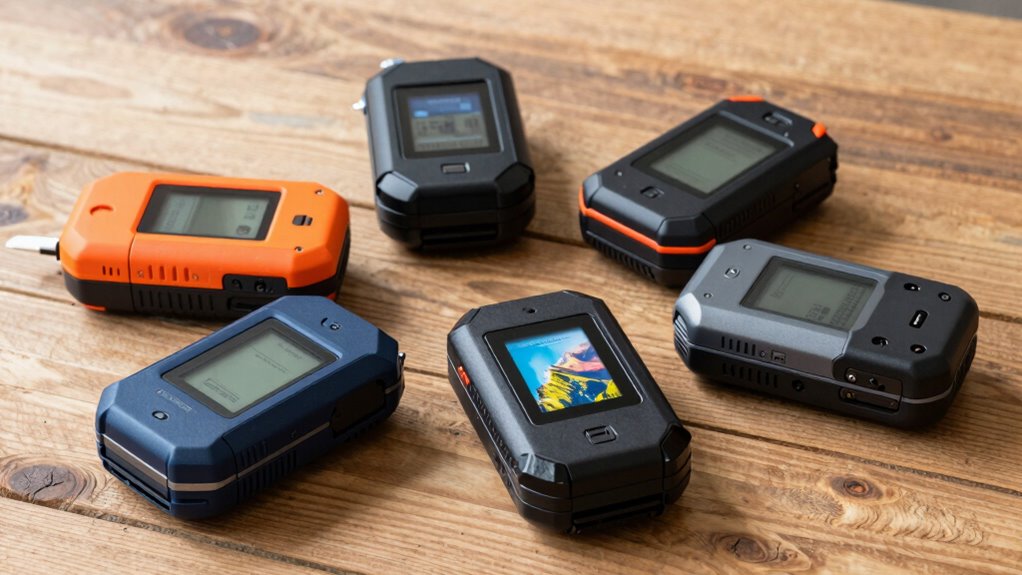
Choosing a rugged portable printer means deciding what kind of rough use matters most: surviving drops and dust, traveling easily, or printing full-size documents away from a desk. My strongest pick for genuinely harsh work settings is the Brady M511, which has explicit drop, crush, and dust resistance—but it prints narrow labels, not letter-size pages. For mobile documents, the Brother PocketJet 8 PJ-822 offers fast monochrome printing in a compact body, while the HP OfficeJet 200 is the better fit when color matters. The tradeoff is clear: the most rugged option is a label printer, while the full-page models prioritize portability and functionality over specified impact protection.

Get privacy and security gear delivered free with Prime
- Fast, free delivery on millions of items
- Prime Video, Amazon Music and more included
- Member-only deals all year
I ranked these options by how well their stated construction, power, size, and print format fit mobile work. Some are rugged because they have documented environmental protection; others are simply portable enough for travel. I distinguish those cases so a buyer does not mistake a compact printer for a job-site-proof one.
Key Takeaways
- Brady M511 is the only model here with stated resistance to six-foot drops, crushes, shocks, sand, and dust, but it prints labels up to 1.5 inches wide rather than full pages.
- Brother PocketJet 8 PJ-822 is the speed-focused choice for monochrome letter-size documents; its rechargeable battery is optional, so check the complete mobile setup before buying.
- HP OfficeJet 200 is the more portable HP choice for color documents, while the OfficeJet 250 adds scan and copy functions at the cost of extra weight.
- ETIKEZ D90E avoids ink and toner and includes a travel case, but it needs thermal paper and the Labelnize app for phone printing.
- None of the page printers has stated drop or dust protection in the supplied specifications; for rough handling, use a protective case and keep the printer away from grit and moisture.
| Brady M511 Portable Wireless Industrial Label Printer |  | Best for genuinely rugged field labeling | Printer type: Portable wireless industrial label printer | Maximum label width: 1.5 inches | Battery: Internal lithium-ion | VIEW ON AMAZON | See Our Full Breakdown |
| Brother PocketJet 8 PJ-822 Mobile Direct Thermal Printer |  | Best for fast monochrome field documents | Printer type: Direct thermal | Print output: Monochrome | Resolution: 200 dpi | VIEW ON AMAZON | See Our Full Breakdown |
| HP OfficeJet 200 Wireless Mobile Printer with Battery |  | Best portable color page printer | Printer type: Inkjet | Output: Color | Weight: 4.9 pounds | VIEW ON AMAZON | See Our Full Breakdown |
| ETIKEZ D90E Inkless Portable Thermal Printer with Case, 8.5 x 11 Inch |  | Best for ink-free travel printing | Printer type: Thermal | Weight: 2.08 pounds | Dimensions: 10.43 x 2.32 x 1.3 inches | VIEW ON AMAZON | See Our Full Breakdown |
| HP OfficeJet 250 Wireless Mobile All-in-One Printer – Black (Battery Included) |  | Best mobile all-in-one | Printer type: Inkjet all-in-one | Functions: Print, scan, copy | Weight: 6.5 pounds | VIEW ON AMAZON | See Our Full Breakdown |
| portable printer rugged | Printer type | Connectivity | Dimensions | Weight |
|---|---|---|---|---|
| Brady M511 Portable Wireless I | Portable wireless industrial label printer | Bluetooth 5.0 | — | — |
| Brother PocketJet 8 PJ-822 Mob | Direct thermal | USB Type-C | 2.2 x 10 x 1.2 inches | — |
| HP OfficeJet 200 Wireless Mobi | Inkjet | USB 2.0, Wi-Fi | 2.7 x 7.32 x 14.3 inches | 4.9 pounds |
| ETIKEZ D90E Inkless Portable T | Thermal | Bluetooth, USB | 10.43 x 2.32 x 1.3 inches | 2.08 pounds |
| HP OfficeJet 250 Wireless Mobi | Inkjet all-in-one | Wireless, USB 2.0, HP Smart app, cloud services | 7.8 x 14.96 x 3.6 inches | 6.5 pounds |
More Details on Our Top Picks
Brady M511 Portable Wireless Industrial Label Printer
The Brady M511 earns the top spot for buyers who mean rugged literally. It is rated to resist six-foot drops, shocks, 250-pound crushes, and blowing sand and dust, giving it a clearer case for demanding work environments than any page printer in this group. Its internal battery is built in, with stated use of more than eight hours or up to 1,000 labels per charge, so the mobile setup does not depend on an optional battery pack.
This is not a substitute for an OfficeJet or PocketJet. The M511 prints labels up to 1.5 inches wide, including text, graphics, and barcodes edge to edge; it does not print letter-size forms or reports. Bluetooth 5.0 supports a stated range of 65 feet and up to five users, which makes it more appropriate for shared inventory or equipment-labeling tasks than a one-person document printer. Compared with the Brother, it has much stronger stated environmental protection, but gives up full-page output. Compared with the HP models, it trades color documents and general-purpose printing for durable label work.
I would choose this when labels must be produced near equipment, stock, or a worksite and the printer may face rough handling. The narrow output and specialized label workflow make it a poor match for contracts, invoices, or regular office paperwork. The supplied details also do not specify a printer display or document-printing capability, so buyers should treat it as a dedicated label tool.
Pros:- Specified resistance to six-foot drops, shocks, crushing, sand, and dust
- Internal battery rated for more than eight hours or up to 1,000 labels per charge
- Prints text, graphics, and barcodes edge to edge on labels up to 1.5 inches wide
- Bluetooth 5.0 supports up to five users within a stated 65-foot range
Cons:- Prints labels rather than letter-size documents
- The 1.5-inch maximum label width limits the size and layout of output
- A specialized label workflow is less versatile than the HP inkjet models
Best for: Field technicians, facilities teams, and inventory workers who need durable Bluetooth label printing around dust, drops, and heavy equipment.
Not ideal for: Anyone who needs letter-size pages, color documents, scanning, or copying from one portable machine.
- Printer type:Portable wireless industrial label printer
- Maximum label width:1.5 inches
- Battery:Internal lithium-ion
- Battery life:Over 8 hours; up to 1,000 labels per charge
- Connectivity:Bluetooth 5.0
- Bluetooth range:Up to 65 feet
- Simultaneous users:Up to 5
- Stated durability:Resists six-foot drops, shocks, 250-pound crushes, and blowing sand and dust
- Military standard:MIL-STD-810G
Our verdict“For harsh field conditions, I would pick the M511 over the document printers here, provided label output—not full-page printing—is the job.”
Brother PocketJet 8 PJ-822 Mobile Direct Thermal Printer
When the work calls for full-size pages rather than labels, the Brother PocketJet 8 PJ-822 is the most speed-oriented choice in this lineup. Its direct-thermal system prints monochrome letter-size pages at up to 13.5 pages per minute, far faster on paper than the ETIKEZ D90E’s stated four pages per minute. USB Type-C keeps the connection simple, and compatibility with Windows, macOS, and Linux gives it a broader stated computer reach than the ETIKEZ, which does not support Chromebooks.
The PocketJet is compact at 2.2 by 10 by 1.2 inches, but its rugged credentials need careful interpretation. The supplied specifications describe a small mobile printer, not drop- or dust-resistance ratings. Its rechargeable battery and mounting accessories are optional, so the printer alone may not be a ready-to-go wireless field kit. That makes it a less self-contained mobile choice than the battery-included HP OfficeJet 200 or the ETIKEZ, which includes a rechargeable power setup and travel case. In exchange, the Brother is faster and works with three major computer operating systems over USB.
I see it as a good match for drivers, service crews, or technicians who need quick monochrome forms from a laptop and can plan the battery and paper setup in advance. It cannot print color, and direct-thermal output is not the right choice for buyers who need ordinary inkjet flexibility. Compared with the Brady M511, the PocketJet handles pages but has no stated protection against rough site conditions.
Pros:- Prints monochrome letter-size pages at up to 13.5 pages per minute
- Compact body measures 2.2 x 10 x 1.2 inches
- USB Type-C connection works with Windows, macOS, and Linux
- Optional battery is stated to support up to 600 pages per charge
Cons:- Rechargeable battery and mounting accessories are optional
- Monochrome direct-thermal printing only
- No drop or dust resistance is specified in the supplied details
Best for: Mobile professionals who need quick monochrome letter-size printing from a Windows, macOS, or Linux computer and can add the optional battery.
Not ideal for: Buyers who need color, a complete battery-powered kit out of the box, or documented drop and dust protection.
- Printer type:Direct thermal
- Print output:Monochrome
- Resolution:200 dpi
- Print speed:Up to 13.5 pages per minute
- Dimensions:2.2 x 10 x 1.2 inches
- Connectivity:USB Type-C
- Compatible operating systems:Windows, macOS, Linux via USB
- Optional battery capacity:Up to 600 pages per charge
- Warranty:2 years
Our verdict“The PocketJet 8 is my pick for fast, compact monochrome page printing, but buyers must account for the optional battery and the lack of stated rugged protection.”
HP OfficeJet 200 Wireless Mobile Printer with Battery
The HP OfficeJet 200 is the practical pick when a field printer needs to produce color pages, not just black-and-white forms or labels. Its included rechargeable battery and wireless printing let a laptop or mobile device send jobs without a router, while support for media up to 8.5 by 14 inches covers letter and legal-size work. At 4.9 pounds, it is lighter than the OfficeJet 250, which adds scan and copy capability but weighs 6.5 pounds.
That weight difference is useful if printing is the main task and the printer will move frequently between vehicles, appointments, or temporary work areas. The 200 keeps the core mobile-printing role, while the 250 is better for users who want an all-in-one unit and accept the extra bulk. Both HP models use ink cartridges and have a 50-sheet maximum capacity, so neither is ideal for unattended, high-volume runs. For buyers who need ink-free monochrome pages, the ETIKEZ or Brother may suit the supply plan better, though both give up color.
Despite its name and portable design, the OfficeJet 200 has no stated drop, crush, or dust protection in the supplied specifications. I would pack it carefully for travel rather than treat it like industrial equipment. Replacement HP 62-series cartridges are also part of ongoing ownership, and a small 50-sheet capacity means frequent attention during larger jobs. It is a more versatile document printer than the Brady label maker, but far less suited to rough environments.
Pros:- Built-in rechargeable battery supports printing away from an outlet
- Wireless printing works with or without a router
- Prints color pages on media up to 8.5 x 14 inches
- Lighter than the HP OfficeJet 250 while retaining portable page printing
Cons:- 50-sheet maximum capacity limits longer print sessions
- Uses replacement HP 62-series ink cartridges
- No drop, shock, or dust resistance is specified
Best for: Traveling professionals who need color and legal-size document printing from a built-in battery without carrying an all-in-one printer.
Not ideal for: Users who need scanning and copying, inkless operation, high-volume output, or specified protection from drops and dust.
- Printer type:Inkjet
- Output:Color
- Weight:4.9 pounds
- Dimensions:2.7 x 7.32 x 14.3 inches
- Maximum media size:8.5 x 14 inches
- Connectivity:USB 2.0, Wi-Fi
- Battery:Included; charges within 90 minutes while printer is off
- Maximum sheet capacity:50 sheets
- Compatible ink:Original HP 62 series cartridges
Our verdict“I would choose the OfficeJet 200 over the heavier 250 when mobile color printing matters more than scanning and copying.”
ETIKEZ D90E Inkless Portable Thermal Printer with Case, 8.5 x 11 Inch
The ETIKEZ D90E stands out for keeping the printing kit simple: it is rechargeable, weighs 2.08 pounds, and prints without ink, toner, or ribbons. A supplied travel case gives it a more travel-ready package than the Brother PocketJet, whose battery and mounting accessories are optional. For occasional monochrome documents, avoiding cartridges can also mean fewer consumables to pack. Its 8.5-by-11-inch format covers standard US Letter pages, while Bluetooth supports phone printing and USB connects to computers.
Those conveniences come with a narrow use case. The D90E prints only black and white at 203 x 203 dpi and a stated four pages per minute, so it is a slower document printer than the PocketJet 8. It also requires thermal paper rather than regular copy paper, and the mobile workflow depends on the Labelnize app. Chromebook users are explicitly unsupported. Compared with the HP OfficeJet 200, it avoids ink cartridges and is much lighter, but it cannot print color and offers less flexibility in paper choice.
The travel case helps protect the unit during transport, but it is not evidence of built-in drop or dust resistance. I would choose this model for a phone-first traveler who wants occasional full-page monochrome output and is willing to keep compatible thermal paper on hand. I would skip it for a shared computer environment where Chromebook compatibility matters, or for routine use with standard office paper.
Pros:- Prints without ink, toner, or ribbons
- Lightweight 2.08-pound body includes a travel case
- Bluetooth phone printing and USB computer connection
- Supports full US Letter pages
Cons:- Requires thermal paper; regular copy paper is unsupported
- Mobile printing requires the Labelnize app and Chromebooks are incompatible
- Monochrome output is limited to a stated four pages per minute
Best for: Phone-first travelers who want a lightweight, rechargeable printer for occasional monochrome Letter-size pages and can use thermal paper.
Not ideal for: Chromebook owners, color-printing users, or anyone who needs regular copy paper and a documented rugged enclosure.
- Printer type:Thermal
- Weight:2.08 pounds
- Dimensions:10.43 x 2.32 x 1.3 inches
- Print output:Monochrome, black and white
- Resolution:203 x 203 dpi
- Print speed:4 pages per minute
- Maximum media size:8.5 x 11 inches
- Connectivity:Bluetooth, USB
- Paper and mobile app:Thermal paper only; Labelnize app required for mobile printing
Our verdict“The D90E makes sense for lightweight, ink-free travel printing, but its special paper and app requirements make it less flexible than the HP models.”
HP OfficeJet 250 Wireless Mobile All-in-One Printer – Black (Battery Included)
The HP OfficeJet 250 is the broadest-function option here: it prints, scans, and copies while running from an included battery. That makes it more self-contained for paperwork than the OfficeJet 200, which prints but does not add the same built-in scan-and-copy role. The 2.65-inch color touchscreen also gives it a more direct control surface than the simpler mobile setups on the thermal printers, and the stated fast charge time is under 90 minutes.
Its added capability is a real tradeoff in a portable-printer roundup. At 6.5 pounds, it is the heaviest page printer in this group, heavier than the 4.9-pound OfficeJet 200 and far heavier than the 2.08-pound ETIKEZ. If a buyer only needs to print, the lighter 200 is easier to carry; if a buyer needs ink-free output, the D90E removes cartridges entirely. The 250 instead earns its place when copying or scanning forms on the move matters enough to justify carrying extra weight.
It supports a wide range of media, including letter, legal, envelopes, cardstock, and photo sizes, and offers wireless, USB, HP Smart app, and cloud-service connections. Still, the 50-sheet output capacity constrains longer jobs, and replacement HP cartridges can add supply costs and packing needs. Nothing in the supplied specifications establishes drop or dust resistance. I would protect it in transit and avoid calling it job-site-proof; its strengths are all-in-one utility and flexible media, not a ruggedized housing.
Pros:- Combines printing, scanning, and copying in one portable unit
- Battery included, with stated fast charging in under 90 minutes
- 2.65-inch color touchscreen supports direct navigation
- Handles letter, legal, envelopes, cardstock, and photo-size media
Cons:- At 6.5 pounds, it is heavier than the OfficeJet 200 and ETIKEZ D90E
- 50-sheet output capacity is limited for larger jobs
- Uses replacement HP cartridges and has no stated impact or dust protection
Best for: Mobile workers who need to print, scan, and copy varied documents and want a battery-powered all-in-one with a touchscreen.
Not ideal for: Buyers prioritizing the lightest carry, ink-free printing, or documented protection against rough handling and dust.
- Printer type:Inkjet all-in-one
- Functions:Print, scan, copy
- Weight:6.5 pounds
- Dimensions:7.8 x 14.96 x 3.6 inches
- Display:2.65-inch color touchscreen
- Battery and charging:Battery included; fast charge time under 90 minutes
- Maximum paper size:8.5 x 11 inches
- Connectivity:Wireless, USB 2.0, HP Smart app, cloud services
- Output sheet capacity:50 sheets
Our verdict“I would take the OfficeJet 250 over the lighter OfficeJet 200 only when mobile scanning and copying justify the added weight.”

How We Picked
I ranked these five printers around the promise in the search: portable printers for rugged use. The supplied details cover very different jobs, so I did not treat every compact design as equally tough. I gave the strongest ruggedness position to the Brady M511 because its specifications explicitly describe resistance to drops, shocks, crushing, and blowing sand and dust. That evidence matters more for exposed fieldwork than a small footprint alone.
For the four document printers, I compared mobility, power, format, connection options, and operating tradeoffs. A built-in battery can simplify field use, while an optional battery adds a separate purchasing and packing decision. I also weighed whether a printer handles color, scanning, copying, or only monochrome pages, since those differences affect what a buyer can accomplish away from an office.
I treated special media and software needs as practical limitations, not footnotes. The ETIKEZ uses thermal paper and a required mobile app; the Brother is a USB-connected direct-thermal printer with an optional battery; and the HP models use replacement ink. I did not infer waterproofing, shock certification, or dust sealing where none was specified. The order reflects the models’ fit for particular field tasks, rather than a claim that all five are equally rugged or interchangeable.
| portable printer rugged | Printer type | Connectivity |
|---|---|---|
| Brady M511 Portable Wireless I | Portable wireless industrial label printer | Bluetooth 5.0 |
| Brother PocketJet 8 PJ-822 Mob | Direct thermal | USB Type-C |
| HP OfficeJet 200 Wireless Mobi | Inkjet | USB 2.0, Wi-Fi |
| ETIKEZ D90E Inkless Portable T | Thermal | Bluetooth, USB |
| HP OfficeJet 250 Wireless Mobi | Inkjet all-in-one | Wireless, USB 2.0, HP Smart app, cloud services |
Factors to Consider When Choosing Portable Printer Rugged
A portable printer can be easy to carry without being built for rough handling. I would start by separating ruggedness, mobility, and printing function: the best match depends on which one cannot be compromised.Decide whether you need pages or labels
The Brady M511 is the clear choice for durable labeling, but its 1.5-inch maximum label width rules it out for forms and reports. For full-size monochrome pages, compare the Brother and ETIKEZ. For color documents, choose between the two HP OfficeJets; the 250 adds scan and copy functions that the 200 does not offer.
Read rugged claims separately from portable design
A light body, travel case, or compact shape helps with transport, but does not by itself establish drop or dust resistance. The M511 has explicit resistance claims in the supplied specifications. The other four options do not list comparable protection, so I would carry them in a protective case and keep them clear of grit and moisture rather than assume they can withstand job-site abuse.
Check what powers and feeds the printer
The HP models include batteries; the Brother’s battery is optional. The ETIKEZ is rechargeable and includes a travel case, but it requires thermal paper. HP inkjets need compatible cartridges, while the Brother and ETIKEZ use thermal printing. The Brady has an internal battery and label-specific output. Before choosing, match the power arrangement and consumables to what you can carry and replenish in the field.
Match the printer to your devices and workflow
The Brother connects by USB Type-C and lists Windows, macOS, and Linux support. The ETIKEZ offers Bluetooth and USB but requires its Labelnize app for mobile printing and does not support Chromebooks. The HP models support wireless workflows, while the Brady uses Bluetooth and allows up to five simultaneous users. Check the actual device and app requirements before committing to a mobile setup.
Balance carry weight against extra functions
The ETIKEZ is the lightest listed page printer at 2.08 pounds, followed by the OfficeJet 200 at 4.9 pounds and the OfficeJet 250 at 6.5 pounds. That difference is noticeable when a printer goes into a work bag every day. The 250’s extra weight buys scanning, copying, and a touchscreen; the 200 keeps color page printing in a lighter package. The Brother is notably slim, but a complete battery-powered setup requires optional equipment.
Frequently Asked Questions
Which printer in this group is the most rugged?
The Brady M511 has the strongest stated ruggedness profile, with resistance to six-foot drops, shocks, 250-pound crushes, and blowing sand and dust. It is a label printer, though, so it cannot replace the HP or Brother models for full-page documents. The other models are portable, but their supplied specifications do not state comparable impact or dust protection.
Can any of these printers print without ink cartridges?
Yes. The ETIKEZ D90E and Brother PocketJet 8 use thermal printing rather than ink cartridges, and the Brady is a dedicated label printer. The ETIKEZ requires thermal paper and a mobile app for phone printing. The PocketJet prints monochrome pages and uses USB Type-C, with its battery sold as an optional accessory. The HP OfficeJets use replacement ink cartridges.
Which portable printer can print in color?
The HP OfficeJet 200 and HP OfficeJet 250 are the color inkjet choices in this comparison. The 200 is lighter and focuses on printing, while the 250 adds scanning, copying, and a touchscreen at a higher carry weight. Brother, ETIKEZ, and Brady output is monochrome or label-focused rather than general-purpose color page printing.
Is the Brother PocketJet 8 ready for battery-powered printing out of the box?
Not based on the supplied details: its rechargeable battery is optional, as are mounting accessories. The printer connects over USB Type-C and supports Windows, macOS, and Linux, but a buyer who needs mobile operation away from a computer or outlet should confirm and plan for the battery separately. This differs from both HP models, which include a battery.
Which model is best for printing ordinary letter-size documents from a phone?
The answer depends on whether color and paper choice matter. The HP OfficeJet 200 is a strong fit for color printing on ordinary supported media, while the ETIKEZ offers a lighter, ink-free alternative for monochrome Letter pages. The ETIKEZ requires thermal paper and the Labelnize app, and it does not support Chromebooks. For fast monochrome pages from a computer, the Brother is the speed-focused option, but its battery is optional.
Conclusion
For rough environments and durable labeling, I recommend the Brady M511, with the clear caveat that it prints labels rather than documents. For fast monochrome pages, choose the Brother PocketJet 8 if USB connectivity suits your workflow and you are prepared to add the optional battery. For an ink-free, light travel printer, the ETIKEZ D90E fits occasional phone-based printing if thermal paper and its app work for you. Choose the HP OfficeJet 200 for battery-powered color pages in a lighter package, or the HP OfficeJet 250 when scanning and copying justify the extra weight. If a printer must withstand knocks, dust, or crushing, do not treat portability as proof of protection: among these five, only the Brady has explicit ruggedness claims in the supplied specifications.