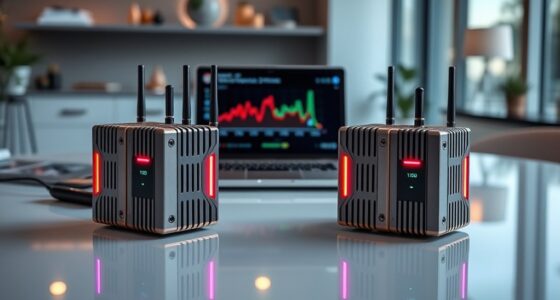
For most operators seeking a self-contained station upgrade, I put the Xiegu XPA125B first because its 100W output and automatic antenna tuner combine two useful functions. The Xiegu GPA100 is a better fit if you want a straightforward 100W linear amplifier, while the MQ9 50W suits QRP radios that need automatic transmit and receive switching. Those choices involve tradeoffs: higher output and added convenience can mean more equipment to integrate, while compact boards and lower-power units ask more of the operator. I also compare three BJ-300 variants and a 30W LICAEVEY board for buyers with different station needs. Read on for the full breakdown and guidance on matching an amplifier to your radio, antenna, and operating style.

Get privacy and security gear delivered free — and shop member deals
- Fast, free delivery on millions of items
- Access to Prime Big Deal Days deals on October 6–7
- Prime Video, Amazon Music and more included
Key Takeaways
- XPA125B leads for an all-in-one station upgrade: its 100W output and automatic antenna tuner make it the most versatile pick in this lineup.
- GPA100 favors a simpler 100W amplifier role: choose it when an integrated tuner is less important than keeping the amplifier function straightforward.
- MQ9 targets QRP operators: 50W output and automatic TX/RX switching address a different need from the two Xiegu 100W units.
- The three BJ-300 listings call for careful model comparison: the Plus and cooling-fan versions may suit buyers seeking those specific configurations, but confirm the exact variant and specifications before purchase.
- LICAEVEY is the low-output board option: its 30W rating points toward compact or project-based setups rather than buyers seeking the lineup’s 100W class output.
| LICAEVEY 30W Shortwave Power Amplifier Board for Ham Radio |  | Best Compact QRP Upgrade | Frequency range: 3–28 MHz | Input power: 0.1–3 W | Output power: 30 W at 7 MHz | VIEW ON AMAZON | See Our Full Breakdown |
| Xiegu XPA125B 100W HF Power Amplifier with Automatic Antenna Tuner |  | Best All-in-One Station Upgrade | Amplifier output: Up to 125 W | Tuner load range: 14–500 ohms | Bands: HF and 6-meter | VIEW ON AMAZON | See Our Full Breakdown |
| MQ9 50W HF Power Amplifier for QRP Radios with Automatic TX/RX Switching |  | Best for Simple QRP Setups | Maximum output power: 50 W | Input drive power: 1–5 W | Frequency range: 3–24 MHz | VIEW ON AMAZON | See Our Full Breakdown |
| Xiegu GPA100 100W HF Linear Power Amplifier |  | Best for Multi-Mode Flexibility | HF output power: Up to 100 W | 6-meter output power: Up to 80 W | Band switching: 7 bands; manual or automatic | VIEW ON AMAZON | See Our Full Breakdown |
| BJ-300 Broadband Linear Amplifier for HF Transceivers | 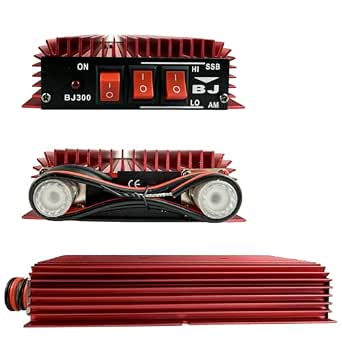 | Best for Mode-Specific Output Options | Model: BJ-300 | Supported modes: AM, FM, SSB, CW | Maximum output power: 100 W FM, 120 W AM, 150 W SSB | VIEW ON AMAZON | See Our Full Breakdown |
| BJ-300 Plus Broadband Linear Amplifier for Radio |  | Best for Multi-Mode Flexibility | Operating voltage: 13.8V | Supported modes: AM, FM, SSB, CW | Output power: 100W FM, 120W AM, 150W SSB | VIEW ON AMAZON | See Our Full Breakdown |
| BJ-300 Plus Broadband Linear Radio Amplifier with Cooling Fan |  | Best for Simple PL-259 Hookup | Input voltage: 13.8V | Supported modes: AM, FM, SSB, CW | Output power: 100W FM, 120W AM, 150W SSB | VIEW ON AMAZON | See Our Full Breakdown |
| power amplifiers for hf radio | Supported modes | Protection | Input power |
|---|---|---|---|
| LICAEVEY 30W Shortwave Power A | CW, SSB | — | 0.1–3 W |
| Xiegu XPA125B 100W HF Power Am | — | Bypass mode for high SWR, excessive drive power, or high temperature | — |
| MQ9 50W HF Power Amplifier for | — | — | — |
| Xiegu GPA100 100W HF Linear Po | SSB, AM, FM, CW, digital | High SWR, overcurrent, overheating, low efficiency, overpower | — |
| BJ-300 Broadband Linear Amplif | AM, FM, SSB, CW | Overvoltage and polarity inversion protection | 3–5 W AM/FM; 2–10 W SSB |
| BJ-300 Plus Broadband Linear A | AM, FM, SSB, CW | Reverse-polarity protection; dual 15A fuses | 3–5W AM/FM; 2–10W SSB |
| BJ-300 Plus Broadband Linear R | AM, FM, SSB, CW | Reverse-polarity protection; dual 15A fuses | 3–5W AM/FM; 2–10W SSB |
More Details on Our Top Picks
LICAEVEY 30W Shortwave Power Amplifier Board for Ham Radio
The LICAEVEY 30W board is the modest-power choice for a QRP operator who wants a straightforward increase in output without moving to a 100W-class amplifier. It accepts 0.1–3W input and supports CW and SSB across 3–28 MHz, giving it a wider stated frequency span than the MQ9 50W amplifier. Its automatic transmit/receive switching and integrated heat sink simplify the setup, though the board still needs suitable integration with a compatible transceiver. The headline output is 30W at 7 MHz; the supplied data does not specify output at other frequencies, so I would not assume the same power across the entire range. Compared with the Xiegu GPA100, it offers far less output and fewer stated controls, but may suit a simpler, lower-power build. Its roughly 6A operating current also calls for a capable supply.
Pros:- Accepts 0.1–3W drive from compatible QRP transceivers
- Supports CW and SSB across a stated 3–28 MHz range
- Automatic transmit/receive switching
- Integrated heat sink
Cons:- 30W output is specified only at 7 MHz
- Requires approximately 6A operating current
- Board format may require more integration than a complete amplifier
Best for: QRP radio owners building a compact CW or SSB station who want a stated 30W output at 7 MHz and can integrate an amplifier board.
Not ideal for: Operators seeking 100W-class output, a finished amplifier enclosure, or confirmed 30W performance across every supported frequency.
- Frequency range:3–28 MHz
- Input power:0.1–3 W
- Output power:30 W at 7 MHz
- Supported modes:CW, SSB
- Operating current:Approximately 6 A
- Transmit/receive switching:Automatic
- Materials:PCB, aluminum alloy
- Package contents:Amplifier board, instruction manual
Our verdict“Choose the LICAEVEY if you want a board-level QRP boost with broad stated coverage and can work within its 30W-at-7-MHz specification.”
Xiegu XPA125B 100W HF Power Amplifier with Automatic Antenna Tuner
The Xiegu XPA125B pairs an amplifier with an HF and 6-meter automatic tuner, making it the most integrated station upgrade in this group. The tuner and amplifier can work independently, so the unit has more than one job in a compact station. Its output reaches 125W, ahead of the Xiegu GPA100’s stated 100W HF limit, while the 2.7-inch display reports power, SWR, voltage, current, temperature, and warnings. Protection can switch the amplifier to bypass when SWR, drive power, or temperature is outside acceptable conditions. That functionality brings added setup flexibility, but the described amplification use requires a low-power transmitter, and the supplied information does not give a frequency-by-frequency output breakdown. Compared with the MQ9, this is a more capable station component, but it is a less minimal choice for someone who only wants a small QRP booster.
Pros:- Up to 125W stated output
- HF and 6-meter automatic tuner with a 14–500 ohm load range
- Amplifier and tuner can be used independently
- LCD displays operating measurements and warnings
Cons:- The described amplification use requires a low-power transmitter
- Bypass protection can interrupt amplification when operating conditions are abnormal
- Supplied data does not detail output by band
Best for: HF and 6-meter operators with a low-power transmitter who want an amplifier and automatic tuner in one station component.
Not ideal for: Buyers who need a basic QRP booster, do not need an antenna tuner, or want detailed per-band output specifications before choosing.
- Amplifier output:Up to 125 W
- Tuner load range:14–500 ohms
- Bands:HF and 6-meter
- Display:2.7-inch backlit LCD
- Display readings:Power, SWR, voltage, current, temperature, status, warnings
- Protection:Bypass mode for high SWR, excessive drive power, or high temperature
- Tuner and amplifier operation:Can be used independently
Our verdict“Pick the XPA125B if you want a low-power-radio upgrade that also adds an independently usable automatic tuner.”
MQ9 50W HF Power Amplifier for QRP Radios with Automatic TX/RX Switching
The MQ9 50W amplifier suits operators who want a finished, signal-sensing booster for a compatible QRP radio and do not need a tuner or advanced display. It takes 1–5W drive, provides up to 50W, and covers 3–24 MHz. That puts it between the LICAEVEY board’s 30W-at-7-MHz specification and the higher-output Xiegu XPA125B, while its stated 8V supply sets it apart from the other listed units. Automatic TX/RX switching can avoid a separate PTT cable, and a temperature-controlled fan supports cooling during operation. The tradeoff is that the operator must check antenna impedance, VSWR, supply voltage, and grounding; the product data does not specify a tuner or measurement display to help with those tasks. Its Q9/BNC interface and listed radio compatibility also make connector matching worth checking.
Pros:- Up to 50W output from 1–5W drive
- Automatic signal-sensing TX/RX switching
- Temperature-controlled cooling fan
- 50-ohm connection and stated compatibility with several QRP radios
Cons:- Requires the specified 8V supply and secure grounding
- Antenna impedance and VSWR must be checked before transmitting
- Q9/BNC interface may require connector matching
Best for: Portable QRP operators with a compatible radio and suitable 8V supply who want automatic switching and up to 50W output.
Not ideal for: Operators who need a built-in tuner, a higher-output amplifier, or a setup that avoids checking antenna match and grounding.
- Maximum output power:50 W
- Input drive power:1–5 W
- Frequency range:3–24 MHz
- Impedance:50 ohms
- Supply voltage:8 V
- Interface:Q9/BNC
- TX switching and cooling:Automatic signal-sensing switching; temperature-controlled fan
- Compatible radios:USD X, FT-817, FT-818, IC-703, IC-705, KX3, Xiegu G90 and similar rigs
Our verdict“Choose the MQ9 for a relatively simple 50W QRP setup if its 8V supply and connector fit your station.”
Xiegu GPA100 100W HF Linear Power Amplifier
The Xiegu GPA100 is the most mode-flexible pick here for operators who use more than SSB and CW. It supports SSB, AM, FM, CW, and digital modes, with up to 100W on HF and 80W on 6 meters. Seven-band manual or automatic switching gives it a broader control scheme than the MQ9’s signal-sensing TX/RX switching, while protection covers high SWR, overcurrent, heat, low efficiency, and overpower. Bluetooth band control is specified for the IC-705, and automatic band synchronization and ALC depend on radio support, so compatibility is central to the choice. Compared with the XPA125B, it offers less stated maximum output and no tuner is listed, but it gives clear support for a wider set of operating modes and compatible QRP radios.
Pros:- Supports SSB, AM, FM, CW, and digital modes
- Up to 100W HF and 80W on 6 meters
- Seven-band manual or automatic switching
- Protection for SWR, current, temperature, efficiency, and overpower conditions
Cons:- Bluetooth band control is specified for the IC-705
- Automatic band synchronization and ALC depend on radio support
- No antenna tuner is listed
Best for: Operators using a compatible QRP transceiver across multiple modes and HF plus 6 meters who want band control and broad protection.
Not ideal for: Buyers whose priority is an integrated antenna tuner, 125W stated output, or Bluetooth control with a radio other than the IC-705.
- HF output power:Up to 100 W
- 6-meter output power:Up to 80 W
- Band switching:7 bands; manual or automatic
- Supported modes:SSB, AM, FM, CW, digital
- Wireless control:Bluetooth band control with IC-705
- Protection:High SWR, overcurrent, overheating, low efficiency, overpower
- Compatibility:Xiegu G90, G1m, G106, X108G, X5105, X6100, X6200, IC-705, and other QRP transceivers
Our verdict“Choose the GPA100 if multi-mode operation and compatible band control matter more than an integrated tuner or the XPA125B’s higher stated output.”
BJ-300 Broadband Linear Amplifier for HF Transceivers
The BJ-300 stands out for giving different stated output ceilings by mode: up to 100W FM, 120W AM, and 150W SSB. That makes it a distinct option for an operator who wants HI/LO power selection and uses several modes, rather than the GPA100’s specified HF and 6-meter output limits and seven-band switching. It supports AM, FM, SSB, and CW, with a 13.8V supply and polarity inversion protection. However, the listed drive range varies by mode, and no specific HF frequency range is supplied. That missing coverage detail makes it harder to compare directly with the LICAEVEY’s stated 3–28 MHz span or the MQ9’s 3–24 MHz range. The aluminum alloy heat sink aids cooling, but the product data does not mention a fan, tuner, or automatic band control.
Pros:- Mode-specific output stated up to 100W FM, 120W AM, and 150W SSB
- Supports AM, FM, SSB, and CW
- HI/LO output power controls
- Polarity inversion protection and aluminum alloy heat sink
Cons:- No specific HF frequency range is provided
- Input drive requirements vary by operating mode
- No fan or automatic band switching is listed
Best for: Operators who need a 13.8V amplifier with selectable HI/LO output and stated mode-specific power for AM, FM, SSB, or CW.
Not ideal for: HF buyers who require a stated frequency range, automatic band switching, or a listed built-in tuner.
- Model:BJ-300
- Supported modes:AM, FM, SSB, CW
- Maximum output power:100 W FM, 120 W AM, 150 W SSB
- Input power:3–5 W AM/FM; 2–10 W SSB
- Operating voltage:13.8 V
- Protection:Overvoltage and polarity inversion protection
- Construction:Aluminum alloy heat sink
- Ports:ANT and RTX
Our verdict“Consider the BJ-300 if its mode-specific output figures match your operating needs and you can confirm its frequency coverage for your station.”
BJ-300 Plus Broadband Linear Amplifier for Radio
The BJ-300 Plus suits operators who want one amplifier for AM, FM, SSB, and CW rather than a unit focused on a narrower operating setup. Its stated output reaches 150W on SSB, compared with the 50W ceiling listed for the MQ9, while the Xiegu XPA125B pairs its 100W output with an automatic antenna tuner. That makes this BJ-300 Plus a straightforward choice when mode coverage and higher stated output matter more than a built-in tuner. The fan and aluminum heat sink help move heat away during operation, and reverse-polarity protection plus dual fuses add basic safeguards. The tradeoffs are a required 13.8V supply and different drive-power ranges by mode, so operators need to match their radio’s output to the selected mode.
Pros:- Supports AM, FM, SSB, and CW operation
- Stated output reaches 150W on SSB
- Fan and aluminum heat sink support heat management
- Reverse-polarity protection and dual 15A fuses
Cons:- Requires a 13.8V power supply
- Acceptable drive power varies by mode
- No automatic antenna tuner is listed
Best for: Operators using compatible radios across AM, FM, SSB, and CW who want higher stated output than the MQ9 provides.
Not ideal for: Portable operators without a 13.8V supply, or buyers who want an integrated antenna tuner like the Xiegu XPA125B.
- Operating voltage:13.8V
- Supported modes:AM, FM, SSB, CW
- Output power:100W FM, 120W AM, 150W SSB
- Input power:3–5W AM/FM; 2–10W SSB
- Cooling:Fan and aluminum heat sink
- Protection:Reverse-polarity protection; dual 15A fuses
- Connectors:PL-259 (RTX/ANT)
Our verdict“Choose this BJ-300 Plus if you need four-mode coverage and high stated SSB output, and can provide the specified supply and drive levels.”
BJ-300 Plus Broadband Linear Radio Amplifier with Cooling Fan
This BJ-300 Plus is aimed at operators who value simple connections and built-in cooling in a multi-mode amplifier. Its listed output and supported modes match the other BJ-300 Plus in this roundup: up to 150W SSB, plus 100W FM and 120W AM, across AM, FM, SSB, and CW. Compared with the BJ-300 Broadband Linear Amplifier, it adds the stated reverse-polarity protection and dual fuses; the Xiegu GPA100 is a separate 100W HF option for buyers whose needs center on that output level. Standard PL-259 connectors and simple controls may suit a conventional radio setup, while the fan and aluminum heat sink address heat buildup. Its limits are the need for a 13.8V input and mode-dependent drive requirements, which make checking radio compatibility part of setup.
Pros:- Supports AM, FM, SSB, and CW
- Stated output reaches 150W on SSB
- Standard PL-259 input and antenna connectors
- Cooling fan, aluminum heat sink, and dual 15A fuses
Cons:- Requires a 13.8V power input
- Drive-power range changes between modes
- No automatic antenna tuner is listed
Best for: HF and CB radio operators with compatible drive output who want PL-259 connections, multi-mode support, and built-in cooling.
Not ideal for: Buyers seeking an automatic antenna tuner, or operators who cannot supply 13.8V and match the mode-specific input range.
- Input voltage:13.8V
- Supported modes:AM, FM, SSB, CW
- Output power:100W FM, 120W AM, 150W SSB
- Input power:3–5W AM/FM; 2–10W SSB
- Connectors:PL-259 (RTX/ANT)
- Protection:Reverse-polarity protection; dual 15A fuses
- Cooling:Cooling fan and aluminum heat sink
Our verdict“Pick this model for a multi-mode setup with PL-259 connections and compatible drive power; choose the XPA125B if an integrated tuner is a priority.”
How We Picked
I ranked these HF radio power amplifiers by how clearly each one fits a real station need: useful output, practical operating features, and the amount of supporting equipment or setup the buyer may need. A built-in automatic tuner and transmit/receive switching can simplify station operation, while a bare amplifier board may appeal to builders who want a compact component and can handle integration themselves. Output ratings also matter, but higher wattage alone does not make an amplifier the better choice for every radio or antenna.
The XPA125B ranks first for pairing 100W output with an automatic tuner. The GPA100 follows as a distinct 100W linear option; the MQ9 earns a separate place for QRP pairings and automatic switching. I group the BJ-300, BJ-300 Plus, and fan-equipped Plus by their shared broadband amplifier identity, giving weight to the stated variant differences while advising buyers to verify exact specifications. LICAEVEY ranks for its narrower 30W board use case. Product details supplied for this roundup do not establish every compatibility, protection, or cooling specification, so I treat those as items buyers should confirm rather than assumed advantages.
| power amplifiers for hf radio | Supported modes | Protection |
|---|---|---|
| LICAEVEY 30W Shortwave Power A | CW, SSB | — |
| Xiegu XPA125B 100W HF Power Am | — | Bypass mode for high SWR, excessive drive power, or high temperature |
| MQ9 50W HF Power Amplifier for | — | — |
| Xiegu GPA100 100W HF Linear Po | SSB, AM, FM, CW, digital | High SWR, overcurrent, overheating, low efficiency, overpower |
| BJ-300 Broadband Linear Amplif | AM, FM, SSB, CW | Overvoltage and polarity inversion protection |
| BJ-300 Plus Broadband Linear A | AM, FM, SSB, CW | Reverse-polarity protection; dual 15A fuses |
| BJ-300 Plus Broadband Linear R | AM, FM, SSB, CW | Reverse-polarity protection; dual 15A fuses |
Factors to Consider When Choosing Power Amplifiers For Hf Radios
Before choosing an amplifier, I would map it to the whole station: the radio’s output, antenna system, power supply, operating habits, and local rules. That check often matters more than the headline wattage because a mismatch can add complexity without improving on-air results.
Match the amplifier to your radio’s output
Start with the radio’s maximum transmit output and the amplifier’s required drive level. An amplifier designed for a low-power QRP radio may not accept the same drive as a typical 100W transceiver, and excessive drive can cause distortion or trigger protection. Ask the seller for the input power range and how output changes across it. Do not assume a product advertised as 50W or 100W will reach that figure with every radio. Leave headroom rather than running every component at its limit. This check is especially useful when comparing the MQ9 with higher-output models.
Treat antenna tuning and amplifier matching as separate jobs
A tuner can help match an antenna system to a transmitter, but it does not make an unsuitable antenna efficient or remove feed-line losses. Check the tuner’s impedance range and whether it is designed to sit before or after the amplifier. That placement affects what the tuner sees and what the amplifier must tolerate. Buyers sometimes choose an amplifier with a tuner assuming it replaces antenna planning; it cannot. If your antenna already presents an acceptable load across your operating bands, a separate tuner feature may matter less than other station needs. If you switch bands or antennas often, an integrated tuner may reduce steps between contacts.
Check band coverage and operating mode details
“HF” and “broadband” do not tell you exactly which frequencies, modes, or duty cycles a unit supports. Compare the published band coverage with the frequencies you actually use, then check whether the specifications apply to SSB voice, CW, or digital modes. Digital operation can keep an amplifier transmitting for longer periods, which puts more demand on thermal design than brief voice transmissions. Confirm whether any bands are excluded or require retuning. A mismatch may leave you with an amplifier that reaches its headline output only in a narrower part of your operating routine. Ask for the manual or detailed specification sheet if the listing is vague.
Plan power, cabling, and station protection
Higher output requires a suitable DC supply, wiring, connectors, and grounding arrangement. Work from the manufacturer’s current draw and voltage specifications; do not size a supply from output wattage alone. Check the radio-to-amplifier cable and any control connection needed for transmit switching. Protection features such as over-temperature, high SWR, or overdrive handling should be confirmed in the documentation rather than inferred from the product name. Poor connections or a supply that sags under load can create faults that look like amplifier problems. Budget time and space for these supporting pieces before deciding which unit is the easiest fit.
Choose cooling for your operating pattern
Cooling needs depend on how long you transmit, the mode, ambient temperature, and ventilation around the station. A fan-equipped model may be appealing for longer sessions, but a fan alone does not establish its safe duty cycle or noise level. Look for a stated duty-cycle rating and thermal protection behavior. If you mostly make short SSB transmissions, a cooling feature may carry less weight than it would for extended digital contacts. Keep vents clear and avoid placing an amplifier in an enclosed cabinet unless the manual permits it. Compare the BJ-300 variants by exact published cooling details, since the names alone do not settle how they differ.
Weigh convenience against integration work
A finished amplifier with automatic switching or a tuner can reduce the number of actions needed during operation. A board-level product may be smaller or better suited to a custom build, but it can require enclosure work, wiring, heat management, and protection components. Be honest about whether you want a ready-to-connect device or a project. Also check what accessories are included; product titles rarely establish whether cables, a power supply, or control leads come in the box. Paying for integrated features makes sense when you will use them regularly. If you already own the relevant station equipment, a simpler amplifier may be a better match.
Frequently Asked Questions
Can I connect a 100W amplifier to any HF transceiver?
No. Confirm the amplifier’s permitted drive level, supported bands, connector type, and transmit control method before connecting it. A transceiver’s rated output may exceed what an amplifier expects at its input. Some combinations also need a keying cable or specific switching arrangement. Start from the manuals for both units and follow their setup instructions, including any required attenuation or drive limit.
Will an automatic antenna tuner let me use any antenna?
No. An automatic tuner can match some antenna-system impedances within its specified range, but it cannot guarantee effective radiation from every antenna or feed line. Check the tuner’s matching limits, supported power, and intended position in the station. A very poor match may exceed the tuner’s range or put stress on equipment. Antenna length, feed-line losses, and operating frequency still shape the result.
Is 50W enough if my radio is a QRP model?
It can be a sensible step up for a QRP station, especially when the amplifier’s drive requirements match the radio and the antenna is working well. The MQ9 is the lineup’s specifically stated 50W option with automatic TX/RX switching. Whether that output suits you depends on your operating goals, band conditions, and how much setup you want. Compare expected output at your radio’s actual drive level instead of relying only on the maximum rating.
Which BJ-300 version should I choose?
Choose by verified specifications for the exact listing, since the three names identify a base model, a Plus version, and a Plus version described with a cooling fan. Confirm output, supported bands, cooling behavior, duty cycle, and included accessories for each. A fan may be useful for sustained transmitting, but it does not by itself establish a higher safe duty cycle. If the listings do not provide those details, ask for the manual or manufacturer documentation before ordering.
Should I buy a ready-made amplifier or a bare board?
A ready-made unit is usually the more direct path if you want an enclosure and defined connections, though you still need to check what the package includes. A bare board such as the LICAEVEY 30W option may suit someone building a compact project and comfortable handling wiring, enclosure, cooling, and station protection. Compare the complete project cost and work, not just the board’s stated output. If you are new to station integration, a documented finished unit is generally easier to set up and troubleshoot.
Conclusion
For the best overall fit, I recommend the Xiegu XPA125B because it combines 100W output with an automatic tuner. The Xiegu GPA100 is my pick for buyers who want a 100W linear amplifier without making an integrated tuner the deciding feature, while the MQ9 is the best choice for QRP radios among these listings. Beginners who want a clear output target and automatic TX/RX switching may find the MQ9 the most approachable, provided its drive requirements match their radio. For buyers prioritizing a specific broadband BJ-300 configuration, compare the exact Plus and cooling specifications before choosing; the fan-equipped variant is the one to investigate for longer sessions. The LICAEVEY board is best reserved for a 30W compact or custom-build need. Confirm compatibility, power, and cooling requirements against the manuals before settling on your match.
Fall Picks
fall essentials
As an affiliate, we earn on qualifying purchases.