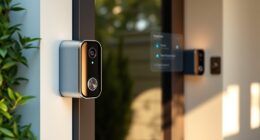
A smart sensor kit for home can help you spot break-ins, leaks, temperature changes, or energy use, but no single kit covers every need equally well. My best overall pick is the YoLink Water Leak Sensor 4 Kit for focused leak monitoring with multiple sensors and a hub. The Tapo T31 stands out for door-and-window monitoring with Matter compatibility, while the Ring Alarm 8-Piece Kit is a stronger fit for a conventional home security setup. The main tradeoff is between a focused system that does one job well and a broader alarm kit that may need more setup or compatible devices. Read on for the full comparison and guidance on matching a kit to your home.

Get privacy and security gear delivered free with Prime
- Fast, free delivery on millions of items
- Prime Video, Amazon Music and more included
- Member-only deals all year
Key Takeaways
- These kits solve different problems: the lineup spans water leaks, entry security, energy monitoring, and temperature or occupancy sensing, so sensor count alone is a poor way to compare them.
- YoLink is the focused pick for leak coverage: its kit combines a hub with six sensors, while the other products center on different household risks.
- Tapo T31 is the standout for connected entry sensors: Matter compatibility may suit homes built around multiple smart-home platforms, but buyers should check their existing hub and setup requirements.
- Ring and Tolviviov offer different paths to alarm coverage: Ring‘s 8- and 14-piece kits let buyers compare system size within one product family, while Tolviviov is an alternative Wi-Fi alarm package.
- Specialist kits can be a better fit than a broad alarm bundle: the energy monitor, ecobee sensors, and YoLink kit target specific needs that general entry-alarm systems do not address.
| Smart Home Energy Monitor with 16 Circuit Sensors |  | Best for Whole-Panel Energy Tracking | Sensors: 16 clamp-on sensors | Connectivity: 2.4 GHz and 5 GHz Wi-Fi; RJ45 Ethernet | Single-phase support: Up to 240 VAC line-neutral | VIEW ON AMAZON | See Our Full Breakdown |
| Tolviviov 8-Piece WiFi Home Alarm System |  | Best for Simple DIY Entry Monitoring | Kit contents: 1 alarm station, 5 door and window sensors, 2 remote controls | Wi-Fi: 2.4 GHz only; does not support 5 GHz | Sensor capacity: Up to 20 sensors | VIEW ON AMAZON | See Our Full Breakdown |
| Wireless Home Security Alarm System Kit, 24 Pieces |  | Best for Expandable, No-Monthly-Fee Coverage | Kit size: 24 pieces | Connectivity: 2.4 GHz Wi-Fi or 4G SIM; no 5G | Alarm volume: 120 dB | VIEW ON AMAZON | See Our Full Breakdown |
| PGST A107F Home Alarm System with 1080p Security Camera |  | Best for Adding Video to an Alarm Kit | Model: A107F | Video resolution: 1080p | Power source: Corded electric | VIEW ON AMAZON | See Our Full Breakdown |
| YoLink Water Leak Sensor 4 Kit with Hub, 6 Sensors |  | Best for Long-Range Leak Detection | Included: 1 hub and 6 leak sensors | Alarm volume: 105 dB per sensor | Wireless range: Up to 2,034 ft. in open air | VIEW ON AMAZON | See Our Full Breakdown |
| Tapo T31 Matter-Compatible Door and Window Sensor Starter Kit with Hub |  | Best for Matter-Compatible Entry Monitoring | Included: 3 Tapo T110 contact sensors and 1 Tapo H100 smart hub | Wireless protocol: Sub-G | Wi-Fi requirement: 2.4 GHz for the hub | VIEW ON AMAZON | See Our Full Breakdown |
| Ring Alarm 8-Piece Home Security Kit |  | Best Starter Security Kit for Small Homes | Included components: Base station, keypad, 4 contact sensors, motion detector, and range extender | Recommended home size: 1–2 bedrooms | Mobile notifications: Available through the Ring app | VIEW ON AMAZON | See Our Full Breakdown |
| ecobee SmartSensor Temperature and Occupancy Sensors, 2-Pack |  | Best for Room-by-Room Comfort | Quantity: 2 sensors | Functions: Temperature and occupancy sensing | Range: Up to 60 feet | VIEW ON AMAZON | See Our Full Breakdown |
| Ring Alarm 14-Piece Wireless Security System |  | Best for Larger Homes | Kit contents: 1 base station, 2 keypads, 8 contact sensors, 2 motion detectors, and 1 range extender | Connectivity: Wireless | App control: Ring app | VIEW ON AMAZON | See Our Full Breakdown |
| smart sensor kit home | Connectivity |
|---|---|
| Smart Home Energy Monitor with | 2.4 GHz and 5 GHz Wi-Fi; RJ45 Ethernet |
| Tolviviov 8-Piece WiFi Home Al | — |
| Wireless Home Security Alarm S | 2.4 GHz Wi-Fi or 4G SIM; no 5G |
| PGST A107F Home Alarm System w | Wireless |
| YoLink Water Leak Sensor 4 Kit | LoRa |
| Tapo T31 Matter-Compatible Doo | — |
| Ring Alarm 8-Piece Home Securi | — |
| ecobee SmartSensor Temperature | — |
| Ring Alarm 14-Piece Wireless S | Wireless |
More Details on Our Top Picks
Smart Home Energy Monitor with 16 Circuit Sensors
For a smart sensor kit focused on understanding electricity use, this monitor is the most targeted option in the group: its 16 clamp-on sensors track individual circuits, so unusual consumption can be tied to a specific part of the home rather than a general alert. That makes it more useful for investigating energy spikes than the Tolviviov 8-Piece WiFi Home Alarm System, which watches doors and windows instead. Dual-band Wi-Fi and Ethernet give it more network flexibility than the alarm kits limited to 2.4 GHz Wi-Fi. The tradeoff is installation: sensors go inside the electrical panel, so this is not a stick-on, room-by-room setup. It supports several common residential configurations, but buyers with a three-phase Delta system should choose a different monitor.
Pros:- Tracks usage across 16 individual circuits
- Provides real-time energy data and alerts for abnormal power activity
- Supports 2.4 GHz and 5 GHz Wi-Fi plus Ethernet
- Works with several single-phase, split-phase, and three-phase electrical configurations
Cons:- Requires installation in the electrical panel
- Does not support three-phase Delta systems
Best for: Homeowners who want circuit-level electricity data and alerts to identify unusually high power use.
Not ideal for: Renters or anyone uncomfortable with electrical-panel installation, and households using a three-phase Delta system.
- Sensors:16 clamp-on sensors
- Connectivity:2.4 GHz and 5 GHz Wi-Fi; RJ45 Ethernet
- Single-phase support:Up to 240 VAC line-neutral
- Split-phase support:120/240 VAC
- Three-phase support:Up to 415Y/240 VAC
- Three-phase Delta:Not supported
- Installation:Sensors install in the circuit panel
Our verdict“Choose this monitor if circuit-by-circuit energy insight matters more than simple wireless placement or entry alerts.”
Tolviviov 8-Piece WiFi Home Alarm System
This kit is the straightforward choice for households that want door and window alerts without a complicated sensor plan. Five contact sensors, two remotes, and an alarm station cover common entry points, while app, voice, and remote controls let different household members arm or manage the system. Compared with the Wireless Home Security Alarm System Kit, 24 Pieces, Tolviviov starts with fewer components and a simpler stated setup, but it also has less room to grow: capacity tops out at 20 sensors rather than 99. Alexa and Google Assistant support is a useful advantage over the 24-piece kit’s Alexa-only compatibility. The main limits are 2.4 GHz Wi-Fi only and a station that needs AC power; its backup battery is specified for eight hours, not extended outages.
Pros:- Includes five door and window sensors and two remote controls
- Supports app, remote, Alexa, and Google Assistant control
- Can expand to 20 sensors and five remotes
- DIY installation avoids tools and wall damage
Cons:- Connects only to 2.4 GHz Wi-Fi
- Alarm station needs AC power for normal operation
- Backup battery is specified for only eight hours
Best for: Renters or first-time smart security buyers who want a small, tool-free entry alarm with app and voice controls.
Not ideal for: Households seeking broad sensor coverage, 5 GHz Wi-Fi, or longer backup operation during power outages.
- Kit contents:1 alarm station, 5 door and window sensors, 2 remote controls
- Wi-Fi:2.4 GHz only; does not support 5 GHz
- Sensor capacity:Up to 20 sensors
- Remote capacity:Up to 5 remotes
- Backup battery life:8 hours
- Smart home compatibility:Alexa and Google Assistant
- Control methods:App, remote, and voice
- Maximum range:100 meters
Our verdict“Pick Tolviviov for a modest, easy-to-install entry alarm, but choose the 24-piece kit if you need much broader sensor expansion.”
Wireless Home Security Alarm System Kit, 24 Pieces
With 24 pieces included and capacity for up to 99 PGST sensors, this kit suits buyers who want to cover more than a few doors and windows from the outset. Its Wi-Fi or 4G SIM connectivity adds an alternative connection path that the Tolviviov 8-Piece system does not list, while app alerts, auto-dial, and SMS can reach several contacts. The system also includes scheduled arming, delayed arming, and two-way voice calls, giving it more alarm-management options than Tolviviov’s simpler app, remote, and voice-control setup. There is no monthly fee, but the broader feature set means more setup and sensor installation. It is also 2.4 GHz Wi-Fi only, and buyers should check SIM and mobile-network compatibility before relying on 4G alerts.
Pros:- Includes a 24-piece alarm kit and supports up to 99 PGST sensors
- Offers 2.4 GHz Wi-Fi or 4G SIM connectivity
- Can send app notifications, auto-dial, and SMS to up to five numbers
- Includes Alexa support and no monthly fee
Cons:- Does not support 5 GHz Wi-Fi
- Requires more setup and sensor installation than the smaller Tolviviov kit
- 4G alerts depend on suitable SIM and network service
Best for: Homeowners who need a larger DIY sensor network, multiple alert channels, and room to add sensors without a monthly service fee.
Not ideal for: People who want a minimal setup, need 5 GHz Wi-Fi, or do not want to configure an app, sensors, and optional SIM connectivity.
- Kit size:24 pieces
- Connectivity:2.4 GHz Wi-Fi or 4G SIM; no 5G
- Alarm volume:120 dB
- App compatibility:Smart Life and Tuya
- Voice assistant:Alexa
- Maximum sensor capacity:99 PGST sensors
- Notifications:App notifications, auto-dial, and SMS to up to 5 numbers
- Additional functions:Two-way voice calls, tamper alarm, delayed and scheduled arming/disarming
- Monthly fee:None
Our verdict“Choose this kit for expandable, multi-channel DIY alarm coverage; Tolviviov is a simpler fit for a smaller set of entry points.”
PGST A107F Home Alarm System with 1080p Security Camera
The A107F is the clearest choice here for buyers who want a camera alongside motion and entry sensors. Its 1080p camera adds visual monitoring to the Smart Life or Tuya app, while SOS calls to preset contacts offer a separate way to request help. Compared with the Wireless Home Security Alarm System Kit, 24 Pieces, the PGST emphasizes camera and SOS features rather than a stated 99-sensor capacity and multiple alert routes such as SMS and auto-dial. Both support app-based monitoring and Alexa, and neither requires a monthly fee. The practical tradeoff is placement: this model uses corded electric power, so camera and alarm positioning depends on access to an outlet. Remote alerts and control also rely on the smartphone app, making it less appealing to buyers who want a more self-contained setup.
Pros:- Combines a 1080p camera with motion and door/window sensors
- Provides app alerts and phone calls for triggered sensors
- SOS button can call preset contacts
- Supports expandable sensors and has no monthly fee
Cons:- Corded power limits placement near available outlets
- Remote alerts and control depend on the smartphone app
- The supplied details do not specify sensor capacity or backup power
Best for: Buyers who want a DIY alarm with a camera, motion monitoring, door and window sensors, and SOS calling in one setup.
Not ideal for: People who need flexible battery-powered placement or want remote control without depending on a smartphone app.
- Model:A107F
- Video resolution:1080p
- Power source:Corded electric
- Connectivity:Wireless
- Alert type:Audio and motion
- Control method:App
- Installation:Self-adhesive
- Dimensions:8 x 6 x 4 inches
- Monthly fee:None
Our verdict“Choose the PGST A107F if camera coverage and SOS calls matter more than the larger stated sensor capacity of the 24-piece alarm kit.”
YoLink Water Leak Sensor 4 Kit with Hub, 6 Sensors
This is the only kit in this group built around water leaks rather than security or energy monitoring, making it the better match for laundry rooms, basements, and other spots where a small leak could go unnoticed. Six sensors each have a 105 dB built-in alarm, and LoRa communication is designed for long reach where ordinary Wi-Fi may struggle. Compared with the PGST A107F, which pairs security sensors with a camera, YoLink concentrates on leak alerts and can trigger compatible devices locally during internet outages. Its stated battery life of up to five years also reduces routine battery attention, though actual life can vary. The kit depends on its hub, and the quoted 2,034-foot range is an open-air figure, not a promise for walls and floors inside a home.
Pros:- Includes six leak sensors, each with a 105 dB alarm
- LoRa connectivity offers long stated open-air range
- Can trigger compatible devices locally during internet outages
- Replaceable batteries have a stated typical life of up to five years
Cons:- Requires the included hub to operate as a kit
- Open-air range may be reduced by walls and indoor obstructions
- Leak-focused sensors do not replace an entry or motion alarm system
Best for: Homeowners who want to monitor several leak-prone areas, especially where Wi-Fi coverage is unreliable or local alerts matter.
Not ideal for: Buyers seeking door, window, motion, or energy sensors, or anyone unwilling to use a dedicated hub.
- Included:1 hub and 6 leak sensors
- Alarm volume:105 dB per sensor
- Wireless range:Up to 2,034 ft. in open air
- Connectivity:LoRa
- Alerts:App, email, and SMS/text
- Local control:YoLink Control-D2D
- Battery:2 AAA batteries per sensor
- Typical battery life:Up to 5 years
- Hub capacity:Supports 300+ YoLink devices
Our verdict“Choose YoLink for hub-based, long-range leak coverage; the PGST kits are better suited to intrusion alerts and camera monitoring.”
Tapo T31 Matter-Compatible Door and Window Sensor Starter Kit with Hub
For a home sensor setup focused on doors and windows, the Tapo T31 pairs three contact sensors with a hub that can alert you locally by chime and remotely through the app. Its Matter compatibility lets it fit into major smart home platforms and trigger compatible devices, giving it more automation flexibility than the security-first Ring Alarm 8-Piece Home Security Kit. The hub also supports up to 64 sensors, switches, and buttons, leaving room to expand beyond the included trio.
The tradeoff is that the sensors depend on the included hub, and that hub needs 2.4 GHz Wi-Fi; this is not a standalone sensor set. Choose it for cross-platform entry alerts and simple automations, not for a full alarm system with motion detection or professional monitoring.
Pros:- Matter support works with Alexa, Google Home, Apple HomeKit, and Samsung SmartThings
- Built-in chime and customizable 90 dB alarm provide local alerts
- Hub supports up to 64 sensors, switches, and buttons
- Magnetic or adhesive mounting needs no tools
Cons:- Sensors cannot operate without the included Tapo hub
- Hub requires a 2.4 GHz Wi-Fi connection
- Includes contact sensors only, with no motion detector
Best for: Smart home owners who want door and window alerts that can trigger automations across Matter-compatible platforms.
Not ideal for: Buyers seeking a complete monitored alarm system or sensors that operate without a dedicated hub.
- Included:3 Tapo T110 contact sensors and 1 Tapo H100 smart hub
- Wireless protocol:Sub-G
- Wi-Fi requirement:2.4 GHz for the hub
- Hub capacity:Up to 64 sensors, switches, and buttons
- Alarm:Customizable 90 dB
- Battery:CR2032; up to 2 years
- Mounting:Magnetic or adhesive
- Compatibility:Matter; Alexa, Google Home, Apple HomeKit, and Samsung SmartThings
Our verdict“Pick the Tapo T31 if you want expandable, Matter-compatible door and window sensing, but choose a Ring Alarm kit for a fuller security-system setup.”
Ring Alarm 8-Piece Home Security Kit
The Ring Alarm 8-Piece Kit is the more security-oriented choice for a one- or two-bedroom home: four contact sensors cover entry points, while the motion detector adds a layer the Tapo T31 does not provide. The keypad and base station make this a complete starter alarm setup rather than a handful of connected sensors, and the Ring app sends mobile alerts when the system is triggered.
Its main limitation is that some capabilities sit behind a compatible Ring Protect subscription, including optional professional monitoring; Alexa voice control also requires a subscription. The included set is sized for smaller homes, and expanding coverage means buying more accessories separately. I’d choose this over the 14-piece Ring kit when fewer entry points need coverage, but not for a larger home that needs more sensors from the outset.
Pros:- Combines four contact sensors with a motion detector
- Includes a keypad, base station, and range extender
- Ring app provides mobile alerts when the alarm is triggered
- Can expand with separately sold sensors and accessories
Cons:- Professional monitoring requires a compatible Ring Protect plan
- Alexa voice control requires a Ring Protect subscription
- Additional sensors and accessories are sold separately
Best for: Residents of one- or two-bedroom homes who want contact and motion sensing in a single app-controlled alarm kit.
Not ideal for: Owners of larger homes who need broad sensor coverage immediately, or buyers who do not want subscription-dependent features.
- Included components:Base station, keypad, 4 contact sensors, motion detector, and range extender
- Recommended home size:1–2 bedrooms
- Mobile notifications:Available through the Ring app
- Professional monitoring:Optional with a compatible Ring Protect Plan
- Alexa voice control:Available with a Ring Protect subscription
- Expandability:Additional sensors and accessories sold separately
Our verdict“Choose this kit for a small home needing a ready-made contact-and-motion alarm, and consider the Ring 14-Piece kit if you need wider coverage.”
ecobee SmartSensor Temperature and Occupancy Sensors, 2-Pack
The ecobee SmartSensor 2-Pack suits buyers who mean room comfort—not intrusion coverage—when they want a smart sensor kit for home. Each sensor reports temperature and occupancy to a compatible ecobee Smart Thermostat, so the system can help account for rooms that run warmer or cooler than the thermostat’s location. That makes it a different kind of pick from the door-and-window-focused Tapo T31, and it can prioritize bedroom temperature overnight.
Wireless setup and stand or wall placement keep installation simple, while the included CR2477 batteries are rated for up to five years. The catch is the ecosystem: you need an ecobee Smart Thermostat, and motion alerts require an active ecobee Smart Security subscription. Skip these if you want standalone security notifications or sensors that work across multiple thermostat brands.
Pros:- Measures both temperature and occupancy
- Can prioritize bedroom temperature overnight
- Wireless setup supports stand or wall placement without tools
- Included CR2477 batteries are rated for up to five years
Cons:- Requires a compatible ecobee Smart Thermostat
- Motion alerts require an active ecobee Smart Security subscription
- Does not provide door or window contact sensing
Best for: Ecobee thermostat owners who want more representative room temperatures and occupancy-aware comfort in bedrooms or other frequently used spaces.
Not ideal for: Buyers without a compatible ecobee Smart Thermostat or anyone seeking standalone door, window, or security sensors.
- Quantity:2 sensors
- Functions:Temperature and occupancy sensing
- Range:Up to 60 feet
- Battery:CR2477
- Battery life:Up to 5 years
- Setup:Wireless app connection; no tools or wiring required
- Compatibility:ecobee Smart Thermostat
- Motion alerts:Require an active ecobee Smart Security subscription
Our verdict“Buy these if you already use an ecobee thermostat and want room-specific comfort data, not a general-purpose home security kit.”
Ring Alarm 14-Piece Wireless Security System
For two- to four-bedroom homes, the Ring Alarm 14-Piece System gives a stronger starting spread than the Ring 8-Piece kit: eight contact sensors cover more doors and windows, and two motion detectors add interior coverage. Two keypads can also make arming and disarming more convenient in a larger layout. Compared with the smaller Ring kit, this one is better suited to homes with more entry points and multiple areas to monitor, rather than buyers who only need a compact starter set.
It remains an alarm-focused system, not a flexible multi-purpose sensor platform like the Tapo T31. App notifications are included, while professional monitoring and Alexa voice control require a compatible Ring Protect subscription. More coverage is built into the box, but expansion still means purchasing additional sensors or accessories separately.
Pros:- Eight contact sensors and two motion detectors provide broad initial coverage
- Two keypads suit homes with more than one convenient entry or arming point
- Ring app provides mobile notifications
- Additional sensors and accessories can expand the system
Cons:- Professional monitoring requires a compatible Ring Protect Plan
- Alexa voice control requires a Ring Protect subscription
- Further expansion requires separately sold sensors and accessories
Best for: Households in two- to four-bedroom homes that want contact and motion coverage across several rooms from the start.
Not ideal for: Small homes with only a few entry points, or buyers who want broad smart-platform compatibility without subscription-dependent features.
- Kit contents:1 base station, 2 keypads, 8 contact sensors, 2 motion detectors, and 1 range extender
- Connectivity:Wireless
- App control:Ring app
- Voice assistant compatibility:Alexa
- Professional monitoring:Available with a compatible Ring Protect Plan
- Recommended home size:2–4 bedrooms
- Expandability:Additional sensors and accessories sold separately
Our verdict“Choose the 14-piece Ring kit when a larger home needs more entry and motion coverage upfront; the 8-piece kit is a better fit for smaller layouts.”

How We Picked
I ranked these products by how clearly each kit meets a real home-monitoring need, then weighed the practical details that affect everyday use: sensor purpose and coverage, included hub or control hardware, connectivity, installation demands, and the ability to grow the setup. I also looked at whether the kit is a focused specialist or a broader alarm package, since those serve different buyers and should not be judged by piece count alone.
The ranking favors kits with a clear role, a useful combination of included components, and a plausible fit for the stated need. That puts YoLink first for its specific leak-detection package, followed by options that offer clear value for entry monitoring or security coverage. Specialist products such as the energy monitor and ecobee sensors remain strong choices for their intended jobs, but rank lower as all-purpose sensor kits because they address narrower needs. I treat larger bundles as potential coverage advantages, not automatic wins: buyers should match their contents and connectivity to the home they already have.
Factors to Consider When Choosing Smart Sensor Kit Home
Before choosing a kit, I would start with the household problem it needs to solve rather than the number of sensors in the box. These factors can help you avoid paying for coverage you will not use or buying a kit that cannot work with your existing setup.
Choose the Risk You Need to Detect First
Entry sensors, leak detectors, temperature sensors, and energy monitors watch for different events, so one category cannot stand in for another. Start by listing the places where an alert would change what you do: a basement leak, an often-opened window, an overheated room, or a circuit drawing unexpected power. A general alarm kit may cover doors and windows but will not automatically monitor plumbing or electrical use. Specialist kits give more attention to one risk, which can be more useful than a mixed bundle with sensors you never install. If you have several concerns, check whether the products can share an app or platform before planning a single unified setup.
Count Coverage Points, Not Just Included Pieces
A large advertised piece count may include a hub, keypad, siren, or other hardware rather than a matching number of sensors. Sketch the doors, windows, rooms, and leak-prone areas you want to cover, then compare that plan with each kit’s actual contents. A starter kit can be easier to place and manage, while a bigger bundle may save you from buying multiple add-ons later. Do not assume every sensor in a security kit can be reassigned to another task; sensor type determines what it can detect. Leave room for future additions, but avoid buying extra components before confirming they are compatible with the system.
Check Hub, Network, and Platform Requirements
Some sensor kits include a hub, while others depend on compatible smart-home hardware or a particular network connection. Before buying, check what connects directly to your router, what needs a hub, and whether that hub must stay powered and online. Matter compatibility can help devices work across supported platforms, but it does not mean every feature works with every controller. Likewise, a Wi-Fi label alone does not explain how a system handles sensor communication or alerts. Confirm the supported app, voice assistants, and automation features against the devices you already use.
Think Through Alerts and What Happens After One
A sensor only helps if its alert reaches someone who can act on it. Decide whether you need a local siren, phone notifications, monitoring services, or just an event log; these functions are not interchangeable. For a leak sensor, a timely alert may be enough if someone is home or nearby, while a security alarm buyer may want a clear plan for responding when nobody is there. Review which functions require an account, subscription, or steady internet connection before relying on them. Test notification settings after installation and consider who else in the household should receive alerts.
Match the System to Your Installation and Maintenance Tolerance
Wireless sensors can simplify placement, but a kit still needs thoughtful positioning, setup, and occasional upkeep. Check whether the installation requires wiring, pairing several components, or placing a central hub where it can communicate with sensors. Battery-powered devices reduce cable clutter but add battery checks and eventual replacements to your routine. Energy-monitoring equipment may have different installation demands from a door sensor, so do not assume every kit is a simple stick-on setup. If you want minimal setup, favor a small system with a clearly defined purpose over a large collection you may not finish installing.
Pay for Coverage You Will Use
A larger or more specialized system makes sense when it addresses a real gap in your home, not simply because it includes more hardware. A focused leak kit may be the better choice for a water-risk problem, while a larger alarm package may suit a home with many entry points. Premium features matter most when they change how you monitor or respond, such as fitting into an established smart-home platform or covering a specific blind spot. Compare the full kit contents and any ongoing service requirements rather than focusing on a single headline feature. If you are unsure how many sensors you need, begin with the highest-risk area and expand only after checking compatibility.
Frequently Asked Questions
Can one smart sensor kit cover security, leaks, and temperature?
Not automatically. The products in this lineup show how separate kits are often built around one main task: Ring and Tolviviov focus on alarm coverage, YoLink on leak detection, and ecobee on temperature and occupancy sensing. A single smart-home platform may let compatible devices work together, but that depends on hub, app, and platform support. Check the specific sensor types and integrations before expecting one kit to cover every risk. For many homes, a focused starter kit plus compatible additions is a more practical plan.
Do I need a hub if a sensor kit says it uses Wi-Fi or Matter?
It depends on the kit and the features you want. Some products include a hub as part of their setup, while Matter devices still need a compatible controller to join a smart-home platform. A Wi-Fi connection does not by itself confirm that sensors connect directly to your router or support every desired automation. Read the setup requirements for the exact model and check whether the hub is included. If you already own a compatible controller, confirm that it supports the device’s specific functions, not just basic connection.
Should I choose a larger alarm kit or add sensors as needed?
A larger bundle can make sense when you already know how many entry points you want to cover and the included components suit your layout. Starting smaller may reduce unused hardware and make setup easier, particularly if you are still deciding where sensors belong. Compare the actual sensor count with the full piece count, since hubs and control devices may be included in the latter. Also check whether add-on sensors are sold for the same system and can be managed in the same app. For a home with many doors and windows, planning coverage first is more useful than choosing by package size alone.
Which kit is a better fit if my main concern is water damage?
The YoLink Water Leak Sensor 4 Kit is the clearest match in this roundup because it is designed around leak detection and includes a hub with six sensors. A door-and-window alarm kit may alert you to entry, but it does not replace sensors placed near plumbing, appliances, or other leak-prone areas. Before choosing, map the spots you want to monitor and check how the system sends alerts when nobody is at home. Think about whether the hub’s location can communicate with those areas. If your priority is break-in detection instead, compare the alarm-focused kits rather than selecting a leak kit as a general security system.
What should I verify before buying an energy monitor or temperature sensor kit?
First confirm that the product measures what you need: the energy monitor is aimed at circuit-level use, while the ecobee sensors focus on temperature and occupancy. These products are not substitutes for entry alarms or leak detectors, even if they sit within a broader smart-home setup. Check installation needs, supported equipment, and whether the readings or automations you want are available through your existing app or controller. For an energy monitor, pay particular attention to electrical compatibility and whether professional installation is appropriate for your home. For room sensors, consider where placement will make the readings useful rather than simply adding sensors to every room.
Conclusion
For a focused answer to a common household risk, I recommend the YoLink Water Leak Sensor 4 Kit as best overall in this comparison. The best value for entry monitoring depends on whether you prefer Tolviviov’s Wi-Fi alarm approach or Ring’s smaller 8-piece setup; compare included hardware and platform needs before choosing. For a larger security footprint, the Ring Alarm 14-Piece Kit is the best premium-style pick among these alarm bundles, while the Tapo T31 is my best choice for buyers who prioritize connected door-and-window sensing and Matter support. Beginners should start with the kit that addresses one clear need and has setup requirements that match their existing smart-home gear. For specific needs, choose the energy monitor for circuit use, ecobee sensors for temperature and occupancy, or YoLink for leak alerts; each is more useful than a general alarm kit when that is the problem you need to solve.
Halloween Picks
halloween
As an affiliate, we earn on qualifying purchases.