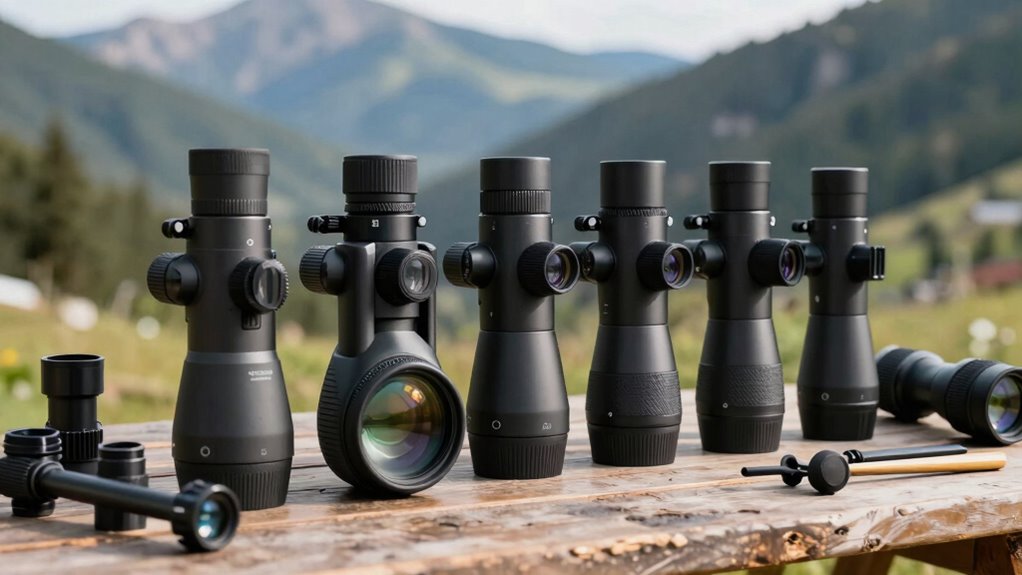

For buyers searching for a high-magnification spotting scope, maximum zoom is only part of the decision: a large objective lens can help at long range, while stability and focusing matter when magnification climbs. I rank the Vortex Diamondback HD 20–60×85 first for its 85 mm objective and helical focus, and the SVBONY SV28 25–75×100 for shoppers who want the largest lens and highest listed zoom here. The Vortex Crossfire HD 16–48×65 is a more manageable alternative when carrying weight and a wider lower-power view matter more than pushing past 50x.

Get privacy and security gear delivered free with Prime
- Fast, free delivery on millions of items
- Prime Video, Amazon Music and more included
- Member-only deals all year
The main tradeoff is straightforward: greater magnification can reveal more detail, but it also makes hand movement, focus errors, and dim conditions more noticeable. A capable tripod and usable optics matter as much as the number printed on the zoom range. I compare these five models by how their magnification, lens size, focusing, included support, and field-ready construction fit real viewing needs—not by zoom figures alone.
Key Takeaways
- The Vortex Diamondback HD combines 20–60x zoom, an 85 mm objective, and helical focus; it is my best balance for supported high-magnification viewing.
- The SVBONY SV28 reaches 75x and has the largest lens in this group at 100 mm, but its desktop tripod is not a substitute for a full-height field tripod.
- The Gosky 20–60×80 is the lighter accessory-rich option at 2.4 pounds, though its included tripod is tabletop-sized.
- The Vortex Crossfire HD tops out at 48x, trading reach for a 65 mm lens, lower weight than the 85 and 100 mm options, and helical focusing.
- The GUANIEE includes a full-size tripod listed at 18.3–59.3 inches, but its 7.39-pound scope weight makes the complete setup the heaviest choice here.
| Vortex Diamondback HD Angled Spotting Scope, 20–60×85 |  | Best Overall for Balanced High Magnification | Magnification: 20–60x | Objective lens: 85 mm | Field of view: 108 feet | VIEW ON AMAZON | See Our Full Breakdown |
| SVBONY SV28 100mm Spotting Scope, 25–75x Magnification |  | Best for Maximum Zoom and a Large Objective | Magnification: 25–75x | Objective lens: 100 mm | Eyepiece: BAK4 Porro | VIEW ON AMAZON | See Our Full Breakdown |
| Vortex Crossfire HD Angled Spotting Scope, 16–48×65 |  | Best for a More Manageable, Lower-Power Setup | Magnification: 16–48x | Objective lens: 65 mm | Field of view: 131 (unit not specified) | VIEW ON AMAZON | See Our Full Breakdown |
| Gosky 20-60×80 Spotting Scope with Tripod |  | Best Value-Style Bundle for Lighter Carry | Magnification: 20–60x | Objective lens: 80 mm | Prism: BAK4 Porro | VIEW ON AMAZON | See Our Full Breakdown |
| GUANIEE 25–75×80 Spotting Scope with Tripod, Carrying Bag, and Phone Adapter |  | Best for a Supplied Full-Size Tripod | Magnification: 25–75x | Objective lens: 80 mm | Prism: BAK4 roof prism | VIEW ON AMAZON | See Our Full Breakdown |
| spotting scope high magnification | Magnification | Objective lens | Weight | Included accessories |
|---|---|---|---|---|
| Vortex Diamondback HD Angled S | 20–60x | 85 mm | 3.8 pounds | Neoprene cover, tethered lens caps, and lens cloth |
| SVBONY SV28 100mm Spotting Sco | 25–75x | 100 mm | 2,560 g | Desktop tripod, smartphone adapter, lens covers, and carrying case |
| Vortex Crossfire HD Angled Spo | 16–48x | 65 mm | 2.8 pounds | Neoprene cover, tethered lens covers, and lens cloth |
| Gosky 20-60×80 Spotting Scope | 20–60x | 80 mm | 2.4 pounds | Tabletop tripod, smartphone adapter, carrying case, covers, and cleaning cloth |
| GUANIEE 25–75×80 Spotting Scop | 25–75x | 80 mm | 7.39 pounds | Full-size tripod, phone adapter, carrying bag, cleaning cloth, and lens covers |
More Details on Our Top Picks
Vortex Diamondback HD Angled Spotting Scope, 20–60×85
I put the Diamondback HD 20–60×85 first because it combines a substantial 85 mm objective with a useful 20–60x range and a helical focus wheel. That pairing suits buyers who want to move between scanning at lower power and examining distant detail without stepping up to the 100 mm SVBONY. Fine focus adjustment is especially relevant when aiming at small targets, where a coarse correction can send the view past the point of sharpness.
Its Arca-Swiss and 1/4-20 compatibility makes it easier to match with a suitable tripod head than scopes whose included support is only a small tabletop unit. The O-ring sealing, argon purge, sunshade, and rubber armor also fit regular outdoor use. Compared with the lighter Gosky, however, the Diamondback weighs 3.8 pounds and does not include a tripod; I would budget for a stable support rather than expect a grab-and-go setup.
This is my best all-round recommendation for buyers who will use a tripod and want high zoom with controlled focusing. It does not reach the 75x maximum of the SVBONY or GUANIEE, and a larger zoom number may appeal more to those chasing the farthest possible magnification. I would still favor this balanced configuration over maximum power alone when clarity and steady adjustment are the aim.
Pros:- 20–60x range paired with a substantial 85 mm objective
- Helical focus supports quick, fine adjustments
- Arca-Swiss and 1/4-20 mounting compatibility
- Waterproof, fogproof construction with sunshade and lens protection
Cons:- At 3.8 pounds, it is heavier than the Gosky and Crossfire scopes
- Tripod or car-window support must be purchased or supplied separately
Best for: Birders, wildlife observers, and range users who want 20–60x magnification, an 85 mm objective, and precise focus on a supported tripod.
Not ideal for: Travelers who need a lightweight kit or buyers who expect a usable tripod to come in the box.
- Magnification:20–60x
- Objective lens:85 mm
- Field of view:108 feet
- Focus:Built-in helical focus wheel
- Mount compatibility:Arca-Swiss and 1/4-20 threads
- Weather protection:O-ring sealed and argon purged; waterproof and fogproof
- Weight:3.8 pounds
- Included accessories:Neoprene cover, tethered lens caps, and lens cloth
Our verdict“I recommend the Diamondback HD as the strongest balance of high zoom, objective size, and focus control for tripod-based viewing.”
SVBONY SV28 100mm Spotting Scope, 25–75x Magnification
The SVBONY SV28 is the reach-focused pick in this group: its 25–75x zoom reaches the joint-highest stated maximum, while its 100 mm objective is the largest here. That size can be attractive for distant wildlife or targets when light is less forgiving, although a larger lens also means more scope to carry and support. Against the Diamondback’s 85 mm lens and 60x ceiling, this model gives buyers more stated magnification and a larger front lens.
That advantage has a practical catch. The SV28 includes a desktop tripod, and the supplied details do not describe a full-height field tripod. At 75x, a small support can make aiming and holding a view less comfortable outdoors. Manual focus also means the user has to adjust sharpness directly; the Diamondback’s helical focus is the more purpose-built choice for fast, fine corrections.
I would choose this scope when the 100 mm objective and 75x upper range are the main priorities and a separate, stable tripod is available. It is not the lightest route to high power at 2,560 g, and the listed optical-tube length of 12.8 millimeters appears unusual for a scope, so I would not rely on that figure to judge portability. Its bundled phone adapter and case are useful extras, but they do not resolve the support limitation.
Pros:- Largest stated objective lens in this lineup at 100 mm
- 25–75x zoom reaches the highest listed magnification range
- Fully multi-coated optics and BAK4 Porro eyepiece
- Includes smartphone adapter, desktop tripod, and carrying case
Cons:- Included desktop tripod may be too low for outdoor viewing
- Manual focus requires direct adjustment by the user
- At 2,560 g, it is not a lightweight high-magnification option
Best for: Buyers seeking the largest objective lens and a 75x upper magnification, with plans to use a sturdier tripod than the included desktop model.
Not ideal for: People who want a ready-to-use, full-height field setup or prefer helical focus for frequent fine adjustments.
- Magnification:25–75x
- Objective lens:100 mm
- Eyepiece:BAK4 Porro
- Coating:Fully multi-coated
- Focus:Manual
- Mount:Altazimuth; universal 1/4-inch tripod thread
- Weight:2,560 g
- Included accessories:Desktop tripod, smartphone adapter, lens covers, and carrying case
Our verdict“I would pick the SV28 for its 100 mm objective and 75x ceiling, provided I could pair it with a more suitable field tripod.”
Vortex Crossfire HD Angled Spotting Scope, 16–48×65
The Crossfire HD 16–48×65 is not the pick for maximum reach: its 48x ceiling is lower than every other scope here. I include it because high-power use is not always improved by pushing zoom higher. Buyers who mostly scan at moderate distances may find its 16x starting magnification and 65 mm objective a more practical combination than carrying the larger Diamondback or 100 mm SVBONY.
It keeps several useful features from the more powerful Vortex: helical focus, an Arca-Swiss-compatible foot, HD optics, and a built-in sunshade. Its 2.8-pound weight is lighter than the Diamondback’s 3.8 pounds, though it still needs a tripod for stable viewing. Nitrogen-purged, waterproof, fogproof, and shockproof construction supports outdoor use. The listed field-of-view value has no unit, so I would not compare that number directly with the other scopes.
This is my lower-power alternative for buyers who value manageable carry weight and an easy-to-mount design more than seeing the highest possible magnification. Compared with the Gosky, it weighs more and does not list a bundled tripod or phone adapter, but it offers helical focusing and Arca-Swiss compatibility. Skip it if your main goal is to inspect fine detail at 60–75x; the Diamondback, SVBONY, or GUANIEE is a closer match.
Pros:- 16–48x range provides a lower-power starting point for scanning
- Helical focus and Arca-Swiss-compatible foot
- Waterproof, fogproof, and shockproof construction
- At 2.8 pounds, lighter than the Diamondback HD
Cons:- 48x maximum is the lowest in this five-scope comparison
- 65 mm objective is smaller than the other listed objectives
- Field-of-view figure is supplied without a unit
Best for: Outdoor observers who want HD optics, helical focus, and a lighter Vortex setup for moderate rather than maximum magnification.
Not ideal for: Buyers whose priority is reaching 60x or higher, or who need a tripod and phone adapter included.
- Magnification:16–48x
- Objective lens:65 mm
- Field of view:131 (unit not specified)
- Focus:Helical focus
- Mount compatibility:Arca-Swiss
- Weather resistance:Waterproof and fogproof; nitrogen purged
- Weight:2.8 pounds
- Included accessories:Neoprene cover, tethered lens covers, and lens cloth
Our verdict“I recommend the Crossfire HD when portability and controlled moderate-power viewing matter more than reaching the lineup’s highest zoom.”
Gosky 20-60×80 Spotting Scope with Tripod
The Gosky 20–60×80 covers the familiar 20–60x range with an 80 mm objective, placing it close to the Diamondback’s zoom while weighing just 2.4 pounds. Its BAK4 Porro prism and fully multi-coated lens are specified alongside a nitrogen-filled, waterproof and fogproof body. For a buyer who wants a portable scope with several accessories already supplied, it is the most bundle-oriented option in the lineup.
Its included tabletop tripod and smartphone adapter make it approachable for casual viewing and phone-assisted observation, but they do not make it equivalent to the Diamondback’s helical focus and more flexible tripod-head compatibility. The Gosky uses manual focus, so sharpness depends on the user making the adjustment, and its tabletop mount may be too low or limited for extended outdoor sessions. Compared with the Crossfire, it reaches 60x and includes more accessories, while the Crossfire offers helical focus and Arca-Swiss mounting.
I would choose the Gosky for a lighter, accessory-rich entry into high-magnification viewing, especially when a small tripod suits the planned use. Its 80 mm objective is smaller than the Diamondback’s 85 mm and the SVBONY’s 100 mm, and the supplied field-of-view range is reported at 1,000 yards rather than in the same format as every other listing. Buyers who need a sturdy, eye-level setup should plan on another tripod.
Pros:- 20–60x magnification with an 80 mm objective
- Lightest scope listed here at 2.4 pounds
- BAK4 Porro prism and fully multi-coated lens
- Includes smartphone adapter, tabletop tripod, and carrying case
Cons:- Manual focus is less direct than the Vortex helical systems
- Included tripod is tabletop-sized, not a full-height field support
- Objective is smaller than the 85 mm and 100 mm alternatives
Best for: Casual wildlife viewers who want a 20–60x scope, smartphone adapter, and carrying accessories in a lighter package.
Not ideal for: Users who need fine helical focusing, a full-height included tripod, or the largest objective lens for high-power viewing.
- Magnification:20–60x
- Objective lens:80 mm
- Prism:BAK4 Porro
- Lens coating:Fully multi-coated
- Field of view:82.9–48 ft per 1,000 yards
- Focus:Manual
- Weight:2.4 pounds
- Included accessories:Tabletop tripod, smartphone adapter, carrying case, covers, and cleaning cloth
Our verdict“I see the Gosky as the most convenient lightweight bundle, as long as its tabletop tripod and manual focus match the intended use.”
GUANIEE 25–75×80 Spotting Scope with Tripod, Carrying Bag, and Phone Adapter
The GUANIEE 25–75×80 reaches 75x, matching the SVBONY’s stated upper magnification, and pairs that range with an 80 mm fully multi-coated lens and BAK4 roof prism. Its most practical distinction is the listed full-size tripod with an 18.3–59.3-inch height range. That gives it a stronger out-of-box field-support story than the desktop-tripod Gosky and SVBONY, which can matter when viewing from standing or seated positions.
The cost of that ready-to-set-up approach is substantial carrying weight: the scope itself is listed at 7.39 pounds, well above the other scopes here. The full package may suit a stationary setup or a short walk from a vehicle, but it is a poor match for buyers who count every pound. Compared with the SVBONY, it has a smaller 80 mm objective but the same 75x maximum; compared with the Diamondback, it includes a full-size tripod but lacks the stated Vortex helical-focus feature.
I would select this model when included support and a high zoom ceiling matter more than a light kit. It has a 45-degree eyepiece and weather protection listed as waterproof and fogproof, plus a phone adapter and carrying bag. The available details do not specify focus type or lens-coating performance beyond fully multi-coated, so I would not assume it offers the same focus feel as either Vortex. Its weight remains the clearest reason to skip it.
Pros:- 25–75x zoom matches the highest stated maximum in this group
- Includes a full-size tripod listed from 18.3 to 59.3 inches
- 80 mm fully multi-coated lens with BAK4 roof prism
- Waterproof and fogproof design with phone adapter and carrying bag
Cons:- Listed scope weight of 7.39 pounds is the heaviest here
- Focus type is not specified in the supplied details
- The 80 mm objective is smaller than the SVBONY’s 100 mm lens
Best for: Observers who want 25–75x magnification and a supplied full-size tripod for stationary or vehicle-accessible viewing.
Not ideal for: Hikers and traveling users who need a light scope, or buyers who want clearly specified helical focus.
- Magnification:25–75x
- Objective lens:80 mm
- Prism:BAK4 roof prism
- Field of view:123–63 ft at 1,000 yards
- Eyepiece angle:45 degrees
- Tripod height:18.3–59.3 inches
- Weight:7.39 pounds
- Included accessories:Full-size tripod, phone adapter, carrying bag, cleaning cloth, and lens covers
Our verdict“I would choose the GUANIEE for its included full-height tripod and 75x range only if its heavy carry weight is acceptable.”

How We Picked
I ranked these scopes for high-magnification spotting, giving priority to useful zoom range, objective-lens size, focus control, and the support needed to hold a clear view. High power is not automatically better: at the top of a zoom range, a scope needs a stable mount and careful focusing, and the larger objective may help gather light while adding size or carrying weight.
I also compared what is supplied with each scope. A smartphone adapter can help document a view, but it does not replace a steady tripod. I distinguish tabletop support from a full-size tripod because that affects whether a buyer can use high magnification comfortably in the field. Weather sealing, lens coatings, and build details matter for outdoor use, but I do not treat them as substitutes for optical and support limits.
The ranking reflects the information provided for these exact models. The Diamondback takes the lead because its 85 mm lens, 20–60x range, and helical focus offer a strong balance. The SVBONY earns the high-zoom, large-objective role despite its support limitation. The Crossfire ranks as a lower-power handling alternative; Gosky is the lighter bundled option, and GUANIEE is for buyers who prioritize supplied full-height support over portability. I have not inferred unlisted optical performance or treated a stated maximum zoom as proof of clear detail at that setting.
| spotting scope high magnification | Focus | Included accessories |
|---|---|---|
| Vortex Diamondback HD Angled S | Built-in helical focus wheel | Neoprene cover, tethered lens caps, and lens cloth |
| SVBONY SV28 100mm Spotting Sco | Manual | Desktop tripod, smartphone adapter, lens covers, and carrying case |
| Vortex Crossfire HD Angled Spo | Helical focus | Neoprene cover, tethered lens covers, and lens cloth |
| Gosky 20-60×80 Spotting Scope | Manual | Tabletop tripod, smartphone adapter, carrying case, covers, and cleaning cloth |
| GUANIEE 25–75×80 Spotting Scop | — | Full-size tripod, phone adapter, carrying bag, cleaning cloth, and lens covers |
Factors to Consider When Choosing Spotting Scope High Magnification
I would choose a high-magnification spotting scope by matching its usable power and support needs to the way I observe, rather than buying the largest zoom figure available.Maximum magnification is not the whole story
The lineup spans 48x to 75x at the upper end. The SVBONY and GUANIEE list the most reach, but the higher setting can make movement and focus errors more apparent. A steady tripod is particularly useful at high power. If most viewing happens at moderate distance, the Crossfire’s 16–48x range may be more practical than a 75x scope that spends much of its time on a smaller setting.
Zoom ranges also begin at different points: the Vortex models start at 16x or 20x, while the SVBONY and GUANIEE start at 25x. A lower starting power can help locate a moving subject before zooming in. I would weigh that ease of acquisition against the desire for a high-power close view.
Objective size affects size, weight, and light gathering
Among these models, objectives range from 65 mm to 100 mm. A larger objective can collect more light, which can be useful in dimmer viewing conditions, but it adds bulk and makes a stable mount more valuable. The SVBONY’s 100 mm lens is the largest; the Diamondback’s 85 mm objective offers a middle ground, while the Crossfire’s 65 mm lens keeps its optical package smaller.
Do not treat lens diameter as a guarantee of a bright or sharp image in every setting. Magnification, coatings, focus, light, and stability all affect what you see. I would compare objective size with carrying tolerance and mounting plans instead of choosing on aperture alone.
Focus control matters when the view is narrow
The Diamondback and Crossfire specify helical focus, offering direct, fine adjustment through a focus wheel. The Gosky and SVBONY list manual focus without the same helical-control description, and the GUANIEE details do not state a focus type. When viewing distant detail, the ability to make small corrections can be more useful than a higher maximum zoom.
If the target moves, fast adjustment can help bring it back into focus; for static targets, precision still matters. I would favor a clearly specified focus control if I expect to use the highest magnification often, while treating unspecified details as unknown rather than assuming features.
Check the tripod before planning a field setup
Included support varies sharply. The GUANIEE includes a full-size tripod with a listed height range, while the Gosky and SVBONY include desktop models. The Vortex scopes list tripod compatibility but do not include a tripod in the supplied accessories. A tabletop unit can be convenient on a bench or vehicle surface, but it may not provide comfortable standing-height viewing or the stability desired at high zoom.
For long sessions or maximum magnification, match the scope to a solid tripod head and verify its mounting fit. The Diamondback accepts Arca-Swiss and 1/4-20 threads; the Crossfire lists an Arca-Swiss-compatible foot. The other scopes list tripod or altazimuth arrangements, so confirm that the planned support works with the specific scope.
Balance weather protection and carry weight
Every model here is described as suitable for outdoor use, with waterproof and fogproof protection specified across the lineup. The Vortex scopes add nitrogen or argon purging details, and their rubber armor helps protect the body. Such construction supports outdoor use, but it does not remove the need to protect lenses and keep caps or a case close at hand.
Weight is a defining difference: Gosky is listed at 2.4 pounds, Crossfire at 2.8, Diamondback at 3.8, SVBONY at 2,560 g, and GUANIEE at 7.39 pounds. These figures are for the scopes as listed and should not be confused with the weight of every included accessory. For hikes, lighter equipment can make a setup easier to carry; for stationary viewing, a heavier option with the right support may be acceptable.
Treat phone adapters as a bonus, not an optical feature
The Gosky, SVBONY, and GUANIEE include a phone adapter, which can help capture or share a view. The Diamondback and Crossfire instead emphasize protective accessories and mounting compatibility in their listed packages. A phone adapter adds convenience, but holding a phone correctly over an eyepiece may take adjustment and should not drive the choice if the core goal is clear, stable high-power viewing.
I would first decide on the magnification range, lens size, focus, and tripod. Then I would treat an included adapter, case, cover, or cloth as a useful extra. That order prevents accessory count from obscuring the more important differences in support and handling.
Frequently Asked Questions
Is 75x magnification better than 60x for spotting?
Not automatically. The SVBONY and GUANIEE reach 75x, while the Diamondback and Gosky top out at 60x, but higher power also makes image movement and focusing more demanding. A stable tripod and suitable viewing conditions matter, and some buyers may get more practical use from a 60x scope with easier focusing or a better-fitting setup. I would choose 75x when the extra reach is a real need, not just because the number is larger.
Which scope has the largest objective lens?
The SVBONY SV28 has a 100 mm objective, the largest listed in this group. The Diamondback follows at 85 mm, while the Gosky and GUANIEE have 80 mm lenses and the Crossfire has a 65 mm lens. Larger objectives can gather more light, but they can also add bulk, and they do not by themselves guarantee a sharper view.
Do I need a tripod for high-magnification viewing?
A tripod is strongly advisable for these scopes, especially near the top of their zoom ranges. At high magnification, small movements can make it harder to hold a target in view, and a stable platform can make focusing more manageable. The Gosky and SVBONY include tabletop tripods, the GUANIEE includes a full-size tripod, and the Vortex models list compatible mounts but no tripod in the supplied accessories.
Which option is easiest to carry?
By the listed scope weights, the Gosky at 2.4 pounds is the lightest, followed by the Crossfire at 2.8 pounds. The Diamondback is 3.8 pounds, and the GUANIEE is listed at 7.39 pounds; the SVBONY is listed at 2,560 g. The full kit can weigh more once a tripod and accessories are included, so I would check the weight of the complete setup before planning a long hike.
Which model makes the most sense for a beginner?
The Gosky is a reasonable beginner-oriented bundle because it includes a phone adapter, carrying case, and tabletop tripod, and its 20–60x range is straightforward to compare with the Diamondback. However, buyers should know that its tripod is small and focus is manual. If precise focus control and mount flexibility matter more than included accessories, I would look at the Diamondback; if a full-height tripod in the box is the priority, the GUANIEE is the listed alternative, though it is much heavier.
Conclusion
My pick for the broadest mix of high magnification, lens size, and focus control is the Vortex Diamondback HD 20–60×85, particularly for buyers who already have or plan to add a stable tripod. Choose the SVBONY SV28 if the 100 mm objective and 75x maximum are the priority and you can replace its desktop support for field use. For a lighter accessory bundle, the Gosky brings 20–60x power and a phone adapter, with the clear compromise of manual focus and a tabletop tripod.
I would steer moderate-power observers toward the Vortex Crossfire HD if its lighter 65 mm format and helical focus fit better than maximum reach. Choose the GUANIEE when a supplied full-size tripod and 75x range matter more than carry weight. In short: buy for the viewing conditions and tripod you will actually use, not the largest magnification number on the label.