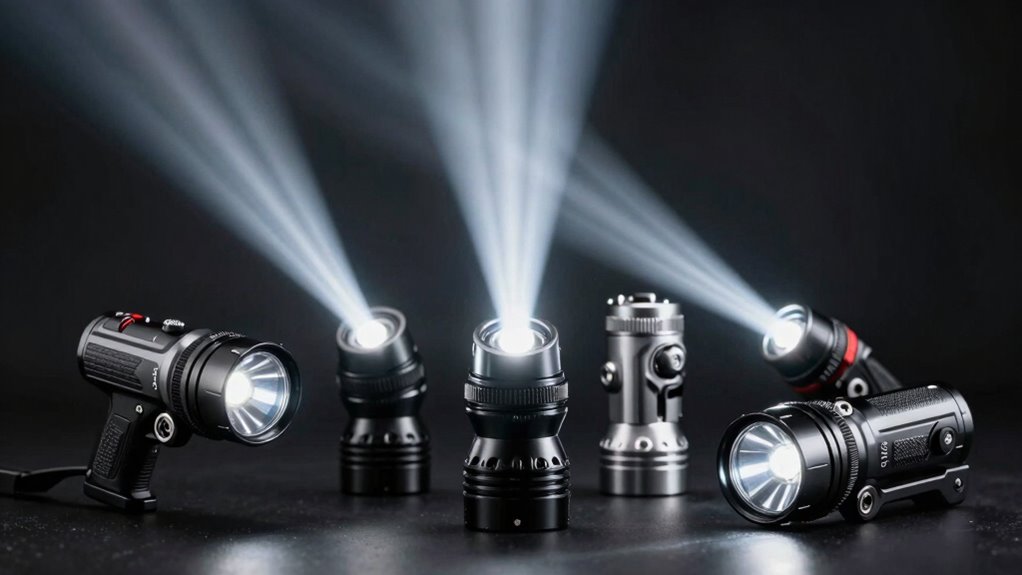
A high-lumen tactical flashlight can throw a broad wash of light across a large area, but headline output alone does not tell you how useful it will be. My best overall pick is the Fenix TK21R for shoppers prioritizing a purpose-built tactical design, while the Streamlight ProTac HL-X stands out as a more established, lower-output alternative and the WUBEN L50 as a simpler rechargeable option. The main tradeoffs are peak brightness versus runtime, specialized controls versus ease of use, and rechargeable convenience versus battery flexibility. This lineup also includes multi-packs and high-output claims that call for careful attention to what is specified about power and performance. Read on for the full breakdown and help matching a flashlight to your priorities.

Get privacy and security gear delivered free with Prime
- Fast, free delivery on millions of items
- Prime Video, Amazon Music and more included
- Member-only deals all year
Key Takeaways
- The Fenix TK21R is the strongest fit for buyers prioritizing a dedicated tactical design; the Streamlight ProTac HL-X takes a more restrained approach with a stated 1,300-lumen output.
- The Streamlight and WUBEN picks represent different kinds of practicality: Streamlight emphasizes tactical utility, while the L50 offers a straightforward rechargeable format.
- The Shadowhawk S1476 makes a very high output claim, but buyers should check the exact runtime, output levels, and charging details before treating its headline figure as the deciding factor.
- The AKNEAR two-pack may suit households or shared use, though buying multiple lights does not replace checking each light’s controls, battery setup, and performance details.
- The generic battery-not-included tactical light shifts more setup work to the buyer; it can make sense only if its battery requirements and build details match what you want.
| AKNEAR Rechargeable LED Flashlight 2-Pack, High Lumens, Tactical Zoomable, USB-C Fast Charging |  | Best Two-Light Set | Claimed output: 99,000 lumens | Lighting modes: 5: High, Medium, Low, Strobe, SOS | Beam adjustment: Zoomable, flood or spot | VIEW ON AMAZON | See Our Full Breakdown |
| Streamlight 88085 ProTac HL-X 1,300-Lumen Flashlight |  | Best for Professional Beam Control | Brightness: 1,300 lumens | Beam intensity: 35,000 candela | Modes: High, Low, Strobe | VIEW ON AMAZON | See Our Full Breakdown |
| Shadowhawk S1476 10,000 Lumen Rechargeable 30W LED Flashlight |  | Best for Adjustable Long-Range Reach | Maximum brightness: 10,000 lumens | Output power: 30 W | Listed beam distance: Up to 5,000 feet | VIEW ON AMAZON | See Our Full Breakdown |
| LED Tactical Flashlight – High Lumen Handheld Light (Batteries Not Included) |  | Best for AA Battery Convenience | Brightness: 1,200 lumens | Listed beam distance: Up to 1,000 feet | Battery: 4 × AA alkaline, not included | VIEW ON AMAZON | See Our Full Breakdown |
| Fenix TK21R Tactical Flashlight |  | Best Premium Tactical Carry | Maximum output: 3,600 lumens | Listed beam distance: 524 yards | Maximum runtime: 72.5 hours | VIEW ON AMAZON | See Our Full Breakdown |
| WUBEN L50 Rechargeable Tactical Flashlight |  | Best Compact USB-C Pick | Maximum brightness: 1,200 lumens | Beam distance: 200 m / 656 ft | Light modes: High, Medium, Low, Eco, SOS | VIEW ON AMAZON | See Our Full Breakdown |
| tactical flashlight high lumen | Water resistance | Dimensions | Battery | Modes |
|---|---|---|---|---|
| AKNEAR Rechargeable LED Flashl | IPX7 | 0.98 × 0.98 × 3.9 inches | Built-in rechargeable NiMH | — |
| Streamlight 88085 ProTac HL-X | IPX7 | — | — | High, Low, Strobe |
| Shadowhawk S1476 10,000 Lumen | IP67 | 7.09 × 1.26 × 1.69 inches | Rechargeable lithium-ion polymer listed; AAA mention conflicts | High, Medium, Low, Strobe, SOS |
| LED Tactical Flashlight | IPX4 | 7.5 × 1.3 × 1.3 inches | 4 × AA alkaline, not included | High, Medium, Low |
| Fenix TK21R Tactical Flashligh | IP68 | — | — | — |
| WUBEN L50 Rechargeable Tactica | — | 5.53 x 0.83 inches | — | — |
More Details on Our Top Picks
AKNEAR Rechargeable LED Flashlight 2-Pack, High Lumens, Tactical Zoomable, USB-C Fast Charging
The AKNEAR’s clearest advantage is practical: two rechargeable lights give a household or vehicle kit a spare without buying a second model. Its zoomable head switches between a broad flood and a tighter spot, while USB-C charging and a power-level display make upkeep simpler than the AA-powered LED Tactical Flashlight, which needs separate batteries. The listed 99,000-lumen claim deserves skepticism; I would not treat it as a reliable measure of real output or compare it directly with the Fenix TK21R’s stated 3,600 lumens. IPX7 water resistance and five modes add useful versatility, but the built-in NiMH batteries are not user-replaceable. This set suits general preparedness better than buyers who need a verified beam specification or replaceable field batteries.
Pros:- Two lights provide a spare or let users equip separate locations.
- USB-C charging and a power-level display make battery status easier to manage.
- Zoomable head offers both flood and spot beam patterns.
- IPX7 rating and five modes support varied general-purpose use.
Cons:- The 99,000-lumen figure is a claim and should not be treated as a dependable performance comparison.
- Built-in NiMH batteries cannot be swapped by the user when depleted or worn out.
- The provided specifications do not state runtime or beam distance.
Best for: Households building a shared emergency kit who want two USB-C rechargeable lights with adjustable beams.
Not ideal for: Buyers who need independently verified lumen performance, user-replaceable batteries, or a single-hand tactical control setup.
- Claimed output:99,000 lumens
- Lighting modes:5: High, Medium, Low, Strobe, SOS
- Beam adjustment:Zoomable, flood or spot
- Charging port:USB-C
- Water resistance:IPX7
- Battery:Built-in rechargeable NiMH
- Dimensions:0.98 × 0.98 × 3.9 inches
- Quantity:2
Our verdict“Choose the AKNEAR set for two rechargeable general-purpose lights, but skip it if credible output figures and replaceable batteries matter most.”
Streamlight 88085 ProTac HL-X 1,300-Lumen Flashlight
The ProTac HL-X favors a more measured, specification-led approach than the high-output claims attached to the AKNEAR and Shadowhawk S1476. Its stated 1,300 lumens and 35,000 candela give buyers two useful reference points: output for overall brightness and candela for concentrated beam intensity. The TEN-TAP tail switch lets users select a preferred sequence of high, low, and strobe, which can be more useful in repeated work than cycling through the five modes on the Shadowhawk. Its aircraft-grade aluminum body and IPX7 rating suit demanding outdoor or professional use. The tradeoff is a sparse power package: the supplied information does not specify runtime, batteries, or a charger. I would choose the Fenix TK21R instead for higher stated output and included USB-C charging.
Pros:- Stated 1,300-lumen output and 35,000-candela intensity provide useful performance reference points.
- TEN-TAP switch allows selection of a preferred mode sequence.
- Aircraft-grade aluminum body is built for demanding use.
- IPX7 water resistance supports wet-weather carry.
Cons:- Runtime is not specified in the provided product information.
- The description does not say whether batteries or a charger are included.
- Three listed modes offer less beam and mode versatility than the zoomable Shadowhawk S1476.
Best for: Security, maintenance, and outdoor users who want a durable light with stated beam intensity and a configurable tail switch.
Not ideal for: Buyers seeking a rechargeable kit with stated runtime, included charging accessories, or a broad range of beam modes.
- Brightness:1,300 lumens
- Beam intensity:35,000 candela
- Modes:High, Low, Strobe
- Switch:TEN-TAP programmable tailcap
- Body material:Aircraft-grade aluminum
- Water resistance:IPX7
Our verdict“Pick the ProTac HL-X for a durable, configurable work light with stated candela, not for a ready-to-charge high-output package.”
Shadowhawk S1476 10,000 Lumen Rechargeable 30W LED Flashlight
The Shadowhawk S1476 is the lineup’s reach-and-flexibility pick: its listed 10,000-lumen output, adjustable spot-to-flood focus, and stated beam distance of up to 5,000 feet give it a broader role than the fixed-mode Streamlight ProTac HL-X. USB-C input and output also let it recharge and serve as a backup power source, a useful emergency feature the Fenix TK21R’s listed specs do not mention. The size is the cost of that versatility: at over seven inches long, it is less convenient to carry than the compact Fenix. I would also treat the extraordinary beam-distance claim cautiously, and the product data conflicts on battery type, listing a rechargeable pack while also mentioning AAA batteries. That uncertainty matters for anyone planning a dependable power setup.
Pros:- Adjustable focus switches between a concentrated spot and broad flood.
- USB-C input and output support charging and backup power for other devices.
- IP67 rating and aluminum construction suit rugged outdoor use.
- Low-mode runtime is listed at up to 12 hours.
Cons:- Its 7.09-inch length makes it bulkier than the Fenix TK21R.
- Battery details conflict: the product data lists a rechargeable lithium-ion pack and also mentions AAA batteries.
- The stated 5,000-foot beam distance should be treated cautiously rather than as a guaranteed practical range.
Best for: Campers and emergency-kit planners who want adjustable beam focus, USB-C charging, and a light that can provide backup device power.
Not ideal for: Everyday pocket-carry buyers or anyone who needs unambiguous battery information and conservative, verified range claims.
- Maximum brightness:10,000 lumens
- Output power:30 W
- Listed beam distance:Up to 5,000 feet
- Focus:Adjustable spot and flood
- Modes:High, Medium, Low, Strobe, SOS
- Battery:Rechargeable lithium-ion polymer listed; AAA mention conflicts
- Charging:USB-C input and output
- Water resistance:IP67
- Dimensions:7.09 × 1.26 × 1.69 inches
Our verdict“Choose the Shadowhawk for adjustable reach and power-bank utility, provided its conflicting battery details are acceptable.”
LED Tactical Flashlight – High Lumen Handheld Light (Batteries Not Included)
This flashlight makes the most sense for buyers who prefer readily available AA batteries over built-in charging. Its listed 1,200 lumens and zoomable head offer a straightforward mix of close-area flood and narrower beam, while the four-AA power format can be easier to replenish away from a USB outlet than the sealed AKNEAR pack. The tradeoff is that batteries are not included, and the stated IPX4 rating is less protective than the IPX7 Streamlight or IP68 Fenix. At 11.2 ounces, it is also a substantial handheld light rather than an especially light pocket option. The 1,000-foot range and up-to-10-hour high-mode runtime are useful listed figures, but buyers should plan around the required battery supply and modest weather protection.
Pros:- Uses four replaceable AA batteries instead of a built-in rechargeable pack.
- Zoomable head offers a choice of flood or more focused illumination.
- Listed output is 1,200 lumens with a stated beam distance of 1,000 feet.
- Aluminum body is described as drop-resistant.
Cons:- Four AA batteries are not included, so the light is not ready to use out of the box.
- IPX4 water resistance is below the ratings listed for the Streamlight and Fenix.
- The 11.2-ounce weight and 7.5-inch length make it less convenient for compact carry.
Best for: Campers and vehicle-kit owners who want a zoomable light powered by replaceable AA batteries they can stock separately.
Not ideal for: Users who need USB-C charging, stronger water protection, or a lighter everyday carry option.
- Brightness:1,200 lumens
- Listed beam distance:Up to 1,000 feet
- Battery:4 × AA alkaline, not included
- Modes:High, Medium, Low
- Runtime:Up to 10 hours on high
- Water resistance:IPX4
- Dimensions:7.5 × 1.3 × 1.3 inches
- Weight:11.2 ounces
Our verdict“Choose this model if replaceable AA power matters more than USB-C charging or stronger water resistance.”
Fenix TK21R Tactical Flashlight
The Fenix TK21R earns its place as the most carry-focused high-output option here. It pairs a 3,600-lumen maximum with a 524-yard stated beam distance, then puts control on dual rear switches for single-hand access to three brightness levels, Burst, and Strobe. Against the larger Shadowhawk S1476, the Fenix is shorter on listed maximum output and has no stated adjustable flood-to-spot focus, but its 7.81-ounce weight and compact tactical layout favor faster handling. USB-C charging is listed at 1.5 hours, and IP68 protection gives it a stronger water-resistance rating than the Streamlight ProTac HL-X’s IPX7. The tradeoff is that the provided data does not describe battery replacement, and the impressive 72.5-hour runtime is a maximum rather than a runtime figure tied to high mode.
Pros:- 3,600-lumen maximum output and a listed 524-yard beam distance suit high-output carry.
- Dual rear switches support single-hand control of brightness and special modes.
- USB-C charging time is listed at 1.5 hours.
- IP68 rating, one-meter impact resistance, and included carry accessories support field use.
Cons:- The 72.5-hour maximum runtime is not identified as applying to high mode.
- The provided specifications do not say whether the battery is user-replaceable.
- Unlike the Shadowhawk S1476, it has no listed adjustable spot-to-flood focus.
Best for: Tactical users who want a compact, high-output light with quick rear-switch control, USB-C charging, and strong water protection.
Not ideal for: Buyers who prioritize adjustable spot-to-flood focus, user-replaceable batteries, or a runtime figure specifically for maximum brightness.
- Maximum output:3,600 lumens
- Listed beam distance:524 yards
- Maximum runtime:72.5 hours
- Charging time:1.5 hours
- Charging port:USB-C
- Weight:7.81 ounces
- Water resistance:IP68
- Impact resistance:1 meter
- Included accessories:USB-C cable, holster, lanyard, LumenTac organizer
Our verdict“Choose the Fenix for compact tactical handling and fast charging; choose the Shadowhawk instead if adjustable focus and device-charging output matter more.”
WUBEN L50 Rechargeable Tactical Flashlight
The WUBEN L50 pairs a stated 1,200-lumen output with a 200-meter beam distance in a body just 5.53 inches long. That makes it a useful middle ground for buyers who want reach without carrying a larger light. Compared with the Shadowhawk S1476, which claims much higher peak output, the L50 puts more emphasis on compact size, USB-C charging, and stated IP68 protection rather than headline brightness. Its five modes include SOS, while Eco mode is listed for up to 143 hours—handy for extended low-output use, though not a measure of runtime at full brightness. The tradeoff is that the provided specifications do not state high-mode runtime or charging-port protection. I’d choose it for a compact everyday or vehicle light, not for buyers who prioritize maximum output above all else.
Pros:- Stated 1,200-lumen output and 200-meter beam distance offer a useful balance of brightness and reach.
- USB-C charging and a listed three-hour charge time simplify recharging.
- IP68 waterproof and 1.5-meter shockproof ratings suit rough-weather and field use.
- Compact 5.53-inch length is easier to carry than a larger high-output light.
Cons:- The 143-hour runtime applies to Eco mode; no high-mode runtime is provided.
- Its 1,200-lumen rating is below the Shadowhawk S1476’s stated 10,000-lumen peak.
- The supplied specifications do not say whether the USB-C port has a cover or other protection.
Best for: Buyers who want a compact, USB-C-rechargeable flashlight for everyday carry, vehicle storage, or outdoor use, with a stated long-range beam and waterproof construction.
Not ideal for: Users who prioritize the highest claimed lumen output or need published runtime figures for high mode; the L50 is rated at 1,200 lumens and only lists its 143-hour runtime for Eco mode.
- Maximum brightness:1,200 lumens
- Beam distance:200 m / 656 ft
- Light modes:High, Medium, Low, Eco, SOS
- Charging:USB-C rechargeable
- Charge time:3 hours
- Maximum runtime:Up to 143 hours in Eco mode
- Durability:IP68 waterproof; 1.5 m shockproof
- Body material:Hard-anodized aircraft-grade aluminum alloy
- Dimensions:5.53 x 0.83 inches
Our verdict“Choose the WUBEN L50 if compact size, USB-C charging, and a stated 200-meter beam matter more than the highest claimed lumen output.”

How We Picked
I ranked these lights around the needs behind the search for a high-lumen tactical flashlight: useful output, clear controls, dependable power arrangements, and a build suited to repeated handling. A stated lumen figure matters, but it does not tell the whole story; I also weighed whether product information describes settings, charging or battery needs, and the intended role. Practicality matters because a light that is difficult to power or operate may be a poor choice even if its maximum-output claim is impressive.
The ranking favors a clear use case and a more purpose-built combination of performance and usability over a headline number by itself. The Fenix TK21R leads for tactical-focused buyers; the Streamlight ProTac HL-X and WUBEN L50 offer distinct alternatives for buyers who value a more measured output or simpler rechargeable use. Multi-pack and less-detailed listings rank lower because buyers may need to verify more of the practical specifications before choosing. I treated product claims as claims, not as proof of sustained brightness or runtime.
| tactical flashlight high lumen | Water resistance | Modes |
|---|---|---|
| AKNEAR Rechargeable LED Flashl | IPX7 | — |
| Streamlight 88085 ProTac HL-X | IPX7 | High, Low, Strobe |
| Shadowhawk S1476 10,000 Lumen | IP67 | High, Medium, Low, Strobe, SOS |
| LED Tactical Flashlight | IPX4 | High, Medium, Low |
| Fenix TK21R Tactical Flashligh | IP68 | — |
| WUBEN L50 Rechargeable Tactica | — | — |
Factors to Consider When Choosing Tactical Flashlight High Lumen
Before choosing by maximum lumens, decide what the light needs to do after you switch it on. The right balance depends on how long you need illumination, how quickly you must reach a preferred mode, and whether you want to manage rechargeable or replaceable batteries. These checks can prevent a bright-looking option from being a poor fit for regular use.
Match Brightness to the Job
Maximum lumens describe a light’s peak output, not how much illumination it will provide throughout a task. A brief burst can help scan a broad area, while lower settings can be more useful for close work or longer periods of use. Check whether a listing names several brightness levels and explains how to select them. If it gives only a large headline number, you have less information for judging day-to-day usefulness. Avoid choosing the brightest claim by default when a lower, well-described output may suit your needs better.
Look for Runtime Details, Not Just Peak Output
Runtime is tied to both the selected setting and the battery, so a single runtime figure can hide important differences. Look for separate runtime information by brightness level and check whether the manufacturer specifies how output changes as the battery drains. A high setting may be useful for short searches but unsuitable for an extended shift or trip. One common mistake is assuming a flashlight holds its maximum output until the battery is empty. When that information is missing, treat endurance as uncertain rather than inferring it from the lumen claim.
Choose a Power Setup You Can Maintain
Rechargeable lights reduce the need to keep spare disposable cells on hand, but they depend on access to charging and on a compatible cable or power source. Battery-powered models can offer a fallback if you carry spares, though you need to know the exact battery type and whether it is included. Check charging-port details and any stated charging protections before relying on a light as emergency equipment. A low-cost or multi-pack purchase can become less convenient if replacement batteries are unusual or hard to source. For routine use, favor a power arrangement you can replenish without guesswork.
Test the Control Logic on Paper Before You Buy
Tactical-style lights may prioritize quick access to a bright mode, while general-purpose models can use simpler mode cycling. Think through what should happen when you press the switch once, hold it, or turn the light off and back on. A confusing sequence can slow you down or leave you in a mode that is too bright for close work. Check whether the product information describes momentary operation, mode memory, or a dedicated switch, rather than assuming every tactical light works alike. If other people will use it, straightforward controls may matter more than extra modes.
Treat Build and Weather Claims as Separate Checks
A sturdy appearance does not tell you how well a flashlight handles drops, rain, or dust. Seek explicit construction and ingress-protection information, and compare the stated level with the conditions where you expect to use the light. A light for a vehicle or home may face different risks from one carried outdoors in wet weather. Also check the body size and grip details, since a bulky flashlight can be tiring to carry even if its output is appealing. Do not assume the word “tactical” alone guarantees a specific level of durability or weather resistance.
Decide Whether a Multi-Pack or Premium Model Solves a Real Need
A two-pack can be useful when you need one light in more than one location, but it is not automatically better value if the specifications are unclear or you only need one dependable flashlight. A premium model may justify its place through better-documented controls, power details, or build features rather than a larger peak-output claim. Compare what you can verify about the product with what you actually need, and avoid paying for modes or accessories you will not use. Buyers new to tactical lights often benefit more from clear instructions and a familiar charging setup than from extra complexity. For specialized use, verify that the listing’s details answer your requirements before relying on it.
Frequently Asked Questions
Should I choose the flashlight with the highest lumen claim?
Not by itself. Peak lumens can indicate how much light a flashlight can produce at its brightest setting, but they do not show how long that setting lasts or how the beam performs at useful distances. Check runtime information, lower modes, and whether the product gives enough detail to judge sustained use. In this roundup, the Shadowhawk S1476 advertises a particularly high figure, while the Streamlight ProTac HL-X specifies 1,300 lumens; those claims do not make them interchangeable. Choose based on the task and available performance details, not the largest number alone.
Is a rechargeable tactical flashlight a better choice than one that uses separate batteries?
Rechargeable models are convenient when you can regularly access a power source and want to avoid buying disposable cells. A flashlight using replaceable batteries may suit longer outings if you can carry compatible spares and change them when needed. Check whether the rechargeable model explains its charging method and whether the battery is included; do the same for battery type and inclusion on non-rechargeable listings. The WUBEN L50 and AKNEAR listing foreground rechargeable use, while the generic battery-not-included option makes battery planning part of the purchase. Your charging access and spare-battery habits should guide the choice.
Is the AKNEAR two-pack a sensible first purchase?
It can make sense if you want lights for separate places, such as a vehicle and a home, or need to share them. A multi-pack does not tell you whether the controls, runtime, or battery arrangements will fit your needs, so check those details for the actual listing before buying. If you need one primary light for demanding use, compare its specifications with a single purpose-focused model such as the Fenix TK21R or Streamlight ProTac HL-X. A first-time buyer may prefer one well-understood light over two whose practical performance is less clearly documented. Choose the pack for the extra location coverage, not just the number of units.
What should I check when a flashlight listing gives few runtime or battery details?
First, look for an official product page or manual that identifies battery type, charging method, output levels, and runtime by mode. If those details remain unavailable, treat endurance and operating cost as unknown rather than filling the gaps with assumptions. Check whether the battery is included, since the generic flashlight in this roundup explicitly says it is not. Also confirm dimensions and weather-resistance information if those affect your use. When the light is intended for safety or emergency use, choose a better-documented option instead of relying on an incomplete listing.
Which matters more for tactical use: a quick-access switch or more brightness modes?
For many tactical tasks, reaching the intended setting quickly matters more than having a long list of modes. Extra modes can add useful flexibility for close work or conserving battery, but a complicated sequence can be awkward under pressure. Check whether product information describes switch behavior, momentary activation, or mode memory; do not assume these features from the tactical label. The Fenix TK21R and Streamlight ProTac HL-X are the more tactical-focused choices in this group, while the WUBEN L50 suits buyers seeking a simpler rechargeable option. Prioritize the control pattern you can operate predictably.
Conclusion
For a tactical-focused balance, I would start with the Fenix TK21R as best overall, then compare its controls and power details with your specific needs. The AKNEAR two-pack is my best value-style pick if you need lights in multiple locations, while the Streamlight ProTac HL-X is my best established, lower-output alternative for buyers who do not want to chase the largest lumen claim. The WUBEN L50 is the best beginner-friendly direction for someone who prefers a rechargeable format, subject to checking its control and runtime details. I would reserve the Shadowhawk S1476 for buyers drawn to its high-output claim who can verify the performance information, and choose the battery-not-included generic light only when its battery requirements and specifications are clear. Match the light to your use and power routine before treating maximum brightness as the deciding factor.
Halloween Picks
halloween
As an affiliate, we earn on qualifying purchases.