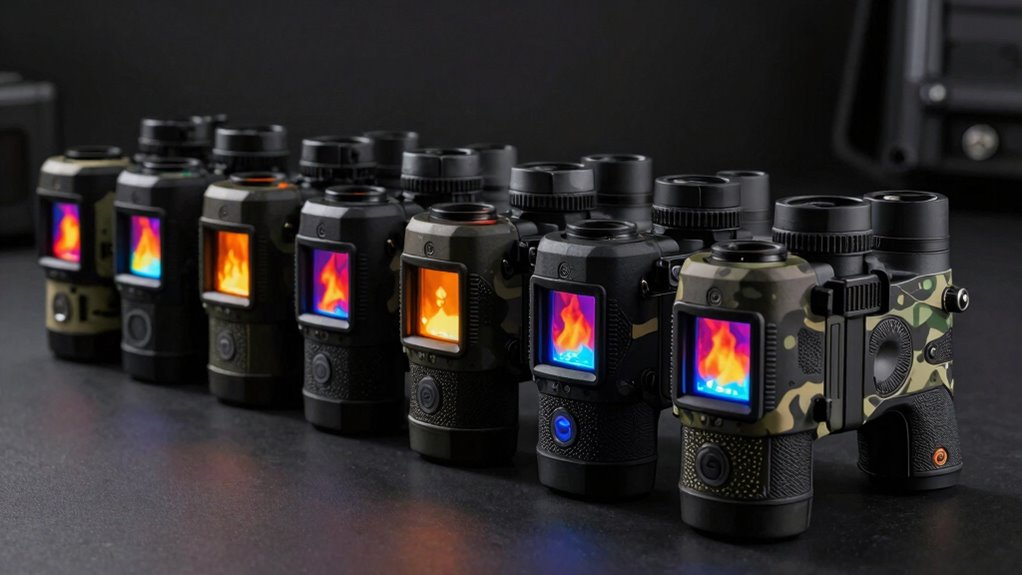
A thermal monocular helps detect warm objects in darkness, brush, or other low-visibility conditions, but the right choice depends on how far away you need to spot them and how much detail you want to see. My best overall pick is the TOPDON TS004 Pro, whose 19 mm lens gives it a reach-oriented advantage over shorter-lens options. The Pulsar Axion XQ19 is a standout for compact carry, while the RIX Pocket K2 pairs a 256×192 sensor with a 50 Hz refresh rate for a portable viewing setup. The main tradeoffs are reach versus field of view, image detail versus size, and useful features versus ease of operation. Read on for the full comparison, buying advice, and picks matched to different users.

Get privacy and security gear delivered free with Prime
- Fast, free delivery on millions of items
- Prime Video, Amazon Music and more included
- Member-only deals all year
Key Takeaways
- Lens length changes the job each monocular suits: the 19 mm TOPDON TS004 Pro is the reach-oriented pick, while 10 mm and 13 mm lenses favor a broader nearby view.
- Sensor resolution is only part of image usefulness: several models list 256×192 sensors, but lens, display, image processing, and viewing conditions also shape what you can distinguish.
- Compactness is a real differentiator: the Pulsar Axion XQ19 and RIX Pocket models suit buyers who value a smaller carry setup over maximum reach.
- A 50 Hz refresh rate can help when scanning movement: the TOPDON TS004 and RIX Pocket K2 advertise 50 Hz, a useful distinction for following active subjects.
- Several listings share product-family names: compare the exact lens and configuration before choosing among the AGM Taipan V2 entries, since the name alone does not identify the version.
| GOYOJO G210 Thermal Imaging Monocular, 256×192 Sensor, 10 mm Lens |  | Best for Wide-Area Scanning | Thermal resolution: 256×192 | Pixel pitch: 12 μm | Lens focal length: 10 mm | VIEW ON AMAZON | See Our Full Breakdown |
| AGM Global Vision Taipan V2 Thermal Imaging Monocular |  | Best for Long-Range Features | Thermal sensor resolution: 320×256 | Display resolution: 1280×960 LCOS | Lens: 19 mm | VIEW ON AMAZON | See Our Full Breakdown |
| TOPDON TS004 Thermal Imaging Monocular, 13 mm, 50 Hz |  | Best for Long Runtime | Infrared resolution: 256×192 | Refresh rate: 50 Hz | Lens diameter: 13 mm | VIEW ON AMAZON | See Our Full Breakdown |
| Pulsar Axion XQ19 Compact Thermal Monocular |  | Best Compact Premium Pick | Thermal sensor resolution: 384×288 | Display: 640×400 AMOLED | Thermal sensitivity: <18 mK NETD | VIEW ON AMAZON | See Our Full Breakdown |
| GOYOJO G215 Thermal Imaging Monocular, 256×192, 15 mm Lens |  | Best for Narrower-View Observation | Sensor resolution: 256×192 | Refresh rate: 50 Hz | Detector pixel size: 12 μm | VIEW ON AMAZON | See Our Full Breakdown |
| AGM Global Vision Taipan V2 Thermal Imaging Monocular, 15-384 |  | Best for Clearer Thermal Detail | Thermal sensor resolution: 384×288 | Thermal sensitivity: Under 20 mK | Display: 1024×768 OLED | VIEW ON AMAZON | See Our Full Breakdown |
| AGM Global Vision Taipan V2 Thermal Imaging Monocular |  | Best for Built-In Field Tools | Thermal detector sensitivity: Sub-35 mK | Digital zoom: 1.5×–12× | Display: 1280×960 LCOS | VIEW ON AMAZON | See Our Full Breakdown |
| RIX Pocket K2 Portable Thermal Monocular, 256×192, 50 Hz |  | Best Compact Pick | Sensor resolution: 256×192 | Display: 800×600 OLED | Refresh rate: 50 Hz | VIEW ON AMAZON | See Our Full Breakdown |
| TOPDON TS004 Pro Thermal Imaging Monocular, 19 mm |  | Best for Longer Outings | IR resolution: 384×288 | TISR resolution: 512×384 | Refresh rate: 50 Hz | VIEW ON AMAZON | See Our Full Breakdown |
| RIX Pocket K3 Thermal Monocular | | Best Compact High-Resolution Pick | Thermal sensor resolution: 384×288 | Base magnification: 2× | Field of view: 17.5° horizontal | VIEW ON AMAZON | See Our Full Breakdown |
| thermal monocular | Field of view | Refresh rate | Digital zoom | Battery life |
|---|---|---|---|---|
| GOYOJO G210 Thermal Imaging Mo | 17.5 degrees | 25 Hz | 4× | Over 6 hours |
| AGM Global Vision Taipan V2 Th | — | — | 3× to 22.5× | — |
| TOPDON TS004 Thermal Imaging M | 13.5 degrees | 50 Hz | — | Up to 11 hours |
| Pulsar Axion XQ19 Compact Ther | 19.5 degrees | — | 1.5–6× | — |
| GOYOJO G215 Thermal Imaging Mo | 11.7 degrees | 50 Hz | 4× | — |
| AGM Global Vision Taipan V2 Th | — | 50 Hz | — | Up to 6.5 hours |
| AGM Global Vision Taipan V2 Th | 10 degrees | — | 1.5×–12× | Up to 7 hours |
| RIX Pocket K2 Portable Thermal | 19.4° | 50 Hz | — | — |
| TOPDON TS004 Pro Thermal Imagi | — | 50 Hz | — | Up to 11 hours |
| RIX Pocket K3 Thermal Monocula | 17.5° horizontal | — | — | — |
More Details on Our Top Picks
GOYOJO G210 Thermal Imaging Monocular, 256×192 Sensor, 10 mm Lens
The G210’s 10 mm lens and 17.5-degree field of view make it the more scan-friendly choice beside the narrower-lensed GOYOJO G215. Its 256×192 sensor is suited to general heat detection, while six palettes let you switch display styles for different viewing conditions. The 4× digital zoom and 16 GB of storage add basic image-capture flexibility, and app-based sharing can help when you want to send a view to a phone. An IP65 rating and more than six hours of stated runtime suit outings where light weather protection matters. The tradeoff is a fixed-focus design and replaceable-battery operation; buyers wanting manual focus, a faster refresh rate, or longer battery life should compare the TOPDON TS004 instead.
Pros:- 17.5-degree field of view supports broader scanning than the GOYOJO G215’s 11.7-degree view.
- Six palettes and 4× digital zoom provide flexible viewing options.
- 16 GB storage and app-based sharing support image capture and transfer.
- IP65-rated housing and over six hours of stated battery life.
Cons:- Fixed focus limits adjustment for different viewing distances.
- Requires a replaceable battery rather than listing a rechargeable built-in power source.
Best for: Scouts and outdoor users who prioritize a wider thermal view and straightforward image sharing over fine focus control.
Not ideal for: Buyers who need manual focus, a 50 Hz refresh rate, or stronger water protection; the TOPDON TS004 offers those listed advantages.
- Thermal resolution:256×192
- Pixel pitch:12 μm
- Lens focal length:10 mm
- Field of view:17.5 degrees
- Digital zoom:4×
- Refresh rate:25 Hz
- Storage:16 GB
- Battery life:Over 6 hours
- Weather resistance:IP65
Our verdict“Choose the G210 for wide-area scanning and basic sharing, but favor the TOPDON TS004 if manual focus and longer runtime matter more.”
AGM Global Vision Taipan V2 Thermal Imaging Monocular
The Taipan V2’s 320×256 sensor, 19 mm lens, and stated detection range of up to 950 meters give it a longer-range emphasis than the 256×192 GOYOJO G210 and G215. That reach is paired with a 1280×960 LCOS display and digital zoom up to 22.5×, though digital magnification is not the same as added thermal detail. For users who want more than a live view, it records audio and video to 16 GB storage, streams over Wi-Fi, and includes hot spot tracking and distance measurement. Its IP67 rating and transferable five-year warranty add practical reassurance. The tradeoffs are substantial listed weight and up to six hours of battery runtime, both less appealing for long handheld sessions than the lighter-feeling compact approach of the Pulsar Axion XQ19.
Pros:- 320×256 sensor and 19 mm lens support longer-range viewing than the GOYOJO G210 and G215.
- Up to 950 m stated detection range, with hot spot tracking and distance measurement.
- Records audio and video to built-in 16 GB storage and supports Wi-Fi streaming.
- IP67 rating and five-year transferable warranty.
Cons:- Listed weight of 3.3 lb can make prolonged handheld scanning tiring.
- Battery runtime is up to six hours, shorter than the TOPDON TS004’s stated maximum.
Best for: Hunters and field observers who value a higher-resolution sensor, long detection reach, and onboard audio/video recording.
Not ideal for: Buyers who need a lighter monocular for extended handheld use or more than six hours of stated runtime.
- Thermal sensor resolution:320×256
- Display resolution:1280×960 LCOS
- Lens:19 mm
- Digital zoom:3× to 22.5×
- Detection range:Up to 950 m
- Storage:16 GB
- Battery runtime:Up to 6 hours
- Water and dust resistance:IP67
- Weight:3.3 lb
Our verdict“Pick the Taipan V2 when detection reach and recording features take priority over carrying comfort and runtime.”
TOPDON TS004 Thermal Imaging Monocular, 13 mm, 50 Hz
The TOPDON TS004 combines a 50 Hz refresh rate with up to 11 hours of stated battery life, making it a strong fit for extended observation. Compared with the GOYOJO G210, it refreshes more quickly and offers manual focus, so users can adjust the image rather than rely on a fixed-focus setup. Its IP67 housing is designed to withstand water, dust, and drops up to two meters, adding protection for rougher outings. Detection is listed up to 410 meters, but detail visibility is specified within 100 yards; the 8× zoom should not be mistaken for extra sensor resolution. The tradeoff is a 256×192 sensor and a 13.5-degree field of view, narrower than the G210’s 17.5 degrees. Choose it for endurance and durability, not the broadest scan.
Pros:- 50 Hz refresh rate supports smoother viewing than the GOYOJO G210’s 25 Hz.
- Up to 11 hours of stated battery life exceeds the other listed models’ runtimes.
- IP67-rated and designed to withstand drops up to two meters.
- Manual focus and wireless smartphone connectivity support adjustable viewing and image capture.
Cons:- Detail visibility is specified within 100 yards, limiting its appeal for long-distance identification.
- Its 13.5-degree field of view is narrower than the GOYOJO G210’s 17.5 degrees.
Best for: Outdoor observers who need a fast-refresh image, manual focus, and long operating time in a rugged housing.
Not ideal for: Buyers who prioritize a wide field of view or fine detail at longer distances; its specified detail visibility is within 100 yards.
- Infrared resolution:256×192
- Refresh rate:50 Hz
- Lens diameter:13 mm
- Field of view:13.5 degrees
- Zoom ratio:8×
- Detection range:Up to 410 m
- Battery life:Up to 11 hours
- Drop resistance:Up to 2 m
- Water and dust resistance:IP67
Our verdict“Choose the TS004 for long outings and rugged handling, but look to the G210 if a wider scan matters more.”
Pulsar Axion XQ19 Compact Thermal Monocular
The Axion XQ19 stands apart through its 384×288 sensor and compact 8.8-ounce weight. That higher sensor resolution gives it an advantage over the 256×192 GOYOJO G215 when the goal is to inspect a thermal scene rather than simply spot heat. Its 640×400 AMOLED display and stated thermal sensitivity below 18 mK are aimed at showing subtle temperature differences, including in fog, rain, and humidity. The 19.5-degree field of view supports scanning, while 1.5–6× digital zoom allows closer inspection. Compared with the AGM Taipan V2, it is far lighter, but it offers less maximum digital magnification and does not list the same extended detection range. Its included APS3 battery, IPX7 rating, and photo/video recording round out a refined but more specialized option.
Pros:- 384×288 sensor offers higher thermal resolution than the GOYOJO G215’s 256×192 sensor.
- Light 8.8-ounce body is much easier to carry than the listed AGM Taipan V2.
- AMOLED display and sensitivity below 18 mK support viewing subtle heat contrasts.
- IPX7 rating, photo/video recording, and included APS3 battery.
Cons:- Digital zoom tops out at 6×, well below the AGM Taipan V2’s 22.5× maximum.
- The supplied product data does not state a detection range.
Best for: Scouts and hunters seeking a light, high-resolution monocular for scanning subtle heat differences in challenging weather.
Not ideal for: Buyers who need very high digital magnification or a listed long-distance detection range; the AGM Taipan V2 specifies both a higher zoom ceiling and up to 950 m detection.
- Thermal sensor resolution:384×288
- Display:640×400 AMOLED
- Thermal sensitivity:<18 mK NETD
- Objective lens:19 mm f/1.0
- Digital zoom:1.5–6×
- Field of view:19.5 degrees
- Weight:8.8 ounces
- Water resistance:IPX7
- Recording:Photo and video
Our verdict“Choose the Axion XQ19 for compact carrying and higher sensor resolution, not maximum magnification or documented long-range reach.”
GOYOJO G215 Thermal Imaging Monocular, 256×192, 15 mm Lens
The G215 pairs a 15 mm lens with a 50 Hz refresh rate, setting it apart from the wider-view, 25 Hz GOYOJO G210. Its 11.7-degree field of view frames a narrower area, which can suit users who prefer a more focused view, while the shared 256×192 sensor class keeps expectations grounded: this is not the higher-resolution choice beside the Pulsar Axion XQ19. The G215 adds six palettes, 4× zoom, and 16 GB storage, along with Wi-Fi app connectivity and USB-C. The supplied data lists a human detection range of 1,417 meters and recognition range of 254 meters, which describe different tasks and should not be treated as equivalent. IP65 protection and more than six hours of operation are useful, but its 1 kg weight and lack of SD-card support limit portability and storage flexibility.
Pros:- 50 Hz refresh rate is higher than the GOYOJO G210’s 25 Hz.
- Six palettes, 4× zoom, and 16 GB built-in storage support flexible viewing and capture.
- Wi-Fi app connectivity and USB-C provide sharing and connection options.
- IP65 rating and over six hours of stated battery life.
Cons:- Narrow 11.7-degree field of view covers less area than the GOYOJO G210’s 17.5 degrees.
- Listed weight of 1 kg may be tiring for prolonged handheld use.
- No SD card support limits removable-storage options.
Best for: Thermal users who want a 50 Hz image, app connectivity, and onboard storage in a narrower-view handheld monocular.
Not ideal for: Travelers prioritizing a light monocular or buyers who need removable SD storage; the listed weight is 1 kg and SD cards are unsupported.
- Sensor resolution:256×192
- Refresh rate:50 Hz
- Detector pixel size:12 μm
- Lens focal length:15 mm
- Field of view:11.7 degrees
- Digital zoom:4×
- Detection range (human):1,417 m
- Recognition range:254 m
- Built-in storage:16 GB
Our verdict“Choose the G215 for a faster-refresh, narrower-view setup with app sharing, but skip it if low weight or removable storage is a priority.”
AGM Global Vision Taipan V2 Thermal Imaging Monocular, 15-384
The 384×288 sensor and 1024×768 OLED display give this Taipan V2 a detail-focused profile, while its stated 750 m detection range supports scanning beyond the immediate area. Compared with the RIX Pocket K2, which uses a 256×192 sensor, this model is better suited to buyers who want more sensor resolution for interpreting heat patterns. Its 50 Hz refresh rate helps keep moving scenes smooth, and recording, Wi-Fi, and 16 GB of storage add useful documentation options. The tradeoff is its 15 mm objective lens, which may not be the best fit for buyers prioritizing a wider view, and the battery lasts up to 6.5 hours—less than the TOPDON TS004 Pro’s stated 11 hours. At 350 g, it is also heavier than the pocket-sized K2.
Pros:- 384×288 sensor paired with a high-resolution 1024×768 OLED display
- Stated detection range reaches 750 m
- Built-in recording, Wi-Fi, and 16 GB storage
- IP67-rated housing and replaceable power source
Cons:- Up to 6.5 hours of battery life is shorter than the TOPDON TS004 Pro’s stated runtime
- 15 mm objective lens may not suit buyers seeking a wider view
- 350 g weight is higher than the RIX Pocket K2’s 200 g
Best for: Outdoor users who prioritize a higher-resolution sensor and display for scanning and recording thermal scenes.
Not ideal for: Buyers planning long outings without access to a power source, or those who want the lightest monocular and a wide field of view.
- Thermal sensor resolution:384×288
- Thermal sensitivity:Under 20 mK
- Display:1024×768 OLED
- Refresh rate:50 Hz
- Detection range:Up to 750 m
- Battery life:Up to 6.5 hours
- Weight:350 g
- Storage:16 GB
Our verdict“Choose this Taipan V2 if sensor and display resolution matter more to you than pocketable weight or the longest runtime.”
AGM Global Vision Taipan V2 Thermal Imaging Monocular
This Taipan V2 is the more tool-oriented pick in this group: hot tracking and distance measurement add ways to interpret a scene beyond simply viewing heat. It also records photos and video with sound to 16 GB of storage, a practical distinction from the RIX Pocket K2, whose listed features emphasize stabilization and portability rather than recording. The IP67-rated housing and up-to-7-hour rechargeable battery suit regular outdoor carry, while smartphone connectivity supports sharing and viewing. Its listed display is 1280×960 LCOS, not OLED, and the supplied data does not give a sensor resolution or detection range, so I would not rank it ahead of the 384×288 Taipan variant when sensor detail or reach is the deciding factor. The rechargeable power system also makes spare-power planning relevant for longer outings.
Pros:- Hot tracking and distance measurement provide additional scene-analysis tools
- Records photos and videos with sound to 16 GB of built-in storage
- IP67-rated housing for outdoor use
- Up to 7 hours of operation and a 5-year transferable warranty
Cons:- Rechargeable battery requires planning for charging or backup power on extended outings
- The provided specifications do not state sensor resolution or detection range
- LCOS display differs from the OLED displays listed for the other Taipan variant and RIX Pocket K3
Best for: Field users who want onboard heat-tracking and distance tools alongside sound-recording and smartphone connectivity.
Not ideal for: Buyers choosing primarily by sensor resolution or detection range, since neither figure is provided in this product’s listed specs.
- Thermal detector sensitivity:Sub-35 mK
- Digital zoom:1.5×–12×
- Display:1280×960 LCOS
- Field of view:10 degrees
- Battery life:Up to 7 hours
- Storage:16 GB
- Dimensions:6.23 × 2.2 × 2.4 inches
- Warranty:5-year transferable
Our verdict“Pick this Taipan V2 if its tracking, measuring, and sound-recording tools matter more than a fully specified sensor and range profile.”
RIX Pocket K2 Portable Thermal Monocular, 256×192, 50 Hz
At 200 g and about 4.9 inches long, the RIX Pocket K2 is the easiest option here to keep close at hand. Its 19.4° field of view favors a broader scan than the 10° listed for the AGM Taipan V2 with tracking tools, while electronic image stabilization can help steady the view when holding a small device. The 50 Hz refresh rate and OLED display make it a more capable pocket companion than its size alone suggests, and IP67 protection suits wet conditions. The main compromise is its 256×192 sensor: the RIX Pocket K3 and the 384×288 Taipan variant offer higher stated sensor resolution for buyers who want more image detail. Fixed focus also limits user adjustment, so this is better for quick, close-range scanning than fine-tuning a view across varied distances.
Pros:- Light 200 g body with compact dimensions for easy carry
- 19.4° field of view supports broad scanning
- Electronic image stabilization helps steady handheld viewing
- 50 Hz refresh rate, OLED display, and IP67 waterproof design
Cons:- 256×192 sensor resolution is lower than the RIX Pocket K3 and 384×288 Taipan variant
- Fixed focus does not let the user adjust focus for different viewing conditions
Best for: Hikers and outdoor users who want a light, pocketable thermal monocular for quick scanning in wet conditions.
Not ideal for: Buyers who prioritize higher sensor resolution, adjustable focus, or detailed identification at distance.
- Sensor resolution:256×192
- Display:800×600 OLED
- Refresh rate:50 Hz
- Field of view:19.4°
- NETD:<25 mK
- Weight:200 g
- Dimensions:4.9 × 1.8 × 2.9 in
- Objective lens diameter:9 mm
Our verdict“Choose the Pocket K2 if low carry weight and a broad view matter more than higher sensor resolution or adjustable focus.”
TOPDON TS004 Pro Thermal Imaging Monocular, 19 mm
The TS004 Pro’s strongest case is up to 11 hours of battery life, the longest stated runtime among these five products. Its 384×288 IR resolution and 50 Hz refresh rate also put it closer to the higher-resolution AGM Taipan and RIX Pocket K3 than to the 256×192 RIX Pocket K2. A 19 mm objective lens and listed 650 yd detection range suit buyers focused on scanning farther than a compact 9 mm-lens unit, while app connectivity enables live monitoring and recording. The figures need interpretation, though: TOPDON lists clear detail visibility at 146 yd, well short of its maximum detection range, so detecting a heat source should not be confused with seeing fine detail. Manual focus adds control but requires adjustment, unlike a fixed-focus approach.
Pros:- Up to 11 hours of battery life
- 384×288 IR resolution and 50 Hz refresh rate
- 19 mm objective lens with stated detection range up to 650 yd
- IP67 design with stated drop resistance up to 2 m and app connectivity
Cons:- Manual focus requires user adjustment
- Listed clear detail visibility is 146 yd, far shorter than the maximum detection range
- The provided specs do not state weight or dimensions for carry comparisons
Best for: Outdoor users who need a longer stated operating time, a 19 mm lens, and app-connected monitoring or recording.
Not ideal for: Buyers who prefer focus-free operation or expect the maximum detection range to provide clear detail at that distance.
- IR resolution:384×288
- TISR resolution:512×384
- Refresh rate:50 Hz
- Objective lens diameter:19 mm
- Detection range:Up to 650 yd
- Clear detail visibility:146 yd
- Battery life:Up to 11 hours
- Drop resistance:Up to 2 m
Our verdict“Choose the TS004 Pro for its long stated runtime and 19 mm lens, while treating its detection and clear-detail distances as different measures.”
RIX Pocket K3 Thermal Monocular
The Pocket K3 keeps a pocket-sized format while stepping up to a 384×288 sensor, making it a natural choice for buyers who find the RIX Pocket K2’s 256×192 resolution limiting but still want a compact unit. Its 2× base magnification, 50 Hz frame rate, and electronic image stabilization suit handheld observation of moving subjects; Wi-Fi and photo, audio, and video recording add ways to share or save what appears on screen. RIX lists detection up to 853 yards under controlled testing conditions, but that figure depends on target and environmental conditions and does not mean fine detail is visible at that distance. Compared with the AGM Taipan 15-384, the K3 is lighter and smaller, but it has 8 GB rather than 16 GB of storage. Its replaceable power supply helps with extended use, though the supplied data does not state battery runtime.
Pros:- 384×288 sensor in a compact 7.52 oz body
- 50 Hz frame rate and electronic stabilization support handheld viewing of moving subjects
- Wi-Fi and photo, audio, and video recording
- Replaceable power supply, tripod mount, and IP67 water resistance
Cons:- 8 GB of memory is half the storage listed for the 384×288 AGM Taipan variant
- Maximum detection range is qualified by controlled testing and varies with conditions
- Battery runtime is not stated in the supplied specifications
Best for: Mobile outdoor users who want a compact monocular with a 384×288 sensor, stabilization, and onboard recording.
Not ideal for: Buyers who need a stated battery runtime, more than 8 GB of storage, or guaranteed detail at the listed maximum detection distance.
- Thermal sensor resolution:384×288
- Base magnification:2×
- Field of view:17.5° horizontal
- Maximum detection range:Up to 853 yd under controlled testing conditions
- Frame rate:50 Hz
- Display:800×600 OLED
- Memory:8 GB
- Weight:7.52 oz
Our verdict“Pick the Pocket K3 if you want higher sensor resolution in a compact, record-capable monocular and can accept limited storage and unspecified runtime.”

How We Picked
I ranked these monoculars by how clearly their stated specifications support distinct outdoor uses, rather than treating a longer feature list as a better product. The main factors were sensor resolution, lens size, refresh rate, portability, and ease of matching the device to a viewing distance. I also considered whether a model’s role is clear from the available details and whether similarly named listings identify a distinct configuration.
The TOPDON TS004 Pro leads for buyers seeking more reach from a 19 mm lens, while the Axion XQ19 ranks highly for compact carry. The TS004 and Pocket K2 gain a practical distinction from their stated 50 Hz refresh rates. Models with less specific configuration details rank lower because buyers have less information for comparing fit. I treat advertised specifications as selection clues, not guarantees of detection distance or image quality; those depend on the target, weather, terrain, and viewing conditions.
| thermal monocular | Battery life |
|---|---|
| GOYOJO G210 Thermal Imaging Mo | Over 6 hours |
| AGM Global Vision Taipan V2 Th | — |
| TOPDON TS004 Thermal Imaging M | Up to 11 hours |
| Pulsar Axion XQ19 Compact Ther | — |
| GOYOJO G215 Thermal Imaging Mo | — |
| AGM Global Vision Taipan V2 Th | Up to 6.5 hours |
| AGM Global Vision Taipan V2 Th | Up to 7 hours |
| RIX Pocket K2 Portable Thermal | — |
| TOPDON TS004 Pro Thermal Imagi | Up to 11 hours |
| RIX Pocket K3 Thermal Monocula | — |
Factors to Consider When Choosing Thermal Monocular
Before choosing a thermal monocular, decide what you need to detect, how far away it is likely to be, and how long you will carry the device. A headline sensor number cannot answer all three questions. These factors help separate genuine fit from specifications that sound useful but may not match your routine.
Match Lens Size to Viewing Distance
A longer lens can make distant subjects appear larger in the image, but it usually narrows the scene you see at once. That can make scanning a wide field slower, especially when a target is moving or its location is unknown. Shorter lenses tend to suit closer observation and broad sweeps, where finding a subject matters more than magnifying it. A common mistake is to buy the longest lens available based on reach claims without checking its field of view. Think about your typical terrain: open ground may reward a narrower view, while dense woods can favor a wider scene. Compare lens specifications and field-of-view data together whenever both are provided.
Read Sensor Resolution Alongside the Rest of the Imaging System
Sensor resolution affects the amount of thermal information captured, but it does not determine how clearly every subject will appear. Lens quality, display resolution, image processing, thermal sensitivity, and viewing conditions all shape the image you perceive. Two units with the same 256×192 sensor can feel different if their lenses or processing differ. Avoid treating digital zoom as a substitute for a higher-detail sensor; enlarging an image does not create new thermal information. Look for sample imagery or clear manufacturer specifications when available, and judge detail at the distances you actually expect to use. If identification matters, check how the maker distinguishes detection, recognition, and identification ranges rather than relying on one headline distance.
Choose Refresh Rate for the Way You Scan
Refresh rate affects how fluid the image appears as you pan or follow a moving subject. A stated 50 Hz rate, as found on the TOPDON TS004 and RIX Pocket K2 listings here, may appeal to users who track motion. Still, a higher refresh rate alone does not guarantee a clearer image or easier operation. Check whether the advertised rate applies to the viewing mode you plan to use, and look for information about image lag or processing if available. For slow, stationary observation, other factors such as field of view and controls may matter more. Buyers often overpay for a single specification while overlooking the handling features that shape routine use.
Treat Portability as a Performance Choice
A smaller monocular is easier to keep on hand, which can matter more than a longer lens if the device stays in a pocket or pack until needed. Compact models such as the Pulsar Axion XQ19 and RIX Pocket line emphasize carry convenience, while larger optics may give more reach or room for controls. Check the full carry setup, including battery, protective case, and any mounting accessories, rather than judging by the device alone. Also consider grip, button placement, and whether you can operate it with gloves. A device that is awkward to access can undermine its technical advantages. Choose the largest body you are genuinely willing to carry on your usual outing.
Compare Battery, Weather Protection, and Support Before Buying
Thermal use often happens outdoors, so battery runtime and weather resistance can affect whether a monocular is ready when needed. Runtime figures can vary with screen brightness, recording, wireless features, and ambient temperature; compare the conditions behind any stated figure. Check the protection rating and operating-temperature range rather than assuming a rugged-looking body is suited to rain or cold. Confirm what charging method, spare-battery options, warranty coverage, and service support are available for the exact version. Buyers sometimes focus on the sensor and discover later that charging or replacement parts are inconvenient. These practical details can matter more over years of ownership than a small difference in resolution.
Confirm the Exact Model and Configuration
Product-family names can cover several versions, and the AGM Taipan V2 entries in this roundup show why checking the listing details matters. Verify the sensor, lens, included accessories, and any model suffix before comparing listings or ordering. A product title may omit a specification that changes field of view or intended use. Save the exact model number and compare it with the manufacturer’s documentation, especially when multiple sellers use similar names. Do not assume that a shared family name means identical hardware or software. If key details remain unclear, choose a listing with a complete specification sheet or contact the manufacturer before committing.
Frequently Asked Questions
Is a 19 mm lens always better than a 10 mm or 13 mm lens?
No. A 19 mm lens can make distant subjects easier to view, but its narrower field of view may make it harder to find a target while scanning. A 10 mm or 13 mm lens can suit closer observation or areas where a broader scene is useful. The TOPDON TS004 Pro is the reach-oriented choice in this lineup, not a universal upgrade over shorter-lens models. Match the lens to your terrain and expected viewing distance. If you regularly switch between wide searches and distant checks, compare field-of-view figures and consider whether carrying a second optic is practical.
Will a 256×192 thermal sensor let me identify an animal at long range?
Not by itself. Resolution describes the sensor’s pixel count, but identification at distance also depends on the lens, target size, thermal contrast, image processing, and atmospheric conditions. Detection means noticing a heat source; recognizing or identifying it requires more visible detail. Several products here list 256×192 sensors, so other differences—such as lens length and refresh rate—help distinguish their intended uses. Check the manufacturer’s separate detection, recognition, and identification figures, and treat them as estimates under stated conditions. If precise identification matters, prioritize supported identification data over a detection claim.
Does a 50 Hz refresh rate matter for wildlife observation?
It can matter when you pan quickly or follow an animal in motion because a higher refresh rate can make movement appear more fluid. The TOPDON TS004 and RIX Pocket K2 listings specify 50 Hz, which gives them a clear distinction for motion-oriented scanning in this roundup. Refresh rate does not directly improve thermal resolution or guarantee better detail. For stationary subjects, field of view, image quality, and controls may have a larger effect on your experience. Check that the stated rate applies to the viewing mode you plan to use. If possible, compare the image at the movement speed you expect in the field.
How do I choose between compactness and reach?
Start with how you carry and use the device, not with the longest lens on the list. If you need a monocular that stays close at hand during long walks, a compact option such as the Pulsar Axion XQ19 or a RIX Pocket model may fit better. For more distant viewing, the TOPDON TS004 Pro’s 19 mm lens is the stronger match among the clearly specified lens options here. Longer optics can narrow the view and make scanning less intuitive, so reach has a handling cost. Consider whether you spend more time searching a wide area or inspecting known locations. That distinction usually points to the better compromise.
What should I verify when several listings use the same model-family name?
Check the exact model number, sensor resolution, lens size, refresh rate, and included accessories on the listing and manufacturer documentation. The AGM Taipan V2 entries in this roundup make configuration checks especially relevant because the shared family name does not, on its own, explain every version. Confirm whether the listing includes the same battery, charger, case, or software features you expect. Also check warranty terms and seller support for that precise configuration. Avoid assuming that a specification from one Taipan V2 listing applies to another. If the details do not line up, ask the seller or manufacturer to confirm the hardware before purchase.
Conclusion
For most buyers seeking a reach-oriented all-rounder, my best overall pick is the TOPDON TS004 Pro, thanks to its 19 mm lens. The best value-minded choice is the GOYOJO G210 if a 10 mm lens and 256×192 sensor suit closer, broad-area observation; it is not the pick for maximum reach. For a premium compact option, I would look first at the Pulsar Axion XQ19, while the best beginner fit is a simpler, clearly specified model chosen around a familiar use case rather than the most complex feature set. For motion scanning, the TOPDON TS004 or RIX Pocket K2 stand out with listed 50 Hz refresh rates; for pocketable carry, compare the RIX Pocket models. Before choosing among the AGM Taipan V2 listings, confirm the exact configuration. The right thermal monocular is the one whose lens, handling, and verified specifications match the distances and conditions you actually face.