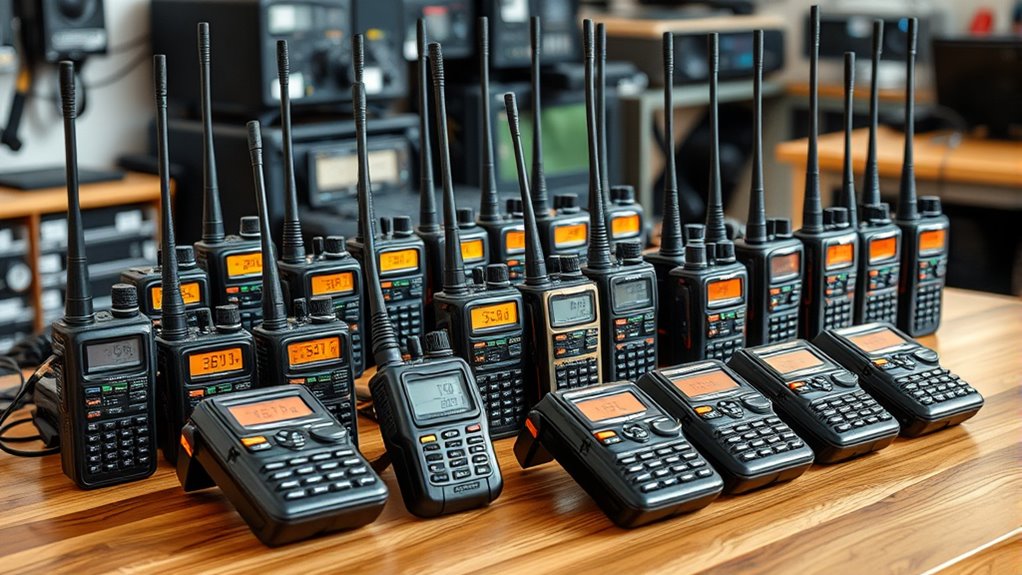

Choosing VHF UHF mobile radios for commercial use means balancing transmit power, channel capacity, durability, and whether you need digital modes like DMR or plain analog FM. For most commercial fleets and work sites, the Powerwerx DB-750X stands out as the best overall pick because it was purpose-built for commercial duty with 750 programmable channels and Part 90 compliance, rather than being a ham radio pressed into service. If you need digital capability and interoperability, the AnyTone AT-D578UVIII Plus brings tri-band DMR and GPS that the analog-only models here can’t match, while the Radioddity DB50 delivers 50 watts of output at a friendlier price point. The core tradeoff in this category is between ham-oriented radios that are cheap and flexible but not FCC-certified for business frequencies, and true commercial radios that cost more but keep you legal and licensed. Read on for the full breakdown of all ten radios and which one fits your operation.

Get privacy and security gear delivered free — and shop member deals
- Fast, free delivery on millions of items
- Access to Prime Big Deal Days deals on October 6–7
- Prime Video, Amazon Music and more included
Key Takeaways
- The Powerwerx DB-750X is the only radio in this lineup designed specifically for commercial Part 90 use — every other model is a ham radio that may require careful frequency licensing to use legally on business channels.
- If digital voice matters, the AnyTone AT-D578UVIII Plus is the only DMR-capable option here; everything else is analog FM only, which limits interoperability with digital commercial fleets.
- Wattage varies hugely, from 25W (AT-778UVII) to 65W (TM-281A) — but the TM-281A is VHF-only, so UHF users must trade raw power for dual-band coverage.
- The QYT KT-8900D is the smallest and cheapest way into a mobile install, but its compact size comes with a small heatsink and a speaker that struggles in noisy cabs.
- The Retevis MA1’s cross-band repeater function is a genuinely rare feature at its price, effectively giving a two-person crew site-wide coverage from a single vehicle.
| ABBREE 30W Mobile Ham Radio, Dual Band VHF/UHF with GPS, NOAA, Speaker Mic, 500 Channels |  | Best Feature-Packed Budget Pick | Max Power Output: 30W | TX Frequency: 144-148MHz; 420-450MHz | RX Frequency: 136-174MHz; 400-480MHz | VIEW ON AMAZON | See Our Full Breakdown |
| Retevis RT95 Dual-Band Mobile Ham Radio |  | Best Flexible Mount for Vehicle or Base Station | Radio Type: Dual-band mobile transceiver | Bands: 2m/70cm | Channel Storage: 200 channels | VIEW ON AMAZON | See Our Full Breakdown |
| AnyTone AT-778UV Dual-Band Mobile Transceiver Radio |  | Best Value Workhorse | RX Frequency: VHF: 136-174 MHz; UHF: 400-490 MHz | TX Frequency: VHF: 144-148 MHz; UHF: 420-450 MHz | Transmit Power: 25W / 15W / 5W | VIEW ON AMAZON | See Our Full Breakdown |
| AnyTone AT-D578UVIII Plus Tri-Band DMR Mobile Radio |  | Best Premium Pick | Frequency Range: 144-148 MHz, 222-225 MHz, 420-450 MHz | Output Power: 50W VHF / 45W UHF | Channels: 4000 | VIEW ON AMAZON | See Our Full Breakdown |
| QYT KT-8900D Dual-Band Mini Mobile Transceiver |  | Best Compact Pick | Type: Dual-band mini mobile transceiver | Standby: Quad standby | Power Settings: High: 25W; Low: 20W | VIEW ON AMAZON | See Our Full Breakdown |
| Powerwerx DB-750X Dual Band VHF/UHF 750 Channel Commercial Mobile Radio |  | Best for Licensed Commercial Fleets | Frequency Range: 136-174 MHz, 400-490 MHz | Output Power: 50W VHF / 40W UHF | Channels: 750 across 10 memory banks | VIEW ON AMAZON | See Our Full Breakdown |
| TM-281A 65W VHF Mobile Radio, 136-174MHz FM Transceiver, 200 Channels |  | Best Long-Range VHF Power | Frequency Range: 136-174 MHz VHF | Output Power: 65W high / 25W low | Channels: 200 (100 enabled by default) | VIEW ON AMAZON | See Our Full Breakdown |
| Retevis MA1 Dual-Band Mobile Ham Radio with Cross-Band Repeater |  | Best for Range Extension | Channels: 999 | Bands: Dual band (VHF/UHF) | Key Feature: Cross-band repeater | VIEW ON AMAZON | See Our Full Breakdown |
| AnyTone AT-778UVII Dual-Band 25W Mobile Transceiver |  | Best Compact Value | Frequency Range: 144-148 MHz / 420-450 MHz | Output Power: 25W / 15W / 5W selectable | Channels: 200 | VIEW ON AMAZON | See Our Full Breakdown |
| Radioddity DB50 Dual-Band 50W Mobile Ham Radio |  | Best Overall Ham Pick | Output Power: 50W | Channel Capacity: 758 | Bands: VHF, UHF, air band, 1.25m, 350 MHz | VIEW ON AMAZON | See Our Full Breakdown |
| vhf uhf mobile radios commercial | Channels | Display | Dimensions | Output Power |
|---|---|---|---|---|
| ABBREE 30W Mobile Ham Radio | 500 | — | — | — |
| Retevis RT95 Dual-Band Mobile | — | 180-degree rotatable TFT color screen | 1.54 x 4.88 x 6.42 in | — |
| AnyTone AT-778UV Dual-Band Mob | — | 180-degree rotatable TFT LCD | — | — |
| AnyTone AT-D578UVIII Plus Tri- | 4000 | — | 7.5 x 5.5 x 2 inches | 50W VHF / 45W UHF |
| QYT KT-8900D Dual-Band Mini Mo | — | Larger LCD screen | — | — |
| Powerwerx DB-750X Dual Band VH | 750 across 10 memory banks | — | 8.4 x 5.5 x 1.6 inches, 2.6 lbs | 50W VHF / 40W UHF |
| TM-281A 65W VHF Mobile Radio | 200 (100 enabled by default) | — | — | 65W high / 25W low |
| Retevis MA1 Dual-Band Mobile H | 999 | — | 8.34 x 5.51 x 1.73 inches | — |
| AnyTone AT-778UVII Dual-Band 2 | 200 | 180-degree rotatable TFT LCD | 4.9 x 6.4 x 1.5 inches | 25W / 15W / 5W selectable |
| Radioddity DB50 Dual-Band 50W | — | Dual digital displays with dual-watch | — | 50W |
More Details on Our Top Picks
ABBREE 30W Mobile Ham Radio, Dual Band VHF/UHF with GPS, NOAA, Speaker Mic, 500 Channels
The ABBREE 30W stands out for stacking capabilities that usually cost far more — built-in GPS, NOAA weather alerts, air band reception, and voice scrambling — into one dual-band package. Compared with the Retevis RT95, which stores 200 channels and has no GPS, the ABBREE’s 500-channel capacity and location tracking make it more useful for fleets or convoy work where coordination matters. The speaker mic with dual PTT means the driver never has to reach for the head unit, a genuine safety advantage over dash-mounted designs like the AnyTone AT-778UV.
The tradeoff is durability: there is no water resistance rating here, whereas the AnyTone AT-D578UVIII Plus carries IP54. Treat this as a cab-protected radio, not an exposed-mount one.
Pros:- Built-in GPS for location tracking and fleet coordination
- Speaker mic with dual PTT keeps full control at hand for safer driving
- NOAA weather alerts and air band reception add emergency and aviation utility
- 500-channel storage is double the capacity of most competitors in this class
Cons:- No water resistance rating limits mounting options
- Programming software only available in English
- 30W output trails 50W-class radios like the AnyTone AT-D578UVIII Plus on range
Best for: Fleet operators and off-road convoys who want GPS coordination and weather alerts without a premium price
Not ideal for: Anyone mounting a radio in an exposed cab or work truck environment where moisture and dust are constant threats
- Max Power Output:30W
- TX Frequency:144-148MHz; 420-450MHz
- RX Frequency:136-174MHz; 400-480MHz
- Channels:500
- Key Features:Dual band, dual display, GPS, NOAA, air band RX, DTMF, voice scrambling
- Water Resistance:Not water resistant
- Control:Speaker mic with dual PTT
Our verdict“A capability-dense choice for operators who want GPS and emergency features on a budget, provided the radio stays protected from the elements.”
Retevis RT95 Dual-Band Mobile Ham Radio
What separates the Retevis RT95 is its dual personality: it works in a vehicle or doubles as a home and field base station with a 13.8V/10A supply. The 180-degree rotatable color display handles odd mounting angles better than fixed-screen units like the QYT KT-8900D, which matters when you’re installing under a shelf or on a cramped dash. CHIRP compatibility is a real advantage over the ABBREE 30W, whose software is English-only and proprietary — CHIRP’s open platform makes channel management far less painful.
The catches: the base station power supply is not included, so budget for it, and the bundled antenna specifications are vague enough that serious users will want an aftermarket upgrade anyway.
Pros:- Works as a vehicle mobile or home/field base station
- Simultaneous monitoring of 2m and 70cm bands
- CHIRP compatibility simplifies programming across platforms
- Rotatable TFT display adapts to unusual mounting angles
Cons:- Base station power supply not included
- Antenna specifications are unclear and likely need replacing
Best for: Hams and light commercial users who want one radio that moves between truck, home shack, and field deployment
Not ideal for: Buyers expecting a complete out-of-box base station kit — the power supply and a proper antenna are extra purchases
- Radio Type:Dual-band mobile transceiver
- Bands:2m/70cm
- Channel Storage:200 channels
- Display:180-degree rotatable TFT color screen
- Programming:CHIRP compatible
- Power Supply (base use):13.8V/10A, not included
- Audio:Built-in dual speakers; RCA output
- Dimensions:1.54 x 4.88 x 6.42 in
Our verdict“The most versatile mount in this lineup for buyers who need one radio to serve the truck and the shack — just factor in the extra power supply.”
AnyTone AT-778UV Dual-Band Mobile Transceiver Radio
The AnyTone AT-778UV earns its place as the dependable middle-of-the-road choice — not the cheapest, not the flashiest, but the one most buyers will be satisfied with long-term. The full alloy body and built-in cooling fan give it a more planted, durable feel than plastic-bodied minis like the QYT KT-8900D, and the illuminated keypad mic plus speakers in both the radio and the microphone make nighttime cab operation genuinely practical. Three power settings (25/15/5W) let you dial back heat and battery draw where the 30W ABBREE’s extra wattage isn’t needed.
It’s analog-only, though — no GPS, no digital modes — so if DMR or APRS matter, the AnyTone AT-D578UVIII Plus is the better family member to buy. And setup means downloading programming software from AnyTone’s website first.
Pros:- Full alloy body with built-in cooling fan for sustained transmit sessions
- Three selectable power settings (25W/15W/5W) manage heat and draw
- Illuminated keypad mic and speakers in both radio and mic
- FCC Part 15B and Part 97 compliant with verified FCC ID
Cons:- Programming software must be downloaded from AnyTone’s website before setup
- No digital modes, GPS, or advanced scanning features found on pricier rivals
Best for: Daily-driver operators who want a solid, cool-running analog dual-band radio with straightforward controls
Not ideal for: Digital-mode users — there’s no DMR, APRS, or GPS here, so step up to the AT-D578UVIII Plus instead
- RX Frequency:VHF: 136-174 MHz; UHF: 400-490 MHz
- TX Frequency:VHF: 144-148 MHz; UHF: 420-450 MHz
- Transmit Power:25W / 15W / 5W
- Display:180-degree rotatable TFT LCD
- Body:Full alloy construction
- Features:VOX, CTCSS/DCS scan, narrow-band compliant, cooling fan
- FCC Compliance:Part 15B and Part 97 (FCC ID: T4K-778UV)
Our verdict“A no-drama analog workhorse for operators who value build quality and cooling over digital bells and whistles.”
AnyTone AT-D578UVIII Plus Tri-Band DMR Mobile Radio
The AT-D578UVIII Plus is the clear flagship of this batch. Tri-band coverage (including 222 MHz), 50W VHF output, APRS transmit and receive, Bluetooth audio, and 4000 channels put it in a different league from the AnyTone AT-778UV, which shares the brand name but none of the digital capability. The IP54 rating also makes it the only radio here with meaningful dust and splash protection — a real consideration for work vehicles compared to the unsealed ABBREE. BridgeCom’s included codeplug and training course soften what is traditionally a steep DMR learning curve.
Even so, DMR programming remains intimidating for newcomers despite the course, and this is amateur-only hardware requiring a license — commercial users needing Part 90 coverage should look at the Powerwerx DB-750X instead.
Pros:- Tri-band coverage with air band reception and full APRS RX/TX
- 50W VHF / 45W UHF output outclasses every other pick here
- Bluetooth audio enables hands-free operation
- IP54 rated for dust and splash resistance
- Free codeplug and training course from BridgeCom ease DMR setup
Cons:- Amateur radio use only — requires a license, no commercial Part 90 use
- DMR programming remains complex for beginners even with the included course
- 4.2-pound build is heavier and less compact than mini units like the QYT KT-8900D
Best for: Licensed hams who want tri-band DMR, APRS, and full-power performance in one permanent install
Not ideal for: Unlicensed users or businesses needing Part 90 commercial certification — this radio is amateur radio use only
- Frequency Range:144-148 MHz, 222-225 MHz, 420-450 MHz
- Output Power:50W VHF / 45W UHF
- Channels:4000
- Connectivity:Bluetooth audio
- Water Resistance:IP54
- Voltage:13.8V
- Dimensions:7.5 x 5.5 x 2 inches
- Weight:4.2 pounds
- Warranty:1 year
Our verdict“The pick for licensed operators who want maximum capability and power — as long as they’re prepared for DMR’s setup learning curve.”
QYT KT-8900D Dual-Band Mini Mobile Transceiver
When dash space is the constraint, the QYT KT-8900D makes the most sense. Its mini footprint fits where the AnyTone AT-D578UVIII Plus (7.5 inches deep, 4.2 pounds) simply can’t, and its quad standby monitoring beats the dual standby of the Retevis RT95 for keeping tabs on multiple frequencies at once. CHIRP and Miklor software support means you’re not locked into one programming path, and remote stun/kill features are unusual at this size and price point.
Be realistic about power, though — 25W high output with only a 20W low setting gives a narrow power range, far short of the 50W Radioddity DB50’s reach, and the cooling fan works hard in extended transmissions. Plan on a programming session before first use; it won’t work well straight out of the box.
Pros:- Mini footprint fits tight mounting spaces where full-size radios can’t
- Quad standby monitors multiple frequencies simultaneously
- CHIRP and Miklor programming support offers flexible setup options
- Remote stun and remote kill features add fleet-management utility
Cons:- Requires software programming before first use
- Narrow 25W/20W power range limits flexibility and maximum range
- Small chassis and fan can struggle during long transmit sessions
Best for: Operators with cramped cabs or sedans who need dual-band coverage in the smallest possible footprint
Not ideal for: Users needing maximum range or long duty cycles — the 25W ceiling and small chassis limit sustained performance
- Type:Dual-band mini mobile transceiver
- Standby:Quad standby
- Power Settings:High: 25W; Low: 20W
- Display:Larger LCD screen
- Cooling:Built-in cooling fan
- Programming Support:CHIRP or Miklor
- FCC ID:2AV62KT-8900D
Our verdict“The right choice when space is the deciding factor — compact and capable, as long as you accept its power limits.”
Powerwerx DB-750X Dual Band VHF/UHF 750 Channel Commercial Mobile Radio
This is the only radio in this lineup built around true FCC Part 90 certification, which is why it earns the commercial-focused slot rather than the Retevis MA1 or Radioddity DB50 — those are ham-first radios that can’t legally serve as primary radios for police, fire, or business fleets on licensed land mobile channels. The true dual receive with independent volume controls means a supervisor can monitor dispatch and a tactical channel at once, something the DB50’s dual-watch approximates but doesn’t match. The 750 channels across 10 banks give large organizations room to organize by district or function. The tradeoffs are real: the radio ships keyboard locked and needs an optional programming cable before it does anything, and unlike ruggedized commercial units, it has no water resistance, so exposed vehicle installs are out.
Pros:- True FCC Part 90 certification for legal commercial land mobile use
- True dual receive (V+V, U+U, V+U) with separate volume controls
- 750 channels across 10 linkable memory banks
- Narrowband 2.5 kHz operation for FCC 2013 compliance
Cons:- Requires an optional programming cable (PRG-750) to unlock and program before first use
- No water resistance for exposed installations
- Ships keyboard locked, adding setup friction
Best for: Licensed businesses, security firms, and public safety organizations that need Part 90 compliance and dual-receive dispatch capability
Not ideal for: Hobbyists or anyone wanting plug-and-play — the locked-out-of-box experience and separate cable purchase make setup slow
- Frequency Range:136-174 MHz, 400-490 MHz
- Output Power:50W VHF / 40W UHF
- Channels:750 across 10 memory banks
- Aircraft Receive:108-136 MHz (AM)
- Certification:FCC Part 90, CE
- Dimensions:8.4 x 5.5 x 1.6 inches, 2.6 lbs
- Included Accessories:DTMF microphone, DC power cable, mounting bracket, manual
Our verdict“Buy this if your organization operates on licensed Part 90 frequencies and needs dual-receive dispatch; skip it if you’re a hobbyist who wants to talk today.”
TM-281A 65W VHF Mobile Radio, 136-174MHz FM Transceiver, 200 Channels
At 65W of transmit power, this model out-muscles everything else here — the Radioddity DB50 tops out at 50W and the AnyTone AT-778UVII manages only 25W — which matters when you’re working simplex across open terrain or rural roads where a repeater isn’t available. The MIL-STD-810G shock and vibration rating is another differentiator; none of the other picks in this batch carry an equivalent durability spec, making this the stronger choice for work trucks and off-road use. The catch is the VHF-only coverage: no UHF means no flexibility in dense urban environments where UHF penetrates buildings better. You’ll also need to budget for a separate antenna and programming software, and only 100 of the 200 channels are enabled until you unlock the rest manually.
Pros:- Highest output power in the lineup at 65W with a 25W low mode
- MIL-STD-810G shock and vibration resistance for rough vehicles
- 200 programmable channels with multiple scan functions
- Complete mounting hardware and 1-year warranty included
Cons:- VHF-only — no UHF band access at all
- Antenna and programming software sold separately
- Only 100 of 200 channels enabled by default, requiring manual unlocking
Best for: Rural operators, truckers, and off-road drivers who need maximum simplex range on VHF and a vibration-rated install
Not ideal for: Urban users who need UHF for building penetration, or buyers wanting a complete out-of-box kit — antenna and software cost extra
- Frequency Range:136-174 MHz VHF
- Output Power:65W high / 25W low
- Channels:200 (100 enabled by default)
- Durability Standard:MIL-STD-810G shock/vibration
- Antenna Connector:PL-259
- Operating Temperature:-20°C to +60°C
- Warranty:1 year
Our verdict“This is the pick when raw VHF range and durability matter more than band flexibility, provided you’re willing to buy the antenna and software separately.”
Retevis MA1 Dual-Band Mobile Ham Radio with Cross-Band Repeater
The standout feature here is cross-band repeating, which no other radio in this roundup offers — it retransmits between VHF and UHF so a low-power handheld can reach a distant repeater through your vehicle, effectively turning your mobile into a relay station. That’s a genuine capability the Powerwerx DB-750X and Radioddity DB50 simply don’t have. The detachable, reversible control panel also makes it easier to mount in cramped cabs than fixed-face units like the TM-281A. With 999 channels, it has the largest capacity here, and noise reduction helps clean up weak signals. Be clear about what it isn’t: this is a ham radio, not Part 90 certified, and the aircraft band is receive-only — plus the lack of water resistance rules out exposed installs.
Pros:- Cross-band repeater function dramatically extends handheld range
- Detachable, reversible front panel for flexible cab mounting
- 999 channel capacity, the largest in this lineup
- Noise reduction and FM/AM plus air-band receive
Cons:- Not water resistant for exposed installations
- Aircraft band is receive-only
- No FCC Part 90 certification for commercial use
Best for: Ham operators and volunteer groups who want to extend handheld range through their vehicle via cross-band repeat
Not ideal for: Commercial licensees and aviation listeners — no Part 90 certification and no aircraft transmit capability
- Channels:999
- Bands:Dual band (VHF/UHF)
- Key Feature:Cross-band repeater
- Control Panel:Detachable and reversible
- Extras:Noise reduction, FM/AM radio, air-band receive
- Dimensions:8.34 x 5.51 x 1.73 inches
- Voltage:13.8 V DC
Our verdict“Choose this if relaying handhelds through your mobile is the mission; choose the DB-750X instead if you need certified commercial operation.”
AnyTone AT-778UVII Dual-Band 25W Mobile Transceiver
Measuring under five inches deep, this is the smallest footprint in the batch — noticeably more compact than the Powerwerx DB-750X or Radioddity DB50 — which makes it the practical choice for smaller cars where under-dash space is tight. The 180-degree rotatable color display solves the mounting-angle problem that fixed-face radios create, and CHIRP compatibility means free, familiar programming software instead of proprietary tools. The honest limitation is power: at 25W maximum, it delivers roughly half the punch of the DB50 and nowhere near the TM-281A’s 65W, so simplex range in open country falls short. Raising the mic gain to compensate can also pull in background noise, which matters on noisy job sites. Signaling support (CTCSS/DCS, DTMF, 5-tone) is solid for the size.
Pros:- Compact chassis fits tight under-dash installs
- 180-degree rotatable color display for any mounting angle
- CHIRP-compatible programming plus manual entry
- Full signaling suite: CTCSS/DCS, DTMF, 5-tone, VOX
Cons:- 25W maximum output is the weakest transmit power in this lineup
- Mic gain adjustment can amplify background noise
- Not water resistant
Best for: Drivers of compact vehicles and first-time mobile radio owners who want easy CHIRP programming in a small package
Not ideal for: Rural users needing long simplex range — 25W can’t compete with 50-65W alternatives over open terrain
- Frequency Range:144-148 MHz / 420-450 MHz
- Output Power:25W / 15W / 5W selectable
- Channels:200
- Display:180-degree rotatable TFT LCD
- Dimensions:4.9 x 6.4 x 1.5 inches
- Signaling:CTCSS/DCS, DTMF, 5-tone, VOX
- Included Accessories:Microphone, fused power cable, mounting brackets, cable, manual
Our verdict“This model makes the most sense for space-constrained installs and repeater-based use where 25W is plenty; go DB50 if you need raw wattage.”
Radioddity DB50 Dual-Band 50W Mobile Ham Radio
This option stands out for combining 50W of output with a genuinely complete accessory bundle — unlike the TM-281A, which makes you buy the programming cable and antenna separately, the DB50 includes the programming cable in the box, so CHIRP setup happens the day it arrives. The detachable front panel matches the Retevis MA1’s installation flexibility, and the dual displays with dual-watch let you monitor two channels, though the DB-750X’s true dual receive with separate volume knobs is still superior for serious dispatch work. Multi-band receive (air band, 1.25m, 350 MHz) adds monitoring versatility beyond the ham-only DB50 competitors. Compared with the AnyTone AT-778UVII, you trade compact size for double the power — a fair swap if range is the priority. Like everything else here, it’s not water resistant.
Pros:- 50W output doubles the AnyTone AT-778UVII’s transmit power
- Programming cable included in the box for immediate CHIRP setup
- Detachable front panel plus dual displays and dual-watch
- 758 channel capacity and multi-band receive including air band
Cons:- Not water resistant
- Requires a 13.8V power supply — not a simple 12V accessory tap
- Larger footprint than compact alternatives like the AT-778UVII
Best for: Ham operators who want high power, dual-watch monitoring, and an included programming cable without commercial certification requirements
Not ideal for: Part 90 commercial users and anyone in a compact car — no certification, and the full-size chassis demands mounting room
- Output Power:50W
- Channel Capacity:758
- Bands:VHF, UHF, air band, 1.25m, 350 MHz
- Display:Dual digital displays with dual-watch
- Control Panel:Detachable front panel
- Programming:CHIRP compatible, cable included
- Voltage:13.8 V DC
Our verdict“The strongest all-around ham choice here for range, features, and out-of-box completeness, as long as you don’t need Part 90 certification.”

How We Picked
I ranked these radios by the criteria that actually matter in a commercial mobile install: transmit power and duty cycle, channel capacity and programming flexibility, regulatory compliance for business frequencies, and physical durability in a vehicle environment. A radio that lives bolted to a truck dashboard needs to handle heat, vibration, and long key-downs — so chassis size, heatsink mass, and cooling design counted as much as raw specs. I also weighed ease of programming, because a fleet of ten radios that takes a weekend to configure is a real cost even if the hardware is cheap.
The ranking logic follows a simple split: true commercial-grade radios first, then ham-derived dual-band radios that work well for licensed business use, then compact budget options. Models that offered something genuinely distinct — DMR digital, cross-band repeat, exceptional wattage — moved up despite narrower appeal, while me-too dual-band units without a differentiator settled lower. Every pick still had to clear a build-quality floor; no amount of features excuses a radio that drifts or overheats on a job site.
Factors to Consider When Choosing Vhf Uhf Mobile Radios Commercial
Before pulling the trigger on any radio in this lineup, step back and think about how and where it will actually be used. The differences between these ten models matter far less than matching a radio to your licensing situation, terrain, and fleet size.Licensing: The Mistake That Voided Many a Purchase
The single most common mistake in this category is assuming any VHF/UHF mobile radio can legally transmit on business frequencies. Most models here are ham radios certified only for amateur bands, which means using them on commercial Part 90 frequencies — a farm, construction site, or delivery fleet — is a violation unless the radio itself carries that certification. The Powerwerx DB-750X is the clear exception. Using ham gear commercially isn’t just a paper risk; FCC enforcement does target businesses, and an unlicensed setup can complicate insurance claims after an incident. Budget for a licensed frequency coordinator if you’re building a real fleet, and let certification drive your shortlist before wattage or price does.
Analog vs. Digital (DMR) and Future-Proofing
Nine of these ten radios are analog FM, and for many small operations that’s perfectly fine — analog is simple, interoperable with cheap handhelds, and easy to troubleshoot. But if your business is growing, or you coordinate with agencies and contractors already on DMR digital systems, an analog-only radio becomes a dead end within a few years. Digital brings clearer audio at range, better battery and spectrum efficiency, and features like individual caller ID. The AnyTone AT-D578UVIII Plus is the lone digital path in this lineup, and it’s also the most expensive and hardest to program. My advice: choose analog if your team is small and closed; choose digital if interop with outside organizations is in your future.
Wattage, Terrain, and Where Power Actually Matters
Wattage is the spec everyone fixates on, but it’s frequently misunderstood. Going from 25W to 50W buys you roughly 3 dB of signal — noticeable, but it won’t punch through hills or steel structures the way a better antenna or higher mounting point will. In flat rural terrain, a 25W unit like the AT-778UVII with a well-placed antenna will outperform a 65W radio with a mag-mount stuck on a dashboard. High power earns its keep in rolling terrain, large sprawling sites, and situations where mobile units talk directly to each other rather than through a repeater. Spend your money on antenna quality and coax before chasing maximum wattage.
VHF vs. UHF (and Why Dual-Band Isn’t Always the Answer)
VHF (136–174 MHz) travels farther and bends around terrain, making it the traditional choice for rural agriculture, forestry, and wide-open sites. UHF (400–512 MHz) penetrates buildings, concrete, and dense urban environments far better, which is why warehouses, security teams, and city-based fleets live there. Dual-band radios like the ABBREE 30W or Radioddity DB50 cover both, but that flexibility adds cost and menu complexity you may never use. The TM-281A’s VHF-only design looks like a limitation until you realize a dedicated single-band radio often outperforms dual-band rivals on receive sensitivity and simplicity. Match the band to your environment first; versatility is only valuable if you’ll actually use it.
Programming, Channel Capacity, and Fleet Management
Channel count ranges from 200 to 750 across this lineup, and the number matters more than it seems — not because you need hundreds of channels, but because well-organized channel banks (by site, crew, or function) prevent wasted time and miscommunication. More important is how you program them. Radios that support PC-based programming software with copy-paste channel templates, like the AnyTone and Retevis models, let you clone a fleet in an afternoon. Front-panel-only programming is fine for a single unit in a hobby vehicle but becomes a genuine burden across five or ten trucks. If you manage more than two radios, factor programming software and compatible cables into the total cost before comparing sticker prices.
Build Quality, Heat, and Vehicle Realities
A mobile radio in a commercial vehicle endures heat, vibration, dust, and long transmit sessions that a desktop shack radio never sees. Physical mass matters here: compact units like the QYT KT-8900D trade heatsink surface area for size, which can trigger thermal rollback during extended use. Check whether the radio has a real cooling fan, how the mounting bracket handles vibration, and whether the display is readable in direct sunlight — a dim screen forces you to shade it with your hand at exactly the wrong moment. Also consider current draw at full power; a 50W radio keyed down for long periods can tax a vehicle’s electrical system, and cheap power wiring introduces alternator whine that no radio spec sheet mentions.
Frequently Asked Questions
Can I legally use a ham radio like the AnyTone AT-778UV for my business?
Not on amateur frequencies, no — ham bands are strictly for non-commercial use by licensed operators, so business traffic there is a rule violation on two counts. Using the radio on commercial Part 90 frequencies is a separate problem: most ham-certified radios lack the FCC Part 90 certification required for business use, regardless of whether you hold a valid commercial license. The practical exception in this lineup is the Powerwerx DB-750X, which carries commercial certification out of the box. Some operators do use ham radios on licensed business frequencies, but doing so puts you on the wrong side of FCC equipment rules and can create liability if an incident occurs. For a legitimate business, buying a certified radio costs more upfront and removes the risk entirely.
Is 50 watts actually better than 25 watts for my work site?
Sometimes, but less than the numbers suggest. Doubling power yields about 3 dB, which can mean the difference between readable and noisy audio at the edge of coverage — helpful on large rural sites or when vehicles talk directly to each other without a repeater. However, if you’re working through a repeater with a strong signal, the repeater’s elevation and antenna do the heavy lifting, and 25W is usually plenty. Obstacles like buildings and terrain respond poorly to power increases; a better antenna mounted higher on the vehicle typically beats extra wattage. Choose 50W (like the Radioddity DB50) for direct unit-to-unit communication across big sites, and 25W for repeater-based or compact installs where heat and power draw matter.
What does cross-band repeat on the Retevis MA1 actually do for me?
It turns your vehicle into a mini repeater, which is a bigger deal than the spec sheet suggests. When the MA1 is in cross-band repeat mode, a handheld radio with limited range can transmit to your truck on one band, and the mobile radio re-transmits that signal on the other band at full mobile power and antenna height. In practice, a worker with a low-power handheld at the far corner of a property can reach the whole site as long as the vehicle is positioned in the middle. This solves the classic problem of handhelds being too weak to cover large job sites without buying a dedicated repeater and its associated infrastructure. The tradeoff is that the vehicle radio must stay powered and stationary to act as the relay, and continuous repeating generates heat over long shifts.
Do I need DMR digital, or is analog FM enough for my fleet?
If your team is closed — everyone uses the same radios, and you never need to talk to outside organizations — analog FM will serve you well and costs dramatically less. The moment you need to interoperate with contractors, public agencies, or larger companies already running digital systems, analog becomes a wall you can’t talk through. Digital also delivers cleaner audio at the edge of range and supports features like individual and group caller ID, which helps on busy multi-crew sites. The only DMR option in this lineup is the AnyTone AT-D578UVIII Plus, and it demands real effort: codeplug building, talkgroup configuration, and a steeper learning curve than any analog radio here. Pick digital only when interop or fleet growth genuinely justifies the complexity.
Are compact radios like the QYT KT-8900D durable enough for daily commercial use?
They can be, within limits — and knowing those limits is the difference between a bargain and a headache. The KT-8900D’s small chassis suits tight installs like compact vehicles, forklift cabs, or equipment bays where a full-size radio simply won’t fit. The tradeoffs are a lighter heatsink, which can cause power rollback during long key-downs on hot days, and a small internal speaker that struggles against engine and road noise. For intermittent use — dispatch check-ins a few times an hour — those weaknesses rarely matter. For heavy continuous traffic, a full-size unit like the Powerwerx DB-750X or Radioddity DB50 with proper thermal mass will hold up better over years of daily abuse. Match the radio’s duty expectations to how your crew actually talks.
Conclusion
The right choice here depends almost entirely on licensing and mission. For the best overall commercial option, the Powerwerx DB-750X is the clear call — it’s the one radio in this lineup built and certified for business use, with the channel capacity and durability a real fleet needs. For the best premium pick, the AnyTone AT-D578UVIII Plus earns its price with tri-band coverage, DMR digital, and GPS, making it the right tool for organizations that need digital interop. The best value goes to the Radioddity DB50, which delivers 50 watts of dual-band performance at a price that lets smaller crews equip multiple vehicles. Beginners and licensed hams moving into their first mobile install should start with the AnyTone AT-778UV or Retevis RT95 — straightforward, forgiving, and well documented by the community. For specific needs: the Retevis MA1 covers sprawling job sites with its cross-band repeater, the VHF-only TM-281A maximizes rural range at 65W, and the QYT KT-8900D fits where nothing else physically will. Decide on band, certification, and digital-or-analog first — then the rest of this list sorts itself out quickly.
Fall Picks
fall essentials
As an affiliate, we earn on qualifying purchases.