A professional weather station should match the detail and reliability you need, not just display a long list of readings. I rank the Ambient Weather WS-5000 first for its ultrasonic wind sensing and connected monitoring, while the Davis Vantage Pro2 Plus stands out for added UV and solar radiation data, and the Tempest for a simpler wireless setup. The main tradeoffs are sensor depth versus installation effort, and a dedicated console versus app- and network-based access. Read on for how all 13 options compare and which one fits your monitoring goals.

Get privacy and security gear delivered free with Prime
- Fast, free delivery on millions of items
- Prime Video, Amazon Music and more included
- Member-only deals all year
Key Takeaways
- The WS-5000 leads for connected, higher-detail home monitoring: its ultrasonic wind sensing avoids moving wind parts, while Davis Pro2 models suit buyers prioritizing a more traditional, expandable station setup.
- Davis separates into distinct tiers of measurement: the Vantage Pro2 Plus adds UV and solar radiation sensors, while the fan-aspirated version targets buyers concerned about solar heating affecting temperature readings.
- Convenience is not the same as measurement depth: Tempest and Ambient WS-4000 offer streamlined wireless or solar-powered setups, while multi-sensor packages can bring more installation and placement work.
- Display preference changes the buying decision: the WS-2000, Ecowitt HP2564, and several AcuRite Iris packages include dedicated screens, while other options emphasize Wi-Fi and app access.
- Entry-level Iris stations are best treated as accessible home monitors: they can cover everyday conditions, but buyers needing specialized radiation readings or a more advanced measurement setup should compare them with Davis or Ambient’s higher-end models.
| La Crosse Technology 328-69357-INT Wi-Fi Professional Weather Station |  | Best for Expandable Home Monitoring | Model: 328-69357-INT | Connectivity: Wi-Fi; standalone operation | Mobile app: La Crosse View | VIEW ON AMAZON | See Our Full Breakdown |
| AcuRite Atlas Professional Wi-Fi Weather Station with HD Display and Lightning Detection (01001M) |  | Best for Lightning and Hazard Awareness | Model: 01001M | Connectivity: Wi-Fi | Power source: Corded electric | VIEW ON AMAZON | See Our Full Breakdown |
| AcuRite Iris Weather Station with Rain Gauge, Wind Sensor, and HD Display (01535M) |  | Best for Straightforward Local Forecasting | Model: 01535M | Connectivity: Wireless | Power source: Corded electric | VIEW ON AMAZON | See Our Full Breakdown |
| Ambient Weather WS-2000 Smart Weather Station | 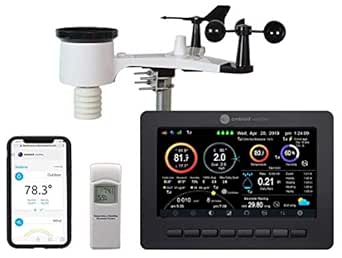 | Best for Calibrated Sensor-Array Monitoring | Model: WS-2902-ARRAY+2000C | Connectivity: Wi-Fi | Measurements: Wind speed and direction, temperature, humidity, rainfall, UV, and solar radiation | VIEW ON AMAZON | See Our Full Breakdown |
| Tempest Wireless Weather Station with Wind Meter and Rain Gauge | 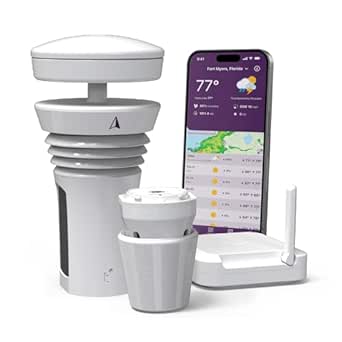 | Best for Low-Maintenance Smart Monitoring | Model: 2026 | Power source: Solar powered | Connectivity: 433 MHz or 868 MHz | VIEW ON AMAZON | See Our Full Breakdown |
| La Crosse Technology Professional Smart Wi-Fi Weather Station with Wind and Rain Sensors |  | Best for App-Based Everyday Monitoring | Model: V42-PRO-INT | Connectivity: Wi-Fi | Transmission range: Up to 400 ft | VIEW ON AMAZON | See Our Full Breakdown |
| Davis Instruments Wireless Vantage Pro2 Plus Weather Station with UV and Solar Radiation Sensors and WeatherLink Console, Metric |  | Best for Detailed, Fast-Changing Conditions | Connectivity: Wi-Fi | Transmission range: 300 m | Data update frequency: Every 2.5 seconds | VIEW ON AMAZON | See Our Full Breakdown |
| Ambient Weather WS-5000 Ultrasonic Smart Weather Station |  | Best for Low-Maintenance Ultrasonic Monitoring | Model: WS-5000 | Sensor technology: Ultrasonic | Connectivity: Radio frequency and Wi-Fi | VIEW ON AMAZON | See Our Full Breakdown |
| Ambient Weather WS-4000 Solar-Powered Wi-Fi Weather Station | 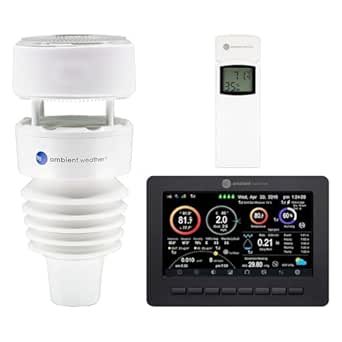 | Best for Minimal-Maintenance Remote Monitoring | Model: WS-4000 | Power source: Solar powered | Connectivity: Wi-Fi | VIEW ON AMAZON | See Our Full Breakdown |
| Ecowitt Wittboy Pro HP2564 Weather Station with HP2560 7-Inch TFT Display and WS90 Outdoor Sensor | 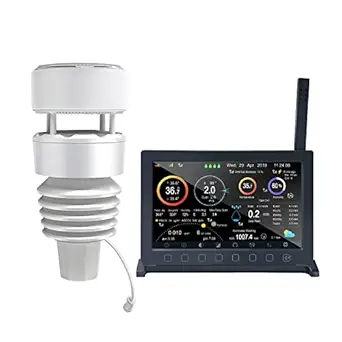 | Best for Expandable Sensor and Service Support | Model: HP2564 | Display console: HP2560, 7-inch TFT | Outdoor sensor: WS90, 7-in-1 | VIEW ON AMAZON | See Our Full Breakdown |
| Davis Instruments Wireless Vantage Pro2 Weather Station with WeatherLink Console, Metric |  | Best for Fast, Dependable Monitoring | Measurements: Outdoor temperature, humidity, wind speed and direction, and rainfall | Data update frequency: Every 2.5 seconds | Wireless range: Up to 300 m | VIEW ON AMAZON | See Our Full Breakdown |
| AcuRite Iris 01512MCB Indoor/Outdoor Wireless Weather Station with Color Screen |  | Best for Readable At-Home Forecasting | Measurements: Indoor and outdoor temperature and humidity, wind speed and direction, rainfall, and barometric pressure | Connectivity: 433 MHz radio frequency | Display: Color LCD with adjustable brightness | VIEW ON AMAZON | See Our Full Breakdown |
| Davis Instruments Wireless Vantage Pro2 Weather Station with 24-Hour Fan-Aspirated Radiation Shield and WeatherLink Console, Metric | 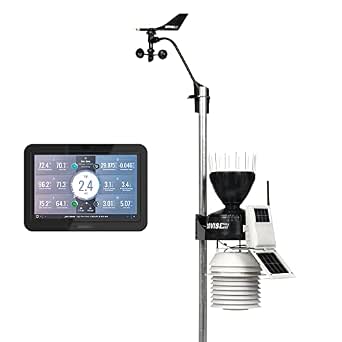 | Best for Temperature and Humidity Accuracy | Measurements: Temperature, humidity, wind speed and direction, and rainfall | Data update frequency: Every 2.5 seconds | Wireless transmission range: Up to 300 m | VIEW ON AMAZON | See Our Full Breakdown |
| weather station professional | Connectivity | Display | Temperature accuracy | Model |
|---|---|---|---|---|
| La Crosse Technology 328-69357 | Wi-Fi; standalone operation | Illuminated color display with adjustable intensity and programmable auto-dimming | — | 328-69357-INT |
| AcuRite Atlas Professional Wi- | Wi-Fi | — | — | 01001M |
| AcuRite Iris Weather Station w | Wireless | HD display | — | 01535M |
| Ambient Weather WS-2000 Smart | Wi-Fi | High-definition color TFT | ±2 °F | WS-2902-ARRAY+2000C |
| Tempest Wireless Weather Stati | 433 MHz or 868 MHz | No display | ±0.5 °C | 2026 |
| La Crosse Technology Professio | Wi-Fi | LCD | 1°C | V42-PRO-INT |
| Davis Instruments Wireless Van | Wi-Fi | HD color touchscreen | 0.5°C | — |
| Ambient Weather WS-5000 Ultras | Radio frequency and Wi-Fi | Full-color TFT LCD | ±2°F | WS-5000 |
| Ambient Weather WS-4000 Solar- | Wi-Fi | Color LCD console | 1°C | WS-4000 |
| Ecowitt Wittboy Pro HP2564 Wea | Console to router: Wi-Fi; sensor to console: RF | — | +0.3°C | HP2564 |
| Davis Instruments Wireless Van | Wireless | HD color touchscreen WeatherLink Console | ±0.5 °C | — |
| AcuRite Iris 01512MCB Indoor/O | 433 MHz radio frequency | Color LCD with adjustable brightness | ±1.11 °C | — |
| Davis Instruments Wireless Van | — | HD touchscreen WeatherLink Console | ±0.5 °C | — |
More Details on Our Top Picks
La Crosse Technology 328-69357-INT Wi-Fi Professional Weather Station
The La Crosse Technology 328-69357-INT is a strong fit for homeowners who want a broad set of readings now and room to add sensors later. Its Breeze Pro sensor and rain gauge track wind, rainfall, temperature, and humidity, while the console also reports barometric pressure. Compared with the AcuRite Iris 01535M, this model adds Wi-Fi app access and expandable sensor support, making it more adaptable for remote checks and a growing setup. The La Crosse View app can show historical wind data from one hour up to a year and send custom alerts, but those connected features depend on a working network. Its adjustable, auto-dimming color display is useful for a shared indoor console. The tradeoff is that the supplied details give no accuracy figures or sensor range, so buyers prioritizing documented measurement limits may prefer another option.
Pros:- Tracks indoor and outdoor temperature, humidity, wind, rainfall, and barometric pressure.
- Wi-Fi app access includes custom alerts and historical wind data.
- Adjustable color display includes programmable auto-dimming.
- Supports additional sensors and displays.
Cons:- App access and connected features depend on a network connection.
- Product information does not specify measurement accuracy or sensor range.
Best for: Home weather watchers who want app alerts, long-term wind history, and the option to add sensors or displays over time.
Not ideal for: Buyers who need published accuracy or wireless-range specifications, or who want app features to work without Wi-Fi.
- Model:328-69357-INT
- Connectivity:Wi-Fi; standalone operation
- Mobile app:La Crosse View
- Sensor:Breeze Pro
- Measurements:Temperature, humidity, wind speed and direction, rainfall, and barometric pressure
- Wind units:mph or km/h
- Historical data:Wind history from 1 hour up to 1 year
- Display:Illuminated color display with adjustable intensity and programmable auto-dimming
- Expandability:Supports additional sensors and displays
Our verdict“Choose this La Crosse if you value expandable monitoring and app-based wind history more than published accuracy and range figures.”
AcuRite Atlas Professional Wi-Fi Weather Station with HD Display and Lightning Detection (01001M)
The AcuRite Atlas 01001M is the most hazard-focused choice in this group: alongside everyday readings, it detects lightning up to 25 miles away and offers customizable alerts. That extra warning capability separates it from the La Crosse 328-69357-INT, which covers core weather variables and app history but does not list lightning detection. Atlas also tracks UV and light intensity, then pairs its readings with a 12-hour hyperlocal forecast and connections to the AcuRite NOW app and Weather Underground. This breadth suits a household that wants local conditions and remote access in one system. The practical tradeoffs are a corded console that needs an outlet and Wi-Fi limited to 2.4 GHz. Buyers who need a console that can be placed without nearby power should look at a different setup.
Pros:- Lightning detection range is specified up to 25 miles.
- Measures UV, light intensity, and core outdoor weather conditions.
- Connects to the AcuRite NOW app and Weather Underground.
- Includes customizable alerts and a 12-hour hyperlocal forecast.
Cons:- The display requires corded electric power and a nearby outlet.
- Wi-Fi connection uses a 2.4 GHz network.
Best for: Homeowners in storm-prone areas who want lightning detection, customizable alerts, and app-connected readings from a powered indoor console.
Not ideal for: Buyers who need a battery-powered or freely placed console, or whose Wi-Fi network does not support 2.4 GHz.
- Model:01001M
- Connectivity:Wi-Fi
- Power source:Corded electric
- Measurements:Temperature, humidity, wind speed and direction, rainfall, UV, light intensity, and barometric pressure
- Lightning detection:Up to 25 miles
- Forecast:12-hour hyperlocal forecast
- Additional features:Customizable alerts, adjustable brightness, clock, and pre-calibrated setup
- Weather resistance:Weather resistant
- Warranty:One-year limited warranty
Our verdict“Pick the Atlas if lightning alerts and broad environmental readings matter more than flexible console placement.”
AcuRite Iris Weather Station with Rain Gauge, Wind Sensor, and HD Display (01535M)
The AcuRite Iris 01535M keeps the focus on a detailed local console rather than Wi-Fi services. It reports temperature, humidity, wind, rainfall, and barometric pressure, with more than 25 data points and a personalized 12-hour forecast. Its customizable alerts and storm alarm give it useful day-to-day context, while the self-emptying rain collector reduces the need to clear accumulated water manually. Compared with the Wi-Fi-equipped AcuRite Atlas 01001M, Iris is the simpler pick for buyers who primarily want readings at home; Atlas adds app connectivity, Weather Underground, UV and light readings, and lightning detection. Iris’s limits matter for professional-style monitoring: lightning sensing is sold separately, and the outdoor sensor needs a pole or post for mounting. The corded display also means placement depends on access to an outlet.
Pros:- Shows more than 25 data points and a personalized 12-hour forecast.
- Measures indoor and outdoor temperature and humidity, wind, rainfall, and barometric pressure.
- Customizable alerts include a storm alarm.
- Self-emptying rain collector supports ongoing rainfall monitoring.
Cons:- Lightning sensor is sold separately.
- Outdoor sensor requires mounting to a pole or post.
- Corded display requires access to an electrical outlet.
Best for: Home users who want a broad set of live readings, rainfall tracking, and a forecast on an indoor display without requiring Wi-Fi monitoring.
Not ideal for: Buyers who want built-in lightning detection, remote app access, or an outdoor sensor that needs no mounting structure.
- Model:01535M
- Connectivity:Wireless
- Power source:Corded electric
- Measurements:Indoor and outdoor temperature and humidity, wind speed and direction, barometric pressure, and rainfall
- Display:HD display
- Forecast:Personalized 12-hour forecast
- Data points:More than 25
- Additional features:Clock, barometer, customizable alerts, and storm alarm
- Warranty:One-year limited warranty
Our verdict“Choose Iris for detailed, local display-based monitoring, but opt for the Atlas if built-in lightning detection and app connectivity are priorities.”
Ambient Weather WS-2000 Smart Weather Station
The Ambient Weather WS-2000 suits buyers who want a broad outdoor sensor array plus console options for tuning readings. It measures wind, temperature, humidity, rainfall, UV, and solar radiation, while Wi-Fi enables remote monitoring and data sharing. Its calibration support and choice of imperial or metric units give more setup flexibility than the AcuRite Iris 01535M, whose appeal centers more on its local display, forecast, and alerts. The WS-2000 also lists a temperature accuracy of ±2 °F, a concrete specification that is absent from some alternatives here. That said, the console needs the included 5V adapter, and the sensor array relies on three AAA batteries that are not included. This is a capable home monitoring option, but buyers should account for both indoor power access and battery upkeep.
Pros:- Tracks wind, temperature, humidity, rainfall, UV, and solar radiation.
- Wi-Fi supports remote monitoring and data sharing.
- Calibration options allow readings to be adjusted.
- Lists temperature accuracy of ±2 °F.
Cons:- Sensor array requires three AAA batteries, which are not included.
- Console requires a 5V DC adapter.
- Plastic construction may not suit buyers seeking a more ruggedly specified enclosure.
Best for: Weather hobbyists who want Wi-Fi data sharing, UV and solar readings, calibration options, and a stated temperature-accuracy figure.
Not ideal for: Buyers seeking a self-contained power setup or a console they can place far from a wall outlet.
- Model:WS-2902-ARRAY+2000C
- Connectivity:Wi-Fi
- Measurements:Wind speed and direction, temperature, humidity, rainfall, UV, and solar radiation
- Temperature accuracy:±2 °F
- Upper temperature range:149 °F
- Sensor frequency:915 MHz
- Power:Solar-powered sensor array; console uses included 5V DC adapter
- Sensor batteries:3 AAA batteries, not included
- Display:High-definition color TFT
Our verdict“Choose the WS-2000 if calibration and remote data access are priorities and you can accommodate its separate console and sensor power needs.”
Tempest Wireless Weather Station with Wind Meter and Rain Gauge
The Tempest Wireless Weather Station takes a different approach from console-led systems such as the Ambient Weather WS-2000: it has no display, instead sending readings to connected devices and compatible smart-home services. Its solar-powered, non-mechanical sensor updates every three seconds and tracks temperature, humidity, pressure, wind, rainfall, UV, solar radiation, and lightning. With no moving parts, it avoids some of the upkeep associated with mechanical sensors, while the stated wireless range of up to 1,000+ feet supports flexible sensor placement. Machine-learning-based forecasts and Alexa, Rachio, and IFTTT integrations make it appealing for connected homes. The tradeoff is clear: anyone wanting a dedicated indoor readout must use another device or interface. Its temperature accuracy is specified as ±0.5 °C, so buyers comparing measurement tolerances should weigh that figure against their needs.
Pros:- Updates readings every three seconds.
- Solar-powered, non-mechanical sensor is designed for low-maintenance operation.
- Tracks lightning, UV, solar radiation, and standard weather conditions.
- Integrates with Amazon Alexa, Rachio, and IFTTT.
Cons:- No display is included, so readings require a connected device or platform.
- Temperature accuracy is specified as ±0.5 °C.
- Listed wireless connectivity is 433 MHz or 868 MHz, which may not match every buyer’s preferred setup.
Best for: Smart-home owners who prefer app or platform access, want frequent updates, and value a solar-powered sensor with no moving parts.
Not ideal for: Buyers who want a dedicated console display or prefer a station with a more traditional on-screen readout.
- Model:2026
- Power source:Solar powered
- Connectivity:433 MHz or 868 MHz
- Wireless range:Up to 1,000+ feet
- Update interval:Every 3 seconds
- Measurements:Temperature, humidity, pressure, wind, rainfall, UV, solar radiation, and lightning
- Temperature accuracy:±0.5 °C
- Display:No display
- Smart-home integrations:Amazon Alexa, Rachio, and IFTTT
Our verdict“Pick Tempest if smart-home access and low-maintenance sensing matter more to you than a dedicated weather console.”
La Crosse Technology Professional Smart Wi-Fi Weather Station with Wind and Rain Sensors
The La Crosse V42-PRO-INT is a practical fit for buyers who want wind and rainfall alongside indoor and outdoor temperature and humidity, then want to check those readings through an app. Wi-Fi adds extended forecasts and customizable alerts, making it more connected than a basic console-focused setup. Compared with the Davis Vantage Pro2 Plus, it has a shorter stated transmission range and fewer measured variables: there is no UV or solar-radiation data. Its appeal is simpler home monitoring rather than a broad sensor suite. The 400-foot transmission range gives placement flexibility, but forecasts and extra weather information depend on Wi-Fi, and the required sensor batteries are not included. I’d choose it for accessible alerts, not specialist atmospheric tracking.
Pros:- Measures temperature, humidity, wind, and rainfall
- Wi-Fi adds extended forecasts and app notifications
- Customizable alerts help flag changing local conditions
- Stated transmission range reaches up to 400 feet
Cons:- Enhanced forecasts and added weather information require Wi-Fi
- Sensor batteries are not included
- Does not measure UV or solar radiation
Best for: Homeowners who want wind and rain readings, indoor and outdoor conditions, and phone alerts in one approachable Wi-Fi system.
Not ideal for: Weather observers who need UV or solar-radiation measurements, rapid updates, or connected forecasts when Wi-Fi is unavailable.
- Model:V42-PRO-INT
- Connectivity:Wi-Fi
- Transmission range:Up to 400 ft
- Outdoor temperature range:-40°F to 140°F (-40°C to 60°C)
- Temperature accuracy:1°C
- Display:LCD
- Power:Corded electric with CR2032 backup battery
- Sensor batteries:2 AA for temperature/humidity sensor; 3 AA for wind/rain sensor (not included)
Our verdict“Choose this La Crosse for app-linked household weather and alerts, but look to the Davis Vantage Pro2 Plus for broader measurements and faster reporting.”
Davis Instruments Wireless Vantage Pro2 Plus Weather Station with UV and Solar Radiation Sensors and WeatherLink Console, Metric
The Vantage Pro2 Plus earns its place for observers who need more than standard household readings. Along with temperature, humidity, wind, and rainfall, it tracks UV and solar radiation, with updates every 2.5 seconds. That faster reporting and 0.5°C temperature accuracy give it a more measurement-focused profile than the La Crosse V42-PRO-INT, which emphasizes app alerts and extended forecasts instead. Its wireless range is also much longer than the La Crosse’s stated 400 feet. The tradeoff is the installation layout: the anemometer can sit up to 12 meters from the rest of the sensor suite, which may limit placement choices. The console needs AC power, with battery backup available. I’d favor this Davis when detailed readings matter more than a simpler, less specialized setup.
Pros:- Measures temperature, humidity, wind, rainfall, UV, and solar radiation
- Updates readings every 2.5 seconds
- Wireless transmission range reaches up to 300 meters
- Solar-powered sensor suite includes battery backup
Cons:- Console requires AC power for regular operation
- Anemometer placement is limited to 12 meters from the rest of the sensor suite
- Broader measurement coverage may be more than casual household monitoring requires
Best for: Weather observers, growers, and research-minded homeowners who want frequent updates plus UV and solar-radiation readings.
Not ideal for: Buyers seeking a simple app-first station or a setup with unrestricted separation between the anemometer and other sensors.
- Connectivity:Wi-Fi
- Transmission range:300 m
- Data update frequency:Every 2.5 seconds
- Sensors:Temperature, humidity, wind speed and direction, rainfall, UV, and solar radiation
- Temperature accuracy:0.5°C
- Display:HD color touchscreen
- Sensor power:Solar-powered with battery backup
- Anemometer placement:Up to 12 m from the rest of the sensor suite
Our verdict“Pick the Vantage Pro2 Plus for fast, wide-ranging weather data; choose the La Crosse V42-PRO-INT if app alerts matter more than UV and solar measurements.”
Ambient Weather WS-5000 Ultrasonic Smart Weather Station
The WS-5000 suits buyers who want frequent readings without the upkeep associated with moving wind-sensor parts. Its ultrasonic sensor array has no moving parts, and the station refreshes weather data every five seconds. Remote access and smart-home integrations add useful flexibility, while the full-color TFT display keeps local readings visible. Compared with the Ecowitt Wittboy Pro HP2564, it offers a similarly modern sensor approach but does not list the same broad set of supported upload services in the supplied specifications. Its ±2°F temperature accuracy is also less precise on paper than the Ecowitt’s stated +0.3°C. The WS-5000 includes a rain cup and indoor/outdoor thermo-hygrometer-barometer, but it still requires five AA batteries, and network access is optional rather than built into the basic local-monitoring role.
Pros:- Ultrasonic sensor array avoids moving parts
- Weather data updates every five seconds
- Supports remote data access and smart-home integrations
- Includes a full-color TFT display and rain cup
Cons:- Requires five AA batteries
- Network connection is optional, so remote features depend on setup
- Stated temperature accuracy is ±2°F
Best for: Home weather enthusiasts who value a no-moving-parts wind sensor, five-second updates, and smart-home access.
Not ideal for: Buyers prioritizing the stated temperature accuracy of the Ecowitt Wittboy Pro HP2564 or those who want network features without Wi-Fi.
- Model:WS-5000
- Sensor technology:Ultrasonic
- Connectivity:Radio frequency and Wi-Fi
- Update frequency:Every five seconds
- Temperature accuracy:±2°F
- Upper temperature range:149°F
- Display:Full-color TFT LCD
- Batteries:Requires five AA batteries
Our verdict“Choose the WS-5000 for low-maintenance ultrasonic sensing and smart-home options, while the Ecowitt Wittboy Pro HP2564 lists finer temperature accuracy and more named upload services.”
Ambient Weather WS-4000 Solar-Powered Wi-Fi Weather Station
The WS-4000 is aimed at buyers who would rather avoid moving parts in the outdoor wind and rain gauges. Its ultrasonic wind gauge and haptic rain gauge pair with a solar-powered outdoor array, while the included indoor sensor adds temperature, humidity, and barometric pressure. That combination makes it a tidy remote-monitoring package through the Ambient Weather Network, where users can access data, analysis, and alerts. Compared with the WS-5000, this model specifically highlights its haptic rain gauge and network monitoring, while the WS-5000 lists a full-color TFT display and five-second updates. The WS-4000’s stated 1°C temperature accuracy is clear, but no update interval or transmission range is supplied here. Wi-Fi is needed for network-connected features, so it is less compelling as an offline-first station.
Pros:- Ultrasonic wind and haptic rain gauges have no moving parts
- Solar-powered outdoor array reduces reliance on routine power changes
- Ambient Weather Network offers remote monitoring, analysis, and alerts
- Included indoor sensor measures temperature, humidity, and barometric pressure
Cons:- Network-connected features require Wi-Fi
- Temperature accuracy is specified as 1°C
- Supplied product data does not state an update frequency or transmission range
Best for: Homeowners who want a solar-powered outdoor array with no-moving-parts wind and rain sensing plus remote data and alerts.
Not ideal for: Buyers who need a specified update interval, a stated wireless range, or remote features without Wi-Fi.
- Model:WS-4000
- Power source:Solar powered
- Connectivity:Wi-Fi
- Wind and rain gauges:Ultrasonic wind gauge and haptic rain gauge
- Temperature accuracy:1°C
- Display:Color LCD console
- Indoor sensor:Measures temperature, humidity, and barometric pressure
- Item weight:1.32 kg
Our verdict“Choose the WS-4000 for solar-powered, remote monitoring with low-maintenance gauges; favor the WS-5000 if a stated five-second update cadence is a priority.”
Ecowitt Wittboy Pro HP2564 Weather Station with HP2560 7-Inch TFT Display and WS90 Outdoor Sensor
The Wittboy Pro HP2564 stands out for buyers who want a broad set of measurements and room to build a larger monitoring setup. Its WS90 sensor combines ultrasonic wind and haptic rainfall with temperature, humidity, UV, and light, while the 7-inch console presents live readings and can send data to several named weather services. Compared with the Ambient Weather WS-4000, the Ecowitt lists more supported upload destinations and compatibility with additional Ecowitt sensors. It also states +0.3°C temperature accuracy, though its rain readings can vary with raindrop size and wind. The solar-powered sensor has a battery option, but those batteries are not included, and the corded console needs a power outlet. For precise rainfall tracking, the product description recommends a separate gauge.
Pros:- 7-in-1 outdoor sensor measures temperature, humidity, wind, UV, light, and rainfall
- Solar-powered outdoor sensor has a battery backup option
- Uploads records to Ecowitt Weather and several other supported services
- Console can pair with additional Ecowitt sensors
Cons:- Rainfall readings may vary with raindrop size and wind
- Batteries are not included
- Corded console requires access to an outlet
Best for: Weather hobbyists who want a large console, multiple data-upload options, and the ability to add compatible Ecowitt sensors.
Not ideal for: Buyers who need dependable rainfall totals from the included sensor alone, or a cordless console and supplied sensor batteries.
- Model:HP2564
- Display console:HP2560, 7-inch TFT
- Outdoor sensor:WS90, 7-in-1
- RF frequency:915 MHz
- Connectivity:Console to router: Wi-Fi; sensor to console: RF
- Temperature accuracy:+0.3°C
- Rain gauge technology:Haptic piezoelectric
- Transmission range:Up to 150 m with obstacles; up to 300 m in open space
- Supported services:Ecowitt Weather, Weather Underground, WeatherCloud, WOW, and compatible custom websites
Our verdict“Choose the Wittboy Pro HP2564 for an expandable station with broad service support, but add a separate rain gauge if rainfall precision is a priority.”
Davis Instruments Wireless Vantage Pro2 Weather Station with WeatherLink Console, Metric
The Vantage Pro2 updates every 2.5 seconds, making it a strong choice when changing wind or rainfall conditions matter more than a forecast-oriented display. Its sensor suite measures temperature, humidity, wind, and rain, while the 300 m wireless range gives more flexibility for siting sensors away from the console than the AcuRite Iris 01512MCB’s listed specifications provide. Solar power with battery backup also reduces the need for routine outdoor power maintenance.
The tradeoff is a console that needs AC power, so it is less suitable for a remote setup without a nearby outlet. Its standard sensor arrangement also lacks the 24-hour fan-aspirated radiation shield included with the other Davis pick here, which is aimed at buyers prioritizing temperature and humidity shielding. Choose this model for frequent readings and a capable core sensor set; skip it if you need a fully independent console location.
Pros:- Updates temperature, humidity, wind, and rainfall every 2.5 seconds
- Wireless sensor transmission range reaches up to 300 m
- Solar-powered sensor suite includes battery backup
- HD color touchscreen console presents readings clearly
Cons:- Console requires AC power, limiting placement where outlets are unavailable
- Does not include the 24-hour fan-aspirated radiation shield found on the other Davis model in this roundup
Best for: Serious home weather observers who want rapid updates, broad core measurements, and a long wireless link to a fixed indoor console.
Not ideal for: Buyers placing the console in a shed or remote location without reliable AC power, or those who specifically want the fan-aspirated shield supplied with the other Vantage Pro2 model.
- Measurements:Outdoor temperature, humidity, wind speed and direction, and rainfall
- Data update frequency:Every 2.5 seconds
- Wireless range:Up to 300 m
- Temperature accuracy:±0.5 °C
- Upper temperature range:49 °C
- Sensor suite power:Solar-powered with battery backup
- Display:HD color touchscreen WeatherLink Console
- Connectivity:Wireless
Our verdict“Choose this Vantage Pro2 for fast, wide-ranging core weather monitoring when a permanently powered console is practical.”
AcuRite Iris 01512MCB Indoor/Outdoor Wireless Weather Station with Color Screen
The AcuRite Iris 01512MCB suits buyers who want a broad set of local readings presented on a color screen without stepping up to the Davis Vantage Pro2’s more frequent 2.5-second updates and longer specified transmission range. It tracks indoor and outdoor temperature and humidity, wind, rainfall, and barometric pressure, then uses local readings to generate a personalized 12-hour forecast. Adjustable display brightness and built-in time and date make it a practical household console, not just a sensor readout.
Its tradeoffs are setup patience and power needs: forecast calibration takes about 14 days, and the station requires 10 AA batteries that are not included, alongside corded power. Its stated temperature accuracy is also less precise than either Davis model listed here. Pick it for an accessible, forecast-focused home display; skip it if rapid updates or a more professional monitoring emphasis comes first.
Pros:- Measures indoor and outdoor temperature and humidity, wind, rainfall, and barometric pressure
- Color LCD includes adjustable brightness, time, and date
- Creates a personalized 12-hour forecast from local sensor readings
- Outdoor sensor mounting hardware is included
Cons:- Requires 10 AA batteries, which are not included, as well as corded electric power
- Forecast calibration takes about 14 days to become reasonably accurate
- Listed temperature accuracy of ±1.11 °C is less precise than the ±0.5 °C Davis Vantage Pro2 models
Best for: Households seeking a color-screen station with indoor readings, a locally generated forecast, and a wide range of everyday weather measurements.
Not ideal for: Weather observers who need rapid data updates, Davis-level stated temperature accuracy, or a setup that avoids buying and replacing multiple AA batteries.
- Measurements:Indoor and outdoor temperature and humidity, wind speed and direction, rainfall, and barometric pressure
- Connectivity:433 MHz radio frequency
- Display:Color LCD with adjustable brightness
- Temperature accuracy:±1.11 °C
- Temperature range:32 °F to 120 °F
- Power:Corded electric; requires 10 AA batteries, not included
- Dimensions:2.63 × 8.13 × 6.75 inches
- Battery life:1000 hours
Our verdict“Choose the Iris for an approachable, forecast-led household display, but favor a Davis Vantage Pro2 if rapid updates and tighter stated temperature accuracy matter more.”
Davis Instruments Wireless Vantage Pro2 Weather Station with 24-Hour Fan-Aspirated Radiation Shield and WeatherLink Console, Metric
This Vantage Pro2 is the specialist pick for buyers who want the 24-hour fan-aspirated radiation shield alongside fast, full-range weather monitoring. Like the standard Davis Vantage Pro2 in this roundup, it updates every 2.5 seconds, measures temperature, humidity, wind, and rainfall, and has a wireless range up to 300 m. The difference is the shield, which is designed to support temperature and humidity measurement accuracy; that makes this model a better fit for careful outdoor monitoring than the AcuRite Iris, whose listed temperature accuracy is ±1.11 °C.
The added setup flexibility is useful too: the anemometer can be mounted up to 12 m from the rest of the sensor suite, helping when wind exposure and sensor placement call for separate locations. The tradeoff is a more specialized configuration, and the product data does not list a console power source or a temperature accuracy figure beyond the model family’s related specification. Choose it for shielded sensing; the standard Davis model is the simpler choice if that feature is not a priority.
Pros:- Includes a 24-hour fan-aspirated radiation shield to support temperature and humidity measurement accuracy
- Updates core weather readings every 2.5 seconds
- Wireless transmission range reaches up to 300 m
- Anemometer can be mounted up to 12 m from the remaining sensor suite
Cons:- Separate anemometer placement adds setup decisions compared with the standard Vantage Pro2
- Product specifications do not state the console power arrangement
- The specialized shield may add little value for buyers who only need general household weather readings
Best for: Weather-focused homeowners and observers who prioritize shielded outdoor temperature and humidity readings and need flexible anemometer placement.
Not ideal for: Buyers who want the simplest sensor installation or do not need a fan-aspirated shield and separate anemometer mounting.
- Measurements:Temperature, humidity, wind speed and direction, and rainfall
- Data update frequency:Every 2.5 seconds
- Wireless transmission range:Up to 300 m
- Temperature accuracy:±0.5 °C
- Radiation shield:24-hour fan-aspirated
- Anemometer mounting distance:Up to 12 m from the rest of the sensor suite
- Display:HD touchscreen WeatherLink Console
- Power:Solar powered; includes one lithium polymer battery
Our verdict“Choose this Vantage Pro2 when shielded temperature and humidity sensing plus flexible wind-sensor placement matter more than a simpler installation.”

How We Picked
I ranked these stations by how well their measurement capabilities, data access, and hardware suit serious home weather monitoring. I gave more weight to useful sensor distinctions—such as ultrasonic wind sensing, lightning detection, UV and solar radiation measurements, and fan aspiration—than to feature counts alone. I also considered whether a station provides a dedicated display, relies more heavily on connected services, and appears manageable to install and maintain.
The order reflects tradeoffs rather than a claim that one design is right for every observer. The WS-5000 earns the lead for balancing advanced sensing with connected use; Davis models rank strongly for buyers who want more specialized data or a station built around a fuller measurement setup. Simpler wireless and screen-focused models rank below them for professional-style monitoring, but can be better fits for routine household use, tighter installation constraints, or buyers who prefer a more direct interface.
Factors to Consider When Choosing Weather Station Professional
Before choosing a professional weather station, I would decide what decisions the data needs to support. A station for checking garden conditions has different demands from one used to compare long-term trends, monitor solar exposure, or feed readings to a weather network. These factors can prevent paying for sensors you will not use—or buying a station that cannot answer the questions you care about.
Choose measurements around a real use
Start with the readings you will act on, then match sensors to those needs. Wind and rainfall cover many household and property questions, while UV and solar radiation matter more for solar projects, exposure studies, or detailed observation. Lightning detection is a different kind of value: it can add awareness of nearby storm activity, but it does not replace a dedicated alert system. A common mistake is to count sensor types without checking what each reading will change for you. If you mainly want local conditions, a simpler package may give clearer value than a station with specialized measurements.
Plan sensor placement before buying
Open, representative placement is often harder than choosing the console. Buildings, trees, paved surfaces, and rooflines can distort wind, rain, and temperature readings, so a station’s real-world usefulness depends on where its sensors can go. Before purchase, identify a suitable site and check whether you can mount equipment securely and reach it for upkeep. Avoid assuming that a wireless connection removes installation work; it only changes how readings travel to the display or network. If your available location is constrained, prioritize a design and sensor arrangement that you can place well rather than a more elaborate package you cannot site properly.
Decide how you want to access data
A dedicated console is useful when you want conditions visible at a glance without opening an app. Wi-Fi and connected platforms can make remote viewing and data sharing easier, but they bring dependence on network coverage, account setup, and service compatibility. Think about who needs the readings and where they will check them: a kitchen display, a phone away from home, or a computer-based archive. Do not treat a colorful screen as a substitute for data history, or assume a connected station will provide every feature without configuration. Choose the access method that fits your daily routine and tolerance for setup.
Match sensor design to maintenance tolerance
Moving parts, exposed collectors, and outdoor electronics can need periodic inspection, cleaning, or replacement. Ultrasonic wind measurement removes rotating anemometer parts, which may appeal to buyers who want fewer mechanical components, but the complete station still needs sensible placement and care. Rain sensors and outdoor housings also face debris, weather, and seasonal conditions. Consider how easily you can reach the equipment and whether you are willing to check it throughout the year. A more sophisticated sensor package is less useful if its upkeep is inconvenient enough that you stop maintaining it.
Pay for accuracy features only when they address a known problem
Radiation shielding and aspiration relate to temperature measurement under sun exposure, while additional solar and UV sensors expand what the station can report. Those features make more sense when you need those specific readings or want tighter control over measurement conditions. They are less compelling if you only want a general sense of local weather. Compare the intended sensor setup and its placement requirements, not just the product name or the number of included components. Spending more can be justified by a measurement need, but it cannot fix a poor site or neglected maintenance.
Check compatibility and future data plans
Weather stations can differ in how they connect to displays, apps, networks, and data services. Before committing, check the current requirements for your preferred phone or home network and whether you can access the history or sharing features you expect. Buyers who plan to keep years of records should decide where those records will live and whether they can export or retain them. A station that works well as a standalone display may not suit someone building a wider data setup. Confirming these details ahead of time can prevent an otherwise capable station from becoming an isolated instrument.
Frequently Asked Questions
Is the Ambient WS-5000 a better choice than a Davis Vantage Pro2?
They suit different priorities rather than forming a simple upgrade ladder. The WS-5000 is a strong fit for buyers who want ultrasonic wind sensing and connected home monitoring, while Davis Vantage Pro2 models offer a more specialized station approach, with versions that add UV, solar radiation, or fan aspiration. I would choose based on the measurements you need and the way you plan to place and access the system. If radiation-related readings matter, compare the specific Davis version rather than the base model. If a connected setup and fewer moving wind parts matter more, the WS-5000 is the clearer match.
Do I need a dedicated display, or is app access enough?
A dedicated display makes routine checks quick and keeps basic readings visible to anyone in the household. App access is more useful when you want to check conditions away from home or use connected data features. The WS-2000, Ecowitt HP2564, and several Iris packages are relevant if a screen is part of your preferred setup, while other models lean more on connected access. Before choosing, check whether the station’s display shows the readings you care about and whether its remote features require extra configuration. If several people will use the station, a console can be easier than asking everyone to install and manage an app.
Does a solar-powered weather station need less attention?
Solar power can reduce reliance on frequent battery changes, but it does not make an outdoor station maintenance-free. Sensors still need suitable placement and may need cleaning or inspection after debris, severe weather, or seasonal changes. The Ambient WS-4000 is a natural candidate for buyers drawn to solar-powered operation, but power convenience should not outweigh whether its measurements and data access fit your needs. Check the manufacturer’s requirements for backup power and operating conditions before installation. Plan to inspect the station periodically even if its power source is solar.
When is the Davis Vantage Pro2 Plus worth choosing over the standard Vantage Pro2?
The Plus version makes more sense when UV and solar radiation are meaningful parts of your observation plan. Those readings can support work that goes beyond a general record of temperature, wind, and rain, but they add little value if you will not use them. The standard Pro2 may be the more sensible fit when its core weather measurements cover your needs. Also compare the fan-aspirated Pro2 version if controlling solar heating effects on temperature readings is a priority. Choose the sensor package for the data you need, not the longest feature list.
Can an AcuRite Iris station meet professional monitoring needs?
An Iris station can suit a home user who wants accessible outdoor readings, a rain gauge, and a dedicated display, especially when ease of routine checking matters more than specialized measurements. The listed Iris models differ in their packages, so check the exact sensors included rather than assuming every model offers the same capabilities. For more demanding monitoring, compare them with the WS-5000 or Davis stations, which offer different sensor and data options. The Iris models are less suited to buyers who specifically need UV and solar radiation readings or a more specialized measurement setup. Define what professional means for your use before deciding whether an accessible home station is enough.
Conclusion
For most buyers seeking a strong blend of advanced sensing and connected monitoring, I recommend the Ambient Weather WS-5000 as best overall. The best premium choice depends on the data goal: choose the Davis Vantage Pro2 Plus for UV and solar radiation, or the fan-aspirated Pro2 when temperature exposure is the priority. For best value among feature-led options, the Ambient WS-2000 offers a dedicated HD display and smart monitoring without the specialized focus of Davis’s higher-end packages. Beginners who want a familiar screen and everyday readings should look at an AcuRite Iris, while buyers who favor straightforward wireless monitoring can compare the Tempest. For solar-powered operation, consider the Ambient WS-4000; for lightning detection, the AcuRite Atlas is the targeted pick. Choose the station whose measurements, display style, and installation demands match your actual monitoring plan.
Fall Picks
fall essentials
As an affiliate, we earn on qualifying purchases.