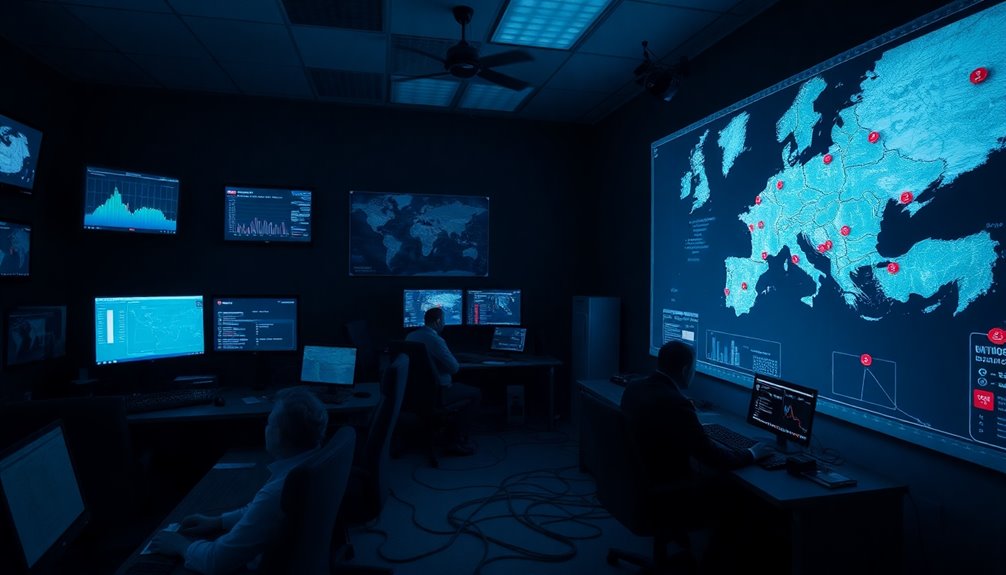


As state-backed cyber espionage intensifies, European telecoms are facing unprecedented threats from nations like China, Russia, and Iran. You need to be aware that Denmark has even raised its threat level to “high” due to the surge in state-sponsored activities targeting telecoms. These nations aren’t just after your networks; they aim to intercept customer data, including call records and location information, for surveillance purposes. This isn’t merely a concern for IT departments; it’s a challenge that affects the integrity and trustworthiness of your entire operation. Furthermore, poor installation practices can exacerbate vulnerabilities in telecom infrastructure, making it easier for attackers to exploit weaknesses.

Get privacy and security gear delivered free — and shop member deals
- Fast, free delivery on millions of items
- Access to Prime Big Deal Days deals on October 6–7
- Prime Video, Amazon Music and more included
China’s role in this espionage landscape is particularly alarming. They use stolen data to monitor dissidents and political figures, further solidifying their grip on information control. Meanwhile, Russia flexes its advanced capabilities in destructive cyberattacks, employing tools designed to jam signals and sabotage infrastructure. You can’t ignore Iran’s tactics either, as they exploit vulnerabilities in telecom networks to intercept communications and further their espionage agenda. The threat landscape for telecoms has become increasingly serious as state-sponsored activities expand from Asia and the Middle East to Europe.
China, Russia, and Iran are leveraging advanced tactics to exploit telecom vulnerabilities, intensifying their espionage agendas and threatening global security.
These threats aren’t confined to Europe; they’ve global ramifications, with international indictments recently highlighting China’s extensive involvement. The risks you face are escalating, with cybercrime still categorized as “very high.” Ransomware and data breaches are just the tip of the iceberg.
If you’re responsible for a telecom company, you should know the importance of adopting robust cybersecurity measures. Implementing zero-trust architectures can significantly enhance your security posture. Network segmentation is another critical strategy; it can limit lateral movement in case of a breach, buying you precious time to respond.
You also need to prioritize patch management for legacy systems, as outdated software is often the weakest link in your defenses. Data encryption should become second nature; mandatory encryption of sensitive data is essential for protecting customer information. Real-time monitoring of network anomalies will enable you to detect threats early, giving you a fighting chance.
The economic implications of these threats are severe. Beyond the immediate risk of intellectual property theft, your firm could face systemic vulnerabilities that jeopardize national security. The digital economy is intertwined with trust and stability in critical infrastructure, and cyber espionage can severely undermine that trust.
As geopolitical tensions simmer, the stakes continue to rise, making it imperative that you take these threats seriously and act decisively against them.
enterprise network security firewall
As an affiliate, we earn on qualifying purchases.
As an affiliate, we earn on qualifying purchases.
Fall Picks
fall essentials
As an affiliate, we earn on qualifying purchases.