TL;DR

Get privacy and security gear delivered free with Prime
- Fast, free delivery on millions of items
- Prime Video, Amazon Music and more included
- Member-only deals all year
Amazon’s Ring announced two mobile security cameras on November 10, 2026: an indoor drone for homes and a wheeled patrol robot for businesses. Ring says both use automated navigation and recording safeguards, but the drone still awaits FCC authorization and the company’s encryption approach has drawn criticism.
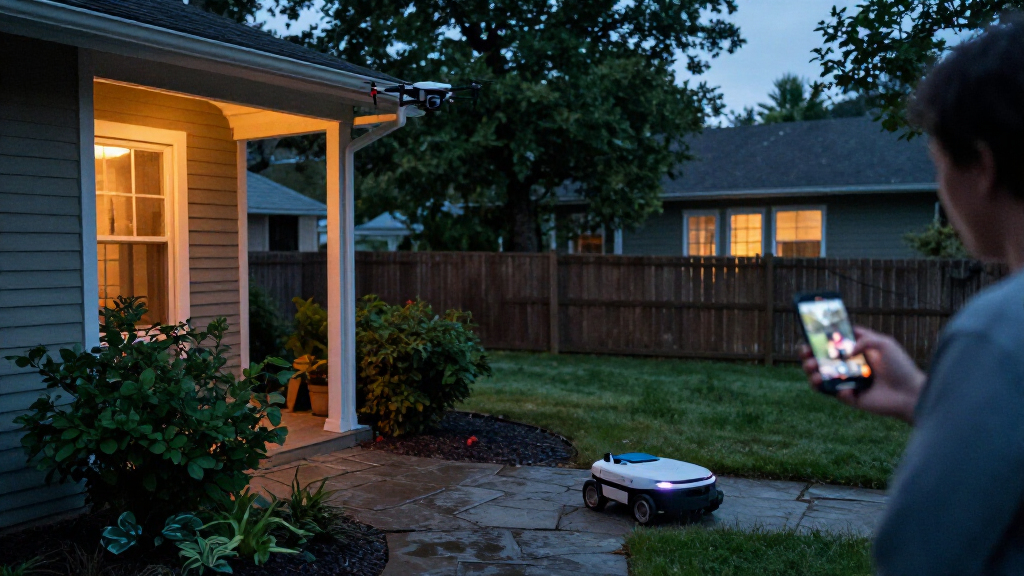
Amazon’s Ring announced two mobile security cameras on November 10, 2026: the Drone Cam, which flies inside homes, and the Rover Cam, a wheeled patrol robot aimed at businesses. The products extend Ring’s camera system beyond fixed locations, but their launch plans include an unresolved regulatory hurdle for the drone and renewed questions about how Ring protects recorded video.
Ring says both devices use a system called AI Pilot to map spaces, suggest patrol points and avoid obstacles. When a Ring camera, sensor or alarm is triggered, either device can travel to investigate. Ring describes the line as autonomous mobile security, with scheduled patrols also available through a compatible Ring Protect plan.
The Drone Cam costs $249.99, with US shipping listed for January 27, 2027. Ring lists a 148-degree field of view, 360-degree rotation, 2K video and lights for dark conditions. The Verge reported that the drone weighs 165 grams and that Ring estimates five to eight minutes of flight per charge. It must be connected to the internet to operate, the outlet reported; without Wi-Fi, it can land but cannot carry out its usual functions.
The Rover Cam costs $999.99, with US shipping scheduled for December 16, 2026. Ring says it records in up to 4K while moving or patrolling and can begin recording when it detects motion, including while docked. Its features include a camera on an adjustable mast, two-way audio, a siren and a light tower. The Verge reported that it runs for about 30 minutes on battery, covers an estimated 5,000 square feet and is limited to one floor.

Mobile Cameras Expand Ring Patrols
These devices would let Ring customers send a camera toward an alert instead of relying only on views from fixed cameras. For a home, the drone could inspect rooms that lack a camera; for a business, Rover could patrol during closed hours. Ring says automation is intended to help devices investigate alerts and follow schedules, though the announcement does not establish how well the system performs in everyday use.
The same mobility changes the privacy stakes. A camera that moves through rooms or records while patrolling can capture different areas and people than a fixed camera. Ring says the devices have visible recording indicators and privacy modes, but customers and businesses will need to weigh those controls against how much video the devices collect and how cloud features handle it.
Products Worth Considering

Apple MacBook Air 13.6-inch Laptop with M5 Chip, 16GB Memory, 512GB SSD, Midnight

Jackery Explorer 300 Portable Power Station with 40W Solar Panel

Sonos Arc Ultra Soundbar with Dolby Atmos, Black
As an affiliate, we earn on qualifying purchases.
From Astro to Ring Robotics
Ring’s indoor drone concept dates back several years. CNBC reported that Ring first previewed an indoor drone, then called Always Home Cam, in 2020. The Verge reported that founder Jamie Siminoff said development began in 2016. The new Drone Cam is the announced commercial product, with a planned US launch in 2027.
Rover draws on Amazon’s earlier Astro robot. Ring says it developed Rover after Astro customers said they valued its roving security features. The Verge reported that Amazon launched Astro for Business in 2023 and discontinued it the following year. That history is relevant to businesses considering Rover, though it does not by itself show how long Ring plans to support the new product.
Ring says its TAKE encryption, announced August 26, 2026, is its strongest default encryption. Ring’s description says its servers temporarily access keys to provide cloud features such as smart alerts and then delete them. Full end-to-end encryption, in which only a customer’s devices hold the keys, remains an optional setting, according to the company.
“For years, customers told us they wanted eyes in the places a fixed camera couldn’t reach, and peace of mind in the spots they’d never want one.”
— Jamie Siminoff, Ring founder and chief inventor, in Ring’s announcement
Regulatory and Privacy Questions
The Drone Cam’s US sale is conditional. Ring’s announcement says the device has not been authorized as required by FCC rules and may not be sold until authorization is granted. The source material does not say whether or when that approval will arrive.
Ring’s privacy safeguards have also not been tested in broad public use. The company says the drone’s camera is off while docked and Rover’s Sleep Mode retracts its camera mast and turns off its microphone. Ring also says both devices use visible recording indicators. The announcement does not provide independent verification of these controls or explain every circumstance in which footage may be accessible through cloud services.
That concern comes against Ring’s prior record: the Federal Trade Commission charged the company in 2023 with allowing employees and contractors to access customers’ private videos. The source material does not establish the outcome of that case or whether the new products’ controls address the conduct cited by the FTC. Ring’s TAKE design has separately drawn criticism from the EFF because it permits temporary server access to encryption keys.
Launch Dates and FCC Review
Ring lists Rover Cam for US shipment beginning December 16, 2026, followed by Drone Cam on January 27, 2027. The company’s announced schedule is the next milestone for buyers, while the drone’s availability depends on FCC authorization. Ring has not provided a confirmed approval date in the source material.
Customers and business buyers can also expect further details as the products approach release, including how the patrol system performs in actual spaces and how recording and cloud access work in practice. Scheduled patrols require a compatible Ring Protect plan, but the supplied announcement does not specify plan pricing for these devices.
Key Questions
What did Ring announce?
Ring announced two products under Ring Robotics: the Drone Cam, an indoor security drone for homes, and the Rover Cam, a wheeled patrol robot for businesses.
When will the devices ship, and what will they cost?
Ring lists Rover Cam at $999.99 with US shipping from December 16, 2026. Drone Cam is listed at $249.99 with US shipping from January 27, 2027, subject to required FCC authorization.
How do the cameras respond to alerts?
Ring says its AI Pilot system maps spaces and helps the devices navigate to investigate when another Ring camera, sensor or alarm is triggered. Scheduled patrols require a compatible Ring Protect plan.
What privacy controls does Ring say are included?
Ring says the drone’s camera is off while docked, Rover has a Sleep Mode that retracts its periscope and turns off the microphone, and both devices show recording indicators. Ring says footage is protected by TAKE encryption, which allows temporary server access to keys for cloud features.
Is the Drone Cam approved for sale?
Not according to Ring’s announcement. The company says the drone has not received authorization required by FCC rules and may not be sold until that authorization is granted. A decision date was not provided.
Source: Thorsten Meyer AI