


As cyber threats continue to evolve, you can’t ignore the significant risks posed by China-linked groups that target nations like the U.S., India, and Japan. These groups, such as APT10 and APT40, have developed advanced persistent threat (APT) capabilities that allow them to execute sophisticated attacks. They often exploit techniques like spear-phishing, backdoors, and botnets to breach government networks, critical infrastructure, and major corporations, driven by motivations ranging from espionage to potential disruption of essential services.
China’s cyberwarfare capabilities have reached a level of sophistication that’s alarming. State-sponsored attacks reveal a high degree of coordination among these groups. With significant technological advancements from Chinese companies, these cyber threats have a global reach, infiltrating networks across Asia, Europe, and North America.
China’s cyberwarfare capabilities exhibit alarming sophistication, showcasing coordinated state-sponsored attacks that infiltrate networks globally.
As you consider these risks, it’s essential to understand that the tactics employed are constantly evolving, with threat actors pre-positioning themselves for future attacks on critical infrastructure.
Recent campaigns have seen the deployment of ANEL and AsyncRAT backdoors, particularly highlighted in Operation AkaiRyū. These backdoors primarily target diplomatic entities, often using spear-phishing as their entry point. The shift from older tools like LODEINFO to ANEL represents a significant technological progression, making detection and mitigation more challenging.
The groups behind these attacks, such as the MirrorFace group linked to APT10, have improved their operational security, complicating intelligence-gathering efforts.
The potential for disruption in critical infrastructure from these China-linked threats is a pressing national security concern. Sectors like energy, water, telecommunications, and transportation are prime targets. Moreover, small businesses that provide essential services to these sectors are particularly vulnerable, making it crucial for all organizations to be vigilant.
Pre-positioning tactics indicate that these threat actors are preparing for future assaults, emphasizing the need for enhanced cybersecurity measures to mitigate such risks.
Furthermore, the implications of espionage and data collection are significant. Chinese companies and hackers are known for gathering vast amounts of data, which can be exploited for espionage. This includes potential risks from connected devices and software, further exacerbated by the development of AI capabilities.
Regulatory concerns have already prompted restrictions on Chinese tech companies operating in sensitive sectors. Ultimately, the global implications of these cyber threats affect international relations and security, making it imperative for nations to adopt robust cybersecurity strategies.
You can’t afford to overlook these threats; the stakes are just too high.
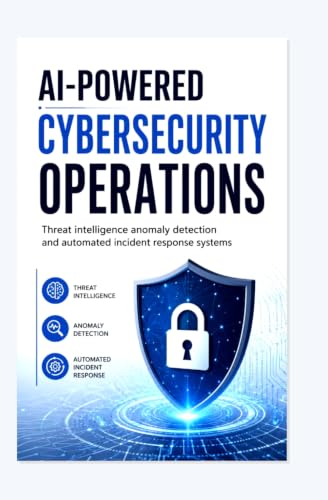
AI-POWERED CYBERSECURITY OPERATIONS: Threat intelligence anomaly detection and automated incident response systems
As an affiliate, we earn on qualifying purchases.
As an affiliate, we earn on qualifying purchases.