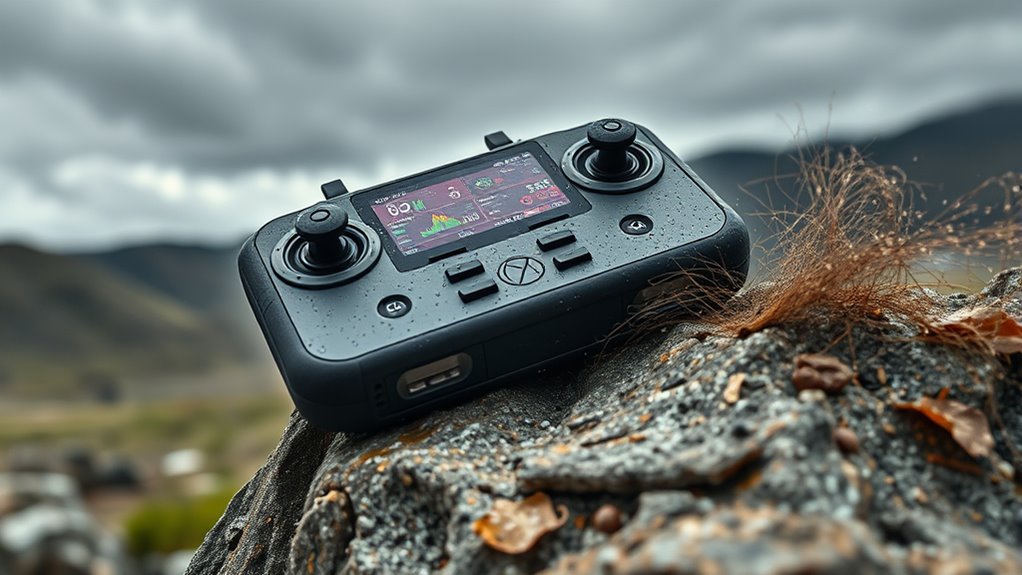
For a rugged drone controller with a built-in screen, I would start by matching the controller to your aircraft: these DJI options are not interchangeable across every drone. The DJI RC Pro is my premium pick for bright outdoor viewing and advanced functions, while the lighter DJI RC offers a simpler, portable setup for a broad group of older compatible models. If you fly a Mini 4 Pro, Air 3, or another listed newer aircraft, the DJI RC 2 brings O4 transmission and a stated 20 km maximum range.

Get privacy and security gear delivered free with Prime
- Fast, free delivery on millions of items
- Prime Video, Amazon Music and more included
- Member-only deals all year
The main tradeoff is not just screen brightness. It is the balance between sunlight visibility, drone compatibility, portability, and transmission generation. None of the supplied specifications establishes a formal ruggedization or weather-resistance rating, so I treat “rugged” here as a request for a self-contained, field-ready screen controller—not a claim that these units can take rain, drops, or rough handling. My ranking gives priority to dependable fit for outdoor use and a clear buyer role, while putting compatibility ahead of headline range figures.
Key Takeaways
- The DJI RC Pro has the brightest stated display at 1,000 nits, compared with 700 nits on the DJI RC and RC 2.
- The DJI RC is the lightest listed controller at approximately 390 g; the RC 2 weighs 420 g, and no weight is supplied for the RC Pro.
- The DJI RC 2 is the match for its listed newer aircraft, including Mini 4 Pro and Air 3, and uses O4 transmission.
- The RC Pro and DJI RC list a maximum transmission range of 15 km; the RC 2 lists 20 km, all under conditions that may not match real flights.
- None of these product details confirms weather sealing or impact protection, so buyers needing a truly all-weather controller should verify protection ratings separately.
| DJI RC Pro Remote Controller for DJI Mavic Drones |  | Best Premium: brightest screen and the broadest advanced-tool set | Display: 5.5-inch, 1080p | Maximum brightness: Up to 1,000 nits | Transmission: O3+ | VIEW ON AMAZON | See Our Full Breakdown |
| DJI RC Smart Remote Controller for Mavic 3, Mini 3, and Air 2S |  | Best Portable Value: light body and a useful built-in display | Display: 5.5-inch FHD, up to 700 nits | Maximum transmission range: 15 km, model and condition dependent | Operating time: Up to 4 hours | VIEW ON AMAZON | See Our Full Breakdown |
| DJI RC 2 Remote Controller with 5.5-inch FHD Screen | 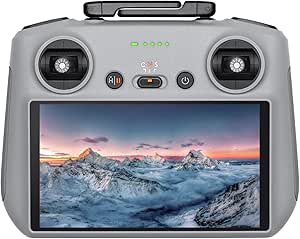 | Best for Newer Compatible Drones: O4 link and four antennas | Display: 5.5-inch FHD touchscreen, 700 nits | Processor: 6 nm, 8-core | Video transmission: O4 | VIEW ON AMAZON | See Our Full Breakdown |
| rugged drone controllers with screen | Display | Compatible drones | Weight |
|---|---|---|---|
| DJI RC Pro Remote Controller f | 5.5-inch, 1080p | DJI Mavic 3 family, Mini 3 Pro, Air 2S | — |
| DJI RC Smart Remote Controller | 5.5-inch FHD, up to 700 nits | Mavic 3 family, Mini 3 Pro, Mini 3, Air 2S | Approximately 390 g |
| DJI RC 2 Remote Controller wit | 5.5-inch FHD touchscreen, 700 nits | DJI Flip, Mini 4 Pro, Air 3, Air 3S, DJI Neo | 420 g |
More Details on Our Top Picks
DJI RC Pro Remote Controller for DJI Mavic Drones
The DJI RC Pro takes the top spot for pilots whose priority is seeing the screen outdoors. Its 5.5-inch 1080p display is rated at up to 1,000 nits, a meaningful step above the 700-nit panels on both the DJI RC and RC 2. That extra brightness can make framing and checking flight information easier in strong daylight, though it cannot remove reflections or guarantee clear viewing in every sun angle.
Compared with the simpler DJI RC, the Pro adds 4K video playback, third-party app support, and a stated latency as low as 120 ms. Those features make it a better fit for a more involved workflow, rather than merely a way to avoid mounting a phone. It shares an O3+ system and a 15 km maximum range with the DJI RC, so buyers should not choose it expecting a longer stated link range. The RC 2, meanwhile, lists a newer O4 system and 20 km maximum range, but supports a different set of aircraft.
This is the most capable option in this lineup for compatible Mavic-family and listed DJI aircraft, but the supplied specifications do not state its weight or operating time. Its field-readiness is about screen visibility and functionality, not proven rugged protection; there is no supplied water or drop rating. Outdoor mode also requires a firmware update, and the maximum transmission range depends on conditions and an unobstructed signal. I would choose it for its bright display and advanced features, not for a claim that it is weatherproof or universally compatible.
Pros:- 5.5-inch 1080p screen rated up to 1,000 nits
- O3+ transmission with a stated maximum range of 15 km
- Supports up to 4K/120fps video playback and third-party apps
- Precision control sticks and latency specified as low as 120 ms
Cons:- Outdoor mode requires a firmware update
- 15 km range depends on signal conditions and unobstructed transmission
- No weight, operating-time, or weather-resistance rating is supplied
Best for: Pilots with a listed compatible DJI aircraft who want the brightest stated screen, 4K playback, and third-party app support.
Not ideal for: Buyers who need a documented waterproof or impact-resistant controller, want a lightweight specification, or fly an aircraft outside the listed compatibility set.
- Display:5.5-inch, 1080p
- Maximum brightness:Up to 1,000 nits
- Transmission:O3+
- Maximum video range:15 km, condition-dependent
- Latency:As low as 120 ms
- Video playback:Up to 4K/120fps
- Compatible drones:DJI Mavic 3 family, Mini 3 Pro, Air 2S
- In the box:Controller and USB 3.0 Type-C cable
Our verdict“I rank the RC Pro first for compatible pilots who value its brighter display and advanced tools more than a newer transmission generation or documented rugged protection.”
DJI RC Smart Remote Controller for Mavic 3, Mini 3, and Air 2S
The DJI RC is the straightforward choice if you want to leave your phone out of the flight setup without carrying a heavier-feeling controller. At approximately 390 g, it is the lightest unit here with a stated weight, narrowly below the 420 g RC 2. Its 5.5-inch FHD screen reaches up to 700 nits, which provides a dedicated outdoor display, although it has less stated brightness than the RC Pro.
For listed Mavic 3 models, Mini 3 Pro, Mini 3, and Air 2S aircraft, this controller offers up to four hours of operating time and O3+ support with compatible drones. The RC Pro also lists O3+ and a 15 km maximum range, so the basic transmission headline does not separate these two. Instead, the Pro earns its premium role with a 1,000-nit panel and advanced playback and app functions; the DJI RC makes more sense when portability and a simpler flight-control setup matter more.
Its main limitation is the compatibility boundary: it is not the listed controller for newer models such as Mini 4 Pro or Air 3, which are supported by the RC 2. Transmission technology can also vary by the paired drone, so I would verify the aircraft-specific details rather than assuming every supported model gets identical performance. This listing is not in original packaging, a practical concern for buyers who want retail presentation or are purchasing a gift. No weather-sealing or impact-resistance rating is provided, so its light build should not be mistaken for proof of ruggedness.
Pros:- Approximately 390 g, the lightest stated weight in this roundup
- 5.5-inch FHD display rated up to 700 nits
- Up to four hours of operating time
- Dual-spring control sticks for controlled input
Cons:- Not supplied in original packaging
- Compatibility does not include the newer aircraft listed for RC 2
- Transmission technology varies by compatible drone, and no protection rating is supplied
Best for: Owners of the listed Mavic 3, Mini 3, Mini 3 Pro, or Air 2S models who want a relatively light controller with a built-in screen and stated four-hour operating time.
Not ideal for: Pilots with newer aircraft such as Mini 4 Pro or Air 3, buyers who need the brightest available display, or anyone requiring documented weather protection.
- Display:5.5-inch FHD, up to 700 nits
- Maximum transmission range:15 km, model and condition dependent
- Operating time:Up to 4 hours
- Battery:Li-ion, 5,200 mAh at 3.6 V
- Weight:Approximately 390 g
- Charging time:1.5 hours with a 5 V/3 A charger
- Compatible drones:Mavic 3 family, Mini 3 Pro, Mini 3, Air 2S
- Model:RM330RC
- Packaging:Not original packaging
Our verdict“I recommend the DJI RC as the portable, uncomplicated pick for its supported aircraft, but not as a bright-screen upgrade over the RC Pro or a controller for newer RC 2 models.”
DJI RC 2 Remote Controller with 5.5-inch FHD Screen
The DJI RC 2 is the right fit when your aircraft is on its compatibility list, especially if you fly a Mini 4 Pro, Air 3, Air 3S, DJI Flip, or DJI Neo. Its key distinction from the DJI RC and RC Pro is O4 video transmission, paired with four antennas and a stated maximum range of 20 km. That figure exceeds the 15 km listed for the other two controllers, but it is a specified-condition maximum, not a guarantee for ordinary flights or every region.
The screen is a 5.5-inch FHD touchscreen rated at 700 nits, matching the DJI RC’s stated brightness and falling short of the RC Pro’s 1,000-nit rating. Its built-in DJI Fly app supports a phone-free setup, while a 6 nm, eight-core processor is listed for responsive operation. At 420 g, it is still a portable screen controller, though the DJI RC is lighter by about 30 g. Buyers choosing between the two should let drone compatibility and transmission generation decide the matter before comparing weight.
The tradeoff is a narrower aircraft list: this is not presented as a replacement for the RC Pro or DJI RC across their listed Mavic and older models. The supplied battery detail is unusual—a CR5 lithium-based battery is listed—so I would confirm the exact power arrangement and included accessories in the product listing before purchase. Most importantly for a roundup framed around rugged use, no weather sealing or impact rating is stated. The RC 2 is a newer-platform field controller, not a certified all-weather remote.
Pros:- O4 transmission and four antennas
- 5.5-inch FHD touchscreen rated at 700 nits
- Pre-installed DJI Fly app allows phone-free operation
- Listed maximum range of 20 km under specified conditions
Cons:- Compatible only with its listed aircraft
- 700-nit screen is less bright on paper than the RC Pro
- Maximum range varies by conditions and region; no ruggedness rating is supplied
Best for: Owners of DJI Flip, Mini 4 Pro, Air 3, Air 3S, or DJI Neo who want a built-in display and O4 transmission.
Not ideal for: Pilots with aircraft listed for the RC or RC Pro but not the RC 2, buyers seeking the brightest screen, or users who need a verified weatherproof controller.
- Display:5.5-inch FHD touchscreen, 700 nits
- Processor:6 nm, 8-core
- Video transmission:O4
- Maximum stated range:20 km under specified conditions
- Antennas:Four: two built-in and two external
- Weight:420 g
- Compatible drones:DJI Flip, Mini 4 Pro, Air 3, Air 3S, DJI Neo
- Connectivity:Bluetooth and Wi-Fi
- Maximum supported devices:2
Our verdict“I would choose the RC 2 over the other two only when its newer compatible aircraft and O4 system match the drone, since its range claim does not outweigh its narrower fit.”

How We Picked
I ranked these controllers around the actual decisions behind buying a screen-equipped field remote: compatibility first, then outdoor readability, transmission, and handling. A bright screen is useful only if the controller works with your drone, and a stated long range cannot make up for a mismatch in transmission system or aircraft support.
I compared the listed display size and brightness, supported drone models, transmission information, operating-time or battery details where provided, weight, and field-oriented functions. That makes the RC Pro the premium visibility choice, the original DJI RC the more portable pick for its compatible models, and the RC 2 the newer-platform choice. I did not treat maximum range as a promise: manufacturer conditions, interference, local rules, and line of sight all affect actual performance.
There is an important limit to the word rugged in this roundup. The supplied descriptions do not give ingress-protection ratings, drop testing, or operating-temperature ranges. I therefore compare these as portable controllers with built-in displays for outdoor use, not as certified waterproof or impact-proof equipment. Before choosing, I would confirm the exact aircraft compatibility and whether the controller’s physical protection matches the places you fly.
| rugged drone controllers with screen | Compatible drones |
|---|---|
| DJI RC Pro Remote Controller f | DJI Mavic 3 family, Mini 3 Pro, Air 2S |
| DJI RC Smart Remote Controller | Mavic 3 family, Mini 3 Pro, Mini 3, Air 2S |
| DJI RC 2 Remote Controller wit | DJI Flip, Mini 4 Pro, Air 3, Air 3S, DJI Neo |
Factors to Consider When Choosing Rugged Drone Controllers With Screens
I would narrow this shortlist in a fixed order: match the controller to the drone, decide how much screen brightness matters in your flying conditions, then weigh portability and transmission features. For a controller described as rugged, I would also check protection details beyond this product data.
Start with the exact drone model
Compatibility is the first filter. The DJI RC and RC Pro list support for Mavic 3 models, Mini 3 Pro, and Air 2S, with the DJI RC also listing Mini 3. The RC 2 is aimed at DJI Flip, Mini 4 Pro, Air 3, Air 3S, and DJI Neo. Do not assume a controller works across DJI models because the brand or screen size is the same. Confirm the exact aircraft, firmware, and controller pairing information before buying.
Choose screen brightness for your flying locations
The RC Pro’s 1,000-nit display is the brightest stated screen here; the DJI RC and RC 2 are rated up to 700 nits. Higher brightness can make a screen easier to read outdoors, but viewing angle, glare, and ambient light still matter. If you often fly in open daylight, the Pro has the clearest specification advantage. If your main concern is a built-in display rather than maximum brightness, the other two retain the same 5.5-inch FHD screen size class.
Treat maximum range as a comparison, not a promise
The RC 2 lists a 20 km maximum, while the RC and RC Pro list 15 km. Those figures depend on conditions and do not describe the range a pilot should expect in every location. Interference, obstacles, regional rules, and line of sight affect the link. The RC 2’s O4 system and four antennas distinguish it technically, but a compatible aircraft is still required. For similar supported drones, the RC Pro’s brighter screen may matter more to your decision than the range headline.
Balance weight against the features you will use
The DJI RC has the lowest stated weight at approximately 390 g, with the RC 2 at 420 g. No weight is provided for the RC Pro in the supplied specifications, so I would not assume how it compares physically. The Pro’s higher brightness, 4K playback, and third-party app support add value for pilots who need those functions. If your priority is carrying a lighter field setup, the DJI RC has the strongest evidence in its favor.
Check what rugged means for your conditions
A screen-equipped remote can simplify outdoor flying, but that does not make it waterproof, dustproof, or drop-resistant. None of the three product details supplied here gives an ingress-protection rating, impact test, or operating-temperature range. If you fly around spray, blowing dust, or cold conditions, check the manufacturer’s documentation and consider a compatible protective case. Do not rely on a high-brightness display or a sturdy-sounding material as proof of environmental protection.
Account for packaging, updates, and battery information
The DJI RC listing specifies not original packaging, which may matter if presentation or a complete retail package is important to you. The RC Pro requires a firmware update for outdoor mode. The DJI RC lists up to four hours of operating time and charging details, while equivalent runtime information is not supplied for the other two. The RC 2’s listed battery detail should be checked against the seller’s full listing so you understand its power arrangement and included items before ordering.
Frequently Asked Questions
Which controller has the brightest screen?
The DJI RC Pro has the brightest stated display, rated at up to 1,000 nits. The DJI RC and RC 2 are each rated at up to 700 nits. Brightness is one part of outdoor readability; glare, sun angle, and screen reflections can still affect how easily you see the display.
Can I use the same controller with all three product families?
No. The listed compatibility differs. The DJI RC and RC Pro include several Mavic 3 models, Mini 3 Pro, and Air 2S, while the RC 2 lists DJI Flip, Mini 4 Pro, Air 3, Air 3S, and DJI Neo. I would confirm your exact aircraft model and current compatibility information before choosing a controller.
Does the RC 2’s 20 km range mean it will fly farther in everyday use?
Not necessarily. The 20 km figure is a stated maximum under specified conditions, and actual transmission depends on signal interference, obstacles, line of sight, regional regulations, and the aircraft-controller pairing. It is higher on paper than the 15 km figures for the other two, but it should not be treated as a normal-use guarantee.
Are these controllers waterproof or impact-resistant?
The supplied specifications do not confirm waterproofing, dust protection, or impact resistance for any of these models. A built-in screen and a field-oriented design do not establish a ruggedness rating. If you need protection from rain, dust, or drops, check the manufacturer’s documentation for a specific rating and use a suitable protective case where appropriate.
Which is the lightest controller in this comparison?
The DJI RC has the lightest stated weight at approximately 390 g. The RC 2 is listed at 420 g, and no weight is supplied for the RC Pro in the product details. That makes the DJI RC the clearest choice if low carry weight is a priority, provided it supports your drone.
Conclusion
For the brightest outdoor screen and advanced playback or app features, I would pick the DJI RC Pro—if your aircraft is on its compatibility list and you do not need a verified weather-resistant remote. For a lighter, simpler setup with a stated four-hour operating time, the DJI RC is the better match for compatible Mavic 3, Mini 3, and Air 2S owners. If you fly a Mini 4 Pro, Air 3, Air 3S, DJI Flip, or DJI Neo, the RC 2 is the model in this group built for that listed aircraft set and brings O4 transmission. Before ordering any of them, I would confirm aircraft compatibility and check protection requirements separately: the product information here does not establish that any controller is waterproof or impact-proof.