The Rosenberg case intensified your fear of atomic espionage by highlighting how easily spies could threaten national security. It became a symbol of Cold War paranoia, showing how suspicion and hysteria could override fairness and civil liberties. This case made you more aware of the dangers hidden among ordinary Americans and pushed the government to adopt stricter security measures. If you want to understand how this case shaped America’s responses to espionage, keep exploring the details.
Key Takeaways
- The Rosenberg case became a symbol of Cold War paranoia, intensifying fears of atomic espionage among Americans.
- It highlighted the threat of internal spies, fueling suspicion of communist infiltration in U.S. institutions.
- The swift, often questionable legal proceedings reflected hysteria, reinforcing fears of widespread espionage.
- The case prioritized national security over civil liberties, shaping policies that increased government surveillance.
- It cemented the perception that atomic secrets were vulnerable, prompting more aggressive security measures during the Cold War.
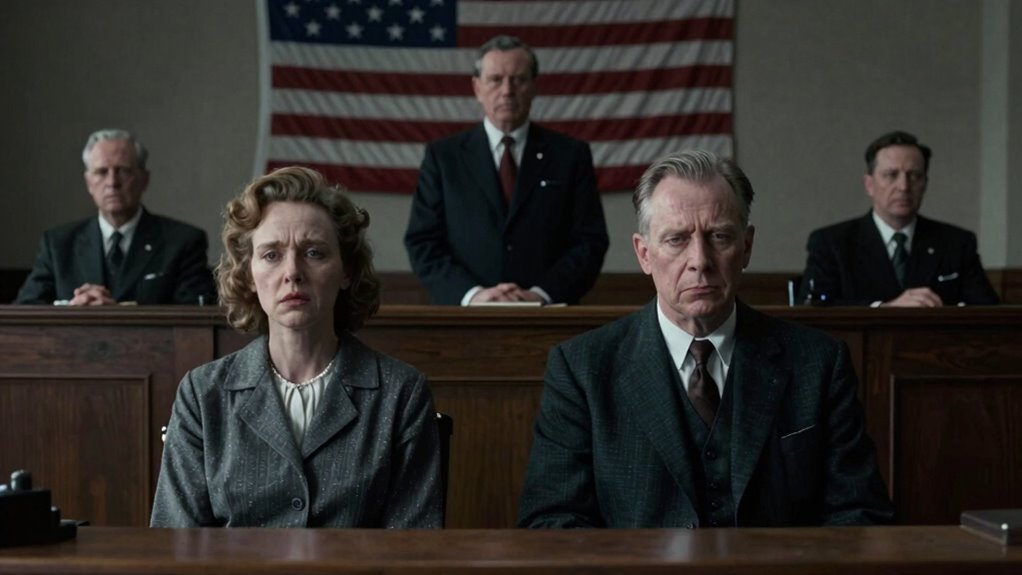
During the Cold War era, the Rosenberg case became a symbol of America’s growing fear of atomic espionage. You could feel the tension in the air, as the government and the public grew increasingly paranoid about national security. The case highlighted that espionage wasn’t just about stealing secrets; it was about threatening the very safety of the nation. As you follow the trial of Julius and Ethel Rosenberg, you realize how deeply Cold War paranoia influenced American society. The government’s aggressive pursuit of espionage trials reflected widespread suspicion that communist spies might infiltrate every corner of the country, even within its most secure institutions.
The Rosenbergs’ conviction was more than just about their alleged role in passing atomic secrets to the Soviets. It became a rallying point for fears that the United States might be vulnerable to sabotage from within. You see, during this time, suspicion ran high, and the government’s actions often blurred the line between justice and hysteria. The espionage trials of the Rosenbergs, carried out swiftly and with little room for doubt, serve as a stark reminder of how fear can drive a nation to overreach. Their case exemplified how Cold War paranoia could turn accusations into convictions, fueling the climate of suspicion that defined the era.
You might notice that the Rosenberg case also intensified the atmosphere of distrust. It was as if the very idea that spies could be lurking among ordinary Americans created a sense of vulnerability. People started to believe that anyone could be a traitor, and that the threat of atomic espionage was more imminent than ever. This sense of threat led to increased security measures and a push for more aggressive espionage trials, often based on scant evidence. Public opinion was heavily influenced by these fears, which often led to a rush to judgment without thorough investigation. The case became a symbol of the lengths the U.S. government was willing to go to protect itself, even if it meant sacrificing civil liberties. Additionally, the case exemplified how the fear of espionage infiltration permeated American society and government actions during this period.
Throughout this period, the Rosenberg case exemplified the height of Cold War paranoia. You see, it wasn’t just about punishing individuals; it was about sending a message that the country would do whatever it took to defend its secrets. Their case reinforced the idea that espionage was a grave threat, justifying a wave of investigations and trials that targeted suspected spies. In this climate, the use of quick and decisive legal actions often overshadowed careful evidence gathering, reflecting the urgent need to act against perceived threats. In the end, the case left a lasting mark on America’s perception of security, making it clear that during the Cold War, fear of atomic espionage could shape national policy and public opinion in profound ways.

The Spy and the Traitor: The Greatest Espionage Story of the Cold War
As an affiliate, we earn on qualifying purchases.
As an affiliate, we earn on qualifying purchases.
Frequently Asked Questions
How Did the Rosenberg Case Influence U.S. Nuclear Policy?
The Rosenberg case heightened U.S. nuclear secrecy during Cold War paranoia, leading you to see espionage as a major threat. It prompted stricter security measures and more aggressive policies to protect atomic secrets. You’d notice increased surveillance of suspected spies and tighter controls on nuclear information. The case reinforced the belief that atomic espionage could undermine national security, shaping U.S. nuclear policy to prioritize secrecy and counterintelligence efforts for years to come.
Were There Other Espionage Cases Similar to Rosenberg’s?
Yes, other espionage cases like the Klaus Fuchs case were similar to Rosenberg’s. These incidents fueled cryptography debates and heightened concerns about atomic security. You see, Fuchs, a British scientist, leaked nuclear secrets to the Soviets, just as Rosenberg’s case did. Such cases made the U.S. more cautious, leading to stricter security measures and emphasizing the importance of protecting atomic secrets to prevent future espionage threats.
How Did Public Opinion Shift After the Rosenberg Trial?
After the Rosenberg trial, public opinion shifted dramatically, with over 70% of Americans believing they were likely guilty. You see, public hysteria and Cold War paranoia surged, fueling fears of widespread espionage. People grew more suspicious of neighbors and government alike, reinforcing the idea that atomic secrets were dangerously easy to steal. This heightened fear led to harsher anti-espionage laws and a climate of suspicion that persisted for years.
What Were the Long-Term Effects on Espionage Laws?
The Rosenberg case led to significant long-term effects on espionage laws, including legal reforms that tightened penalties for espionage and increased surveillance expansion to detect spies more effectively. You might notice stricter laws and more government monitoring now, as authorities aimed to prevent future leaks of atomic secrets. These changes reflected heightened fears of espionage, shaping a more secure, yet more invasive, approach to national security and intelligence gathering.
Did the Rosenberg Case Impact U.S.-Soviet Relations?
The Rosenberg case heightened Cold War paranoia, making you see espionage as a direct threat to national security. It strained U.S.-Soviet relations, fueling distrust and suspicion on both sides. The case led the government to tighten secrecy measures, making diplomatic exchanges more cautious. Overall, it deepened the divide between the two nations, reinforcing fears of Soviet espionage and reinforcing the urgency of protecting classified information during the Cold War.

Rosenberg Manhattan: A Declassified History of the Atomic Spy Ring That Shook the Cold War (Declassified: A Documentary History of Espionage Book 4)
As an affiliate, we earn on qualifying purchases.
As an affiliate, we earn on qualifying purchases.
Conclusion
The Rosenberg case etched a dark shadow across America’s landscape of trust, like a lightning strike illuminating hidden fears. It transformed suspicion into a thunderstorm, warning of spies lurking behind every shadow. Your nation’s heart raced with paranoia, as secrets and safety clashed like stormy seas. This case didn’t just shape policies; it painted a vivid, cautionary mural on the wall of history—reminding you that in the quest for security, shadows can sometimes hide the deepest fears.

Warning Government House Is Under 24 Hour Surveillance Outdoor Sign Aluminum 12"x8" UV Ink Printed for House & Business
- Durable Weather-Resistant Material: Resists rain, UV rays, wind, and friction
- High-Visibility Graphics: Bold, saturated colors visible in all lighting
- Readable from 10+ Feet Away: Clear warning message in various environments
As an affiliate, we earn on qualifying purchases.
As an affiliate, we earn on qualifying purchases.
NUREMBERG: The Untold Story of the Psychiatrist Douglas Kelley, the Nazi Hermann Göring and the Trial That Changed the World
As an affiliate, we earn on qualifying purchases.
As an affiliate, we earn on qualifying purchases.