Choosing a police scanner radio starts with one local question: do the agencies you want to hear use analog channels or a digital radio system? For broad digital-system capability, I’d look first at the Uniden SDS150, whose True I/Q receiver and GPS make it the most capable field option here. If local agencies still use conventional analog channels, the Uniden BC125AT offers portable listening with 500 alpha-tagged channel slots, while the BC365CRS suits a desk or bedside setup with an alarm clock and FM radio.

Get privacy and security gear delivered free with Prime
- Fast, free delivery on millions of items
- Prime Video, Amazon Music and more included
- Member-only deals all year
The tradeoff is clear: the SDS150 is the only scanner in this lineup described with digital receiver technology, while the four other models are analog-only and cannot follow digital or trunked systems. Among the analog picks, I rank the BC125AT for its labeled memories and Close Call feature, the compact SR30C for flexible power, and the WS1010 for its weather tools and simpler channel capacity. Before choosing any model, check which system your local public-safety agencies use; a scanner that cannot decode that system may not receive their traffic at all.
Key Takeaways
- The Uniden SDS150 is the lineup’s digital-capable choice, with True I/Q reception, built-in GPS, Bluetooth, and a water-resistant design.
- The BC125AT and SR30C are portable analog scanners; neither can monitor digital or trunked radio systems.
- The BC365CRS is designed for tabletop use and adds an FM radio, alarm functions, and priority scanning, but remains analog-only.
- The WS1010 pairs 400 channel slots with SAME weather alerts, Skywarn access, and Spectrum Sweeper; computer programming needs separate equipment and software.
- The SR30C is the most compact listed model and supports USB or AA power, but batteries are not included.
| Uniden SDS150 Digital Radio Scanner with SDR Technology and Built-in GPS |  | Best Overall — strongest choice for digital systems and field use | Receiver: True I/Q | Radio bands: AM, NFM, FM, WFM, FMB | Connectivity: Bluetooth | VIEW ON AMAZON | See Our Full Breakdown |
| Uniden Bearcat BC125AT Analog Handheld Scanner, 500 Channels | 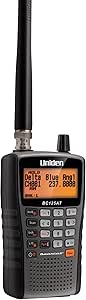 | Best Analog Handheld — easiest analog pick for organized channel lists | Channels: 500 across 10 storage banks | Type: Analog handheld scanner; receive-only | Frequency range: 25–54 MHz, 108–174 MHz, 225–380 MHz, 400–512 MHz | VIEW ON AMAZON | See Our Full Breakdown |
| Uniden BC365CRS 500-Channel Analog Scanner with Alarm Clock and FM Radio |  | Best Desktop Scanner — most useful as a fixed listening station | Channels: 500 across ten banks | Scanner type: Conventional analog | Frequency ranges: 530–1700 kHz, 25–54 MHz, 88–108 MHz, 108–174 MHz, 225–380 MHz, 406–512 MHz | VIEW ON AMAZON | See Our Full Breakdown |
| Uniden Bearcat SR30C 500-Channel Compact Handheld Scanner |  | Best Compact Pick — flexible power in a small analog handheld | Channels: 500 | Communication type: Non-digital | Features: Close Call RF Capture, Turbo Search, PC programming, priority scan | VIEW ON AMAZON | See Our Full Breakdown |
| Whistler WS1010 Analog Handheld Scanner, 400 Channels, Black |  | Best for Weather Tools — analog handheld with useful alert and search features | Channels: 400 | Memory banks: 10 | Scanner type: Analog handheld | VIEW ON AMAZON | See Our Full Breakdown |
| police scanner radio | Dimensions | Channels |
|---|---|---|
| Uniden SDS150 Digital Radio Sc | 2.25 x 2 x 6.1 inches | — |
| Uniden Bearcat BC125AT Analog | — | 500 across 10 storage banks |
| Uniden BC365CRS 500-Channel An | 5.7 x 5.2 x 1.6 inches | 500 across ten banks |
| Uniden Bearcat SR30C 500-Chann | 3 x 1 x 5 inches | 500 |
| Whistler WS1010 Analog Handhel | 1.56 x 2.37 x 5.68 inches | 400 |
More Details on Our Top Picks
Uniden SDS150 Digital Radio Scanner with SDR Technology and Built-in GPS
The Uniden SDS150 ranks first because it addresses the limitation shared by the other four picks: they are analog scanners, while this model is described as a digital scanner with a True I/Q receiver. That receiver technology is intended to improve reception in weak-signal and simulcast environments, making it the clearest choice here for buyers whose local agencies use compatible digital systems. Its built-in GPS can support location-aware scanning, and Bluetooth links it to the U/AWARE smartphone app.
Its field-oriented features also set it apart from the BC365CRS, which is built for a tabletop, and from the analog handhelds, which are not suitable replacements when a system requires digital decoding. The SDS150 is water resistant to JIS4/IPX4, useful for exposure to splashes, though that rating is not a promise that it can be submerged. A charging cradle, included lithium-ion pack, and an extra battery slot make charging more convenient; the second battery itself is sold separately.
This is the most capable and feature-rich option in the group, but it is not the simplest answer for every listener. If local traffic is conventional analog, the BC125AT or SR30C may cover the basic use case with less digital-oriented complexity. I’d choose the SDS150 when system compatibility and reception in challenging environments matter more than keeping the setup straightforward.
Pros:- True I/Q receiver is intended to help in weak-signal and simulcast settings.
- Digital scanner with built-in GPS and Bluetooth app connectivity.
- JIS4/IPX4 water-resistant design for some field exposure.
- Charging cradle has a slot for an additional battery.
Cons:- A spare battery for the cradle’s extra charging slot is sold separately.
- May be more capability than needed where the desired channels are conventional analog.
Best for: Listeners who need a portable scanner with digital-system capability, GPS, and reception features aimed at weak-signal or simulcast environments.
Not ideal for: Buyers who only need a basic analog scanner, want a minimal setup, or expect to use it underwater or in conditions beyond its stated water-resistance rating.
- Receiver:True I/Q
- Radio bands:AM, NFM, FM, WFM, FMB
- Connectivity:Bluetooth
- GPS:Built-in
- Water resistance:JIS4/IPX4
- Battery:Included lithium-ion battery pack
- Dimensions:2.25 x 2 x 6.1 inches
Our verdict“I’d pick the SDS150 when digital-system capability and field-focused reception matter more than simplicity.”
Uniden Bearcat BC125AT Analog Handheld Scanner, 500 Channels
For a buyer who has confirmed that local traffic is conventional analog, the BC125AT is my strongest handheld analog recommendation. It holds 500 channels across 10 banks and supports alpha tagging, so saved channels can carry labels rather than being just another frequency to remember. That organization is a real advantage over the WS1010, which stores 400 channels, and it gives the BC125AT a more focused role than the digital-capable SDS150.
Close Call RF capture can help find nearby transmissions, while preset search bands and an orange backlit display make the handheld easier to use when searching or checking saved channels. Weather alert technology adds another practical function. These conveniences do not change the central limitation: this scanner receives conventional analog transmissions only and cannot monitor digital or trunked systems. It also cannot transmit, and it is not water resistant.
I place it ahead of the SR30C because channel labels and a stated battery-life figure make it a particularly clear fit for someone maintaining a known set of analog channels. The SR30C counters with a smaller listed footprint and USB power, while the BC125AT’s value is its straightforward channel organization. If outdoor exposure or digital coverage is a requirement, I’d skip it rather than expect a handheld form to solve those issues.
Pros:- Stores and alpha-labels 500 channels across 10 banks.
- Close Call RF capture helps identify nearby transmissions.
- Preset search bands and orange backlit display support scanning and channel discovery.
- Weather alert feature and stated battery life of up to 10 hours.
Cons:- Cannot monitor digital or trunked radio systems.
- Receive-only and not water resistant.
Best for: Listeners with confirmed conventional analog channels who want a portable scanner with labeled memories and nearby-signal capture.
Not ideal for: Anyone who needs digital or trunked-system reception, two-way communication, or a water-resistant handheld.
- Channels:500 across 10 storage banks
- Type:Analog handheld scanner; receive-only
- Frequency range:25–54 MHz, 108–174 MHz, 225–380 MHz, 400–512 MHz
- Battery:2 AA batteries included
- Battery life:Up to 10 hours
- Weight:14.4 ounces
- Water resistance:Not water resistant
Our verdict“I recommend the BC125AT for organized analog handheld listening, provided local systems do not require digital decoding.”
Uniden BC365CRS 500-Channel Analog Scanner with Alarm Clock and FM Radio
The BC365CRS is the clear choice for listeners who want a scanner on a desk or bedside table rather than in a pocket. Its 500 channels across ten banks match the capacity of the BC125AT and SR30C, but its tabletop design adds a 30-preset FM radio, alarm with snooze and sleep functions, and a backlit display. Priority scanning checks selected channels every two seconds, which can help a listener keep track of a chosen channel while scanning others.
Compared with the handheld BC125AT, this model trades portability for everyday home utility. It receives conventional analog police, fire, marine, aircraft, railroad, amateur radio, and weather broadcasts, but cannot decode P25, DMR, or NXDN. That makes system research just as important here as with the other analog options: extra alarm and radio functions do not broaden the scanner’s supported signal types.
The listed power information describes corded operation and also notes a requirement for three AA batteries, so buyers should check the product documentation for how battery power is used. I’d choose it over the WS1010 when a fixed setup and clock functions matter more than handheld use or the WS1010’s Spectrum Sweeper and weather-alert features. Skip it if you need to carry a scanner around or follow a digital public-safety system.
Pros:- Stores 500 channels across ten banks.
- Combines scanner functions with FM presets and an alarm clock.
- Priority scanning checks selected channels every two seconds.
- Backlit display is suited to a fixed tabletop setup.
Cons:- Does not receive digital systems such as P25, DMR, or NXDN.
- Corded tabletop design is less suitable for portable listening.
Best for: Home listeners who want an analog scanner alongside an FM radio and alarm clock in a tabletop format.
Not ideal for: Buyers who need portability, digital or trunked reception, or a scanner designed for field use.
- Channels:500 across ten banks
- Scanner type:Conventional analog
- Frequency ranges:530–1700 kHz, 25–54 MHz, 88–108 MHz, 108–174 MHz, 225–380 MHz, 406–512 MHz
- FM presets:30
- Power:Corded electric; 3 AA batteries listed
- Mounting type:Tabletop
- Dimensions:5.7 x 5.2 x 1.6 inches
Our verdict“I’d choose the BC365CRS for a home listening station, not as a substitute for a digital or portable scanner.”
Uniden Bearcat SR30C 500-Channel Compact Handheld Scanner
The SR30C is the compact, flexible-power option among the analog handhelds. Its listed dimensions are 3 x 1 x 5 inches, and it can run from USB or two AA cells, including alkaline or rechargeable Ni-MH batteries. That mix gives it an alternative to the BC125AT’s included AA batteries and stated up-to-10-hour battery life, while making USB power useful for a stationary setup or compatible power source.
It stores 500 channels, includes service presets for weather, marine, aviation, racing, and railroad listening, and offers Close Call RF Capture, Turbo Search, priority scan, and PC programming. Those tools make it a flexible analog scanner for someone who wants to search and organize conventional frequencies. It does not receive digital communications such as Project 25, DMR, or NXDN, so it cannot replace the SDS150 for digital-system use.
The main compromise is that the supplied information does not list batteries as included, so a buyer relying on portable AA power needs to provide them. Its plastic enclosure and stereo audio output are listed, but there is no water-resistance claim. Compared with the BC125AT, the SR30C favors compact size and power choice over a stated battery-life figure and included batteries. I’d choose it for those specific conveniences, not for weatherproofing or digital coverage.
Pros:- Compact listed dimensions with 500 channel slots.
- Can use USB, alkaline AA, or rechargeable Ni-MH AA power.
- Close Call RF Capture, Turbo Search, and priority scan support channel discovery.
- PC programming and service presets for several listening categories.
Cons:- Does not receive digital communications such as P25, DMR, or NXDN.
- AA batteries are not included.
Best for: Listeners seeking a compact analog handheld with USB and AA power options, PC programming, and nearby-signal search.
Not ideal for: Buyers who need digital or trunked reception, included AA batteries, or a water-resistant scanner.
- Channels:500
- Communication type:Non-digital
- Features:Close Call RF Capture, Turbo Search, PC programming, priority scan
- Power options:USB, two AA alkaline batteries, or two AA rechargeable Ni-MH batteries
- Batteries included:No
- Dimensions:3 x 1 x 5 inches
- Weight:14.9 ounces
Our verdict“I’d pick the SR30C when compact size and flexible power matter more than digital reception or included batteries.”
Whistler WS1010 Analog Handheld Scanner, 400 Channels, Black
The Whistler WS1010 is the smallest-capacity handheld in this group, holding 400 frequencies across ten memory banks rather than the 500 available in the BC125AT and SR30C. Its case for inclusion is not channel count; it is the combination of SAME weather alerts, Skywarn access, and Spectrum Sweeper. These features give the scanner a useful weather and nearby-frequency discovery angle that the other analog handheld descriptions do not match in the same way.
Preprogrammed service banks cover marine, fire and police, aircraft, ham, and weather bands, which can give a new listener a starting point before building a custom channel list. The included four AA batteries also mean the handheld is ready for battery-powered use, unlike the SR30C, which lists no batteries in the box. Against the BC125AT, the WS1010 offers weather-specific tools but fewer channel slots and less emphasis on alpha-tagged channel organization.
The key limitation is compatibility: this is an analog-only scanner, so it will not monitor agencies using digital or trunked systems. Computer programming also requires a PCIF cable and third-party software, adding setup work for anyone who prefers managing channels from a computer. I’d recommend it when weather alerts and preprogrammed service banks are a priority and local police traffic is confirmed analog; otherwise, the BC125AT is a stronger general-purpose analog handheld, and the SDS150 is the digital-capable pick.
Pros:- 400 frequencies organized across ten memory banks.
- Includes service banks for police, fire, marine, aircraft, ham, and weather.
- SAME weather alerts, Skywarn access, and Spectrum Sweeper add useful search and alert functions.
- Four AA batteries are included.
Cons:- Analog-only reception cannot monitor digital or trunked systems.
- PC programming needs a separate PCIF cable and third-party software.
Best for: Analog listeners who want SAME weather alerts, Skywarn access, and Spectrum Sweeper in a battery-powered handheld.
Not ideal for: Buyers who need digital or trunked police-system reception, more than 400 channel slots, or simple computer programming without extra equipment.
- Channels:400
- Memory banks:10
- Scanner type:Analog handheld
- Weather features:Skywarn access and SAME weather alerts
- Search feature:Spectrum Sweeper
- Battery requirement:4 AA batteries included
- Dimensions:1.56 x 2.37 x 5.68 inches
Our verdict“I’d choose the WS1010 for its weather tools and service banks, but only where the desired police traffic remains analog.”

How We Picked
I ranked these five options around the job implied by police scanner radio: receiving local public-safety traffic, with system compatibility taking priority over convenience extras. I gave the highest placement to a model described with digital reception features, since analog-only scanners cannot monitor digital or trunked systems. That does not mean digital capability guarantees reception everywhere; buyers still need to confirm local system details and any applicable access restrictions.
For the analog models, I compared the practical differences that shape day-to-day use: handheld versus tabletop format, memory capacity and channel organization, nearby-signal search tools, weather features, and power options. I also treated clear limitations as ranking factors. None of the analog scanners becomes a digital scanner through programming, and the handheld form alone does not make a model suitable for outdoor use if it is not water resistant. My picks reflect the information supplied for each model, not claims of hands-on testing.
Factors to Consider When Choosing Police Scanner Radio
I’d make the system-type check before comparing channel counts or extras. A scanner can only monitor signals it supports, and four models here are explicitly analog-only. Use the points below to match the radio to local traffic and the way you plan to listen.
Check whether local traffic is analog or digital
This is the decision that matters most. The BC125AT, BC365CRS, SR30C, and WS1010 receive conventional analog transmissions, while their descriptions rule out digital or trunked systems. The SDS150 is the one model in this lineup described as a digital scanner, with True I/Q receiver technology. Check current local agency system information before buying, since scanner capabilities and available channels differ by location. Do not assume that a scanner labeled for police use can follow every police system.
Choose handheld or tabletop use
For carrying a scanner, compare the handheld models’ size, power, and weather limitations. The BC125AT and SR30C are portable analog options; the WS1010 adds weather alert tools, while the SDS150 combines digital capability with a water-resistance rating. The BC365CRS is the fixed-location pick, with an alarm, FM radio, and tabletop format. A tabletop feature set may be more useful at home, but it does not suit a listener who needs to move around with the radio.
Treat channel capacity as organization, not compatibility
More memory slots can help you store and arrange more frequencies, but a 500-channel scanner does not automatically receive more types of radio systems than a 400-channel scanner. The BC125AT, BC365CRS, and SR30C each list 500 channels; the WS1010 lists 400. Alpha tagging on the BC125AT helps identify saved channels by label, while the WS1010’s ten banks and service presets offer another way to sort listening interests. Neither organization method adds digital decoding.
Match search and weather tools to your listening habits
Features like Close Call RF capture on the BC125AT and SR30C help locate nearby transmissions, while the WS1010’s Spectrum Sweeper searches nearby frequency ranges. These can assist with discovery, but they do not guarantee that a signal can be decoded or legally monitored. The WS1010 pairs its search tool with SAME weather alerts and Skywarn access; the BC365CRS instead emphasizes priority scanning and home convenience. Choose based on the job you want the radio to do after you have confirmed system compatibility.
Plan for programming and power
Setup needs differ. The WS1010 requires a separate PCIF cable and third-party software for PC programming, while the SR30C lists PC programming and USB or AA power. The BC125AT includes two AA batteries, and the WS1010 includes four; the SR30C does not include batteries. The SDS150 comes with a lithium-ion pack and charging cradle, though a spare battery for its additional charging slot is sold separately. Check the included accessories and programming method before settling on a model.
Keep real-world limits in view
Handheld does not mean rugged. The BC125AT is expressly not water resistant, the SR30C has no water-resistance claim in the supplied details, and the WS1010’s description does not specify a water rating. The SDS150 is listed as JIS4/IPX4 water resistant, which is a different level of protection from submersion-proof construction. All five products are receive-only scanners as described here; they are not two-way police radios and cannot transmit messages to public-safety agencies.
Frequently Asked Questions
Which scanner in this lineup can receive digital systems?
The Uniden SDS150 is the only model here described as a digital scanner with True I/Q receiver technology. The BC125AT, BC365CRS, SR30C, and WS1010 are analog-only and cannot monitor digital or trunked systems. I’d verify the radio system used by the specific agencies you want to hear before choosing, since the scanner must support that system type.
Will an analog police scanner receive every local police channel?
No. An analog scanner can receive compatible conventional analog transmissions, but it cannot decode digital or trunked systems that it does not support. Local systems and agency practices vary, and some channels may also be encrypted or otherwise unavailable to scanner listeners. Check current local system information rather than relying only on a scanner’s police service bank or search feature.
Which model is the best fit for listening at home?
The BC365CRS is the most home-focused option because it is a tabletop analog scanner with an FM radio, alarm functions, and priority scanning. Its role is different from the handheld BC125AT, SR30C, and WS1010, which are meant to be carried, and it does not gain digital reception from its extra clock and radio functions. Choose it only if conventional analog reception meets your needs.
What is the difference between the BC125AT and SR30C?
Both are 500-channel analog handheld scanners with Close Call RF capture, but their advantages differ. The BC125AT supports alpha-tagged channels, includes two AA batteries, and lists battery life up to 10 hours. The SR30C has a smaller listed footprint, USB power, PC programming, and a choice of alkaline or rechargeable AA cells, but its batteries are not included. Neither can receive digital or trunked systems.
Can these scanners transmit or act as two-way radios?
No. These products are presented as receive-only scanners, not two-way radios, and listening to a frequency does not give a scanner the ability to transmit on it. The BC125AT is specifically identified as receive-only; the other models are scanners for reception as described here. I would choose a separate, legally appropriate communications device if two-way communication is the goal.
Conclusion
For buyers who need digital-system capability, I’d start with the Uniden SDS150; it is the lineup’s clear choice for digital reception features, GPS, and field use. If local public-safety traffic is conventional analog and you want a portable radio with organized channel labels, the BC125AT is my general-purpose pick. Choose the BC365CRS for a home desk or bedside station, the SR30C for compact size and flexible USB or AA power, or the WS1010 if its weather alerts and Skywarn access are the strongest match for your listening.
My final recommendation is to confirm local system compatibility before selecting any scanner. If your agencies use digital or trunked communications, the analog BC125AT, BC365CRS, SR30C, and WS1010 are poor fits regardless of their channel capacity. If the traffic you want is analog, choose by where you’ll listen and which features you’ll use: portable organization, home convenience, flexible power, or weather-focused tools.