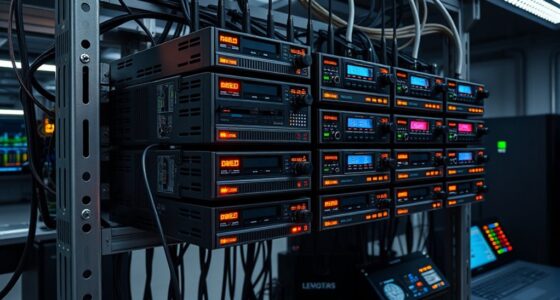
A handheld oscilloscope trades the benchtop screen and deep memory of a lab scope for portability, battery power, and true field troubleshooting — and that tradeoff shapes every pick here. For serious fieldwork, the Siglent SHS810X stands out as the best overall choice thanks to its 100 MHz bandwidth, 1 GSa/s sampling, and a build that survives real industrial abuse. If budget leads your decision, the FNIRSI 2C53T bundles a scope, multimeter, and signal generator in one pocketable tool, while the Fluke 123B remains the premium pick for electricians who value ruggedness and dual-input measurement over raw bandwidth. The core tension in this category is simple: cheap 3-in-1 combo units are tempting but often suffer from noisy traces and fragile enclosures, while dedicated scopes cost more and do less. Read on for the full breakdown of where each model wins and where it falls short.

Get privacy and security gear delivered free with Prime
- Fast, free delivery on millions of items
- Prime Video, Amazon Music and more included
- Member-only deals all year
Key Takeaways
- Bandwidth claims on budget 3-in-1 units are optimistic: the 350 MHz FNIRSI DPOS350P delivers more usable bandwidth than the 50–70 MHz combo units, but none match the Siglent SHS810X for clean, trustworthy signal capture.
- The Fluke 123B’s 20 MHz bandwidth looks weak on paper, yet its Connect-and-View auto-triggering and industrial certification make it faster to use on motors and drives than higher-spec hobbyist scopes.
- FNIRSI dominates the sub-$100 tier with four entries; the 2C53T and 2C53P separate themselves from the 2C23T lineup with larger screens and better generators.
- The FNIRSI DSO152 is a learning tool, not a troubleshooting tool — anyone diagnosing real circuits past audio frequencies will hit its limits immediately.
- Multimeter integration quality varies widely: the HANMATEK HO52 and FNIRSI combos are convenient, but a dedicated DMM still beats every built-in meter for accuracy and safety on high-energy circuits.


| oscilloscope handheld | Display | Sampling rate | Channels | Weight |
|---|---|---|---|---|
| Siglent SHS810X Handheld Oscil | 5.6-inch TFT-LCD, 640 x 480 | — | 2 | 10 pounds |
| FNIRSI DPOS350P 4-in-1 Digital | 7-inch touchscreen | — | 2 | — |
| FNIRSI 2C53T 3-in-1 Handheld O | 2.8-inch LCD | 250 MSa/s | — | 400 g |
| Fluke 123B Industrial ScopeMet | — | — | — | 3.06 pounds |
| Dual Channel 3-in-1 Handheld O | 2.4-inch color TFT | 200 MS/s | — | 7.8 oz |
| HANMATEK HO52 Handheld Digital | 3.5-inch backlit TFT | 250 MSa/s | 2 | 2.6 lb |
| 3-in-1 Handheld Oscilloscope w | — | 280 MSa/s in high-speed mode | Dual channel | — |
| FNIRSI 2C23T Plus 3-in-1 Handh | 2.8-inch LCD | 50 MSa/s | 2 | 10.24 oz |
| FNIRSI 2C23T 3-in-1 Handheld O | 2.8-inch HD LCD | 50 MSa/s | 2 | 10.4 oz |
| FNIRSI DSO152 Handheld Oscillo | 2.8-inch HD LCD, 320 x 240 | 2.5 MS/s | — | — |
| FNIRSI 2C53P 3-in-1 Handheld O | — | 250 MS/s | 2 | — |
More Details on Our Top Picks
Siglent SHS810X Handheld Oscilloscope – 100 MHz, 2 Channels, 1 GSa/s
The 100 MHz bandwidth and 1 GSa/s sample rate make the SHS810X a stronger fit for inspecting faster signals than the 50 MHz FNIRSI 2C53T. Its 12 Mpts memory also gives it more room to capture waveform detail than the DPOS350P’s listed 47 Kpts, though the Siglent lacks that model’s spectrum and frequency-response analysis tools. A built-in 6000-count multimeter and 5.6-inch display make routine field checks easier without carrying separate instruments. The tradeoff is portability: at a listed 10 pounds, it is heavy for a handheld scope, and its channels are non-isolated. I’d rank it for buyers who prioritize scope capture capability over a light carry or isolated measurements.
Pros:- 100 MHz bandwidth and 1 GSa/s sample rate support faster signal inspection than the 50 MHz FNIRSI 2C53T.
- 12 Mpts memory provides room for longer waveform captures.
- Built-in 6000-count multimeter combines common measurement tasks in one instrument.
- 5.6-inch, 640 x 480 display is larger than the screens on the compact FNIRSI 2C53T and the 2.4-inch 70 MHz model.
Cons:- Listed weight of 10 pounds makes it cumbersome for frequent handheld use.
- Non-isolated channels limit suitability for measurements that require input isolation.
- Does not include the DPOS350P’s spectrum analyzer or frequency-response analyzer.
Best for: Field technicians who need a higher-bandwidth, two-channel scope with a built-in multimeter and substantial waveform memory.
Not ideal for: Technicians who carry instruments all day or need isolated channels; the listed 10-pound weight and non-isolated inputs are poor fits.
- Bandwidth:100 MHz
- Channels:2
- Maximum sample rate:1 GSa/s
- Memory depth:12 Mpts
- Display:5.6-inch TFT-LCD, 640 x 480
- Multimeter:6000 counts
- Battery capacity:6900 mAh
- Weight:10 pounds
Our verdict“Choose the SHS810X if waveform capture performance matters more than carrying weight or channel isolation.”
FNIRSI DPOS350P 4-in-1 Digital Oscilloscope (350MHz, 2 Channel)
The DPOS350P brings more analysis tools into a handheld package than the other picks here: alongside a 350 MHz, two-channel oscilloscope, it has a spectrum analyzer, frequency-response analyzer, and DDS signal generator. That range makes it more versatile than the Siglent SHS810X, whose stronger listed memory depth is better suited to extended waveform capture. The DPOS350P’s 47 Kpts memory is a clear limitation beside the Siglent’s 12 Mpts, so buyers should not mistake its high bandwidth for deep capture capacity. Its 7-inch touchscreen, Bode plots, and waterfall views offer a broad analysis workflow, but the controls and features may take time to learn. I’d choose it when one portable unit needs to cover several kinds of signal work.
Pros:- 350 MHz bandwidth exceeds the other listed scopes in this batch.
- Four instrument functions reduce the need to carry separate analysis tools.
- 7-inch touchscreen gives more viewing area than the FNIRSI 2C53T and the 70 MHz model.
- USB-C charging and an 8000 mAh battery support portable use.
Cons:- 47 Kpts memory is much shallower than the Siglent SHS810X’s listed 12 Mpts.
- The combination of analysis modes may be challenging for beginners to learn.
- A touchscreen handheld still offers less workspace than a bench instrument.
Best for: Electronics technicians and advanced hobbyists who want oscilloscope, spectrum, response, and signal-generation functions in one portable device.
Not ideal for: Beginners who want simple scope operation or users who need deep waveform memory for long captures.
- Bandwidth:350 MHz
- Channels:2
- Sample rate:1 GSa/s
- Memory depth:47 Kpts
- Display:7-inch touchscreen
- Battery:8000 mAh
- Signal generator range:0–50 MHz
- Spectrum analyzer range:200 kHz–350 MHz
- Frequency-response analyzer range:10 Hz–50 MHz
Our verdict“Pick the DPOS350P when multiple analysis modes matter more than deep waveform memory or beginner-friendly simplicity.”
FNIRSI 2C53T 3-in-1 Handheld Oscilloscope, Multimeter, and DDS Signal Generator
At 400 g and about 6.57 inches long, the FNIRSI 2C53T is easier to carry than the 10-pound Siglent SHS810X. It combines a 50 MHz scope with a 4.5-digit multimeter and a DDS generator, giving hobbyists a useful set of basic bench functions in a small, battery-powered device. That compactness comes with real limits: its 1 Kpts record depth is far below the Siglent’s 12 Mpts, and its 2.8-inch screen leaves less room to inspect traces than the DPOS350P’s 7-inch display. The signal generator tops out at 50 kHz, so it is intended for basic stimulus tasks rather than the DPOS350P’s broader frequency range. I’d pick it for portability and everyday electronics checks, not demanding capture work.
Pros:- Three measurement functions are combined in a 400 g battery-powered device.
- 19999-count multimeter gives finer displayed counts than the Siglent SHS810X’s 6000-count meter.
- Type-C connection supports PC data export.
- High-voltage protection is included.
Cons:- 1 Kpts record depth is limited compared with the Siglent SHS810X’s 12 Mpts.
- The 2.8-inch display is small for detailed waveform inspection.
- 50 kHz signal-generator ceiling is far below the DPOS350P’s 0–50 MHz range.
Best for: Hobbyists and repair learners who want a lightweight scope, multimeter, and low-frequency signal generator for basic troubleshooting.
Not ideal for: Users analyzing fast or long-duration signals, or anyone who needs a large display or a higher-frequency signal generator.
- Oscilloscope bandwidth:50 MHz
- Oscilloscope channels:2
- Sampling rate:250 MSa/s
- Record depth:1 Kpts
- Multimeter:19999 counts, 4.5-digit
- Signal generator maximum frequency:50 kHz
- Display:2.8-inch LCD
- Battery:3000 mAh; up to 6 hours standby
- Weight:400 g
Our verdict“Choose the 2C53T for a light, all-in-one tool for basic bench and field checks, rather than deep or high-frequency analysis.”
Fluke 123B Industrial ScopeMeter Hand-held Oscilloscope, 2 Input Channels, 20 MHz Bandwidth, SCC120 Kit
The Fluke 123B is aimed at diagnosing electrical and electromechanical equipment, where automated setup and a rugged tool can matter more than broad bandwidth. Connect-and-View and IntellaSet help the user reach stable traces and readings with fewer manual adjustments, unlike the more analysis-focused FNIRSI DPOS350P. Its integrated oscilloscope, multimeter, and high-speed recorder suit service calls that mix measurements and intermittent-event checks. The tradeoff is a 20 MHz bandwidth, well below the Siglent SHS810X’s 100 MHz and the DPOS350P’s 350 MHz; it is a poor match for faster electronics work. At a listed 3.06 pounds, it is also heavier than pocketable handheld tools, though much lighter than the listed Siglent. I’d rank it for industrial field service rather than general-purpose electronics analysis.
Pros:- Connect-and-View and IntellaSet automate setup and readings for field troubleshooting.
- Oscilloscope, multimeter, and high-speed recorder functions are integrated.
- Listed seven-hour operating battery life supports extended service calls.
- Rugged design is specified for industrial environments.
Cons:- 20 MHz bandwidth is much lower than the Siglent SHS810X and FNIRSI DPOS350P.
- Listed weight of 3.06 pounds is heavier than compact handheld instruments.
- The supplied specs do not state sample rate or memory depth.
Best for: Industrial maintenance technicians who troubleshoot electrical and electromechanical systems and value guided readings and recording.
Not ideal for: Electronics engineers working with fast signals or buyers seeking a compact, light scope with broad bandwidth.
- Bandwidth:20 MHz
- Input channels:2
- Display count:5,000-count true-RMS
- Battery type:Rechargeable Li-ion
- Operating battery life:7 hours
- Charge time:4 hours
- Weight:3.06 pounds
Our verdict“Choose the Fluke 123B for guided industrial troubleshooting, but choose a higher-bandwidth model for fast electronics signals.”
Dual Channel 3-in-1 Handheld Oscilloscope Multimeter with Signal Generator (70MHz)
This 70 MHz model puts a dual-channel scope, True RMS multimeter, and signal generator into a 7.8-ounce body, making it much easier to keep on hand than the heavier Siglent SHS810X or Fluke 123B. Its replaceable 18650 battery is another practical distinction: a spare can extend field use without relying on a charging stop. The 200 MS/s sample rate and 2.4-inch display point to quick checks rather than detailed waveform study; the DPOS350P offers a much larger screen, higher bandwidth, and more analysis modes. Four hours of continuous runtime also limits longer sessions. I’d choose this model for portable troubleshooting where a meter and basic scope are both useful, while skipping it for long captures or close waveform inspection.
Pros:- At 7.8 ounces, it is far lighter than the Siglent SHS810X and Fluke 123B.
- Combines a 70 MHz oscilloscope, 20000-count True RMS multimeter, and signal generator.
- Replaceable 18650 battery can be swapped in the field.
- Stores up to 200 waveform records and 1000 multimeter sets.
Cons:- 2.4-inch display limits detailed waveform viewing compared with the DPOS350P’s 7-inch screen.
- Four-hour continuous runtime may not cover a long field session.
- 200 MS/s sampling rate is lower than the 1 GSa/s rates listed for the Siglent and DPOS350P.
Best for: Field technicians and hobbyists who prioritize a very light combined scope and meter, with a replaceable battery for portable checks.
Not ideal for: Users who need a large display, long continuous runtime, or advanced waveform and spectrum analysis.
- Oscilloscope bandwidth:70 MHz
- Sampling rate:200 MS/s
- Multimeter:20000-count True RMS
- Display:2.4-inch color TFT
- Battery:Replaceable 18650 lithium
- Continuous runtime:4 hours
- Dimensions:3.3 x 6.3 x 1.3 inches
- Weight:7.8 oz
- Storage capacity:1000 multimeter sets; 200 waveform records
Our verdict“Pick this model for lightweight, mixed measurement work when portability matters more than screen space and long-session capture.”
HANMATEK HO52 Handheld Digital Oscilloscope & Multimeter (50MHz, 2 Channels)
The HANMATEK HO52 pairs a 50 MHz, two-channel oscilloscope with a true RMS multimeter, making it a practical choice when field troubleshooting calls for both waveform and conventional electrical measurements. Compared with the FNIRSI 2C23T Plus, it offers five times the stated oscilloscope bandwidth, which gives it more room for faster signals, while the FNIRSI adds a signal generator. The HO52 also has a larger 3.5-inch screen and USB-C for power and computer data transfer. Its tradeoffs are a 2.6-pound body that is less pocketable than the FNIRSI units and memory for only four groups of settings or waveforms. At 50 MHz, it is still a moderate-bandwidth tool, so buyers working on faster digital electronics may need a higher-bandwidth scope.
Pros:- Combines a 50 MHz, two-channel oscilloscope with a true RMS multimeter
- 3.5-inch backlit TFT is larger than the FNIRSI 2C23T Plus display
- Auto-calibration and one-key auto-setting can simplify routine measurements
- USB-C supports power and computer data transfer
Cons:- At 2.6 pounds, it is heavier than the 10-ounce FNIRSI 2C23T Plus
- Four saved groups limit how much measurement setup and waveform data can be kept
- 50 MHz bandwidth may be restrictive for faster electronics work
Best for: Automotive technicians and electronics students who need a portable scope and true RMS meter in one device.
Not ideal for: Engineers who regularly inspect high-frequency digital circuits or need extensive waveform storage.
- Bandwidth:50 MHz
- Channels:2
- Sampling rate:250 MSa/s
- Refresh rate:10,000 wfms/s
- Display:3.5-inch backlit TFT
- Multimeter:4 1/2 digits, true RMS
- Maximum input voltage:AC 750 V / DC 1000 V
- Connectivity:USB Type-C
- Weight:2.6 lb
Our verdict“Choose the HO52 if you want a more capable oscilloscope and true RMS meter together and can accept its extra weight and limited storage.”
3-in-1 Handheld Oscilloscope with Digital Multimeter and Signal Generator (50MHz)
The ZT-703S puts a dual-channel oscilloscope, a 25,000-count multimeter, and a signal generator in one handheld instrument. That breadth makes it a stronger fit for bench-side troubleshooting than the HANMATEK HO52 if generating a test signal matters alongside measuring one. Its stated 50 MHz high-speed mode and 280 MSa/s sampling rate also edge past the HO52’s listed sampling rate, though high-speed mode draws more power. The generator offers sine, square, and triangle waveforms, while AUTO recognition can help identify an unfamiliar waveform. The tradeoff is that combining three toolsets creates a steeper learning curve; this model may take more manual reading than a simpler scope-and-meter device. Buyers also need to check whether the 50 MHz ceiling suits their signals.
Pros:- Combines a dual-channel oscilloscope, 25,000-count meter, and signal generator
- High-speed mode specifies 50 MHz bandwidth and 280 MSa/s sampling
- 128K storage depth provides room to capture waveform data
- Type-C supports charging and data transfer
Cons:- High-speed mode uses more power
- Three instrument functions can require time with the manual to operate confidently
- 50 MHz maximum bandwidth can limit work on faster signals
Best for: Repair technicians and electronics hobbyists who want scope, meter, and basic signal generation in one portable instrument.
Not ideal for: Beginners seeking the simplest possible scope, or users who need long sessions in high-speed mode without frequent charging.
- Model:ZT-703S
- Channels:Dual channel
- Maximum bandwidth:50 MHz in high-speed mode
- Sampling rate:280 MSa/s in high-speed mode
- Storage depth:128K
- Multimeter:25,000 counts
- Signal generator waveforms:Sine, square, triangle
- Connectivity:Type-C
Our verdict“Pick the ZT-703S if you will use all three instrument functions and are comfortable learning a more involved interface.”
FNIRSI 2C23T Plus 3-in-1 Handheld Oscilloscope, Multimeter, and DDS Signal Generator
At just 10.24 ounces, the FNIRSI 2C23T Plus is the most clearly travel-oriented option in this group: it combines a two-channel scope, meter, and DDS signal generator in a body small enough to carry easily between a workbench and a vehicle. Its 3000 mAh battery and waveform export add flexibility for DIY and automotive checks. The compromise is its 10 MHz scope bandwidth. The HANMATEK HO52 offers 50 MHz and a larger screen, so it is the better fit for faster signals and easier on-device viewing; the 2C23T Plus instead wins on compactness and adds signal generation. Its 2.8-inch display can feel cramped for detailed waveform inspection, and the bandwidth narrows the kinds of circuits it can handle well.
Pros:- Light 10.24-ounce design is well suited to portable troubleshooting
- Combines two-channel oscilloscope, multimeter, and signal generator
- 3000 mAh battery supports cordless use
- Waveform storage and PC export support later analysis
Cons:- 10 MHz bandwidth is far below the HANMATEK HO52’s 50 MHz
- 2.8-inch display limits detail when examining waveforms on the device
- 50 MSa/s sampling does not make up for the lower stated bandwidth
Best for: DIY electronics hobbyists and automotive users who prioritize light carry and want scope, meter, and signal generation in one device.
Not ideal for: Technicians who need to inspect signals above 10 MHz or read detailed waveforms on a larger built-in screen.
- Oscilloscope bandwidth:10 MHz
- Channels:2
- Sampling rate:50 MSa/s
- Multimeter resolution:10,000 counts
- Signal generator:Up to 2 MHz
- Display:2.8-inch LCD
- Battery:3000 mAh
- Weight:10.24 oz
- Dimensions:6.58 x 3.35 x 1.34 in
Our verdict“Choose the 2C23T Plus when low weight and three-in-one convenience matter more than bandwidth or screen size.”
FNIRSI 2C23T 3-in-1 Handheld Oscilloscope, Multimeter, and DDS Signal Generator
The FNIRSI 2C23T brings a scope, 10,000-count multimeter, and 2 MHz DDS generator into a compact, battery-powered unit. Waveform storage, export, and PC connectivity make it a sensible pick for someone who wants to capture a reading on site and examine it later. Against the 2C23T Plus, the listed measurement core is similar: both specify 10 MHz bandwidth, 50 MSa/s sampling, a 2.8-inch screen, and a 3000 mAh battery. The standard 2C23T is slightly heavier by its listed specifications, while the Plus description claims accessories and up to six hours of standby. Neither is a high-bandwidth substitute for the HANMATEK HO52. The small display and 10 MHz ceiling are the main compromises for detailed or faster circuit work.
Pros:- Combines oscilloscope, 10,000-count TRMS multimeter, and DDS signal generator
- Waveform storage, export, and PC connectivity enable off-device analysis
- 3000 mAh rechargeable battery supports portable use
- High-voltage protection is included
Cons:- 10 MHz bandwidth is much lower than the HANMATEK HO52’s 50 MHz
- 2.8-inch screen can make detailed waveform inspection difficult
- At 10.4 ounces, it is slightly heavier than the listed 2C23T Plus
Best for: Field hobbyists who want to save scope captures and transfer them to a computer for later review.
Not ideal for: Electronics technicians who need a large display or routinely troubleshoot signals above 10 MHz.
- Oscilloscope bandwidth:10 MHz
- Channels:2
- Sampling rate:50 MSa/s
- Multimeter resolution:10,000 counts, TRMS
- Signal generator:DDS, up to 2 MHz
- Display:2.8-inch HD LCD
- Battery:3000 mAh rechargeable
- Weight:10.4 oz
- Dimensions:6.6 x 3.4 x 1.4 in
Our verdict“Choose the 2C23T if you value saved captures and PC analysis in a compact three-function tool and can work within 10 MHz bandwidth.”
FNIRSI DSO152 Handheld Oscilloscope
The FNIRSI DSO152 strips the toolset back to a single-channel, 200 kHz oscilloscope with one-key auto-setup, making it the simplest option here for basic low-frequency checks. Its pocket-sized format and included 10x probe rated up to 800 VPP suit quick field diagnosis where portability matters more than broad capability. The 2.5 MS/s sampling rate and bandwidth place it in a different class from the HANMATEK HO52 or the 50 MHz ZT-703S: those handle much faster signals and offer two channels, while the DSO152 focuses on straightforward measurements. It also lacks a multimeter and signal generator, so it cannot replace the multi-function FNIRSI models. A roughly four-hour battery life may also interrupt longer days away from charging.
Pros:- Pocket-sized design is easy to carry for quick checks
- One-key auto-setup lowers the effort needed to display a waveform
- Included 10x probe is rated up to 800 VPP
- USB Type-C supports charging and data transfer
Cons:- 200 kHz bandwidth and 2.5 MS/s sampling restrict it to slower signals
- Single-channel design cannot compare two signals at once
- Approximately four hours of continuous battery use may be short for extended field sessions
Best for: Beginners and field maintenance workers checking simple, low-frequency signals who want a small, straightforward scope.
Not ideal for: Users troubleshooting digital electronics, comparing two signals, or needing a multimeter and generator in the same device.
- Bandwidth:200 kHz
- Sampling rate:2.5 MS/s
- Display:2.8-inch HD LCD, 320 x 240
- Maximum voltage with probe:800 VPP
- Maximum direct voltage:400 V
- Battery:1000 mAh
- Battery life:Approximately 4 hours
- Connectivity:USB Type-C
- Trigger modes:Auto, Normal, Single
Our verdict“Choose the DSO152 for basic low-frequency waveform checks when pocket portability matters more than channels or bandwidth.”
FNIRSI 2C53P 3-in-1 Handheld Oscilloscope, Multimeter, and DDS Signal Generator
Where most handheld scopes force you to choose between measurement depth and portability, the FNIRSI 2C53P bets everything on doing three jobs at once. The 50 MHz bandwidth covers typical field work like PWM drives, sensors, and power rails, while the integrated 19999-count multimeter and DDS signal generator replace two additional tools in your bag. Compared with its sibling the FNIRSI 2C53T, the 2C53P’s FPGA-based front end delivers steadier waveform capture, and its 4.3-inch IPS touch screen is genuinely easier to navigate than the resistive panels on the HANMATEK HO52. If you need raw bandwidth for faster digital signals, the Siglent SHS810X is the stronger instrument — but it can’t generate test signals or log DMM readings. The tradeoff here is endurance: roughly 4 hours of battery life limits all-day field sessions, and the generator tops out at 10 MHz.
Pros:- 3-in-1 design replaces two separate instruments, saving bag space and money
- FPGA-based hardware produces stable, reliable waveform capture
- IPS touch screen is responsive and readable compared to resistive alternatives
- Advanced analysis modes like FFT and X-Y add lab-grade capability to a field tool
Cons:- Around 4 hours of battery life limits extended field sessions
- Signal generator ceiling of 10 MHz is too low for many modern circuits
- 480×272 screen resolution feels cramped when viewing two channels plus measurements
Best for: Field technicians and hobbyists who want oscilloscope, multimeter, and signal generator functions in a single portable tool
Not ideal for: Engineers working on fast digital buses or needing all-day runtime — the 50 MHz bandwidth and 4-hour battery will both run out too quickly
- Oscilloscope Bandwidth:50 MHz
- Sampling Rate:250 MS/s
- Channels:2
- Multimeter Counts:19999
- Signal Generator Frequency:Up to 10 MHz
- Screen Size:4.3 inches (480×272 IPS)
- Battery:4000 mAh, ~4 hours
- Charging:USB Type-C
Our verdict“A smart pick if you troubleshoot mixed analog and digital systems on the go and value one-tool versatility over maximum bandwidth or runtime.”

How We Picked
I ranked these handheld oscilloscopes on five factors that matter in the field: real-world bandwidth and sampling quality, build and battery endurance, ease of triggering and measurement, versatility of the integrated tools, and value relative to intended use. A scope that claims 70 MHz but produces unstable traces below 30 MHz ranks below an honest 50 MHz unit, and a rugged enclosure with a swappable battery counts for more in industrial settings than a spec-sheet advantage. I also weighed who each tool is actually for — an electrician measuring motor drives needs different things than a hobbyist probing Arduino projects.
That logic drives the order: the Siglent SHS810X earns the top spot as the only true benchtop-class performer in a handheld body, the FNIRSI DPOS350P takes best value among capable scopes, and the Fluke 123B holds the premium slot for professionals despite its modest bandwidth. The middle tier sorts by measurement quality and screen usability, while the DSO152 lands last because it serves learners rather than working technicians.
Factors to Consider When Choosing Oscilloscope Handheld
Choosing a handheld oscilloscope is less about finding the best specs and more about matching the tool to the circuits you actually probe. These are the factors that separate a satisfying purchase from a drawer ornament.Bandwidth You Will Actually Use
A common mistake is buying for the headline number. A 350 MHz rating on a budget handheld often comes with sampling and front-end quality that can’t cleanly display a 50 MHz square wave, so the honest usable bandwidth is a fraction of the claim. As a working rule, you want scope bandwidth at least five times your fastest signal frequency to preserve edge shapes — a 20 MHz microcontroller clock really wants 100 MHz of bandwidth. Industrial technicians probing VFDs and switch-mode supplies should prioritize the Siglent or FNIRSI DPOS350P tier; audio and slow digital work is fine at 50 MHz. Also check the analog front-end and probe quality, because cheap probes with long ground leads will add ringing that the scope itself gets blamed for.
Combo Tools: Convenience vs. Competence
The 3-in-1 trend — scope plus multimeter plus signal generator — is the biggest value story and the biggest trap in this category. A combo unit means one charger, one case, and one tool to grab, which genuinely changes how you work on site. The tradeoff is that integrated multimeters rarely match a standalone DMM for accuracy, input protection, or CAT safety ratings, and the built-in DDS generators usually top out at basic waveform duty. If you already own a good meter, a scope-only unit like the SHS810X or DPOS350P gives you better signal fidelity for similar money. If you’re building a first kit or travel light, the FNIRSI 2C53T/2C53P combos make more sense — just treat the meter as a backup, not your primary instrument on high-energy circuits.
Display, Controls, and Field Usability
Screen size and control layout determine whether you’ll actually use a handheld scope in the field. Small panels under three inches, like the DSO152’s, make it hard to distinguish noise from real signal features, and touch-only interfaces get frustrating with gloves on. Look for physical buttons for vertical scale, timebase, and trigger — digging through menus on a ladder or under a dashboard is where cheap scopes fail in practice. Battery life matters more than it seems: eight hours means a full workday, while three hours means carrying a power bank or accepting downtime. Check whether the battery is replaceable, because a sealed pack can turn a good scope into e-waste in a few years.
Ruggedness and Safety Ratings
This is where price tiers separate sharply. The Fluke 123B carries CAT III/CAT IV input ratings and industrial-grade construction, which matters if you probe distribution panels, motor drives, or anything connected to mains. Hobbyist combo units generally lack documented category ratings, meaning they should never be connected to high-energy circuits regardless of their probes. Enclosure quality also varies: rubberized shells and port covers survive drops that crack bare plastic housings. If your work involves mains-adjacent measurements, safety certification is worth paying for — it’s the difference between the Fluke’s price and a budget combo, and it’s not a corner to cut.
Memory, Sampling, and Data Capture
Sample rate gets advertised; memory depth gets ignored — yet memory is what lets you capture a long record and zoom in afterward to find a glitch. Handhelds typically compromise heavily here compared with benchtop scopes, so check both numbers together: 1 GSa/s with shallow memory only delivers that speed on tiny time windows. If you need to document measurements, look for USB or Wi-Fi connectivity and screenshot export, since several FNIRSI models handle this better than their prices suggest. Isolated channels are another hidden differentiator — the Fluke’s two inputs are isolated from each other and ground, letting you safely measure across components that a grounded scope cannot. That feature alone justifies the premium for many electricians.
Matching the Tool to Your Actual Work
Before buying, write down the three measurements you make most often. Motor and drive work points to the Fluke or Siglent; embedded and hobby electronics point to the FNIRSI mid-tier; teaching or casual learning points to the DSO152 or 2C23T. Resist the urge to overbuy bandwidth you won’t use — a well-built 50 MHz scope you understand beats a 350 MHz unit with a confusing interface. Also consider your upgrade path: if you’ll eventually want a bench scope, a cheap handheld plus a future benchtop purchase may serve better than stretching the budget on one do-everything portable. The buyers who regret handheld scopes most often bought them as their only instrument when a benchtop was the better primary tool.
Frequently Asked Questions
Can a handheld oscilloscope replace a benchtop scope?
For field troubleshooting, absolutely — that’s the whole point of the category. But as a primary instrument on a bench, handhelds compromise on screen size, memory depth, channel count, and advanced triggering, which adds friction to serious analysis work. The Siglent SHS810X comes closest to benchtop competence with its 1 GSa/s sampling and full measurement suite, while the budget combo units are clearly secondary instruments. If you spend most of your time at a desk and only occasionally work in the field, buy the benchtop scope first and add an inexpensive handheld like the FNIRSI 2C53T later.
Are 3-in-1 oscilloscope-multimeter combos worth buying?
They’re worth it if the multimeter is your backup tool rather than your main one. Combos like the FNIRSI 2C53T and HANMATEK HO52 pack genuine convenience into one pocketable device — one battery, one case, one grab-and-go tool for quick diagnostics. The compromises are real, though: integrated meters generally trail standalone DMMs in accuracy, input protection, and CAT safety ratings, and the DDS generators are basic waveform sources rather than test-grade instruments. If you already own a quality meter, spend the same money on a scope-only unit like the FNIRSI DPOS350P and get better signal fidelity instead.
Why is the Fluke 123B only 20 MHz — is that enough bandwidth?
For its intended user, yes. The 123B targets electricians and industrial technicians troubleshooting motors, drives, sensors, and power quality — signals that live well under 20 MHz. What it gives up in bandwidth it returns in isolated dual inputs, CAT-rated safety, and Connect-and-View auto-triggering that locks onto unstable signals instantly, which hobbyist scopes struggle with. If you’re debugging fast digital buses or RF-adjacent circuits, the Fluke is the wrong tool and the Siglent or DPOS350P makes more sense. Bandwidth only matters on the signals you actually measure, and for industrial power work, usability and safety outrank megahertz.
What can I realistically expect from a sub-$100 handheld scope like the FNIRSI DSO152?
Treat it as a learning and basic-checking instrument, not a diagnostic tool. The DSO152 can display audio signals, PWM from a microcontroller, and slow sensor waveforms, which makes it a genuine asset for students and hobbyists verifying that a circuit is alive. Where it falls short is anything requiring measurement precision: limited bandwidth, a small screen that hides signal detail, and triggering that struggles with fast or noisy signals. Compared with spending the same money on nothing, it teaches you to read waveforms cheaply — but if you troubleshoot for a living, you’ll outgrow it within weeks and should start at the FNIRSI 2C23T Plus level or above.
Is isolated input important on a handheld oscilloscope?
It’s one of the most underrated features in the category, and often the reason professionals pay more. Scopes with grounded inputs, like most budget models, share a ground reference with the wall outlet — connecting the ground clip to a live point can short the circuit, destroy the scope, or shock you. Isolated channels, as on the Fluke 123B, float each input independently, letting you measure across a component or take two readings that don’t share a reference. If your work touches mains-powered equipment, this feature is non-negotiable regardless of budget. For battery-only bench work on low-voltage electronics, it’s a nice-to-have rather than a requirement.
Conclusion
After comparing all eleven models, the right choice comes down to what you’re probing and where. For best overall, the Siglent SHS810X is the clear pick — it’s the only handheld here that delivers benchtop-grade bandwidth, sampling, and measurement depth in a field-ready body. The FNIRSI DPOS350P takes best value for anyone who needs real bandwidth without the industrial price tag, while the Fluke 123B earns best premium for electricians and drive technicians whose priority is safety certification, isolated inputs, and ruggedness over megahertz.
For beginners and students, the FNIRSI 2C23T Plus or the DSO152 offer the cheapest meaningful entry into reading waveforms. For best portability on a tight budget, the FNIRSI 2C53T bundles scope, meter, and generator into a genuinely pocketable kit that suits hobbyists and light fieldwork. And for specific needs — embedded debugging on the move — the 2C53P’s larger screen and fuller generator make it the smarter combo choice over its smaller siblings. Whatever you pick, match the tool to the signals you actually measure rather than the biggest number on the box.
Fall Picks
fall essentials
As an affiliate, we earn on qualifying purchases.