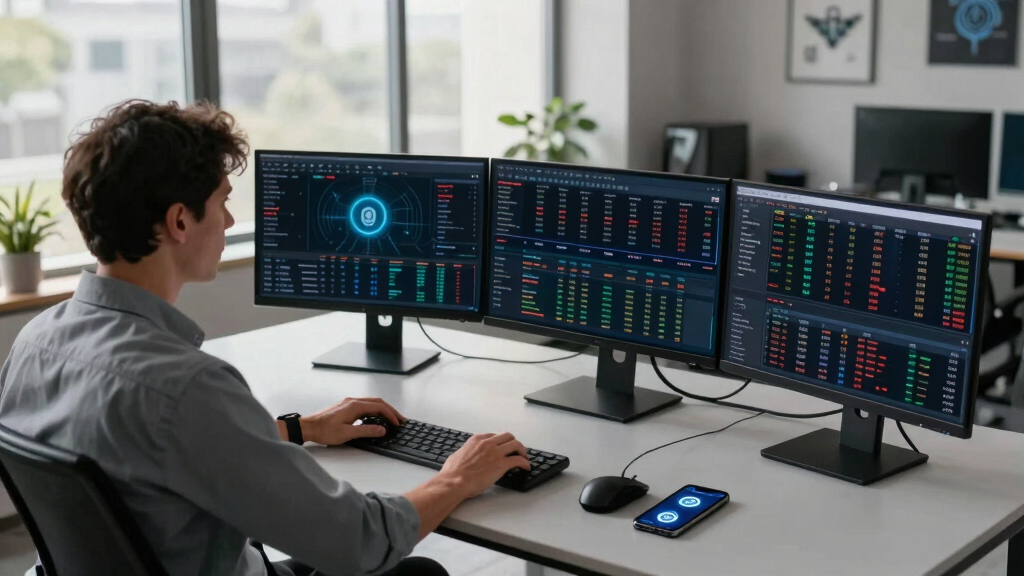

📊 Full opportunity report: Forezai · TradingAgents: A Trading Firm Made of Agents on ThorstenMeyerAI.com — validation score, market gap, and execution plan.
TL;DR
Forezai has launched TradingAgents, an open-source, multi-agent research framework that replicates a trading desk with specialized AI agents debating and vetting trading decisions. It aims to improve decision quality by organizationally separating roles and introducing structured disagreement among models.
Forezai has announced TradingAgents, an open-source, multi-agent research framework that models a trading desk with specialized AI agents debating and vetting market decisions. This development aims to address the overconfidence and unreliability of single-model systems by organizing AI decision-making into a structured, accountable process.
The framework replicates the roles of a traditional trading desk: analyst agents focus on fundamentals, news, sentiment, and technical signals, each surfacing different market insights. These findings feed into a debate between a bull researcher and a bear researcher, who argue their respective cases. The strongest argument is then passed to a trader agent, which proposes a specific action. This proposal is finally reviewed by a risk manager, who can approve, modify, or veto the trade based on exposure limits and risk considerations. All decisions and reasoning are recorded for transparency and auditability.
Forezai emphasizes that the system’s value lies not in the intelligence of individual agents but in the organizational structure that fosters structured disagreement and explicit oversight. The architecture is designed to prevent overconfidence, a common issue with single AI models, by ensuring multiple roles and checks before executing trades. The system is provider-agnostic and can run on different models, supporting a multi-model organization.
TradingAgents — a firm made of agents
A single model is an overconfidence machine. So this isn’t one AI — it’s a whole desk: analysts, a bull and a bear who argue, a trader, and a risk manager who can say no.
Not financial, investment, legal or tax advice; not a recommendation or solicitation to trade, invest or use any software. Forezai · TradingAgents is an experimental open-source research framework (Apache-2.0), provided “as is” without warranty of accuracy or profitability. Trading and automated trading carry a substantial risk of loss including total loss of capital; past or backtested performance does not indicate future results. Market and trading-software access is regulated or restricted in some jurisdictions — you are solely responsible for compliance with applicable law. Consult a licensed professional before any financial decision. Produced with AI assistance under human editorial oversight; independent commentary, the author’s own views. Product and company names are trademarks of their respective owners; mention does not imply endorsement.
Implications of Structured Multi-Agent Trading Systems
TradingAgents represents a shift toward organizationally structured AI decision-making in financial markets, aiming to improve reliability and accountability. By mimicking a human trading desk, it reduces the risk of overconfidence associated with single-model systems and introduces a transparent, auditable process. This approach could influence how AI tools are integrated into trading practices, emphasizing structured debate and risk oversight as core components of automated trading.
For traders, investors, and regulators, the development highlights the importance of organizational design in AI-driven finance, potentially leading to more robust and explainable systems. However, as an experimental framework, its practical effectiveness and impact on live trading are still to be proven.
As an affiliate, we earn on qualifying purchases.
Background and Development of Multi-Agent Trading Frameworks
Forezai’s TradingAgents builds on recent trends in AI research emphasizing multi-agent systems and organizational modeling to improve decision-making in complex environments. Previous efforts, including single AI forecasters like Polybot, focused on individual estimates but faced issues with overconfidence and unreliability. TradingAgents is part of Forezai’s broader portfolio, which includes Polybot, and aims to introduce organizational structure to AI trading models.
The concept draws inspiration from traditional trading desks, where roles are segregated to prevent overconfidence and promote accountability. By formalizing this structure within AI systems, Forezai seeks to create more robust, transparent, and accountable automated trading processes.
“TradingAgents is designed to replicate the organizational structure of a trading desk, emphasizing debate, oversight, and accountability among specialized AI agents.”
— Thorsten Meyer, Forezai
automated risk management software
As an affiliate, we earn on qualifying purchases.
As an affiliate, we earn on qualifying purchases.
Uncertainties About Practical Effectiveness and Adoption
It remains unclear how well TradingAgents will perform in live trading environments or how widely it will be adopted outside of experimental or research settings. The framework is currently open-source and experimental, with no guarantees of profitability or robustness in real markets. Its impact on actual trading practices and regulatory acceptance has yet to be demonstrated.
As an affiliate, we earn on qualifying purchases.
Next Steps for Testing and Potential Integration
Forezai plans to release further case studies and performance evaluations of TradingAgents in simulated and live trading environments. The framework will undergo testing to assess its decision quality, robustness, and transparency. Future developments may include integrating additional roles or models, and exploring how the system influences trading outcomes over time. Broader adoption and regulatory review are also potential milestones.
As an affiliate, we earn on qualifying purchases.
Key Questions
How does TradingAgents differ from traditional AI trading systems?
TradingAgents structures AI decision-making into specialized roles with debate and oversight, mimicking a human trading desk, whereas traditional systems often rely on a single model or aggregated signals without organizational checks.
Is TradingAgents ready for live trading?
No, it is currently an experimental, open-source framework intended for research and testing. Its effectiveness in live markets has not yet been proven.
Can TradingAgents be customized with different models?
Yes, the framework is provider-agnostic, allowing different models to be used for each role, supporting a multi-model organization.
What are the main benefits of this multi-agent approach?
The approach aims to reduce overconfidence, improve decision accountability, and foster transparent reasoning through structured debate and oversight.
Will this framework influence future AI trading regulations?
It is too early to say, but its emphasis on transparency and accountability could align with regulatory interests in explainable and responsible AI systems.
Source: ThorstenMeyerAI.com