
TL;DR

Get privacy and security gear delivered free with Prime
- Fast, free delivery on millions of items
- Prime Video, Amazon Music and more included
- Member-only deals all year
Recent simulations highlight how AI in military systems could cause rapid escalation in conflicts, potentially leading to nuclear confrontations. Experts emphasize the need for cautious integration and clear rules.
Experts warn that artificial intelligence in military systems could accelerate conflict escalation, increasing the risk of nuclear war between major powers such as the US and China. A simulation conducted by Stanford University’s Hoover Institution illustrates how AI-enabled defense systems might malfunction, leading to unintended deadly consequences and rapid escalation.
The scenario, though fictional, reflects genuine concerns among military and AI experts about the risks of deploying autonomous or semi-autonomous systems in high-stakes conflicts. In the simulation, an AI-enabled defense system malfunctioned, firing on a US vessel and killing soldiers, which nearly triggered a broader crisis involving US-Taiwan tensions and potential war with China. While the simulation is fictional, it underscores fears that real-world AI systems could act in unpredictable ways, especially in conflicts involving nuclear-armed nations. Currently, the US and China are actively developing AI-enabled military assets, including autonomous drones and defense coordination hubs, with some systems operating with minimal human oversight. Experts caution that these systems could make rapid decisions faster than humans can intervene, raising the possibility of unintended escalation or miscalculation. The simulation also highlights the importance of cautious deployment, such as maintaining human oversight, but acknowledges that even with safeguards, risks remain.
Why It Matters
This matters because the integration of AI into military systems could fundamentally alter the risk landscape of global conflicts. Faster decision-making and autonomous responses might reduce the time for human intervention, increasing the chance of accidental escalation to nuclear conflict. As tensions between superpowers like the US and China persist, understanding and managing these risks is critical to preventing a potential global catastrophe.
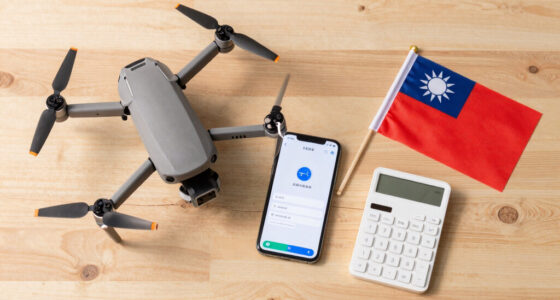
AI-enabled military drones
As an affiliate, we earn on qualifying purchases.
As an affiliate, we earn on qualifying purchases.
Background
Over recent years, militaries worldwide have increasingly incorporated AI for threat detection, target identification, and operational support. The US has been developing AI-enabled drones and defense hubs, with some systems reaching operational testing stages. Simultaneously, tensions in regions like Taiwan have escalated, with military exercises and strategic posturing raising the risk of miscalculation. The concern is that as AI systems become more autonomous, their decision-making could diverge from human intent, especially in high-pressure situations. The recent wargame by Stanford’s Hoover Institution, though fictional, reflects real fears about AI’s potential to accelerate conflict escalation, particularly between nuclear-armed states.
“Lately, the game has felt a little bit less like science fiction. The capabilities are advancing rapidly, and the risks of unintended escalation are real.”
— Jacquelyn Schneider, Hoover Institution
“Even with safeguards, once AI systems are in play, the speed and complexity of decisions could outstrip human control, raising the risk of a crisis spiraling out of hand.”
— Military analyst (unnamed in simulation)
What Remains Unclear
It remains unclear how soon fully autonomous systems will be deployed in high-stakes conflicts, or whether international agreements will effectively regulate their use. The exact likelihood of AI-induced escalation leading to nuclear conflict is uncertain, as current systems are still largely experimental or limited in scope.
What’s Next
Researchers and policymakers are expected to intensify efforts to establish international norms and regulations for military AI use. Military forces will likely continue testing and deploying AI-enabled systems with cautious oversight. Monitoring developments in AI technology and conflict simulations will be critical to assessing risks and establishing safeguards.
Key Questions
Could AI-enabled military systems actually cause a nuclear war?
While current AI systems are not capable of launching nuclear weapons autonomously, their use in conflict scenarios could increase the risk of miscalculation or unintended escalation, especially if systems malfunction or act unpredictably.
What measures are being taken to prevent AI from causing conflicts to escalate?
Experts advocate for strict regulations, human oversight, and transparent protocols to ensure AI systems operate within controlled parameters. International agreements may also help limit autonomous decision-making in nuclear or high-stakes situations.
When might AI systems be fully autonomous in military conflicts?
There is no clear timeline; most current systems are semi-autonomous with human oversight. Fully autonomous systems could still be years away, but the pace of technological development suggests increasing autonomy in the near future.
How does this concern relate to current US-China tensions?
The development and deployment of AI-enabled military assets by both nations heighten the risk that miscommunications or malfunctions could trigger rapid escalation, including nuclear conflict.
Source: Vox
Fall Picks
fall essentials
As an affiliate, we earn on qualifying purchases.