
TL;DR

Get privacy and security gear delivered free with Prime
- Fast, free delivery on millions of items
- Prime Video, Amazon Music and more included
- Member-only deals all year
Militaries equipped with sophisticated air defense systems still struggle to combat the growing drone threat. Drones’ small size, low altitude, and detection difficulties require new strategies and systems, which are still under development.
Western militaries, despite possessing advanced air defense systems designed for aircraft and missile threats, are increasingly struggling to detect and intercept small, low-flying drones, revealing gaps in their current defense architectures.
Many traditional air defense systems, such as the US Patriot, were primarily developed to counter larger, faster, high-altitude threats like aircraft and ballistic missiles. These systems can detect and engage some drones but are not optimized for the small, low-flying, and inexpensive targets that drones represent, especially in large numbers and on the battlefield.
Ukraine’s ongoing conflict with Russia has exposed these vulnerabilities. Ukrainian forces have had to supplement their existing defenses with dispersed sensors, mobile fire teams, acoustic detection, and visual observers to track and neutralize hostile drones, including Iranian Shaheds and Russian variants. These measures highlight the limitations of conventional systems against the evolving drone threat.
Why It Matters
This gap in detection and interception capability matters because drones are increasingly used in modern warfare for reconnaissance, saturation attacks, and even direct strikes. The inability of existing systems to efficiently handle small drones could lead to increased vulnerabilities for military assets and civilian infrastructure, complicating defense strategies in future conflicts.
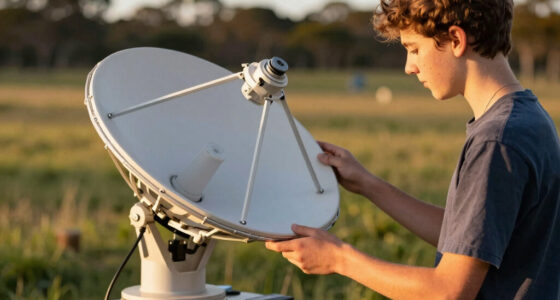
counter drone radar system
As an affiliate, we earn on qualifying purchases.
As an affiliate, we earn on qualifying purchases.
Background
The rise of drone usage in conflicts like Ukraine’s has prompted defense companies and militaries worldwide to develop purpose-built counter-drone solutions. Historically, air defenses were designed for larger threats, but the proliferation of inexpensive, low-flying drones has shifted the threat landscape. The conflict in Ukraine has accelerated investments in new radars and integrated systems tailored for drone detection, such as those developed by Robin Radar, which initially focused on bird detection before adapting to drone threats since 2014.
“You’ve got very, very different requirements from a radar point of view to be good at both of those things.”
— Justin Bronk, RUSI airpower expert
“Detecting a small drone is really a different ballgame, as they are relatively slow-moving and very small.”
— Kristian Brost, Robin Radar US operations head
“You need to combine multiple sensors, you need to integrate them with different forms of intervention, bring all of that together in a command and control setting.”
— Siete Hamminga, CEO of Robin Radar
What Remains Unclear
It remains unclear how quickly and effectively current defense systems can be upgraded or integrated with purpose-built counter-drone technologies at scale. The full capability of existing systems to handle large-scale drone saturation attacks is still being tested and evaluated.
What’s Next
Militaries are expected to continue developing and deploying integrated, multi-layered counter-drone systems. Further testing and real-world application, especially in ongoing conflicts like Ukraine, will shape future defense strategies and technological improvements.
Key Questions
Why are traditional air defense systems not effective against small drones?
Traditional systems were designed for larger, faster threats like aircraft and missiles. Small drones are low-flying, inexpensive, and difficult to detect with radar designed for bigger targets, requiring specialized sensors and tactics.
What technological challenges exist in detecting small drones?
Small drones are slow-moving, low altitude, and often blend into clutter like birds or terrain, making them hard to distinguish. Radars need to be highly sensitive and capable of filtering out false positives, which is technically complex.
Are current defenses capable of stopping all drone attacks?
No, existing systems can detect and sometimes intercept drones but are not fully effective against large-scale saturation attacks or highly maneuverable drones. Upgrades and new systems are needed for comprehensive protection.
What developments are underway to improve drone defense?
Defense companies are developing purpose-built radars, integrated command systems, and specialized interceptors designed specifically for small drone threats. Ongoing conflicts provide testing grounds for these innovations.
Columbus Day / Indigenous Peoples' Day Picks
long weekend sales
As an affiliate, we earn on qualifying purchases.