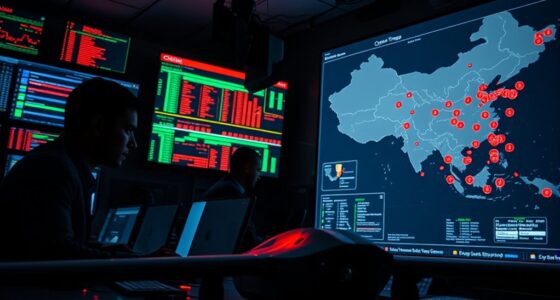

AI is appearing more often in federal security briefings because it helps you analyze large data sets faster, identify emerging threats, and uncover patterns that might be missed otherwise. It supports better decision-making by providing clearer insights into evolving risks, especially in cybersecurity. However, the increasing use of AI also raises concerns about ethics, transparency, and privacy. To understand how agencies balance these issues and leverage AI’s benefits, keep exploring these key topics further.

Get privacy and security gear delivered free with Prime
- Fast, free delivery on millions of items
- Prime Video, Amazon Music and more included
- Member-only deals all year
Key Takeaways
- AI enables faster analysis of large data sets, improving the accuracy and timeliness of security briefings.
- It helps identify emerging threats, patterns, and anomalies that traditional methods might miss.
- AI enhances real-time cybersecurity threat detection and response capabilities.
- Increasing reliance on AI necessitates governance frameworks to ensure ethical and transparent use.
- Building public trust requires transparency in AI decision-making processes within security briefings.

AI is transforming how federal security agencies prepare and deliver briefings, enabling faster analysis and more accurate insights. When you’re dealing with complex issues like cybersecurity threats, traditional methods often fall short in providing timely, all-encompassing information. AI’s ability to sift through vast amounts of data quickly helps you identify emerging threats, patterns, and anomalies that could otherwise go unnoticed. This rapid processing allows you to prepare more informed briefings, giving decision-makers a clearer picture of the evolving landscape. As cyber threats become more sophisticated, the need for real-time intelligence grows, and AI’s capabilities ensure you stay ahead of cybercriminals and state-sponsored actors. Implementing AI governance frameworks is crucial to ensure these systems operate ethically and securely at scale. Additionally, understanding free floating concepts related to AI, such as decentralized decision-making, can influence how these systems are integrated into security protocols. It’s also important to recognize how data privacy concerns shape the deployment of AI tools in sensitive security contexts. Moreover, ongoing advancements in AI technology highlight the importance of algorithmic transparency, ensuring that decision processes are understandable to human overseers. However, with these advancements come significant ethical considerations. When you incorporate AI into federal security briefings, you must carefully evaluate how data is collected, used, and protected. Bias in algorithms can lead to misinterpretations or unfair targeting, raising concerns about civil liberties and privacy. You need to ensure that AI systems are transparent and accountable, so decisions based on AI insights are understandable and justifiable. Ethical considerations also involve the potential misuse of AI-generated information—misinformation or manipulated data could undermine trust in federal agencies or lead to wrong strategic choices. It’s essential to establish strict guidelines and oversight to prevent such issues and maintain public confidence. Additionally, fostering public trust in AI-driven security measures is vital to ensure effective collaboration between agencies and citizens.
Products Worth Considering

Jackery Explorer 1000 v2 Portable Power Station, 1070Wh, 1500W

LG UltraGear 32GX850A-B 32-inch 4K UHD OLED Gaming Monitor

Samsung Odyssey G93SC 49-Inch QD-OLED Curved Gaming Monitor
As an affiliate, we earn on qualifying purchases.
Frequently Asked Questions
How Does AI Identify Emerging Security Threats?
AI identifies emerging security threats through data analysis and threat detection techniques. It continuously scans vast amounts of data from multiple sources, spotting patterns and anomalies that humans might miss. When AI detects signs of suspicious activity or potential threats, it alerts security teams quickly. This proactive approach helps you respond faster, mitigate risks, and stay ahead of evolving security challenges, making your defenses more effective and responsive.
What Are the Privacy Concerns With AI Surveillance?
You might worry that AI surveillance challenges Data privacy and Surveillance ethics, raising concerns about personal freedom. As AI monitors behaviors, it can unintentionally infringe on your privacy, making you feel watched rather than protected. The balance between security and individual rights becomes delicate, and without clear boundaries, technology risks overreach. Staying informed and advocating for transparent policies helps guarantee AI serves everyone without compromising core privacy values.
How Is AI Training Data Protected in Security Contexts?
You protect AI training data in security contexts by applying strong data encryption, ensuring that unauthorized individuals can’t access sensitive information. You also implement strict access controls, limiting data access only to authorized personnel, which reduces risks of leaks or misuse. Regular audits and monitoring further help you maintain data security, ensuring the training data remains confidential and intact, supporting reliable AI performance in critical security operations.
Are There Risks of AI Bias in Security Assessments?
Yes, AI bias poses risks in security assessments. You need to focus on algorithm fairness to prevent discrimination, ensuring the AI treats all groups equally. Data transparency is essential; by understanding where the data comes from and how it’s used, you can identify biases early. Addressing these issues helps improve security decisions, reducing false positives or negatives, and maintaining public trust in the system.
How Quickly Can AI Adapt to New Security Challenges?
You wonder how quickly AI can adapt to new security challenges. The truth is, it varies — sometimes swiftly, other times slowly, depending on AI ethics and the scope of human oversight. While AI can process vast data rapidly, adapting effectively requires careful tuning and ethical considerations. Without vigilant oversight, it risks missing nuances, highlighting the need for continuous human input to guarantee timely, accurate responses to evolving threats.
Conclusion
As AI continues to weave itself into every thread of federal security, it’s clear that its presence isn’t just a trend but a crucial shift. You see, like a rising tide, AI’s influence grows, shaping strategies and safeguarding our future. Embrace this evolving landscape, for ignoring its wave means risking to be left behind. In this dance with technology, staying informed keeps you steps ahead—because in the world of security, knowledge is your strongest shield.