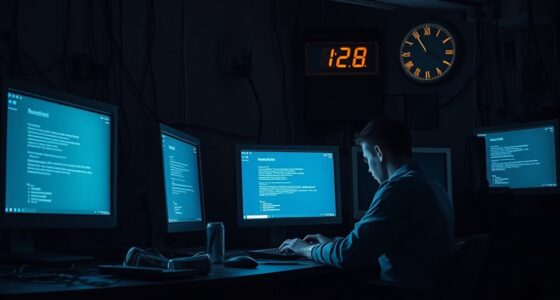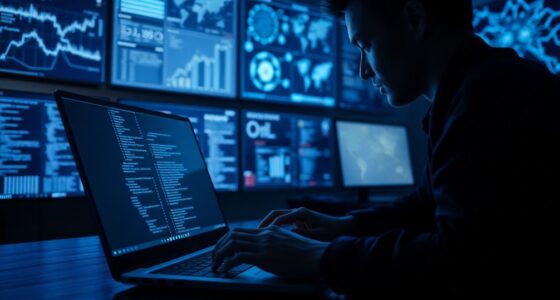

Denmark's hospitals are currently in chaos due to an AI-driven IT crash that's restricted them to emergency surgeries only. This breakdown has raised serious concerns about patient safety and compromised critical logistics systems. Authorities suspect state-backed hackers, possibly from Russia, are behind this cyber assault, highlighting vulnerabilities in the nation's infrastructure. As Denmark grapples with rising cyber espionage threats, the story of who's truly responsible unfolds further.

As Denmark grapples with a significant IT breakdown that has disrupted hospital operations and surgeries, the nation faces an escalating threat of cyber espionage. You might be wondering how something like this could happen. The Danish Agency for Civil Protection recently raised the cyber espionage threat level from medium to high, indicating that the risk isn't just theoretical.
Hospitals, now managing only emergency cases, struggle with severely compromised patient logistics systems. The cause of the IT breakdown remains a mystery, raising alarms about the vulnerabilities within Denmark's critical infrastructure. This massive IT breakdown has led authorities to advise non-emergency patients to stay home, further highlighting the crisis.
Hospitals are limited to emergency cases, revealing alarming vulnerabilities in Denmark's critical infrastructure amid the ongoing IT breakdown.
You need to consider the implications of these cyber threats. State-backed hackers, particularly from Russia, are suspected of ramping up their activities against Denmark. Just earlier this year, a Russian hacking group attacked Danish banks, showcasing their capability and intent.
With hospitals now in the crosshairs, the urgency to fortify cybersecurity measures has never been more critical. Denmark's healthcare system relies heavily on technology, and any disruption can have far-reaching consequences for patient safety and data privacy.
As the situation unfolds, the Danish Data Protection Authority emphasizes the necessity of vigilance regarding AI in healthcare. While AI offers incredible advancements, it also introduces risks, especially in decision support systems.
You'll want to consider how generative AI could potentially exacerbate vulnerabilities, leading to more complex cyberattacks. The landscape is changing, and experts predict that AI-driven attacks could escalate dramatically by 2025, particularly targeting healthcare and finance sectors.
The ramifications of cyberattacks on healthcare aren't just limited to technical disruptions. In February 2023, nine Danish hospital websites fell victim to cyberattacks, highlighting the fragility of digital health infrastructure. Such incidents threaten essential services, jeopardizing patient data and privacy.
You can see how critical it's for hospitals to develop robust cybersecurity strategies to maintain operations during such crises.
To combat these threats effectively, Denmark must prioritize regular threat assessments and swift implementation of security patches. An effective incident response plan is vital, as is the integration of AI and machine learning into security operations for enhanced threat detection.
International cooperation could also play a crucial role in sharing best practices and countering these persistent cyber threats. As you reflect on this situation, it's clear that Denmark's cybersecurity resilience is being tested like never before, and the stakes couldn't be higher.
Conclusion
As you sift through the aftermath of Denmark's cyber chaos, it's clear this isn't just a technological hiccup—it's a modern-day Trojan Horse, stealthily breaching the heart of healthcare. Just like Odysseus' cunning tactics, the attackers exploited vulnerabilities, leaving hospitals in disarray. You can't help but wonder: who truly benefits from this digital warfare? As the dust settles, the quest for answers unfolds, reminding us that in the age of AI, the stakes have never been higher.
Cybersecurity, AI Collaboration, and Software Practice for Healthcare

As an affiliate, we earn on qualifying purchases.
As an affiliate, we earn on qualifying purchases.