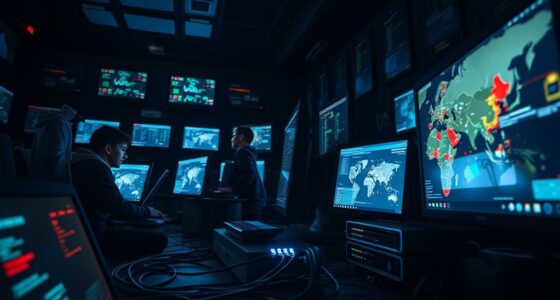


As tensions rise between China and Taiwan, accusations of cyber sabotage have become a focal point in this escalating conflict. You might find it striking that China is accusing Taiwanese hackers, particularly a group called Anonymous 64, of engaging in cyber sabotage aimed at discrediting its political system. Meanwhile, Taiwan’s defense ministry pushes back, claiming that these allegations are simply smoke screens for China’s own cyber harassment activities. This tit-for-tat blame game highlights the deepening rift between the two nations.
You can see how these accusations reflect a broader pattern of escalating pressures from China, which has ramped up both military and political maneuvers against Taiwan. As you delve deeper into the situation, the impact of cyber sabotage becomes more evident. Anonymous 64, for instance, claims to have infiltrated Chinese media, although China disputes the validity of these assertions. Regardless of the truth, the ongoing investigations by China into Taiwan’s alleged cyberwarfare activities show just how serious both sides are taking this digital battleground.
Taiwan’s vulnerabilities, particularly in its energy sector, are alarming. Aging power plants and limited energy margins leave the country exposed to potential cyber or kinetic attacks. If you think about it, critical infrastructure—like power grids and telecommunications—could be severely compromised by cyber sabotage, making it tough for the government to respond effectively to external threats. The lack of political will to enhance security measures only compounds these vulnerabilities, leaving Taiwan open to hostile forces. China’s Ministry of National Security claims that these vulnerabilities are being exploited by groups like Anonymous 64.
Taiwan’s aging energy infrastructure makes it increasingly vulnerable to cyber sabotage, jeopardizing national security and response capabilities.
You should also consider the implications for national security. Cyber sabotage poses significant risks that could undermine Taiwan’s military preparedness. If you were in a position of power, you’d realize that enhancing cyber warfare capabilities is crucial to defending against these threats. Moreover, international cooperation can play a vital role in sharing threat intelligence and fortifying defenses, which is something Taiwan needs to prioritize.
Lastly, the economic ramifications of cyber sabotage can’t be overlooked. Disruptions could impact Taiwan’s critical semiconductor industry, which is a linchpin in global supply chains. As you think about the potential fallout, it becomes clear that investing in cybersecurity is essential for protecting Taiwan’s economic interests. Ransomware attacks loom large, threatening both financial and industrial sectors. Ensuring data protection is vital for maintaining economic stability and trust.
Critical Infrastructure Security: Cybersecurity lessons learned from real-world breaches

As an affiliate, we earn on qualifying purchases.
As an affiliate, we earn on qualifying purchases.