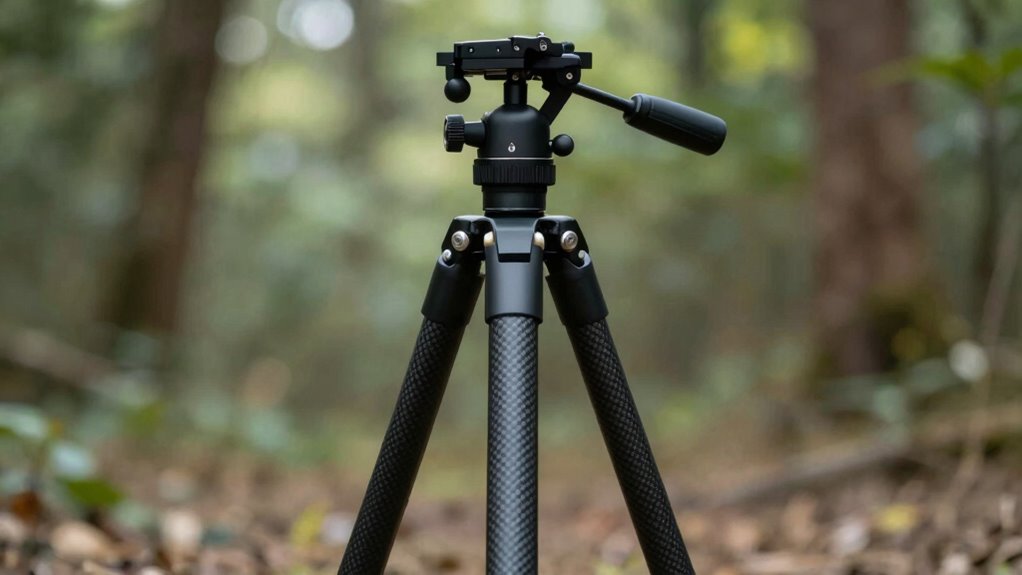

Carbon fiber tripods balance strength and weight by using advanced manufacturing techniques like filament winding and prepreg layup, which layer fibers precisely for maximum strength. The material’s inherent stiffness prevents vibrations and adds durability, while its lightweight nature makes portability easy for outdoor shoots. This combination guarantees the tripod remains stable in tough conditions without being bulky. If you want to discover more about how these tripods deliver both power and portability, keep exploring.
Key Takeaways
- Carbon fiber’s inherent stiffness provides high strength while maintaining a lightweight structure.
- Advanced manufacturing techniques like filament winding optimize load distribution and reduce unnecessary weight.
- Layering carbon fibers with resin enhances durability without adding bulk.
- Customizable designs allow for precise strength-to-weight ratios tailored to specific needs.
- The material’s resilience ensures long-term durability, reducing the need for heavier, more robust alternatives.
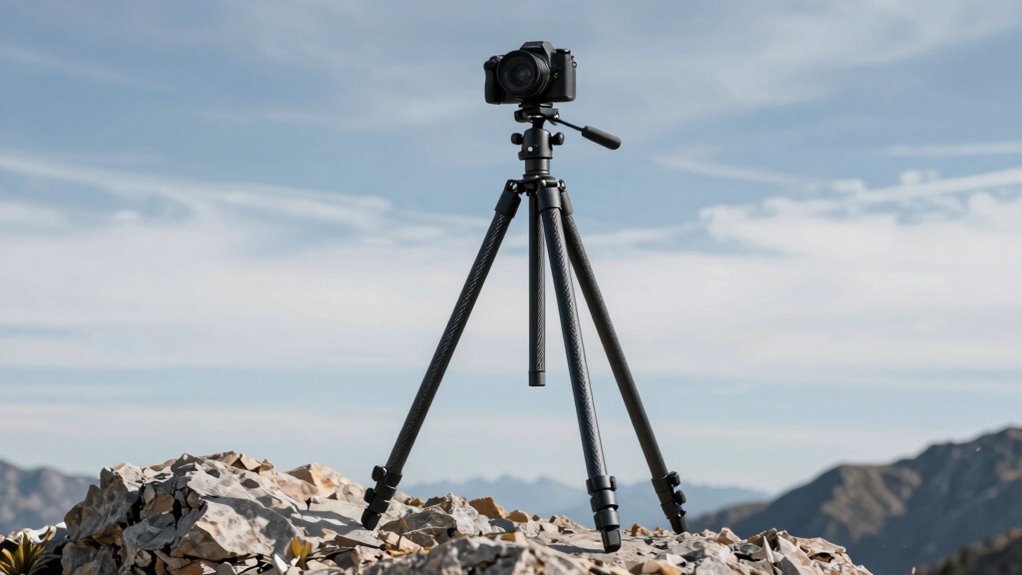
Carbon fiber tripods have revolutionized photography and videography by offering an ideal balance between strength and weight. When you’re working in the field or on location, carrying a lightweight tripod can make all the difference, especially if you need to move quickly or hike to remote spots. Carbon fiber’s incredible material durability ensures your tripod can withstand harsh conditions—like wind, rain, and rough handling—without sacrificing stability or performance. This durability comes from the material’s unique composition, which provides resilience against cracking, corrosion, and fatigue, giving you confidence that your tripod will last through years of demanding use.
The manufacturing processes behind carbon fiber tripods play a crucial role in achieving their impressive strength-to-weight ratio. Unlike aluminum or plastic tripods, these are crafted through advanced techniques such as filament winding or prepreg layup, which involve carefully layering sheets of carbon fibers impregnated with resin. During production, these layers are precisely arranged to optimize strength along the tripod’s critical stress points, ensuring maximum durability without adding unnecessary weight. The meticulous manufacturing process results in a product that’s not only lightweight but also capable of handling substantial loads—like heavy cameras and lenses—without bending or wobbling. Additionally, manufacturing precision ensures the structural integrity of each tripod, reducing the likelihood of defects and enhancing overall performance.
You’ll notice that the material durability of carbon fiber is complemented by these manufacturing processes, which produce a consistent, high-quality structure. Because of the precision involved, you get a tripod that’s less prone to manufacturing defects, offering reliable performance every time you set up your camera. The lightweight nature of carbon fiber doesn’t mean you’re sacrificing stability; in fact, the material’s inherent stiffness ensures minimal vibrations and shake, even in breezy conditions. This combination of durability and manufacturing finesse means your tripod remains a steadfast partner in capturing sharp images and smooth videos, no matter where your creative pursuits take you. Moreover, material properties such as high stiffness and low thermal expansion contribute to the tripod’s stability in varying environmental conditions.
In addition, the advanced manufacturing techniques used for carbon fiber tripods allow for customized designs that optimize performance based on specific user needs. You’ll notice that the material durability of carbon fiber is complemented by these manufacturing processes, which produce a consistent, high-quality structure. Because of the precision involved, you get a tripod that’s less prone to manufacturing defects, offering reliable performance every time you set up your camera. The lightweight nature of carbon fiber doesn’t mean you’re sacrificing stability; in fact, the material’s inherent stiffness ensures minimal vibrations and shake, even in breezy conditions. This combination of durability and manufacturing finesse means your tripod remains a steadfast partner in capturing sharp images and smooth videos, no matter where your creative pursuits take you.
In the end, what makes carbon fiber tripods stand out is how their material durability and sophisticated manufacturing processes work together to deliver strength without added weight. You get a lightweight, portable solution that withstands the rigors of outdoor environments and intensive use. Whether you’re shooting landscapes, wildlife, or fast-paced events, these tripods give you the stability you need without the bulk. That’s the true power of carbon fiber—engineering excellence that balances strength and weight seamlessly, elevating your photography and videography experience.
K&F Concept 60 inch Carbon Fiber Camera Tripod,Super Lightweight Compact Travel Tripod with 360 Degree Ball Head,Quick Release Plate,Detachable Monopod 8KG Load Capacity for SLR DSLR C225C0 (BA225)

Lightweight, durable carbon fiber tripod with 360° ball head, quick release, and detachable monopod for versatile travel and professional photography.
As an affiliate, we earn on qualifying purchases.
As an affiliate, we earn on qualifying purchases.
Frequently Asked Questions
Are Carbon Fiber Tripods More Durable Than Aluminum Ones?
Yes, carbon fiber tripods are generally more durable than aluminum ones because of their material flexibility, which helps absorb shocks and vibrations better. They resist fatigue over time, making them last longer under tough conditions. However, they tend to be more expensive, with a higher cost comparison to aluminum tripods. While they offer better durability, your choice depends on your budget and specific photography needs.
How Do Carbon Fiber Tripods Perform in Extreme Weather Conditions?
In extreme weather, carbon fiber tripods excel due to their weather resistance and thermal stability. You’ll find they handle high humidity, rain, or snow without warping or corrosion. Their thermal stability means they won’t expand or contract considerably with temperature changes, keeping your shots steady. This durability ensures reliable performance in harsh environments, making them ideal for outdoor photography where weather conditions are unpredictable and demanding.
What Is the Typical Lifespan of a Carbon Fiber Tripod?
A carbon fiber tripod typically lasts between 10 to 15 years, but its true longevity depends on how well you care for it. Think of it as a reliable companion that withstands the test of time through material longevity and environmental resilience. Regular cleaning, avoiding extreme impacts, and proper storage extend its life, ensuring your investment remains sturdy and dependable for countless shoots ahead.
Can Carbon Fiber Tripods Be Repaired if Damaged?
Yes, you can repair carbon fiber tripods if damaged, but it depends on the extent of the damage. You should start with a damage assessment to determine whether tripod repair is feasible or if replacement is better. Minor cracks or loose joints might be fixable with professional repairs, but significant structural damage could compromise strength. Always consult a specialist to guarantee the tripod’s integrity and safety before resuming use.
Are There Any Safety Concerns Using Carbon Fiber Tripods?
Yes, there are safety concerns when using carbon fiber tripods, mainly related to material safety and tripod stability. While carbon fiber is strong and lightweight, it can splinter or crack if damaged, posing risks. Always inspect your tripod for cracks or splinters before use. Ensuring proper setup and stable placement will help maintain tripod stability, reducing the chance of accidents. Handle your tripod carefully to keep safety a top priority.
Conclusion
You’ll be amazed to learn that carbon fiber tripods are up to 40% lighter than aluminum ones, yet they still offer superior strength and stability. This incredible balance means you can carry your gear effortlessly without sacrificing performance. Whether you’re shooting landscapes or astrophotography, choosing a carbon fiber tripod guarantees you stay steady and mobile. With their impressive durability and lightweight design, these tripods truly revolutionize how you capture moments—making every shot easier and more reliable.