
TL;DR

Get privacy and security gear delivered free with Prime
- Fast, free delivery on millions of items
- Prime Video, Amazon Music and more included
- Member-only deals all year
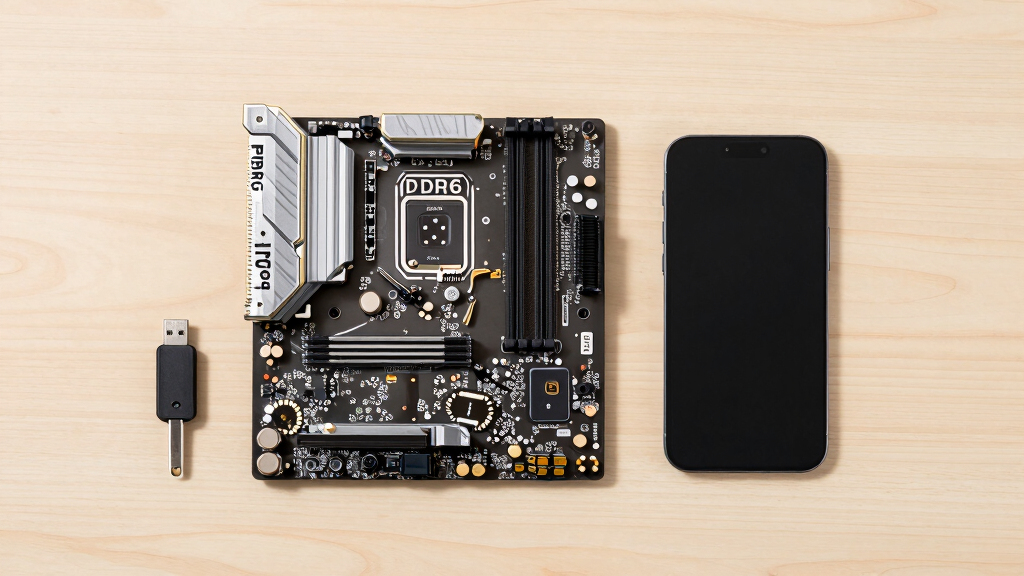
A late-June 2026 buyer guide from Thorsten Meyer AI says PC builders should buy the DDR5 they need now rather than wait for cheaper memory or early DDR6. The guide says price relief is not expected before 2028, while DDR6 is expected to arrive first in servers and later on new desktop platforms.
Thorsten Meyer AI has published a buyer-focused guide for the 2026 memory crunch, advising most PC builders and upgrade buyers to purchase the DDR5 capacity they actually need now rather than wait for cheaper RAM or early DDR6. The guidance matters because the site says memory price relief is not forecast before 2028, while DDR6 is expected to arrive first in servers and later on new desktop platforms at higher launch prices.
The report frames the advice as a change from the usual PC-buying habit of waiting for lower component prices or the next generation. According to Thorsten Meyer AI, that approach is less useful in this cycle because forecasts cited by the site point to meaningful relief no earlier than 2028, with near-term pricing more likely to rise than fall.
For mainstream systems, the guide identifies DDR5-6000 CL30 as the practical sweet spot for both AMD and Intel platforms. It recommends 32GB for gaming and general desktop use and 64GB for content creation or heavier multitasking, while warning that buying 128GB only for possible future use can lock buyers into high prices for capacity they may not use.
The guide also warns against starting a new build on DDR4 as a cost-saving move. It says DDR4 has been pushed toward end-of-life production, with pricing now roughly matching or exceeding DDR5 per gigabyte in some channels. The site says existing DDR4 systems can still be kept if they meet the owner’s needs, but new builds should avoid a dead-end socket.
DDR5 now, DDR6 soon
A buyer’s field guide. The 20-year instinct — wait for prices to drop, or wait for the next generation — is broken this cycle. Buy the DDR5 you actually need now; don’t wait for DDR6. Here’s the reasoning.
Driven to end-of-life, production slashed. Same money, dead-end socket. Leave a working DDR4 box alone — but never start a new build on DDR4 to “save.”
A framework, not a gamble. Buy the DDR5 you need now, at the sweet spot, in the capacity you’ll actually use — don’t buy DDR4, don’t wait for DDR6. The two costliest mistakes in this market are the ones that feel prudent: waiting for a price drop that isn’t coming, and waiting for a next-gen part that launches dearer than what’s on the shelf. Next: The SSD Squeeze.
PC Buyers Face Fewer Good Delays
The practical impact is that buyers who need a working system may have less reason to wait. If the guide’s cited forecasts hold, delaying a build for a near-term price drop could mean paying more later while also postponing gains from newer CPUs, GPUs, boards and storage.
The advice is aimed at shoppers making real purchasing decisions now: home builders, creators, small studios and businesses approving system quotes. Its main message is cost control through right-sizing, not stockpiling. That means buying enough memory for the workload, while avoiding both old-platform DDR4 and oversized DDR5 kits bought out of fear.
DDR5-6000 CL30 RAM 32GB kit
As an affiliate, we earn on qualifying purchases.
As an affiliate, we earn on qualifying purchases.
DDR6 Arrives On New Platforms
The report says DDR6 is expected to appear first in servers around 2026 to 2027, with mainstream desktop availability around 2027. It cites TrendForce, TechPowerUp, OC3D, HWCooling and JEDEC-related standards reporting for the timing and technical expectations.
According to the guide, DDR6 is expected to use different platform support and new form factors such as CAMM2, rather than serving as a simple drop-in upgrade for current DDR5 desktop boards. The site lists projected DDR6 speeds from about 8,800 MT/s to 17,600 MT/s, compared with DDR5 kits that already reach high speeds but remain best valued around DDR5-6000 for most users.
“Buy the DDR5 you actually need now; don’t wait for DDR6.”
— Thorsten Meyer AI
DDR6 Pricing Still Unsettled
Several details remain unsettled. The report says early DDR6 could cost two to three times DDR5 per gigabyte, but final retail pricing will depend on production, platform launches, server demand and channel supply. Desktop timing also remains a forecast, not a confirmed retail schedule for every platform maker.
It is also unclear how quickly software and games will use DDR6 bandwidth on consumer PCs. The guide treats DDR6 as more relevant for AI, scientific computing and long-life workstation buyers than for mainstream gaming systems, but real benefits will vary by workload and platform.
Next Memory Choices To Watch
Buyers weighing a system purchase now should watch near-term DDR5 kit pricing, board support lists and platform road maps. The guide says users pushing beyond the DDR5-6000 range may benefit from CUDIMM support on newer boards, while workstation buyers should check QVL lists before buying multiple DIMMs per channel.
The next part of Thorsten Meyer AI’s series is set to address the SSD squeeze. For memory buyers, the next milestone is clearer DDR6 platform information from server vendors, motherboard makers and standards bodies as products move closer to launch.
Key Questions
Should most PC buyers wait for DDR6?
No, according to Thorsten Meyer AI. The guide says most buyers should choose DDR5 now because DDR6 is expected first in servers, then on new desktop platforms at higher early prices.
What DDR5 kit does the guide recommend?
The report points to DDR5-6000 CL30 as the best practical target for many current AMD and Intel systems.
Is DDR4 still a good budget choice?
The guide says existing DDR4 systems can remain in use if they still perform well, but it warns against starting a new DDR4 build because DDR4 pricing is no longer a clear bargain and the platform path is limited.
Who might wait for DDR6?
The guide names AI and machine-learning users, scientific-compute professionals and long-life workstation buyers as possible exceptions, especially if their workloads are strongly limited by memory bandwidth.
When could memory prices ease?
According to the report’s cited forecasts, broad price relief is not expected before 2028. That remains a market forecast, not a guaranteed outcome.
Source: Thorsten Meyer AI
Halloween Picks
halloween
As an affiliate, we earn on qualifying purchases.