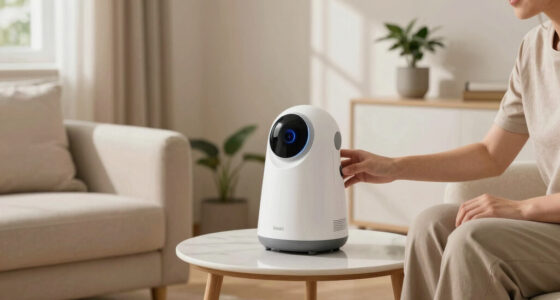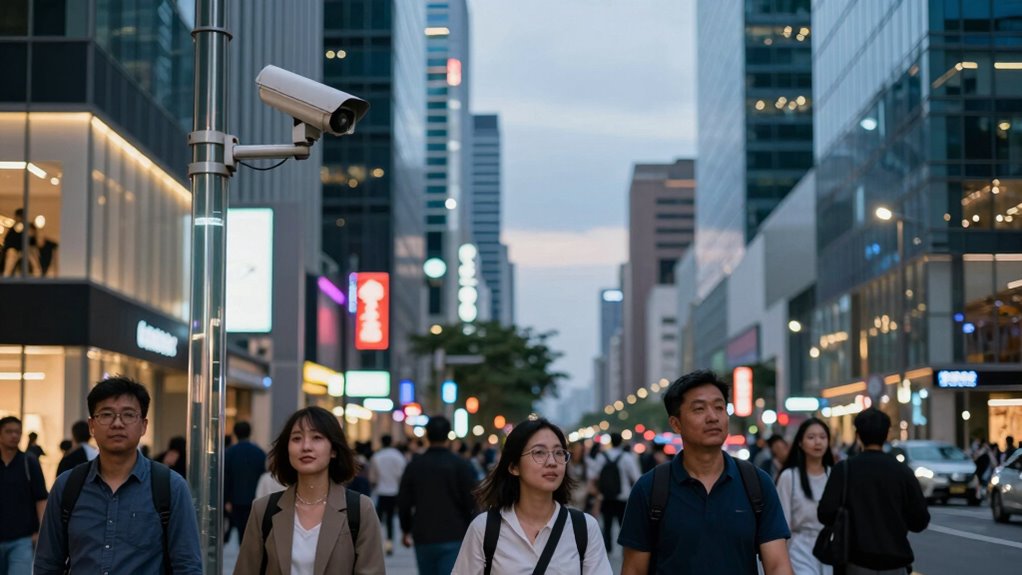

Facial recognition boosts efficiency by quickly verifying identities and streamlining security, marketing, and device access. It allows faster responses even in poor lighting or difficult angles, making daily interactions smoother. However, it also poses risks to your privacy, as your biometric data may be misused, shared without consent, or exploited for invasive surveillance. While the technology offers many benefits, understanding the potential dangers helps you navigate its growing presence—if you want to know more, keep exploring.
Key Takeaways
- Facial recognition speeds up security checks, device access, and identification processes, enhancing convenience and efficiency.
- It enables real-time identification in various settings, streamlining operations and improving safety measures.
- Privacy risks arise from potential misuse, unauthorized data sharing, and invasive surveillance without user consent.
- Increased accuracy and AI advancements can lead to biases, errors, and societal inequalities.
- Balancing technological benefits with strict privacy safeguards is essential to prevent misuse and protect individual rights.
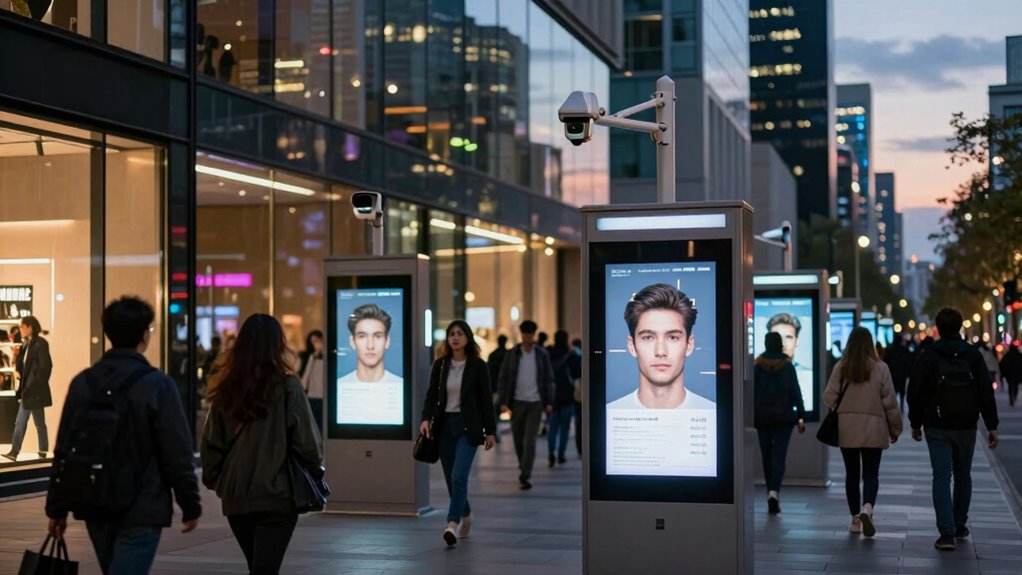
Facial recognition technology has rapidly become a vital tool for security, marketing, and personal device access, promising greater efficiency in identifying and verifying individuals. Its ability to quickly match faces against vast databases streamlines processes that once took minutes or hours, making operations smoother and more responsive. However, as you embrace these technological advancements, you should also be aware of the privacy concerns that come with such powerful tools. When facial data is collected, stored, and analyzed, it raises questions about who has access to this information and how it’s being used. Without strict regulations, there’s a risk that your personal biometric data could be misused, shared without consent, or targeted for invasive surveillance. This dual-edged nature of facial recognition underscores the need to balance innovation with individual privacy rights.
Technological advancements have greatly expanded the capabilities of facial recognition systems, making them more accurate and versatile than ever before. Modern algorithms can now recognize faces in challenging conditions—poor lighting, angles, or obstructions—thanks to improvements in machine learning and artificial intelligence. These innovations enable businesses and law enforcement agencies to identify individuals swiftly, often in real time, which can be invaluable for security and convenience. Yet, these same advancements also amplify privacy concerns. As facial recognition becomes more integrated into daily life, there’s increased potential for abuse—such as mass surveillance or tracking people without their knowledge or consent. This can lead to a loss of anonymity in public spaces, raising ethical questions about the limits of surveillance technology. Understanding biometric data is crucial for recognizing how these technologies impact individual privacy and societal norms. Additionally, the integration of advanced algorithms has made these systems more susceptible to errors and biases, which can disproportionately affect certain groups and reinforce social inequalities. Awareness of biometric data collection practices can also help individuals make informed choices about their digital interactions.
You might notice that while these technological improvements make your interactions faster and more seamless—unlocking your phone instantly or verifying your identity in seconds—they also come with significant risks. The more widespread and sophisticated facial recognition becomes, the easier it is for private data to fall into the wrong hands or be exploited for profit and control. Governments and corporations may justify its use for safety and efficiency, but without transparent policies and safeguards, your privacy could be compromised. As you navigate a world increasingly driven by these systems, understanding the balance between technological progress and privacy rights becomes essential. Additionally, understanding projector technology can help you create secure and private environments, whether for personal or professional use, by choosing the right equipment and setup. While innovation offers undeniable benefits, it’s vital that you remain vigilant about how your biometric data is collected, stored, and used to prevent potential abuses and protect your personal privacy.

Mabtck 3D Face Recognition Smart Door Lock with Video Intercom, Biometric Palm Vein & Fingerprint Keyless Entry, 1080P HD Camera, Tuya App Control, Alexa Compatible, IP65 Waterproof, 5 Ways to Unlock
- 3D Face & Palm Vein Recognition: Secure, touchless access in under 0.5s
- 1080P HD Video Intercom: Real-time video and two-way audio
- Remote App Control: Monitor and grant access remotely via Tuya app
As an affiliate, we earn on qualifying purchases.
As an affiliate, we earn on qualifying purchases.
Frequently Asked Questions
How Accurate Is Facial Recognition Technology Across Different Demographics?
Facial recognition accuracy varies across different demographics, often showing disparities. You might notice higher accuracy rates with some groups, like young white males, while others, such as women of color or older adults, experience lower accuracy. This accuracy variability stems from demographic disparities in training data, leading to biases. As a result, the technology isn’t equally reliable for everyone, raising concerns about fairness and potential misuse.
What Are the Legal Implications of Using Facial Recognition Without Consent?
Using facial recognition without consent raises serious legal concerns, especially around privacy laws and data protection regulations. You could face lawsuits or penalties if you don’t meet consent requirements, as many jurisdictions mandate explicit permission before processing biometric data. It’s essential to guarantee compliance with these legal standards to avoid legal risks, protect individuals’ rights, and maintain trust while leveraging facial recognition technology responsibly.
How Can Privacy Be Protected While Deploying Facial Recognition Systems?
To protect privacy while deploying facial recognition systems, you should prioritize securing data through encryption and guarantee user consent is obtained before capturing or processing facial data. Implement strict access controls, regularly audit data usage, and be transparent about how data is used. Educate users about their rights and provide clear options to opt out. These steps help balance efficiency with privacy, minimizing risks and building trust.
What Are Common Technical Limitations of Current Facial Recognition Methods?
You should know that current facial recognition methods face some common hurdles. Algorithm biases can skew results, especially if training data isn’t diverse enough, leading to unfair inaccuracies. Data quality also plays a big role—poor lighting or image resolution can throw off the system. It’s clear that relying on these techs is a double-edged sword; they’re helpful but need improvements to work reliably across different populations and conditions.
How Do Organizations Mitigate Bias in Facial Recognition Algorithms?
You can mitigate bias in facial recognition algorithms by focusing on algorithm fairness and bias mitigation strategies. This involves diversifying training datasets to include various demographics, regularly testing for bias, and adjusting algorithms to guarantee equitable performance across groups. Implementing transparent development processes and involving diverse teams also helps identify and address potential biases, leading to more accurate and fair facial recognition systems.

Face Recognition Technology: Compulsory Visibility and Its Impact on Privacy and the Confidentiality of Personal Identifiable Images (Law, Governance and Technology Series)
As an affiliate, we earn on qualifying purchases.
As an affiliate, we earn on qualifying purchases.
Conclusion
Just as Icarus soared toward the sun, embracing innovation can lift us high or lead us to fall. Facial recognition offers remarkable efficiency, streamlining security and convenience. But beware, like a double-edged sword, it carries risks of privacy invasion and misuse. As you navigate this brave new world, remember that balance is key—embracing progress without losing sight of the ethical skies we aim to keep clear. The choice is yours: soar wisely or stumble in shadows.

eufy Security SoloCam E42, 4K Security Camera Wireless Outdoor, Solar Powered, AI Motion Tracking, Strobe Light, Pan & Tilt, Facial Recognition, Up to 16 TB, Smart Home Compatible
- Ultra HD 4K Resolution: Captures detailed footage with true 4K UHD
- AI Motion Detection: Automatically detects and tracks people and vehicles
- Wide Coverage: 360° view with no blind spots
As an affiliate, we earn on qualifying purchases.
As an affiliate, we earn on qualifying purchases.
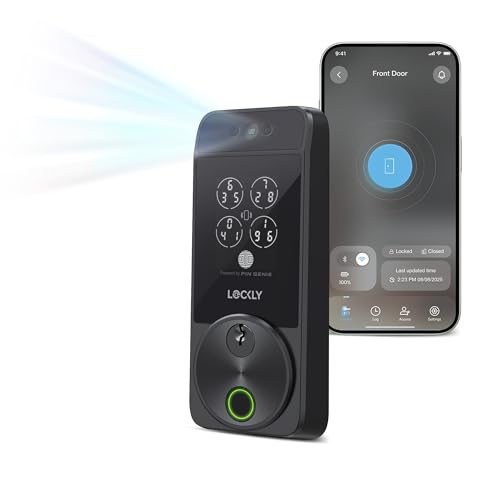
Lockly Visage Zeno Series Smart Lock, Facial Recognition & Fingerprint Keyless Entry Door Lock, Built-in Wi-Fi Deadbolt with Apple Home Key, PIN Genie Keypad, App Remote Control, Easy Installation
- Facial Recognition Technology: Unlocks automatically with your face
- Infrared Sensors: Ensures accurate recognition in all lighting
- Secure Facial Data Storage: Encrypted and stored on device for privacy
As an affiliate, we earn on qualifying purchases.
As an affiliate, we earn on qualifying purchases.