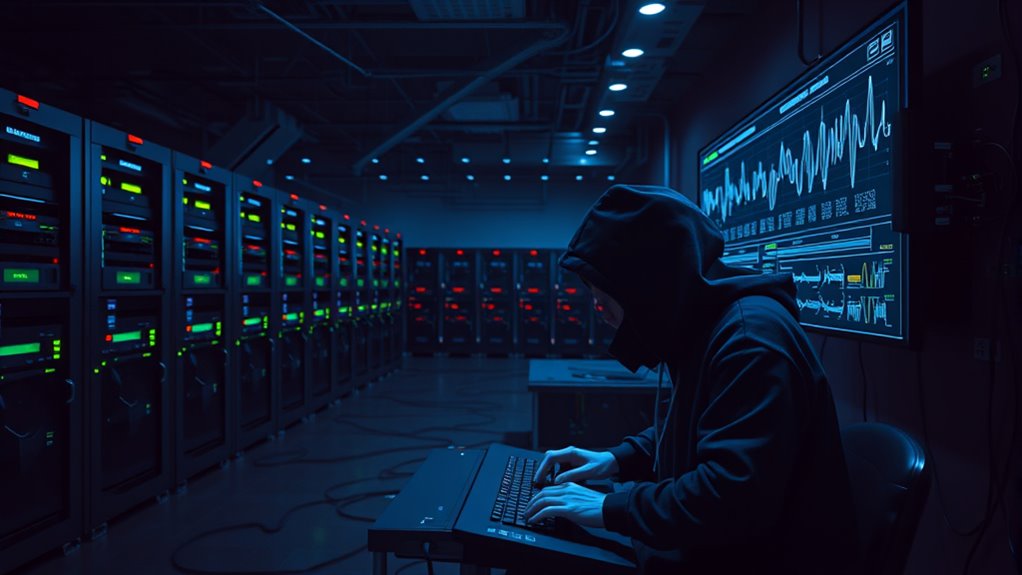

The U.S. government uses mass surveillance to monitor your communications, including calls, emails, and online activity, to protect national security and prevent terrorism. They gather data like metadata, which reveals your habits, relationships, and location, often from millions of innocent people. Laws like FISA and the Patriot Act give authorities broad powers, but concerns about privacy and oversight exist. If you keep exploring, you’ll see how these practices impact your rights and what’s at stake.

Get privacy and security gear delivered free — and shop member deals
- Fast, free delivery on millions of items
- Access to Prime Big Deal Days deals on October 6–7
- Prime Video, Amazon Music and more included
Key Takeaways
- The U.S. conducts mass surveillance by monitoring calls, emails, internet activity, and metadata for national security purposes.
- Legal frameworks like FISA and the USA PATRIOT Act authorize surveillance, often requiring secret court approval.
- Data collected includes communication content and metadata, revealing habits, relationships, and locations.
- Surveillance practices are justified by security needs but raise privacy concerns and potential for misuse.
- Rapid technological advances create legal gaps, complicating oversight and accountability in mass monitoring activities.

Have you ever wondered how governments and organizations monitor your online and offline activities? It’s a question that often brings up privacy concerns, especially as technology advances and the scope of surveillance expands. In the United States, mass surveillance involves collecting vast amounts of data from communications, both digital and analog, often justified by national security needs. To regulate these activities, legal frameworks are established to define what authorities can do and how they must do it. These laws aim to strike a balance between protecting citizens’ rights and ensuring national safety, but the line can sometimes blur, raising questions about privacy and civil liberties.
The backbone of U.S. mass surveillance efforts includes laws like the Foreign Intelligence Surveillance Act (FISA), which grants intelligence agencies the authority to monitor foreign powers and individuals suspected of threatening national security. Under FISA, agencies can conduct electronic surveillance with court approval, but these processes often involve secret courts that operate outside public scrutiny. This secrecy fuels privacy concerns because it limits transparency, making it difficult for the public to understand the full extent of surveillance activities. Additionally, the USA PATRIOT Act expanded the government’s surveillance powers following 9/11, allowing for more intrusive data collection and easier access to communication records. These legal frameworks set the parameters for how agencies can collect, store, and analyze data, but critics argue they sometimes infringe on individual privacy rights, especially when oversight is limited.
Mass surveillance isn’t just about intercepting calls or emails; it also involves data mining, tracking internet activity, and analyzing metadata—information about communications rather than their content. This metadata can reveal a lot about your habits, relationships, and locations, raising privacy concerns about how such data is used and stored. The government often justifies these practices by emphasizing national security and the prevention of terrorist activities, but the scope of data collection can be far-reaching, capturing millions of innocent citizens’ information. Legal frameworks are meant to provide oversight, but the rapid pace of technological change often outstrips existing laws, leaving gaps that can be exploited or lead to misuse. Vetted
privacy VPN for internet security
As an affiliate, we earn on qualifying purchases.
As an affiliate, we earn on qualifying purchases.
Frequently Asked Questions
How Long Does the Government Retain Surveillance Data?
You might wonder how long the government keeps surveillance data. Data retention policies vary, but generally, agencies retain surveillance data for a specified period, often ranging from a few months to several years, depending on the purpose and legal guidelines. Surveillance duration is influenced by these policies, and in some cases, data can be stored indefinitely if linked to ongoing investigations. Always stay informed about current regulations affecting data retention.
Are There Any Legal Limits to Surveillance Activities?
Yes, there are legal limits to surveillance activities. Laws like the Foreign Intelligence Surveillance Act (FISA) set boundaries, but legal exemptions can sometimes justify broader surveillance. You should know that surveillance oversight exists through agencies like the Foreign Intelligence Surveillance Court, which reviews and approves surveillance requests. Still, debates continue about whether these limits are sufficient to protect your privacy, especially when legal exemptions come into play.
How Do Privacy Laws Impact Surveillance Practices?
Privacy laws, including privacy regulations and legal exemptions, directly impact surveillance practices by setting boundaries on what authorities can access. You’re protected by these regulations, which restrict how data is collected, stored, and shared. However, legal exemptions allow certain surveillance activities without violating privacy laws, especially in national security cases. This balance aims to protect your privacy while enabling law enforcement to combat threats effectively.
Can Citizens Access Their Monitored Data?
Imagine your data as a secret garden, hidden behind a tall hedge. You can request public access to your monitored data, but it’s often a complex process. Privacy laws aim to protect your data, yet access isn’t always assured. Your best move is to understand your rights under data privacy regulations. Staying informed helps you navigate the system and ensure your personal information isn’t unduly exposed.
What Technological Tools Are Used for Mass Surveillance?
You’re likely unaware of the technological tools used for mass surveillance, which include data collection methods like wiretapping, internet monitoring, and metadata analysis. These tools often face encryption challenges, making it harder to access content securely. Governments utilize advanced algorithms and AI to sift through massive data sets efficiently. By understanding these tools, you can better grasp how your communications might be monitored and the hurdles authorities encounter with encryption.
Conclusion
So, next time you think your texts are private, remember the U.S. is watching. They’ve got your emails, calls, and social media on a never-ending loop. Privacy’s just an illusion, a game of hide-and-seek played with Big Brother. But hey, don’t worry—if you forget your password, they’ll just know. After all, in this surveillance state, your secrets are just part of the grand, never-ending data parade. Smile, you’re on their radar!
Fall Picks
fall essentials
As an affiliate, we earn on qualifying purchases.