
During the Cold War, spy agencies behind the Iron Curtain innovated with tiny gadgets like hidden listening bugs, miniature cameras, and encrypted communication devices to gather intelligence secretly. You’d find these gadgets cleverly concealed in everyday objects, making detection difficult. They used secure radio links, microdots, and dead drops to transmit information safely. Understanding these innovations reveals how espionage leaders gained an edge—keep exploring to uncover more secrets behind Cold War covert tech.
Key Takeaways
- Cold War spies utilized miniature listening devices hidden in everyday objects for discreet surveillance.
- Innovative concealment of cameras in items like watches and ties enabled covert image capturing.
- Encrypted radio and microdot technology allowed secure, long-distance communication and data transmission.
- Dead drops and untraceable channels facilitated clandestine exchange of intelligence without detection.
- Advancements in encryption and miniature gadgetry gave agents a strategic advantage behind the Iron Curtain.
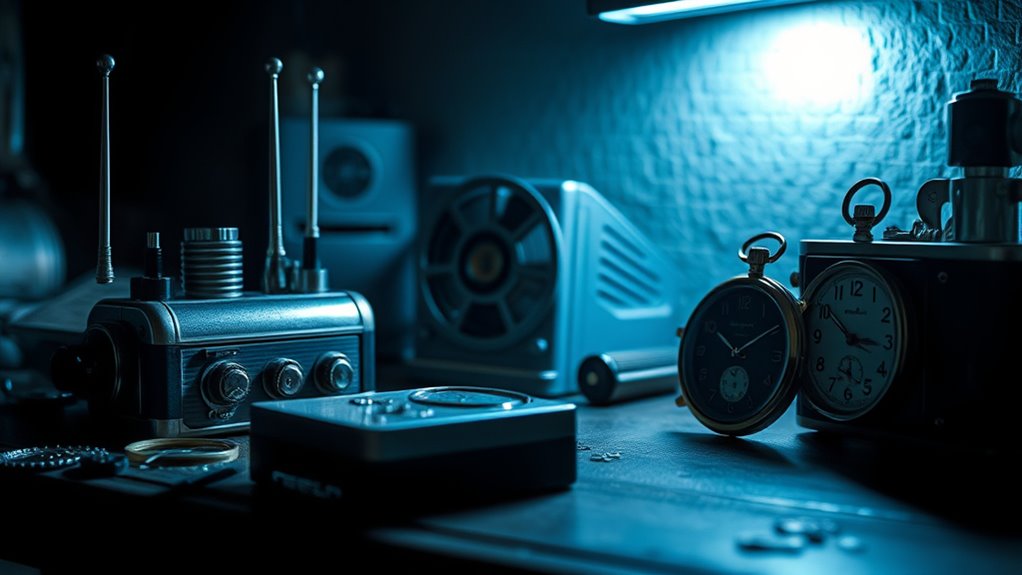
Have you ever wondered how spies during the Cold War managed to gather secret information without being detected? It’s a fascinating world where technology played a crucial role in espionage. One of the key elements was the use of surveillance devices, which allowed agents to monitor targets discreetly and gather intelligence without raising suspicion. These devices ranged from tiny listening bugs hidden in everyday objects to sophisticated cameras concealed within seemingly innocuous items. Because the Cold War was a period of intense secrecy, spies relied heavily on covert communications to relay information back to their handlers. These communications had to be secure, untraceable, and resistant to interception, making the development of covert messaging methods a top priority for intelligence agencies.
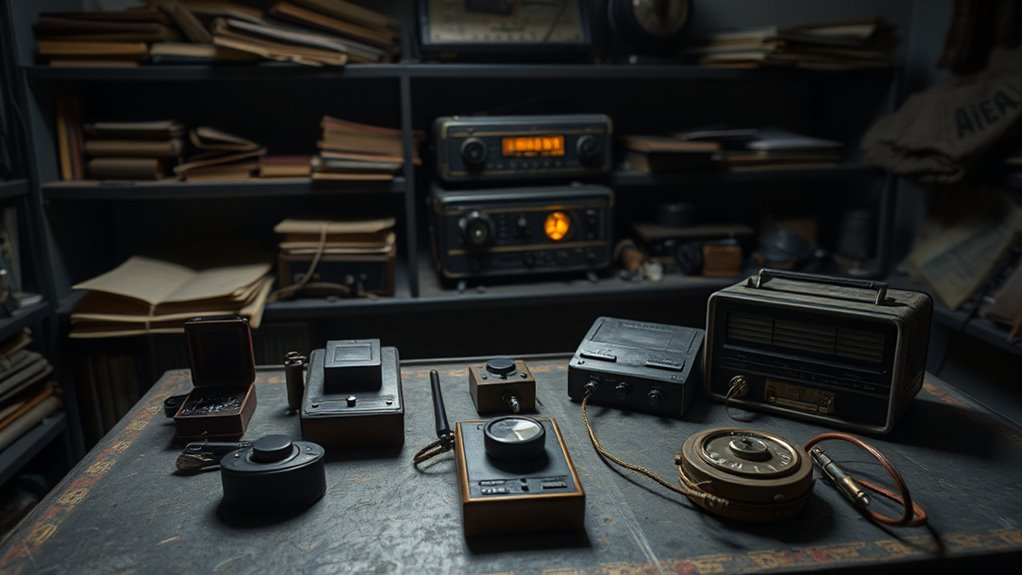
You would find that surveillance devices during this era were often ingeniously concealed. For example, a common technique was to hide a microphone inside a pen or a button, allowing an agent to listen in on conversations without anyone suspecting. Tiny cameras, sometimes smaller than a pack of cigarettes, could be embedded in watches, ties, or even in the lenses of glasses. These gadgets needed to be lightweight, portable, and easy to operate in the field. Meanwhile, covert communications evolved to include encrypted radio transmissions, invisible ink, and microdot photography, which involved shrinking pages of information into tiny dots that could be easily concealed. The goal was simple: keep the flow of information moving while avoiding detection by enemy counterintelligence. Additionally, continuous advancements in encryption played a critical role in securing covert messages, making intercepted communications nearly impossible to decipher without the proper keys.
You might also be interested in how these devices were used in real-world operations. For instance, spies would plant miniature listening devices in strategic locations, then relay what they heard via secure radio links or coded messages. To ensure their transmissions weren’t intercepted, agents employed encryption techniques that kept their conversations safe from eavesdroppers. The use of dead drops—hidden locations where information could be left for retrieval—further increased operational security. These methods allowed spies to communicate covertly, even across great distances, without alerting their adversaries. The constant innovation in surveillance technology and covert communication methods gave spies an edge, enabling them to operate behind enemy lines with a level of stealth that often determined the success of their missions.
In essence, Cold War espionage was a high-stakes game of technological cat and mouse. The development of discreet surveillance devices and secure channels for covert communications formed the backbone of intelligence gathering during this tense period. Every gadget, from miniature microphones to encrypted radio links, was designed with the primary goal of staying hidden while extracting vital information. This secretive, innovative tech helped shape the outcomes of Cold War events and demonstrated how critical advancements in spy craft could be in the shadowy world of espionage.
Frequently Asked Questions
How Secret Were Cold War Espionage Gadgets at the Time?
During the Cold War, espionage gadgets were highly secretive, designed to stay hidden from enemies and protect covert innovations. You’d find that these devices were meticulously concealed, often disguised as everyday objects, to maintain the secrecy of operations. The level of secrecy was extreme, with only a select few knowing the full scope of the technology. This kept rival nations guessing and helped safeguard covert innovations from being compromised.
Were Any Cold War Spy Gadgets Recovered or Displayed Publicly?
Public displays of recovered gadgets do exist, showcasing spy technology’s secretive sophistication. You might see these devices at museums or exhibitions, where authorities have carefully collected and showcased recovered gadgets. These displays reveal a glimpse of covert capabilities, offering insight into Cold War espionage. While many gadgets remain classified, some have been publicly recovered and exhibited, giving you a rare, revealing look at the clandestine world behind the Iron Curtain.
What Was the Most Innovative Spy Tech Developed Behind the Iron Curtain?
You’d find that the most innovative spy tech developed behind the Iron Curtain includes hidden camera innovations and encrypted communication devices. These gadgets allowed spies to covertly gather intelligence and stay in contact securely. The hidden cameras were small and easily concealed, while encrypted devices ensured that messages remained confidential. Their advanced design and functionality made them stand out, showcasing the ingenuity of Cold War espionage technology.
Did Cold War Espionage Gadgets Influence Civilian Technology?
Yes, Cold War espionage gadgets considerably influenced civilian technology through technological spillover. You can see this in everyday devices like cameras, GPS, and even mobile phones, which benefited from innovations initially developed for spy missions. These espionage gadgets drove advancements that later found widespread civilian applications, transforming how you communicate, navigate, and capture images, proving that covert technology often sparks innovative progress for general use.
How Did Cold War Spy Tech Evolve Over the Decade?
Imagine your world evolving from simple radio signals to sleek wireless communication devices, as spy tech advances over the decade. You see concealed cameras shrinking into everyday objects, making espionage more discreet. Cold war spy technology constantly innovated, blending stealth with sophistication, setting the stage for today’s covert surveillance tools. This rapid evolution transformed espionage, making it more efficient and less detectable, shaping both intelligence and civilian tech industries.
Conclusion
You now see how Cold War spy tech wasn’t just about gadgets; it was about innovation under pressure. Imagine a hidden camera in a Soviet embassy that captures crucial intel without detection—such breakthroughs could change the course of history. This era reminds you that even in secrecy, creativity thrives. Today’s modern espionage builds on these bold innovations, proving that sometimes, the smallest device can have the biggest impact.