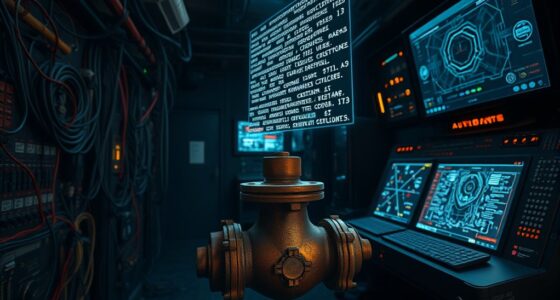
You see, ECHELON became a symbol of global signals surveillance because it shows how an international alliance, including the US, UK, and others, uses advanced technology to intercept worldwide electronic communications. It can monitor everything from satellite signals to fiber-optic cables, often without public consent. This massive data collection raises serious privacy concerns and highlights government overreach. If you want to understand how it shaped global surveillance and security dynamics, there’s more to uncover.
Key Takeaways
- ECHELON’s extensive global interception capabilities made it a prominent example of mass signals intelligence.
- Its involvement by multiple major nations highlighted international cooperation in surveillance efforts.
- The program’s ability to analyze encrypted communications exemplified technological advancements in signals intelligence.
- Public disclosures revealed its wide-reaching scope, raising awareness about government surveillance.
- ECHELON symbolized the evolving arms race between encryption technology and interception methods.

Although details about its operations remain classified, ECHELON is widely recognized as a global signals intelligence (SIGINT) network used by an alliance of nations to intercept and analyze international electronic communications. Its existence has sparked widespread debate about privacy, security, and the extent of government monitoring. You might wonder why ECHELON has become such a symbol of global signals surveillance, and understanding this requires examining its role within the broader evolution of cryptography and intelligence agencies’ capabilities. Over the decades, cryptography has advanced from simple ciphers to intricate algorithms designed to protect information. But as encryption techniques improved, so too did the efforts of intelligence agencies to decode or circumvent these protections. ECHELON emerged in this context as a tool that could intercept encrypted communications before they reached end users, giving agencies the ability to analyze data that would otherwise remain protected.
ECHELON intercepts encrypted communications, evolving alongside cryptography to unlock protected data for intelligence analysis.
What makes ECHELON notable is its ability for massive data collection. It’s not just about eavesdropping on individual conversations but about creating a vast network capable of monitoring global communications in real time. This capability transformed the way intelligence agencies function, shifting from targeted surveillance to broad-spectrum data collection. The system’s scope extends across satellite, radio, microwave, and fiber-optic communications, making it a cornerstone of contemporary signals intelligence. As cryptographic methods became more advanced, intelligence agencies had to adapt, developing new techniques to decrypt or analyze intercepted data. ECHELON exemplifies this technological arms race, where advancements in cryptography prompted equally sophisticated surveillance tools.
Its prominence also derives from its connection with the major intelligence agencies of allied nations, including the United States, the UK, Canada, Australia, and New Zealand. These countries formed an alliance that pooled resources, making ECHELON a symbol of international cooperation in signals intelligence. For the public, ECHELON’s existence raised questions about privacy rights and government overreach, especially as it could intercept communications from ordinary citizens and foreign governments alike. Its very existence underscored how monitoring capabilities had expanded beyond traditional borders, reshaping global power dynamics. Additionally, the development of technologies like high-frequency interception contributed to the system’s extensive reach and effectiveness. As new cryptography techniques emerged, intelligence agencies needed to develop corresponding decryption strategies, fueling an ongoing cycle of technological innovation. The ongoing technological advancements continue to influence the evolution of signals intelligence, highlighting the importance of staying ahead in this continuous cybersecurity arms race.
Understanding these developments highlights the importance of cryptography in modern surveillance efforts and the ongoing challenge of balancing security with individual privacy rights.

Portable Morse Code Reader Translator CW Decoder with LED Display for Ham Radio Communication Practice
- LED Display: Clear Morse code message reading
- Durable Materials: Stable performance for long-term use
- Full-Featured: Supports advanced decoding functions
As an affiliate, we earn on qualifying purchases.
As an affiliate, we earn on qualifying purchases.
Frequently Asked Questions
How Did ECHELON Originate and Develop Over Time?
You see, ECHELON originated in the Cold War era, developed by the US, UK, Canada, Australia, and New Zealand to enhance signal interception and encryption analysis. Over time, it expanded into a vast network that monitors global communications, evolving with advances in technology. Its development allowed intelligence agencies to intercept and analyze signals worldwide, making ECHELON a symbol of covert surveillance and a powerful tool in global signals intelligence.
Which Countries Are Primarily Involved in Echelon’s Operations?
You realize that the primary countries involved in ECHELON’s operations are the United States, the United Kingdom, Australia, Canada, and New Zealand. These nations collaborate closely, often engaging in cyber espionage and data interception to monitor global communications. The coincidence reveals how this alliance quietly shapes national security, highlighting a shared interest in surveillance that extends beyond borders, subtly influencing international relations and privacy norms worldwide.
What Technological Methods Does ECHELON Use for Surveillance?
Echelon uses advanced technology for surveillance, primarily focusing on signal interception and encryption breaking. You see, it captures communications by intercepting satellite, microwave, and radio signals worldwide. Then, it employs powerful algorithms and supercomputers to analyze data and break encryption, revealing sensitive information. This combination of signal interception and encryption breaking allows Echelon to monitor global communications effectively, making it a formidable tool in signals surveillance.
How Has ECHELON Impacted International Relations and Diplomacy?
Imagine you’re caught in a spy movie with a 007 twist—Echelon’s cyber espionage capabilities have profoundly impacted international relations and diplomacy. It fuels mistrust, leading to diplomatic fallout, as nations worry about their secrets being compromised. This covert surveillance hampers open dialogue and cooperation, forcing governments to reassess their alliances. You realize that Echelon’s reach extends beyond intelligence, shaping how countries negotiate and build trust in a digitally connected world.
What Are the Legal and Ethical Concerns Surrounding ECHELON?
You should be concerned about the legal and ethical issues surrounding ECHELON, especially privacy violations and lack of legal accountability. Its surveillance activities often infringe on individual privacy rights, raising questions about legality under national and international laws. The secretive nature of ECHELON makes it difficult to hold operators accountable, fueling debates about transparency, misuse, and the need for stronger regulations to protect civil liberties worldwide.

The Last Unencrypted Message: Trust the wrong device, and it will kill you. (Digital Fortress: The Cybersecurity Series)
As an affiliate, we earn on qualifying purchases.
As an affiliate, we earn on qualifying purchases.
Conclusion
You can’t ignore how Echelon’s rise symbolizes the dawn of modern signals intelligence, much like the advent of the printing press revolutionized information sharing. Its covert surveillance network embodies the tension between security and privacy, making it a symbol of global oversight. Just as Queen Victoria’s empire expanded, Echelon’s reach grew, forever changing how states watch over their citizens. It’s a stark reminder that in the age of digital dragons, secrets are harder to keep than ever.
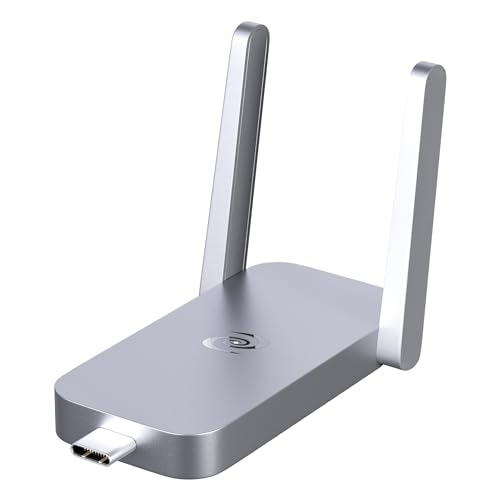
Deeper Connect Air(2023 Version) Portable WiFi Wireless Router Hotspot Device, Lifetime Free Router VPN for Travel Privacy, Compact VPN Routers for Home and Remote Work
- Lifetime Private Browsing: Built-in decentralized VPN for privacy
- Light Daily Connectivity: Low-overhead mode for light browsing
- Optimized Pocket Router: Supports 1-3 devices with reliable connection
As an affiliate, we earn on qualifying purchases.
As an affiliate, we earn on qualifying purchases.

Cryptography and Network Security: Principles and Practice, Global Ed
- Title: Cryptography and Network Security: Principles and Practice, Global Ed
- Publisher: Pearson
- Product Type: ABIS_BOOK
As an affiliate, we earn on qualifying purchases.
As an affiliate, we earn on qualifying purchases.