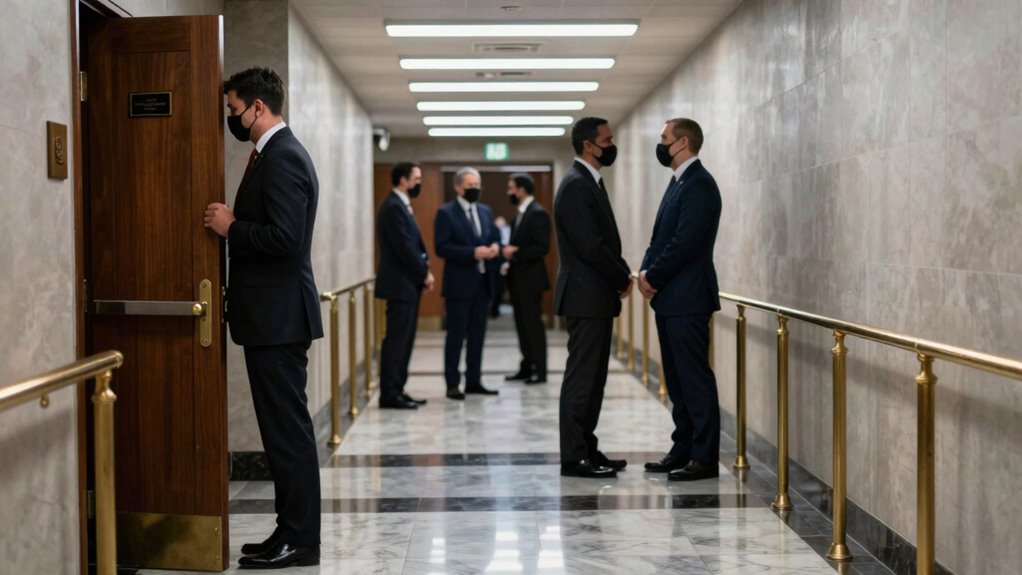

The backdoor access debates keep coming back in Washington because the fight between national security and personal privacy never truly ends. Lawmakers want to guarantee authorities can access encrypted data to fight crime and terrorism, but privacy advocates warn that weakening encryption risks mass surveillance and security vulnerabilities. As technology advances and new threats emerge, these issues resurface, keeping the debate alive. To understand why this discussion persists and how it evolves, there’s much more to explore.
Key Takeaways
- Technological advancements in encryption continually challenge the feasibility and effectiveness of implementing backdoors.
- Security incidents and threats reignite debates over whether access to encrypted data is necessary for national safety.
- Legal and oversight concerns persist regarding government surveillance and potential abuse without proper accountability.
- Political and societal fears of mass surveillance and privacy erosion drive recurring conflicts over encryption access.
- The cyclical nature of technological progress and security threats keeps reopening discussions on backdoor policies.
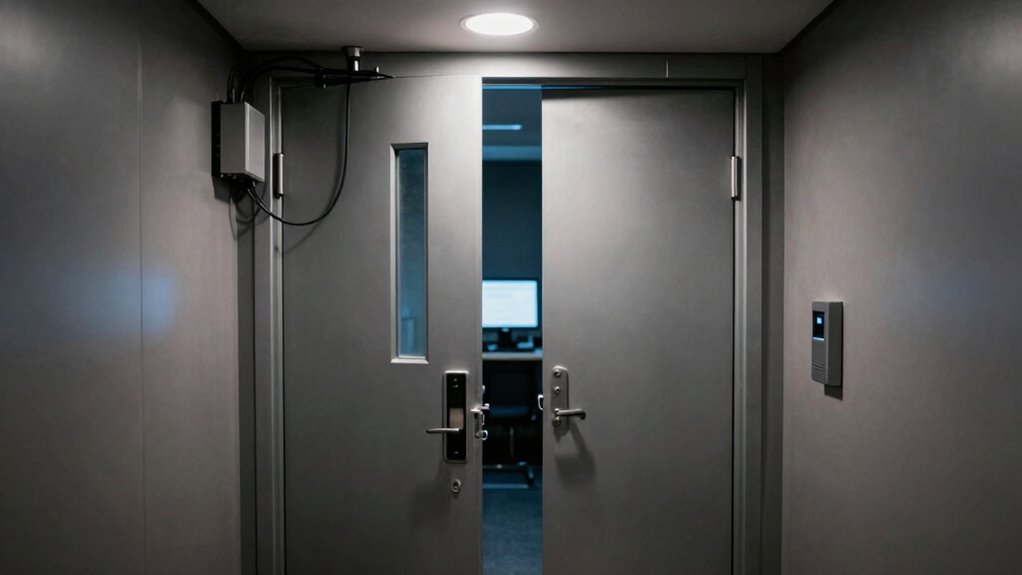
Have you ever wondered how much access government agencies should have to encrypted devices and private communications? It’s a question that keeps resurfacing in Washington, sparking debates that seem to cycle back every few years. The core of these discussions often revolves around the balance between national security and individual privacy. On one side, law enforcement and intelligence agencies argue that backdoor access is essential for fighting crime and thwarting terrorism. They believe that encryption vulnerabilities—weak spots intentionally or unintentionally created—can be exploited by malicious actors if encryption isn’t accessible to authorities. These vulnerabilities are especially concerning because they can be exploited not just by government agencies but also by hackers and foreign adversaries, increasing the risks for everyone. Yet, the push for backdoors raises serious privacy concerns. When governments demand access to encrypted communications, they risk opening the door to broader surveillance, often without clear oversight or accountability. Privacy advocates warn that backdoors could weaken overall security, making personal data more vulnerable to theft and misuse. The debate intensifies because encryption is designed to protect sensitive information, and weakening it for some could inadvertently compromise the entire system. You might see this tension play out in legislation proposals or court cases, where lawmakers grapple with whether security measures should take precedence over privacy rights. The recurring nature of these debates stems partly from technological advancements, which continually reshape the landscape of digital security. As encryption methods evolve, so do the arguments for and against backdoors, especially as encryption techniques become more sophisticated and harder to break. The challenge is that once a backdoor is created, it becomes a potential point of entry for anyone with malicious intent, not just authorized agencies. This persistent vulnerability fuels ongoing concerns about encryption’s security integrity. Meanwhile, privacy concerns are amplified by the fear that governments could misuse their access, leading to mass surveillance or targeting of specific communities. You’re caught between the need to keep citizens safe and the obligation to protect your personal data from unwarranted intrusion. The ongoing debates are further complicated by technological advancements, which continually introduce new challenges and considerations. For example, the development of end-to-end encryption has made it increasingly difficult for authorities to access communications, complicating their efforts. That’s why these debates keep returning—each technological leap or high-profile security incident reignites the discussion. Lawmakers, technologists, and privacy advocates all have stakes in the outcome, making consensus difficult. Ultimately, balancing the benefits of access for security purposes against the risks posed by encryption vulnerabilities and privacy concerns remains a complex, ongoing challenge in Washington’s political landscape. Additionally, advances in home security technology and encrypted communications further complicate the debate over how much access authorities should have.
Military-Grade AES 256 Hardware Encrypted Earbuds 2-Pack – Off-Grid Secure

Secure, off-grid encrypted earbuds with military-grade voice protection for confidential communication anywhere.
As an affiliate, we earn on qualifying purchases.
As an affiliate, we earn on qualifying purchases.
Frequently Asked Questions
How Do Backdoors Impact International Cybersecurity Laws?
Backdoors impact international cybersecurity laws by fueling cryptography conflicts, as nations debate the balance between security and privacy. You might find that backdoors challenge sovereignty issues, since countries struggle over who controls access to encrypted data. When governments push for backdoors, it can create tensions, making it harder to establish unified laws. This often leads to disagreements about jurisdiction, trust, and the global standards needed to protect digital infrastructure.
Who Are the Main Stakeholders Advocating for Backdoor Access?
You might think it’s a tall order, but some government officials and intelligence agencies advocate for backdoor access. They argue it’s necessary for national security, despite the privacy concerns and encryption vulnerabilities involved. Law enforcement agencies claim that access helps prevent crimes and terrorism. However, privacy advocates push back, warning that such backdoors could be exploited by bad actors, undermining the very security they aim to protect.
What Are the Technical Challenges in Implementing Backdoors Securely?
Implementing backdoors securely faces major technical challenges like encryption vulnerabilities and key management. You risk creating weaknesses in the encryption that hackers can exploit, compromising data security. Managing backdoor keys is complex; if mishandled, unauthorized parties might access sensitive information. To guarantee security, you must develop robust, transparent processes for key management and minimize vulnerabilities, but these challenges often make secure backdoor implementation difficult and risky.
How Do Backdoor Debates Influence Public Trust in Technology?
Backdoor debates influence your public trust by raising privacy concerns and highlighting encryption vulnerabilities. When authorities push for access, you might worry about your data’s security and potential misuse. These discussions often lead to fears that backdoors could be exploited by malicious actors, weakening overall privacy. As a result, you could become skeptical of technology providers, questioning whether their encryption truly protects your information or if backdoors compromise your safety.
Are There Historical Precedents for Government Surveillance Debates?
Have you ever wondered if government surveillance debates are new? Historically, they aren’t. In the 1960s and 1970s, concerns over privacy and civil liberties sparked fierce discussions about wiretapping and data collection. These debates shaped policies like the Foreign Intelligence Surveillance Act. Are we repeating history? Today’s privacy concerns echo those past struggles, reminding you that balancing security with individual rights remains an ongoing challenge.
Conclusion
So, here you are, caught in the endless cycle of backdoor access debates, where everyone claims to prioritize security but seems more interested in avoiding accountability. It’s almost poetic — the more we talk about protecting privacy, the more we open hidden doors. Ironically, your biggest worry might not be hackers, but the very folks promising to keep you safe. In Washington, it seems, transparency is just another door left intentionally ajar.