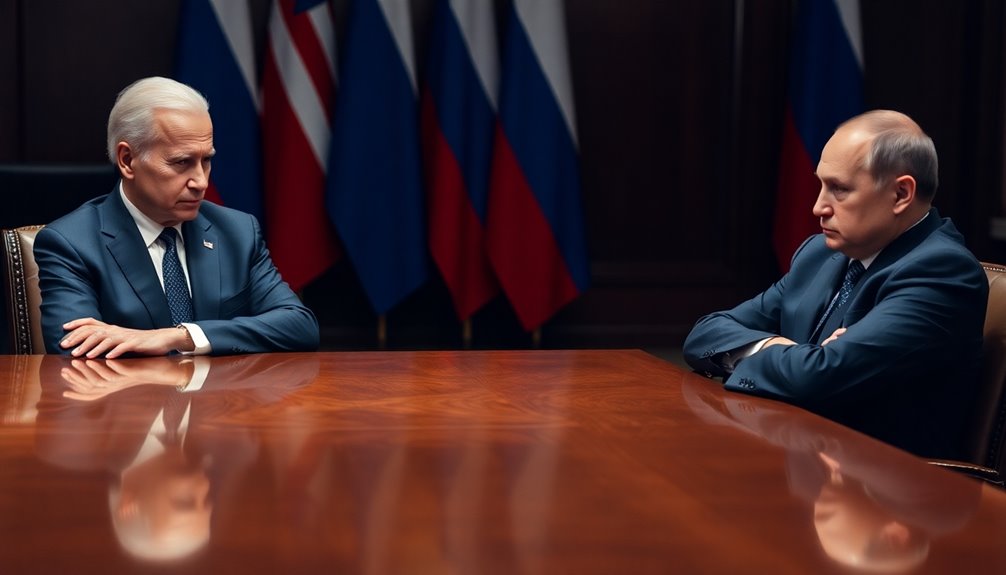

As President Biden embarked on his first foreign trip, he met with Russian President Vladimir Putin on June 16, 2021, in Lake Geneva, aiming to address the rising tensions between the U.S. and Russia. This meeting represented a pivotal moment in re-establishing dialogue, featuring key figures like U.S. Secretary of State Antony Blinken and Russian Foreign Minister Sergei Lavrov. The discussions ranged from cybersecurity to nuclear arms control, highlighting the complexity of the relationship between the two nations.

Get privacy and security gear delivered free — and shop member deals
- Fast, free delivery on millions of items
- Access to Prime Big Deal Days deals on October 6–7
- Prime Video, Amazon Music and more included
President Biden’s meeting with Putin marked a crucial step in addressing U.S.-Russia tensions, focusing on cybersecurity and nuclear arms control.
During the meeting, Biden presented a list of 16 critical infrastructure sectors, such as energy, water, and healthcare, that should remain off-limits to hacking. This came in light of recent ransomware attacks linked to Russian-speaking groups. You could sense the urgency as both sides agreed to collaborate, aiming to curb cybercrime emanating from Russia. This was a significant step forward, even if it didn’t result in immediate solutions. Notably, Biden emphasized that critical infrastructure is off-limits to cyberattacks, underscoring the importance of protecting vital sectors.
As they delved into nuclear and strategic issues, both leaders faced the reality of mutual distrust. They discussed arms control but didn’t announce any specific agreements. Instead, they seemed focused on validating their self-interests rather than fostering deeper trust. This cautious approach suggests that while they seek to stabilize the relationship, the road ahead remains fraught with challenges.
The return of ambassadors to their posts marked another significant outcome of the meeting. This gesture aimed to lower tensions after both countries had recalled their ambassadors. You could see this as a positive diplomatic move, signaling a willingness to normalize relations despite existing strains. Early consultations between the State Department and Russia’s Ministry of Foreign Affairs indicated a renewed commitment to dialogue.
Ukraine’s aspirations to join NATO were also on the agenda. Putin dismissed these desires, citing historical grievances, while the U.S. reaffirmed its support for Ukraine’s sovereignty. This discussion highlighted ongoing tensions, particularly given Russia’s military buildup near Ukraine, which remains a contentious issue.
Human rights were scrutinized during the talks, with Russia’s treatment of dissidents coming under fire. However, the meeting didn’t yield any specific commitments regarding human rights. Both sides acknowledged their differing views, yet international pressure on Russia continues to mount.
Ultimately, this initial talk between Biden and Putin laid the groundwork for future discussions. While concrete agreements were scarce, the emphasis on cybersecurity cooperation and the decision to return ambassadors indicate a cautious yet hopeful approach to stabilizing U.S.-Russia relations. Follow-up meetings are expected to continue addressing these critical issues.
cybersecurity protection software
As an affiliate, we earn on qualifying purchases.
As an affiliate, we earn on qualifying purchases.
Fall Picks
fall essentials
As an affiliate, we earn on qualifying purchases.