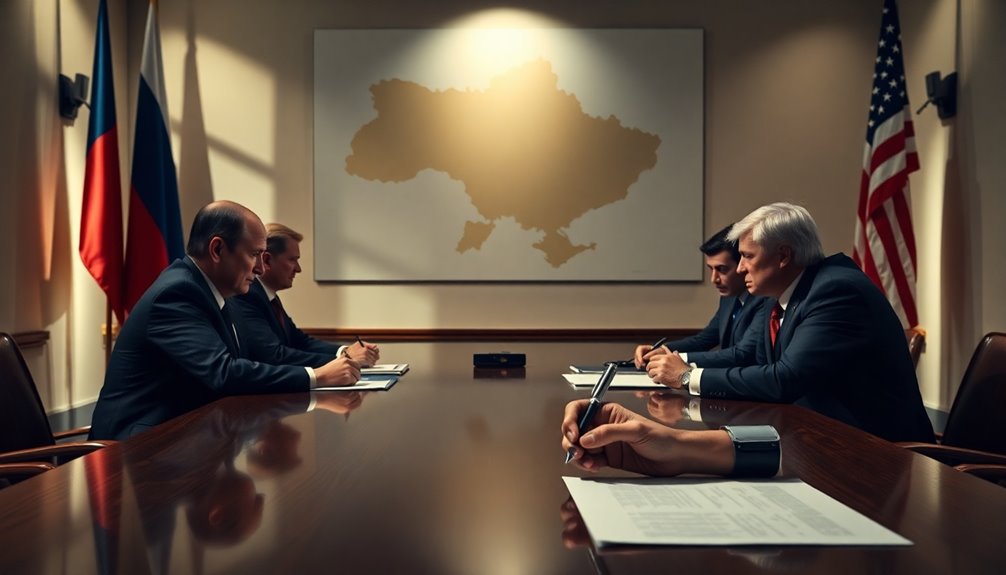


As discussions intensify in Riyadh, Saudi Arabia, U.S. officials are engaging separately with Ukrainian and Russian representatives to hammer out a partial ceasefire in the ongoing conflict. The stakes are high, with both sides feeling the pressure to reach an agreement that could halt the violence that has devastated the region. U.S. mediation aims to bridge the gaps between the two nations, focusing on what targets would be protected under a ceasefire.

Get privacy and security gear delivered free with Prime
- Fast, free delivery on millions of items
- Prime Video, Amazon Music and more included
- Member-only deals all year
U.S. officials push for a crucial partial ceasefire between Ukraine and Russia as tensions escalate in Riyadh.
In these negotiations, Russia has shown willingness to protect energy infrastructure, a significant step forward. However, Ukraine’s demands extend beyond this, as they seek broader protections that include railways and ports. You can sense the tension in the room as both parties grapple with conflicting views on the terms of the ceasefire. Russia’s insistence on conditioning a full ceasefire on halting Western arms supplies complicates matters further, illustrating the intricate web of negotiations at play.
Interestingly, the proposed 30-day ceasefire by former President Donald Trump has already been rejected by Russia. They argue that any pause in military action must be tied to a halt in military mobilization and arms supplies to Ukraine. This back-and-forth highlights the challenges of finding common ground in what seems like an endless cycle of conflict.
Meanwhile, the U.S. remains hopeful that real progress can be made, aiming for a broader ceasefire by April 20, coinciding with Easter celebrations for both Western and Orthodox churches. Additionally, the agenda includes the Black Sea grain initiative, which could ensure safe shipping and facilitate Ukrainian exports. Moscow’s withdrawal from this deal in 2023 adds urgency to discussions, as they seek sanctions relief in any renewed agreement. Recent attacks, including Russian drone strikes that resulted in civilian casualties, underscore the dire need for a ceasefire.
You can imagine the complexities involved, especially as both sides continue to experience strikes and cyberattacks even while talks are ongoing. The international community watches closely, with Ukraine pushing for increased pressure on Russia to end hostilities. As U.S. officials shuttle between both delegations, they aim to foster an environment conducive to peace.
The path forward remains fraught with challenges, but the potential for a ceasefire offers a glimmer of hope amid the chaos. With every conversation, you can feel that the stakes are high, and the need for a resolution has never been more pressing.
Ukrainian rail and port security equipment
As an affiliate, we earn on qualifying purchases.
As an affiliate, we earn on qualifying purchases.
Halloween Picks
halloween
As an affiliate, we earn on qualifying purchases.