

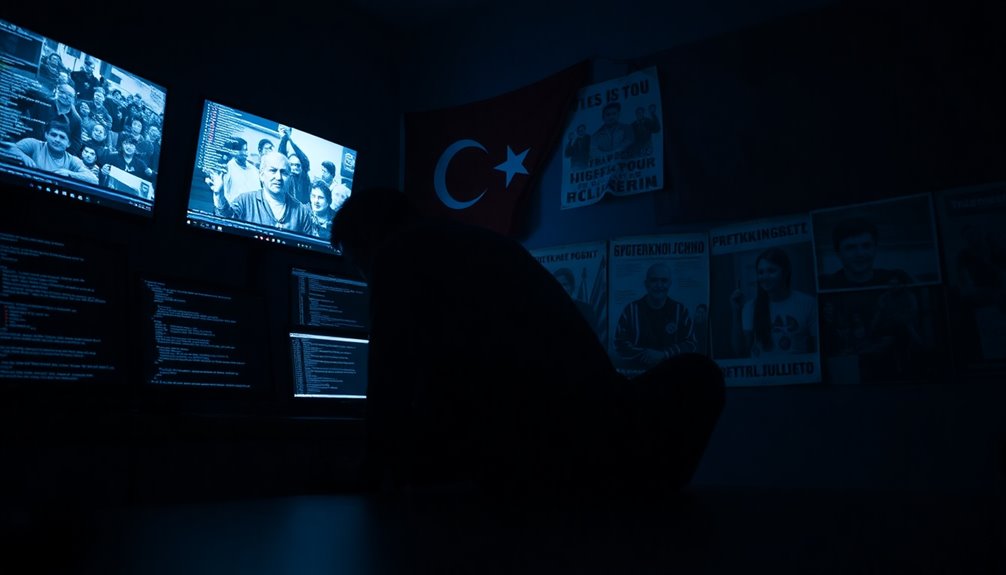
As Turkish authorities ramp up their digital surveillance efforts, you might feel the tightening grip on free expression and access to information. The government’s intensified monitoring particularly targets LGBTQ+ content and other sensitive topics. With laws that allow for extensive wiretapping without court orders, your online activities could be scrutinized more than ever. This legal framework enhances surveillance capabilities, making it easier for authorities to invade your privacy.

Get privacy and security gear delivered free — and shop member deals
- Fast, free delivery on millions of items
- Access to Prime Big Deal Days deals on October 6–7
- Prime Video, Amazon Music and more included
You may have noticed that access to popular social media platforms like X, YouTube, Instagram, and TikTok gets restricted during political crackdowns. This isn’t just a coincidence; it’s part of a broader strategy to control the narrative and limit dissent. The Radio and Television Supreme Council (RTÜK) actively monitors and regulates online content to align it with what they describe as “family values,” creating a chilling effect on your ability to share thoughts freely. In the context of 2025 as the Year of Combatting LGBTQ+ Content, the government’s efforts are particularly focused on censoring material that does not conform to its conservative agenda.
Censorship laws have strengthened the government’s hand, allowing for the blocking of websites and the restriction of online content. Vague disinformation laws target “fake news,” giving authorities broad leeway to censor information that doesn’t fit their agenda. If you’re using foreign social media platforms, be aware that they now have to appoint representatives in Turkey and comply with local regulations or risk penalties like bandwidth throttling, which effectively blocks their services.
You might find it increasingly difficult to navigate independent journalism. The government has intensified its crackdown on free press, with hundreds of journalists jailed or harassed under anti-terror and penal codes. This creates a hostile environment for digital journalism, where disinformation laws and censorship loom over every story. Political dissent is especially vulnerable; legal actions and censorship increasingly target those who voice opposition to the government.
While Turkey plans to regulate big tech firms similarly to the EU, these regulations may clash with U.S. interests. Internet shutdowns during security operations further violate your right to access information. Cloud services are blocked to suppress sensitive leaks, and even code hosting platforms like GitHub face temporary blockages. The Digital Platforms Commission oversees these restrictions, tightening the government’s grip on what you can access online.
In this evolving landscape, it’s crucial to remain aware of how digital crackdowns in Turkey can affect your freedom of expression and access to diverse information sources. The implications are significant, and your voice matters more than ever.
VPN for Turkey
As an affiliate, we earn on qualifying purchases.
As an affiliate, we earn on qualifying purchases.
Fall Picks
fall essentials
As an affiliate, we earn on qualifying purchases.