
Responsible use of facial recognition means respecting privacy by clearly defining how data is collected, stored, and used while ensuring transparency and security. It involves applying strong safeguards like encryption and access controls, and only deploying in public spaces with proper regulation. Fairness is key—you should test systems for bias and include diverse populations. If you’re interested in learning how to implement these principles effectively, there’s more to explore.
Key Takeaways
- Establish clear boundaries and obtain informed consent for biometric data collection and usage.
- Implement encryption, access controls, and regular audits to safeguard data privacy and prevent misuse.
- Deploy facial recognition only in regulated public spaces with transparency and mechanisms for user opt-out.
- Regularly test algorithms for biases, ensuring fairness and inclusivity across diverse populations.
- Foster transparency by clearly communicating system purposes, data handling practices, and accountability measures.
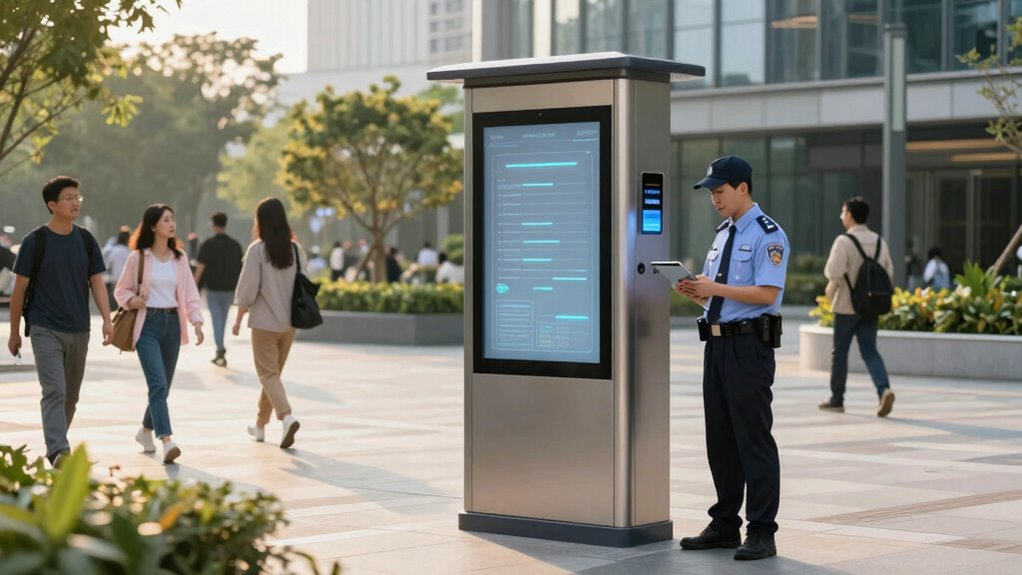
Have you ever wondered how facial recognition technology impacts your privacy and security? As this technology becomes more common, it’s vital to consider what responsible use truly looks like. At its core, responsible use involves establishing clear boundaries that protect individual rights while enabling beneficial applications. Privacy safeguards play a fundamental role here—they ensure that your personal biometric data is collected, stored, and used with strict limits. For example, organizations should implement encryption and strict access controls to prevent unauthorized use or leaks of facial data. Additionally, transparency about when and why facial recognition is employed helps build trust. If you’re aware of how your data is being used, you’re more likely to feel secure and confident in the system’s intentions.
Responsible facial recognition balances privacy, transparency, and ethical safeguards to protect individual rights and build trust.
Ethical frameworks serve as guides for responsible deployment. They remind us to prioritize fairness, accountability, and non-discrimination. For instance, algorithms should be regularly tested to prevent biases that could unfairly target or misidentify specific groups. For example, inclusive casting practices ensure that facial recognition systems are developed and tested with diverse populations to minimize bias. Ethical use also involves obtaining informed consent whenever possible, so individuals understand the purpose behind facial recognition systems and agree to their use. It’s about respecting personal autonomy and avoiding manipulative or intrusive practices. When these principles are in place, facial recognition technology can serve as a helpful tool rather than an invasive one. Incorporating ethical considerations into the development process helps to ensure that the systems are aligned with societal values. Moreover, establishing privacy safeguards is essential to maintain public trust and prevent misuse. Implementing these protections not only supports privacy but also fosters public trust in the responsible application of the technology. Additionally, understanding and addressing the potential for algorithmic bias is critical to ensuring fair and equitable outcomes for all users.
Responsible use also means setting limits on where and how facial recognition is applied. For example, deploying it in public spaces for security purposes might be acceptable if it’s strictly regulated and monitored. Conversely, using facial recognition in private settings without proper safeguards raises serious privacy concerns. Developers and policymakers need to collaborate on establishing standards that guarantee these systems are used ethically and legally. This includes regular audits, clear policies, and avenues for individuals to challenge or opt out of facial recognition programs.
Ultimately, responsible use of facial recognition balances innovation with respect for personal privacy and societal values. By integrating privacy safeguards and adhering to ethical frameworks, you help foster a future where technology enhances safety without sacrificing individual rights. It’s about creating a system that’s accountable and transparent, so you can trust that your biometric data is handled with care. When everyone commits to these principles, facial recognition can evolve into a tool that benefits society while respecting individual dignity and privacy.
TEC SecureTouch TE-FPA4-MC USB Fingerprint Reader with ESS Enhanced Sign-in Security – Match-On-Chip Encryption, 360° Biometric Sensor, 0.23s Fast Login, Password-Free Windows Hello PC Sign-in

Secure, fast, and password-free fingerprint login for Windows PCs with advanced encryption and 360° recognition.
As an affiliate, we earn on qualifying purchases.
As an affiliate, we earn on qualifying purchases.
Frequently Asked Questions
How Can Individuals Opt Out of Facial Recognition Systems?
To opt out of facial recognition systems, you should explore the privacy options available through the service providers or authorities involved. Usually, there are clear opt-out procedures you can follow, such as submitting a formal request or adjusting privacy settings in your account. Stay informed about your rights, and regularly review policy updates to guarantee your preferences are respected, protecting your privacy effectively.
What Laws Regulate Facial Recognition Technology Worldwide?
You might imagine a world where laws like the EU’s GDPR and the US’s Illinois Biometric Information Privacy Act regulate facial recognition, aiming to address privacy concerns and ethical implications. These laws restrict data collection and demand transparency, ensuring companies handle biometric info responsibly. While some countries enforce strict regulations, others have minimal oversight, leaving gaps in privacy protections. Staying informed helps you understand your rights and the evolving legal landscape.
How Is Data Security Maintained in Facial Recognition Databases?
You maintain data security in facial recognition databases by implementing strong data encryption, ensuring that stored images and biometric data are protected from unauthorized access. You also enforce strict access controls, limiting data access to authorized personnel only, and regularly monitor activity logs for suspicious behavior. Combining encryption with access controls helps prevent data breaches, safeguarding personal information while respecting privacy and promoting responsible use of facial recognition technology.
Can Facial Recognition Be Biased or Unfair?
Yes, facial recognition can be biased or unfair due to algorithm bias, which often stems from unrepresentative training data. This can lead to inaccuracies, especially for certain racial or gender groups. Privacy concerns also arise if the technology is used without proper consent or safeguards. To guarantee fairness, you should advocate for diverse data sets, transparent algorithms, and strict privacy protections, promoting responsible and equitable use of facial recognition technology.
What Are the Potential Misuse Scenarios of Facial Recognition?
You should be aware that potential misuse scenarios of facial recognition include unauthorized surveillance, leading to privacy concerns, or misidentification causing wrongful accusations. Technological limitations can worsen these issues, as inaccurate data might result in unfair treatment or breaches of privacy. You need to guarantee strict regulation and transparency to prevent abuse, safeguarding individual rights while leveraging benefits responsibly.
Conclusion
By embracing a thoughtful approach, you can help guarantee facial recognition technology serves everyone well. When used with care and respect, it can become a subtle partner in safety and convenience, rather than an intrusive force. By staying informed and advocating for responsible practices, you help shape a future where innovation and privacy dance in harmony. Together, you can turn the promise of facial recognition into a gentle, positive influence on daily life.