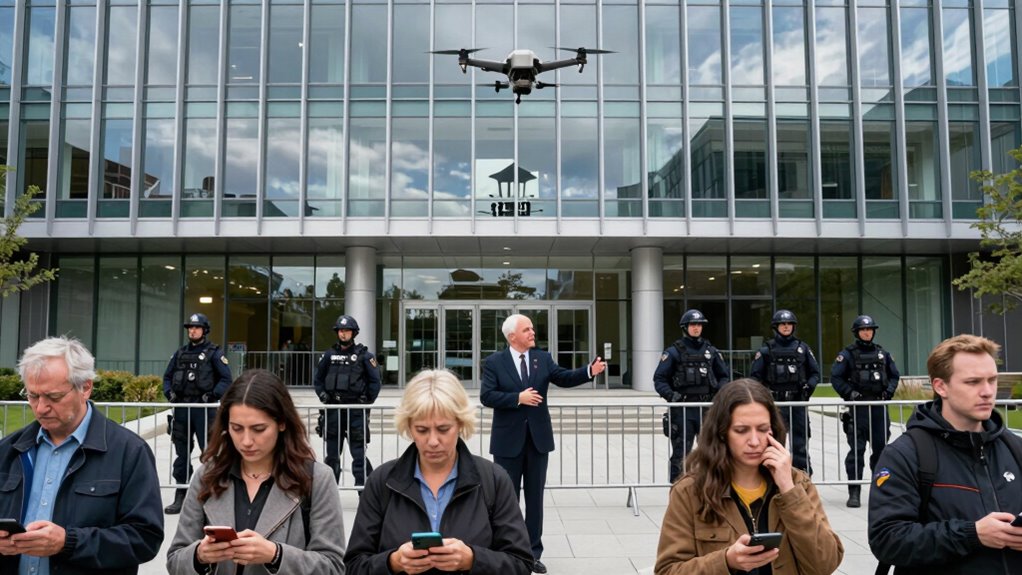

Democratic governments balance security and due process by using oversight processes like independent commissions and parliamentary committees to review surveillance practices, ensuring legal compliance and privacy protection. Judicial review plays a key role by examining if government actions align with constitutional rights, and enforcing laws that define surveillance limits. Transparency initiatives foster public trust and accountability, helping prevent abuse of power. By maintaining vigilance, these systems aim to protect both safety and individual rights—there’s more to understand how these mechanisms work together.
Key Takeaways
- Implement oversight processes like independent commissions and watchdogs to review surveillance practices and prevent overreach.
- Use judicial review to ensure government actions comply with constitutional rights and legal protections.
- Establish clear legal frameworks that define the scope and limits of security measures, with regular judicial scrutiny.
- Promote transparency initiatives to inform the public and foster trust while monitoring government activities.
- Balance security and rights by maintaining vigilance, accountability, and adherence to the rule of law through ongoing oversight.

How do democratic governments strike the delicate balance between ensuring national security and protecting individual rights? It’s a constant challenge that requires careful mechanisms to prevent overreach while keeping citizens safe. You might think that security measures, like surveillance, could easily infringe on personal freedoms, but democracies implement oversight processes to prevent abuse. Surveillance oversight involves creating checks and balances on government agencies that gather intelligence or monitor communications. These oversight bodies—often independent commissions, parliamentary committees, or internal watchdogs—review surveillance practices to ensure they comply with legal standards and respect privacy rights. Their role is to prevent unchecked power, making sure security efforts don’t turn into unwarranted invasions of privacy.
Democratic oversight ensures security measures respect legal standards and protect individual privacy from government overreach.
However, oversight alone isn’t enough. When disputes about security measures arise, judicial review becomes an essential tool. Judicial review means courts have the authority to examine whether government actions, like surveillance programs, align with constitutional principles and legal protections. If you’re concerned that your rights are being violated by secret surveillance, judicial review allows you or your representatives to challenge those actions in court. Courts then assess whether the government’s security measures are justified or if they go beyond what the law permits. This process helps guarantee that even in the name of national security, individual rights aren’t permanently sacrificed. It also reinforces accountability within democratic systems, demonstrating that no branch or agency is above the law.
Balancing security and due process isn’t just about creating rules; it’s about maintaining ongoing oversight and accountability. Democratic governments often establish legal frameworks that define the scope and limits of surveillance activities, but these frameworks need to be enforced through regular monitoring and judicial scrutiny. You might see this as a safeguard that prevents governments from becoming too powerful or secretive. When courts review security policies, they consider the necessity, proportionality, and transparency of those measures. If a surveillance program is deemed excessive or unjustified, courts can order modifications or even halt certain practices. Incorporating surveillance oversight mechanisms ensures continuous checks on government actions and helps prevent abuse of power. Additionally, public awareness and transparency initiatives further strengthen accountability and foster trust in democratic institutions.
This delicate balance is essential for maintaining public trust. Citizens want to feel safe, but they also want their rights protected. Democratic governments recognize this, and by implementing surveillance oversight and judicial review, they aim to uphold both security and due process. A thorough understanding of surveillance oversight mechanisms helps explain how democracies prevent abuses of power while maintaining security. It’s a dynamic process that requires vigilance, transparency, and a commitment to the rule of law—principles that ensure freedom and safety coexist.
privacy surveillance oversight tools
As an affiliate, we earn on qualifying purchases.
As an affiliate, we earn on qualifying purchases.
Frequently Asked Questions
How Do Democracies Measure the Success of Balancing Security and Due Process?
You measure success by observing how well civil liberties are protected while implementing security measures. If citizens feel their rights are respected and security threats are managed effectively, the balance is working. You can also evaluate transparency and accountability in government actions, public trust levels, and the ability to adapt security measures without infringing on fundamental freedoms. These factors together indicate whether democracies are successfully balancing security and due process.
What Historical Examples Highlight Failures or Successes in This Balance?
You see that during World War II, the U.S. government’s use of emergency powers led to the internment of Japanese Americans, a failure of balancing security and civil liberties. Conversely, post-9/11, countries refined emergency powers to better protect civil liberties, like enhanced oversight and judicial review, marking successes. These examples highlight how governments can either violate civil liberties during crises or improve safeguards to maintain democratic principles.
How Do Different Democracies Prioritize Security Versus Individual Rights?
You witness democracies walking a tightrope between security and individual rights. Some prioritize surveillance policies, expanding state powers to safeguard citizens, risking civil liberties. Others fiercely protect civil liberties, restricting intrusive measures. The tension creates a landscape of constant negotiation, where governments must choose between the safety of many and the freedoms of individuals, each decision echoing through society’s fabric. The delicate balance keeps you questioning: where should the line be drawn?
What Role Do Public Opinion and Media Play in Shaping Policies?
Public influence and media advocacy profoundly shape policies by swaying government priorities. When the media highlights security concerns or individual rights issues, it mobilizes public opinion, prompting policymakers to act accordingly. You see this when media coverage pressures leaders to tighten or loosen security measures. Your voice, amplified through media, can push governments to balance security and due process, ensuring policies reflect societal values and respond to public needs effectively.
How Are Judicial Systems Involved in Maintaining This Balance?
You see, judicial systems maintain the balance by ensuring judicial independence, so courts can fairly review security measures without political pressure. They use legal oversight to scrutinize laws and actions that may infringe on individual rights. When security laws threaten due process, the judiciary steps in to protect citizens’ rights, upholding democratic principles. This independence and oversight help prevent abuses, keeping security measures in check with constitutional protections.
Conclusion
You see, balancing security and due process is like walking a tightrope—you need precision and care. Democratic governments must carefully weigh these priorities, knowing that sacrificing one risks undermining the other. As you navigate this delicate dance, remember that safeguarding rights is the anchor that keeps the whole system steady. Striking this balance ensures a resilient democracy, where freedom and safety coexist like two sides of the same coin, each essential to the nation’s soul.